For Caridina shrimp you want a GH-only remineralizer — a mineral salt that raises general hardness (the calcium and magnesium shrimp need for shells) while leaving carbonate hardness, KH, at zero. You add it to RO water and dose to a TDS target of roughly 100–150 ppm, which lands GH at 4–6. That single product choice is the most important decision in Caridina water chemistry, and getting it wrong is one of the most common reasons a soft-water colony quietly fails.
This is bench work I do every week. Remineralizing RO to a logged TDS number is the same discipline I imported from years of mixing hydroponic nutrient solutions: weigh or dose, dissolve fully, test, and only then use it. Here is how to pick a remineralizer, why GH-only matters so much for Caridina, and exactly how to mix it.
Why RO Has to Be Remineralized at All
Reverse osmosis water is blank — near-zero TDS, no minerals, no buffering. That is exactly what you want as a starting point, but it is dangerous to use straight, because shrimp need dissolved calcium and magnesium to build their shells and molt cleanly, and water with nothing in it cannot resist pH movement. Put shrimp in pure RO and you get failed molts and unstable parameters. A remineralizer is the ingredient that turns blank water into shrimp water.
The job is to add back a controlled, repeatable amount of the right minerals. Because you start from zero every time, you get total control over the final number — which is the whole advantage of the RO-and-remineralizer method over fighting with tap. My RO water guide covers making the blank water; this guide covers building it back to spec, and together they are the heart of the Caridina care guide.
GH-Only vs GH/KH: The Decision That Matters
Remineralizers come in two families, and Caridina need one of them specifically. A GH/KH+ product raises both general and carbonate hardness — it is made for Neocaridina, who want a few degrees of KH to hold their pH steady. A GH+ (GH-only) product raises general hardness while leaving KH at zero, which is exactly what Caridina need so an active substrate can pull pH down into the low 6s. The table makes the split clear.
| Product type | Raises | KH result | Use for |
|---|---|---|---|
| GH+ (GH-only) | GH only | Stays at zero | Caridina (Crystal Red, Bee, Tiger) |
| GH/KH+ | GH and KH | Rises to a few degrees | Neocaridina (cherry shrimp) |
Use a GH/KH+ product on a Caridina tank and you add the carbonate hardness you spent money on an active soil to remove — the two fight, the soil loses and exhausts faster, and your low pH never holds. This is the single most common remineralizer mistake. The bottle matters: for Caridina, the label has to say GH-only or GH+. A widely used option is a bee shrimp GH+ mineral, while cherries take a GH/KH+ mineral instead. As an Amazon Associate I earn from qualifying purchases.
Dosing to a TDS Target, Step by Step
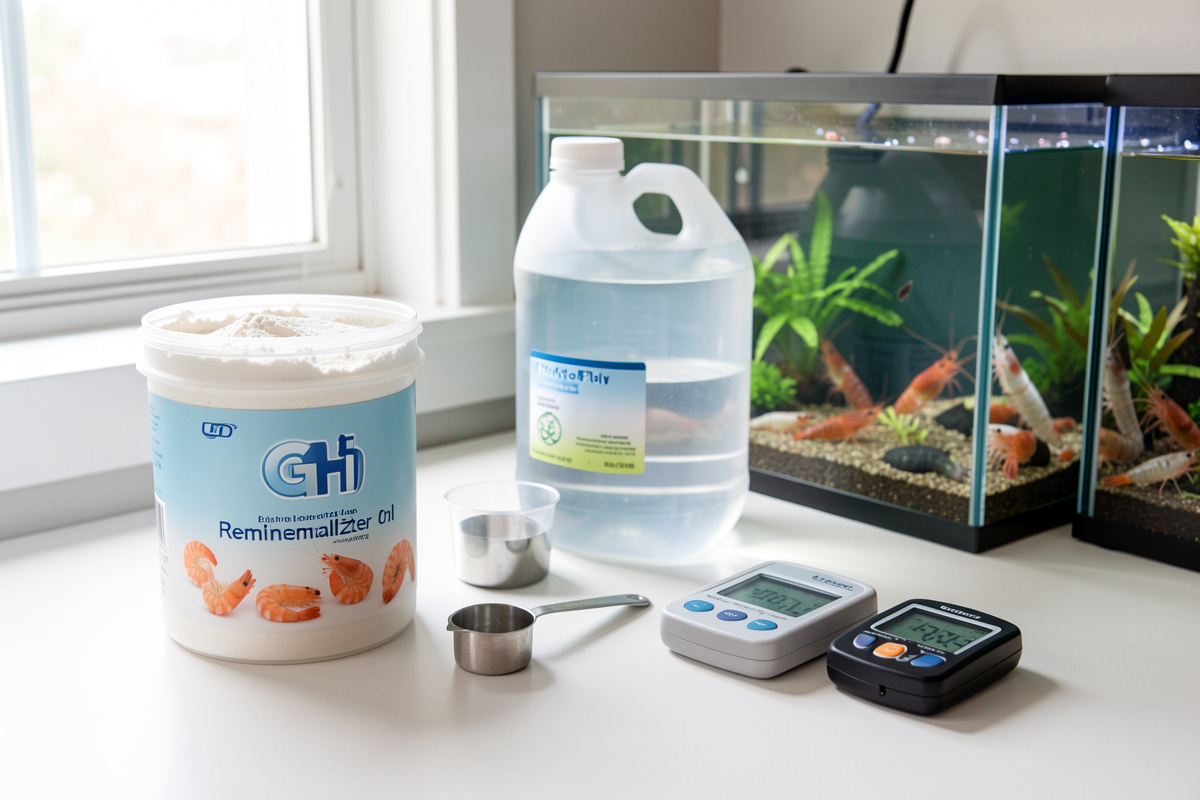
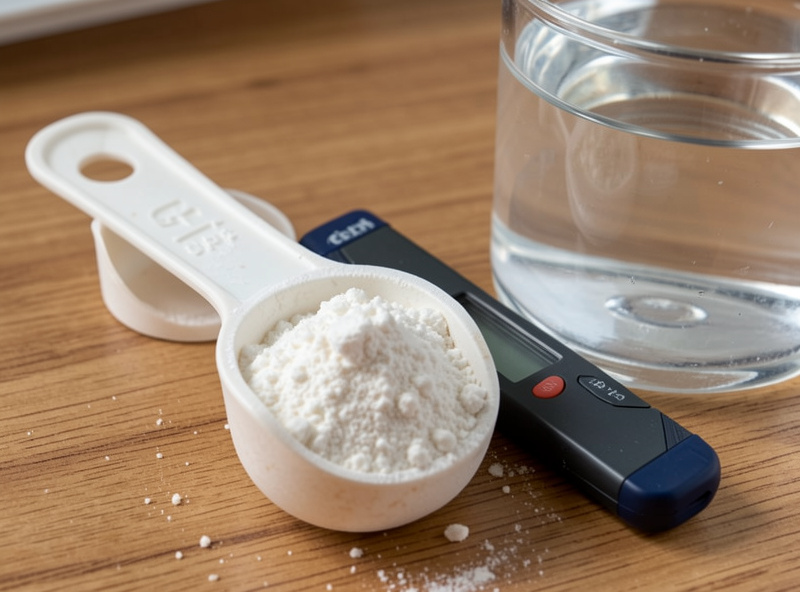
The method is simple and the same every time, which is the point. Start with a known volume of RO water in a clean mixing container. Add the GH+ remineralizer a small amount at a time while stirring, because it dissolves gradually and a half-dissolved dose reads low on the meter. Wait until it is fully dissolved, then check the TDS — aim for around 110–130 ppm for most Caridina. If you are short, add a little more; if you overshoot, add a splash of plain RO to bring it down.
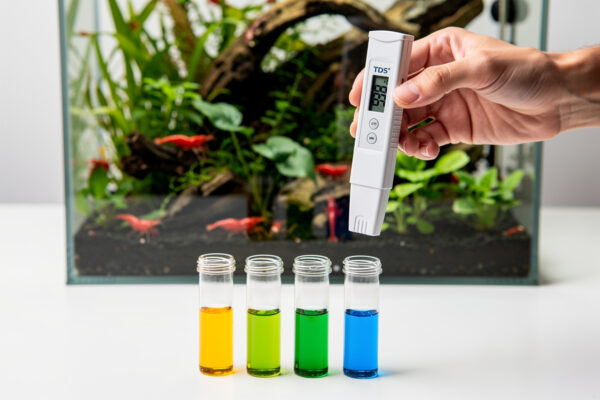
The reason this works is repeatability. Once you know roughly how much product brings your container volume to target, every future batch starts from the same recipe and you only fine-tune with the meter. That is what makes a water change a non-event rather than a parameter swing — the new water matches the tank water because both are built to the same logged number. A TDS meter is the one tool you cannot skip here; dosing by eye is guessing.
TDS, GH and the Numbers That Confirm It
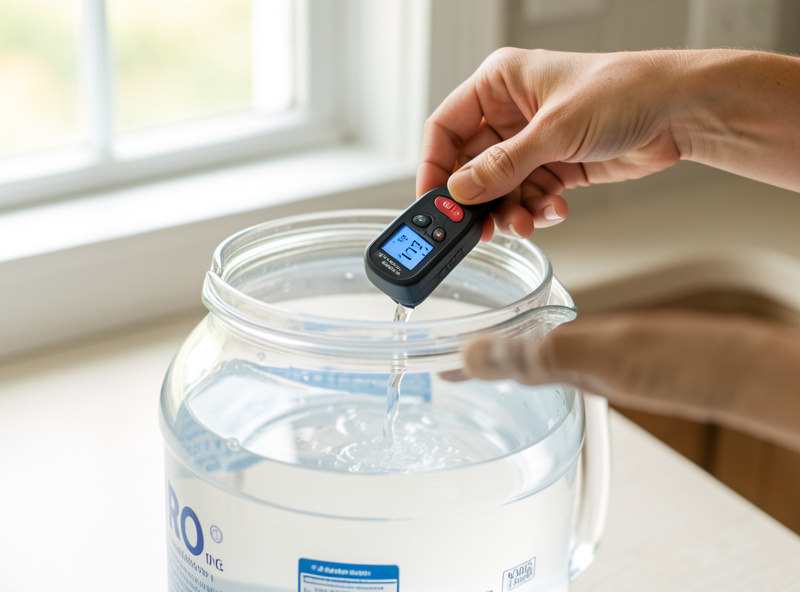
TDS and GH are related but not identical. The TDS meter reads total dissolved solids — everything in the water — while GH measures specifically the calcium and magnesium. With a quality GH-only remineralizer the relationship is consistent: a given TDS corresponds to a predictable GH, so the fast daily TDS reading stands in for the slower GH test most of the time. I still run a liquid GH test periodically to confirm the relationship has not drifted, especially after opening a new tub of mineral.
The practical rhythm: TDS pen for the quick check on every water change, liquid GH and KH tests now and then to verify the meter is telling the truth. A clean molt is the biological confirmation that the GH is right; a failed or stuck molt usually means GH ran too low, which the molting checklist walks through. The parameter explainer covers how KH, GH and TDS relate in more depth.
Common Remineralizer Mistakes
Beyond the GH/KH mix-up, a few errors recur. Dosing into the tank instead of into a mixing container first — this spikes parameters unevenly and stresses shrimp. Not letting the mineral fully dissolve before testing, which gives a false-low reading and leads to overdosing. Chasing GH up and down batch to batch instead of locking one target and matching it. And mixing remineralizer brands mid-tank, since different products hit slightly different GH at the same TDS. Pick one GH+ product, one target number, and stay with both — consistency is worth more than any particular brand.
One more habit worth building: write the recipe down. The first time you bring your standard container volume to target, note how much mineral it took, and tape that figure to the shelf. From then on you are not re-discovering the dose every water change, you are reproducing a known result and only nudging it with the meter. That logged recipe is the difference between remineralizing as a chore you dread and remineralizing as a thirty-second step — the same shift that turned my hydroponic water mixing from guesswork into routine years ago.
Frequently Asked Questions
What remineralizer should I use for Caridina shrimp?
A GH-only product, often labelled GH+, made for bee or Caridina shrimp. It raises general hardness for shell building while leaving KH at zero so an active substrate can hold the low pH Caridina need. Do not use a GH/KH+ product on Caridina.
What is the difference between GH+ and GH/KH+ remineralizer?
GH+ raises only general hardness and leaves KH at zero, which suits Caridina. GH/KH+ raises both general and carbonate hardness, which suits Neocaridina cherry shrimp. Using GH/KH+ on Caridina fights the active soil and stops the low pH from holding.
What TDS should I remineralize Caridina water to?
Around 100 to 150 ppm for most Caridina, which lands GH at 4 to 6. Mix the GH+ mineral into RO water, let it fully dissolve, and confirm the number with a TDS pen before doing the water change.
How do I mix shrimp remineralizer correctly?
Add the GH+ powder to a known volume of RO in a clean container, stir, and wait until it fully dissolves before testing, because a half-dissolved dose reads low. Adjust with more mineral or more RO until the TDS pen shows your target, then use the water.
Can I remineralize tap water instead of RO for Caridina?
No. Tap water already contains KH and other minerals you cannot remove, so adding more on top cannot produce the KH-near-zero, GH 4 to 6 water Caridina require. Remineralizing only works on blank RO or distilled water.