Cherry shrimp breed fast: in a stable, well-fed tank, a colony roughly doubles every 8-12 weeks. A starter group of ten healthy adults can realistically pass 100 shrimp within a year. Females carry 20-30 eggs per clutch and can re-berry within days of releasing their last batch — the limiting factor is almost never fertility, it is water stability.
I have watched this curve play out on my own colony tank, logged the way I log everything, and the pattern is consistent: slow start, then a population explosion once the first generation matures and starts breeding too. If your shrimp are not breeding, the answer is in the parameters, not the shrimp. This guide sets realistic expectations and tells you the few things that actually move the growth rate. It expands the breeding section of my Neocaridina shrimp care guide.
How Fast Do Cherry Shrimp Breed?
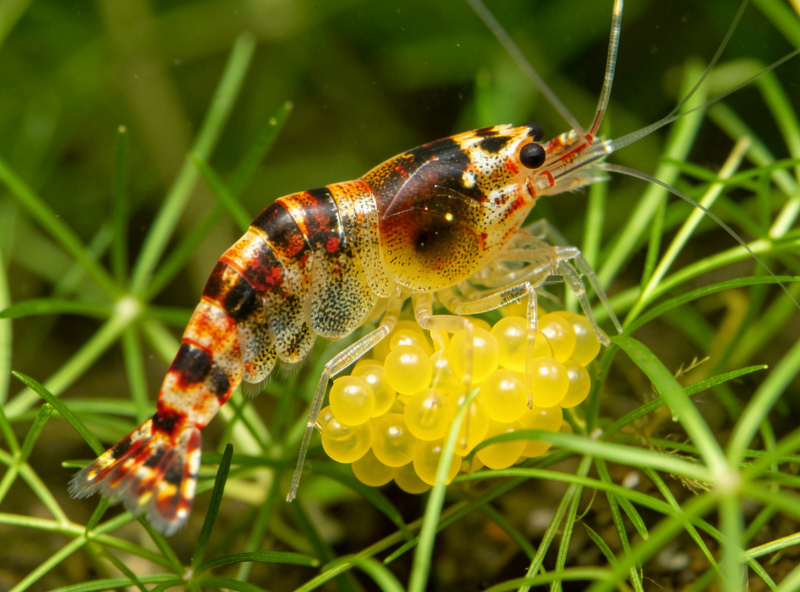
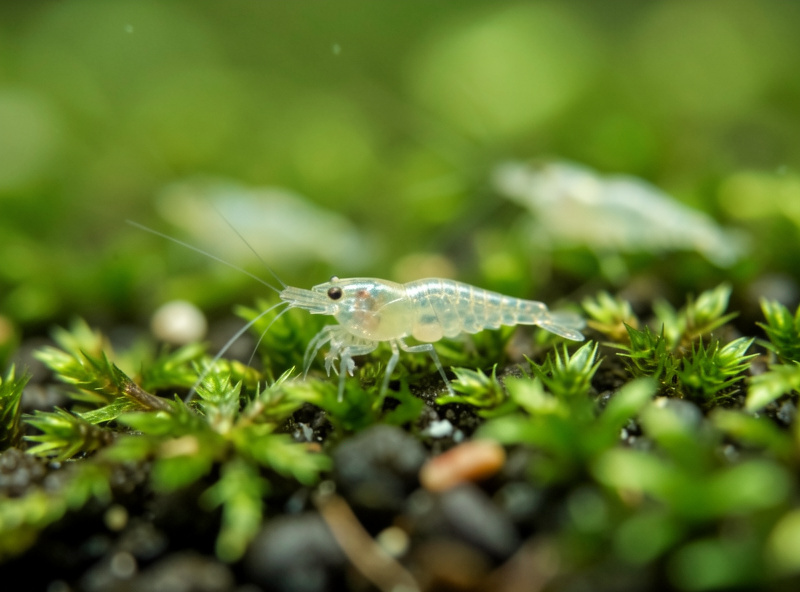
Cherry shrimp reach breeding age at around 3-4 months old, and from there a stable colony doubles roughly every 8-12 weeks. A female carries her 20-30 eggs (“berried”) for about 30 days, releasing fully-formed miniature shrimplets — there is no free-swimming larval stage, which is exactly why Neocaridina are so easy to breed compared to most aquarium animals.
That no-larval-stage detail is the whole reason cherries breed in a normal tank with no special setup: the babies are tiny copies of the adults that immediately start grazing biofilm. Compare that to fish or even Caridina shrimp, where survival rates and conditions get fussy. With cherries, if the adults are healthy and the water is stable, breeding happens on its own — you do not “make” them breed, you simply stop preventing it. The first berried female usually appears within weeks of a group settling in, and she is your single best confirmation that the water is genuinely right.
How Many Shrimp Will I End Up With?
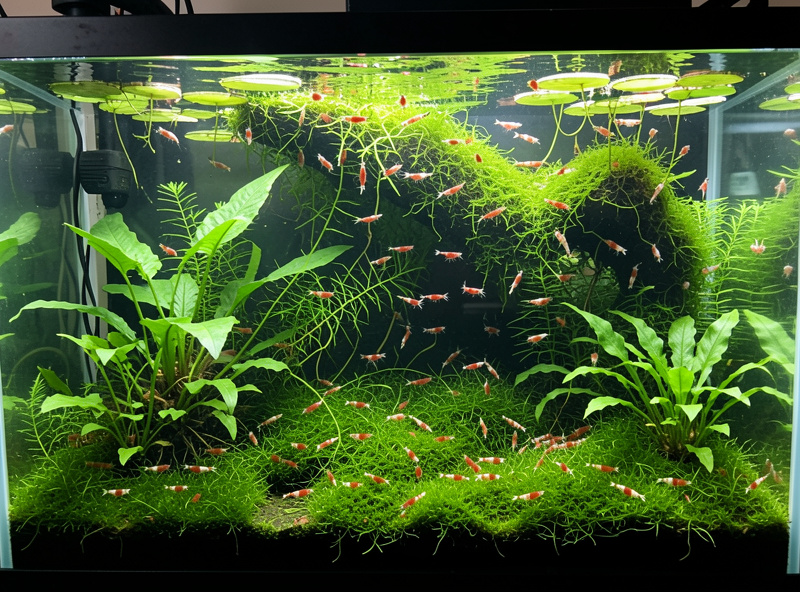
From ten starter shrimp in a stable nano tank, expect 50+ within six months and 100-200 within a year, after which the population plateaus at whatever the tank’s volume and food supply can sustain. The colony self-limits — it will not grow infinitely — and that ceiling is a feature, not a problem to fix.
In my roughly 20-litre colony tank the population settles around 150-200 visible adults and holds there, with births and natural deaths roughly balancing out. That is a healthy, mature colony. The mistake is trying to push past the natural ceiling by overfeeding to force faster breeding — all that does is spike nitrates and degrade the water, which slows breeding rather than speeding it. This is the same carrying-capacity logic I learned with hydroponic reservoirs: a system supports a population set by its volume and turnover, and fighting that just hurts water quality. If you genuinely want more shrimp than your tank holds, the answer is a second tank, not harder feeding.
What Speeds Up Cherry Shrimp Breeding?
The biggest accelerator is temperature: warmer water in the 76-78°F range speeds metabolism, maturation, and breeding — but at the cost of shorter lifespans and lower dissolved oxygen. Beyond temperature, the levers are stable parameters, a varied diet, and dense plant cover so shrimplets survive to adulthood.
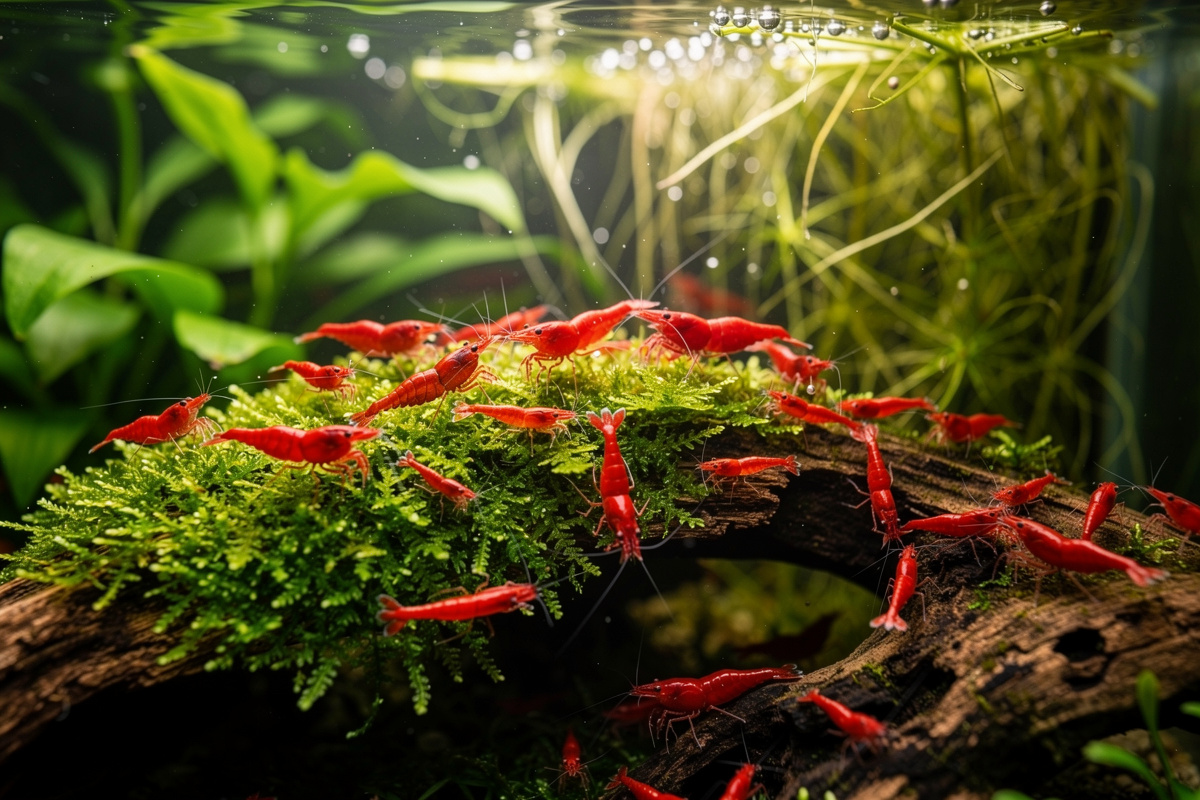
I deliberately run my colony cooler, around 72°F, because I would rather have a slower, longer-lived, more stable population than a fast burnout — but if you want maximum growth rate and accept the trade, nudging temperature up is the most direct tool. Diet matters too: shrimp fed a varied rotation of blanched vegetables, the occasional almond leaf, and a quality shrimp food breed more reliably than a colony living on flake scraps. There is a subtler benefit to good feeding, too: a well-conditioned female carries larger, healthier clutches and re-berries faster, so consistent nutrition compounds over generations into a noticeably faster-growing colony. The quiet hero, though, is plant cover. A tank stuffed with Java moss and floating plants is not decoration — it is a shrimplet nursery, giving the young somewhere to hide and endless biofilm to graze. The difference in survival between a bare tank and an overgrown one is dramatic: in open water, shrimplets are exposed and many simply do not make it; buried in moss, almost all of them grow out. That survival rate, far more than raw egg counts, is what determines how fast a real colony expands. A bag of Java moss is genuinely one of the best breeding investments you can make. My breeding tank is deliberately overgrown for exactly this reason.
As an Amazon Associate I earn from qualifying purchases.
Why Aren’t My Cherry Shrimp Breeding?
If healthy adult cherry shrimp are not breeding, the cause is almost always water instability, parameters out of the GH 6-8 / KH 2-4 band, or a tank that is too new for the colony to feel settled. Shrimp will not invest in breeding when conditions feel unstable — it is a survival response, not stubbornness.
Run the checklist before assuming anything is wrong: are GH, KH, and TDS in range and steady? Is the tank fully cycled with zero ammonia and nitrite? Are there both males and females (a group of ten almost guarantees both)? Is the water swinging from oversized or mismatched water changes? In my experience the answer is nearly always a stability problem — the routines in my nano tank stability guide fix more “non-breeding” colonies than any additive ever could. The other common cause is simply impatience: a freshly stocked tank can take a couple of months before the first berried female appears, especially if the shrimp were young when you got them. Get the chemistry right, covered in my cherry shrimp water parameters breakdown, then give it time. Breeding is the reward for stability, not something you can rush.
Frequently Asked Questions
How fast do cherry shrimp breed?
In a stable tank a cherry shrimp colony roughly doubles every 8-12 weeks. Shrimp reach breeding age at 3-4 months, females carry 20-30 eggs for about 30 days, and they re-berry quickly. Ten starters can pass 100 shrimp within a year.
How long are cherry shrimp pregnant?
A berried female carries her eggs for about 30 days before releasing fully-formed miniature shrimplets. There is no free-swimming larval stage, so the babies graze biofilm immediately, which is why cherry shrimp breed so easily in a normal planted tank.
How many cherry shrimp will 10 become?
From ten starters in a stable nano tank, expect 50+ within six months and 100-200 within a year, then the population plateaus at the tank’s carrying capacity. The colony self-limits to what its volume and food supply sustain.
What temperature makes cherry shrimp breed faster?
Warmer water around 76-78°F speeds metabolism and breeding, but shortens lifespans and lowers oxygen. Many keepers run cooler around 72°F for a slower, longer-lived, more stable colony. Stability matters more than chasing maximum speed.
Why won’t my cherry shrimp breed?
Healthy adults that won’t breed almost always face water instability, parameters outside GH 6-8 and KH 2-4, or a tank too new to feel settled. Confirm the cycle, check parameters are steady, ensure both sexes are present, and give a new tank time.
Further Reading
- Neocaridina Shrimp Care Guide — the complete hub on a thriving cherry shrimp colony.
- Cherry Shrimp Water Parameters — the stable numbers that breeding depends on.
- Shrimp Molting Problems — why a healthy molt cycle underpins a growing colony.
- Nano Tank Stability Guide — fixing the instability behind most non-breeding colonies.