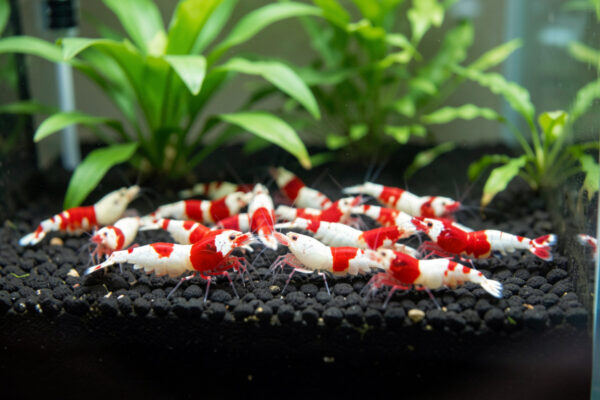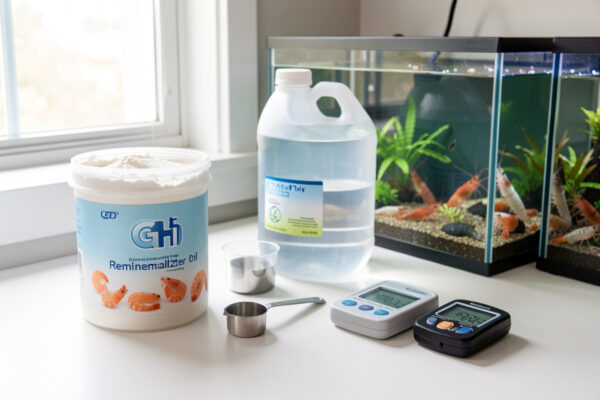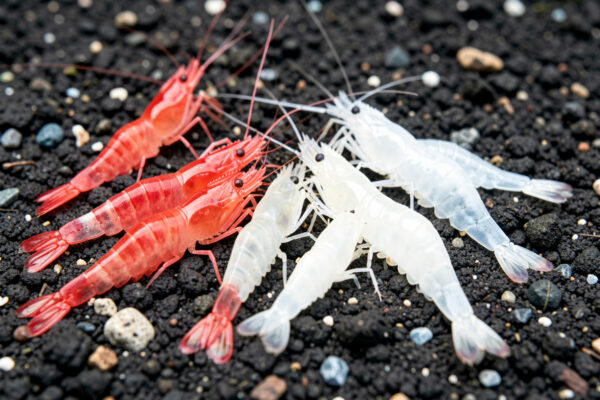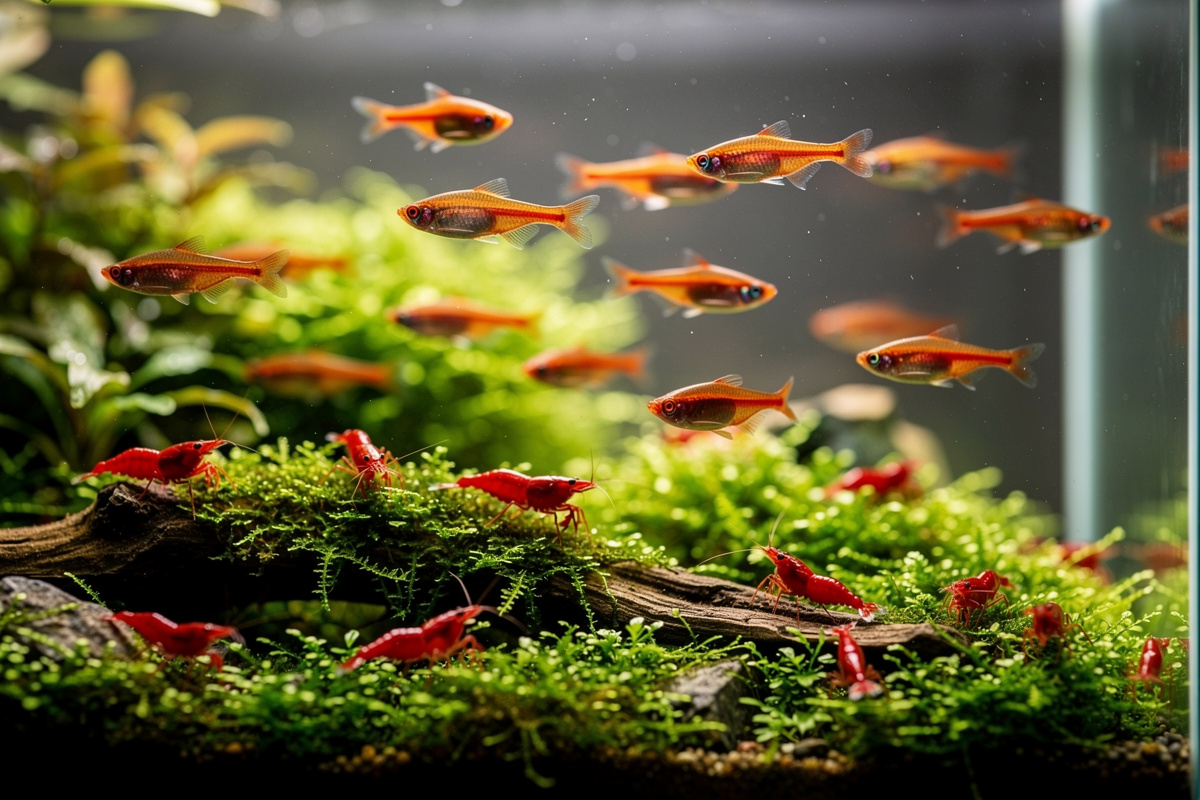
Keeping shrimp with fish is possible but always a compromise: almost any fish that fits a baby shrimp in its mouth will eat them, so a community tank means a surviving adult colony rather than a breeding one. The honest rule is that “shrimp-safe” fish are tolerated, not trusted, and you trade population growth for the look of a mixed tank.
I keep my own colony tank shrimp-only precisely so the shrimplets survive, but I understand the appeal of a planted community tank with a flash of fish above the shrimp. You can absolutely have that — as long as you go in clear-eyed about the trade rather than believing the fish-store promise that species X is “completely shrimp-safe.” Nothing with a mouth is. This guide gives you the real risk tiers and how to stack the deck, building on the stocking honesty in my Neocaridina shrimp care guide.
Can You Keep Shrimp and Fish Together?
Yes, you can keep cherry shrimp with small, peaceful fish — but the adults survive while most shrimplets get eaten, so the colony plateaus instead of growing. For a thriving, multiplying colony you need a dedicated shrimp-only tank. For a planted display where shrimp are part of the scene, a careful fish choice works with realistic expectations.
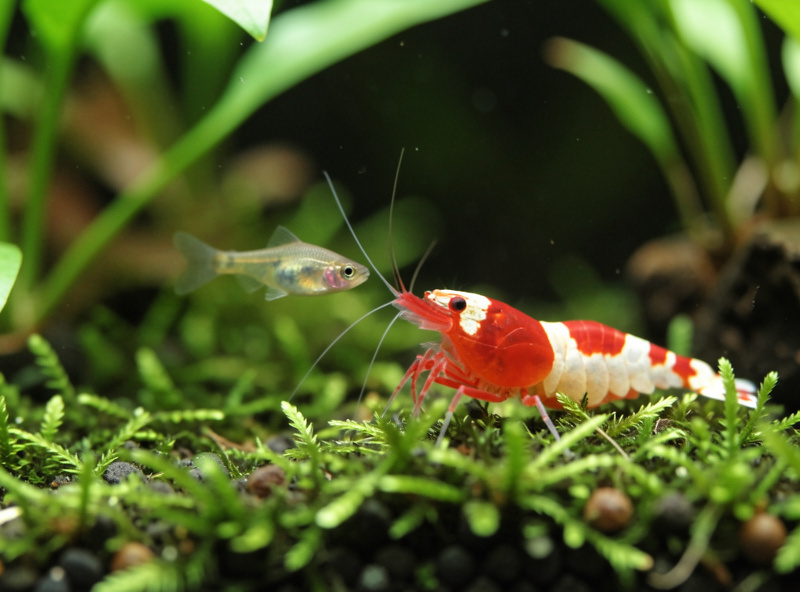
The deciding factor is mouth size and temperament, not the label on the tank at the store. A fish too small to eat an adult cherry shrimp will still happily pick off the 2mm shrimplets, which is where colony growth comes from. So the question is never really “will this fish kill my shrimp?” — adult cherries are usually fine with peaceful nano fish — it is “will this fish let my colony reproduce?” In a community tank the answer is mostly no, and that is fine if a stable display population is what you want. Just do not expect to watch the colony explode the way it does in a shrimp-only setup.
What Fish Are Lowest Risk With Shrimp?
The lowest-risk tankmates are small, peaceful, small-mouthed nano fish: chili rasboras, ember tetras, and pygmy corydoras top the list. Snails (Nerite, ramshorn) and other Neocaridina color morphs are the only genuinely zero-risk companions. The highest-risk are anything large-mouthed, territorial, or predatory.
| Tankmate | Risk to adults | Risk to shrimplets | Verdict |
|---|---|---|---|
| Snails (Nerite, ramshorn) | None | None | Ideal companion |
| Other Neocaridina | None | None | Same genus, safe |
| Chili rasbora | Very low | Moderate | Best fish option |
| Ember tetra | Low | Moderate-high | Workable, fewer babies |
| Pygmy corydoras | Low | Moderate | Bottom-dweller, watchable |
| Betta | Moderate | High | Risky, temperament-dependent |
| Angelfish / cichlids | High | Total | Avoid — shrimp are food |
Notice that even the “best” fish options carry a moderate shrimplet risk — there is no fish that lets a colony breed at full speed. If breeding is the goal, the table’s only true winners are the snails and other shrimp. The betta line deserves a flag: people add a betta to a shrimp tank constantly, and it is genuinely a gamble on that individual fish’s temperament — some ignore shrimp, some hunt them relentlessly, and you cannot know which you have until shrimp start disappearing.
How Do You Protect Shrimp in a Community Tank?
You protect shrimp by stacking the deck heavily in their favor: dense plant cover, well-fed fish, and choosing the smallest-mouthed peaceful species. Heavy Java moss and floating plants give shrimplets places to hide, and a fish that is never hungry hunts less. None of this makes a community tank breed like a colony tank — it just raises the survival floor.
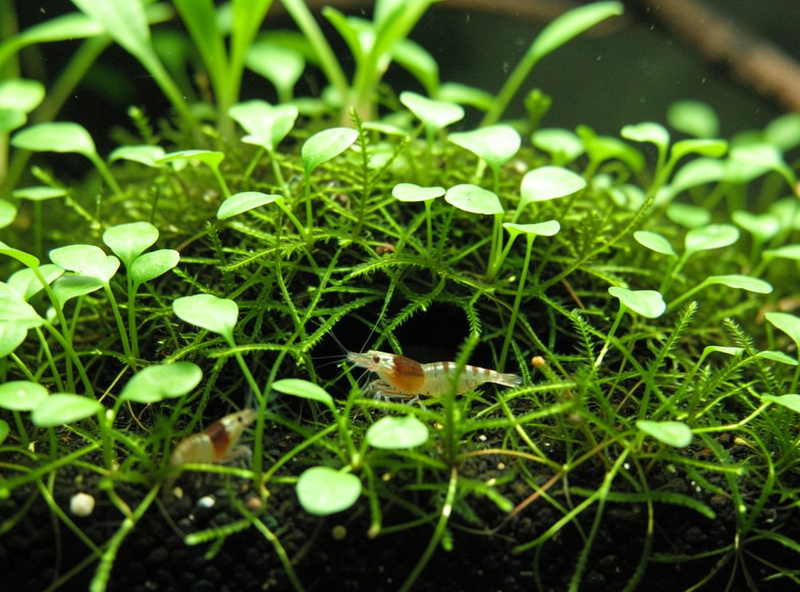
Plant cover is the single biggest lever. A tank stuffed with moss, Anubias, and floating plants gives shrimplets a maze of hiding spots where fish cannot follow, and some always make it to adulthood. I would not run any shrimp-and-fish tank without it — a bag of Java moss and some floating plants are cheap insurance for the colony. Keeping the fish well-fed matters too: a hungry fish hunts harder, so a consistent feeding routine genuinely reduces predation. And keep the bioload honest — adding fish raises the waste load on a small tank, which makes the stability problem harder; the math behind that is in my nano tank stability guide. Stack all of these and a community tank can hold a slowly self-sustaining shrimp population. None of it beats a shrimp-only tank for raw numbers.
As an Amazon Associate I earn from qualifying purchases.
Should You Keep Shrimp and Fish at All?
If your goal is a breeding colony, keep shrimp alone. If your goal is a beautiful planted display where shrimp add movement and cleanup alongside a few small fish, a community tank is a perfectly valid, ethical choice — provided you pick low-risk fish and accept the plateau. The wrong answer is adding shrimp to an unsuitable tank and calling it a colony.
This is where the ethical-keeper line matters to me. Dropping ten cherry shrimp into a tank with an angelfish or a hungry, large-mouthed community is not “keeping shrimp” — it is buying live food, and the shrimp suffer for a brief, doomed cameo. That is the one setup I will tell anyone to avoid outright. Everything else is a legitimate trade-off you get to make with open eyes: dedicated tank for a thriving colony, or a thoughtful community tank for a stable display. Both are good keeping. Decide which you actually want before you buy the livestock, and match the tank to the goal — the parameter and stability fundamentals from my cherry shrimp water parameters guide apply either way.
Frequently Asked Questions
Can you keep cherry shrimp with fish?
Yes, with small peaceful fish like chili rasboras or pygmy corydoras, the adult shrimp usually survive. However most shrimplets get eaten, so the colony plateaus instead of growing. For a breeding colony, keep shrimp in a dedicated shrimp-only tank.
What fish are safe with cherry shrimp?
The safest companions are snails and other Neocaridina shrimp, which pose zero risk. Among fish, small-mouthed peaceful species like chili rasboras and ember tetras are lowest risk to adults, though all fish will eat some shrimplets.
Will fish eat baby shrimp?
Almost always, yes. Even fish too small to eat adult cherry shrimp will pick off the 2mm shrimplets, which is where colony growth comes from. Dense moss and plant cover lets some shrimplets survive, but a community tank never breeds like a shrimp-only one.
Can bettas live with cherry shrimp?
It is a gamble on the individual betta’s temperament. Some ignore shrimp entirely while others hunt them relentlessly, and you cannot predict which until shrimp start disappearing. Heavy plant cover helps, but a betta is a moderate risk to adults and high risk to shrimplets.
How do I protect shrimp from fish?
Stack the deck with dense Java moss and floating plant cover, choose the smallest-mouthed peaceful fish, and keep the fish well-fed so they hunt less. None of this matches a shrimp-only tank for breeding, but it raises shrimplet survival in a community setup.
Do shrimp and fish need the same water?
Cherry shrimp want GH 6-8, KH 2-4 and stable parameters, so choose fish that thrive in that same hard, neutral-to-slightly-alkaline water. Many nano fish prefer softer water, so match species to the shrimp’s requirements rather than the other way around.
Related Guides
- Neocaridina Shrimp Care Guide — the full hub on keeping a cherry shrimp colony.
- Cherry Shrimp Water Parameters — the water both shrimp and any tankmates must share.
- How Fast Do Cherry Shrimp Breed? — the colony growth a community tank trades away.
- Nano Tank Stability Guide — the bioload math behind adding fish to small water.