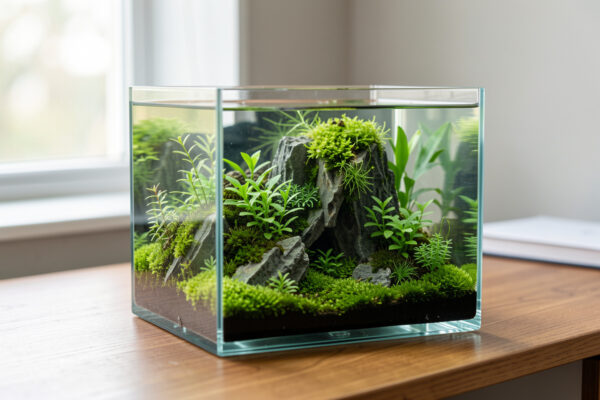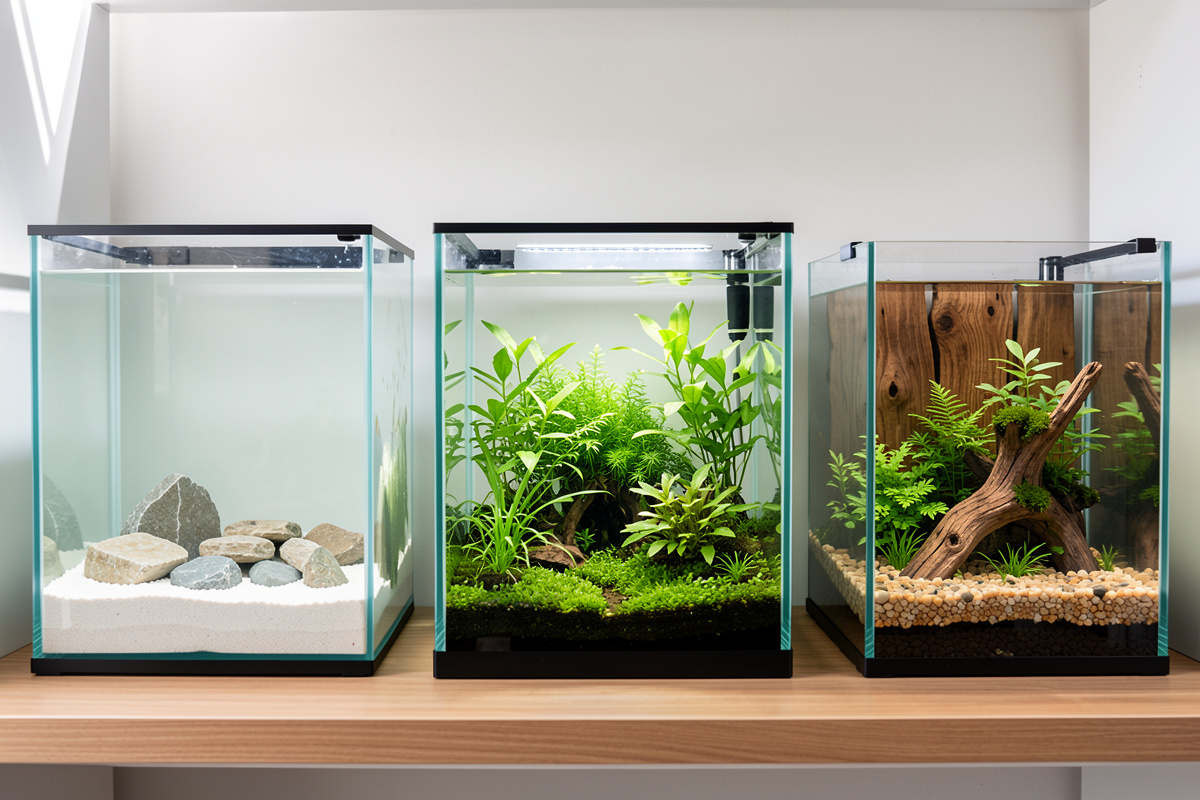
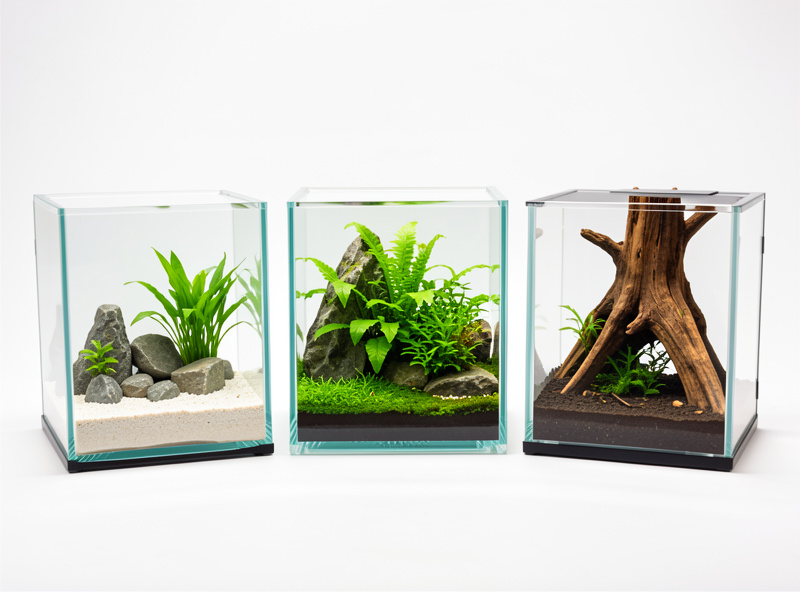
The aquascaping styles that work in a nano tank come down to three that translate to small water — the Iwagumi (stone-only minimalism), the nature or jungle style (plant-led and lush), and the wood-and-epiphyte scape (hardscape-led and low-maintenance). A fourth, the Dutch flower-bed style, almost never reads correctly in under 60 litres. Pick the style before you buy anything; it decides your hardscape, plants, and weekly workload.
I run two of these side by side on my rack — a high-tech 60L rimless I aquascaped by hand and a low-tech 20L that has held a shrimp colony for years — so this is a comparison from tanks I actually live with, not a catalogue. The honest theme throughout: every style is a different amount of work, and the prettiest ones cost the most in maintenance. Choose the one that matches the time you will actually give it.
Iwagumi: Stone, Space, and Discipline
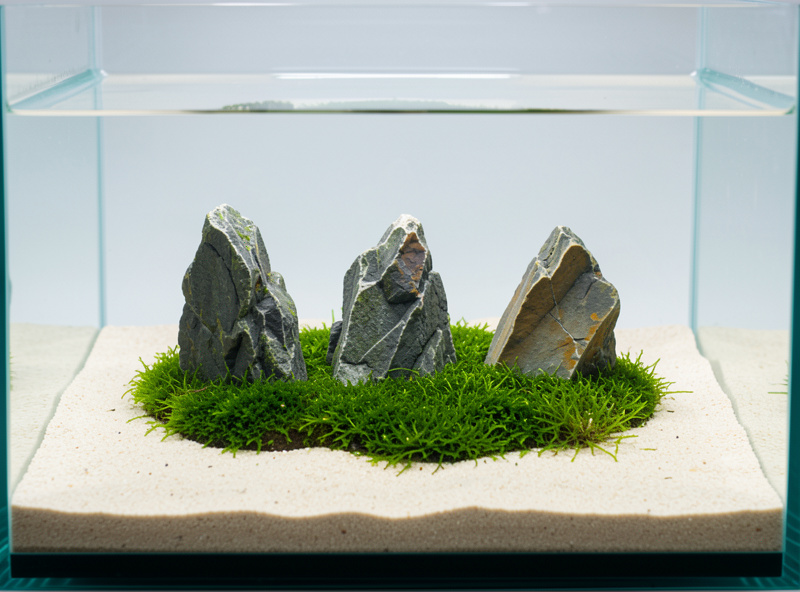
The Iwagumi is the minimalist style — stone only, no wood, usually a single carpeting plant across an open foreground. It is the most photographed nano style and the hardest to keep. Everything rides on stone placement and a flawless carpet, and a carpet means high light and, realistically, pressurised CO2. There is nowhere to hide a mistake because there is almost nothing in the tank but the mistake.
The classic Iwagumi uses an odd number of stones — three is standard — with one dominant “oyaishi” stone placed off-centre as the focal point and smaller stones supporting it in a single visual direction. In a nano the stones have to be proportionally large and few; the beginner error is too many small rocks that read as gravel. If you want the serene, mountain-valley look and you are willing to trim a carpet weekly and run CO2, the Iwagumi is the most rewarding style there is. If you want low effort, skip it — a neglected Iwagumi becomes an algae-covered carpet faster than any other scape.
Nature / Jungle Style: Lush and Forgiving-ish
The nature style aims to recreate a real landscape — a forest floor, a riverbank, a hillside — with a mix of hardscape and many plant species grown in layered, organic profusion. The jungle variant takes it further: dense, slightly wild, equipment hidden behind growth. This is the most flexible style for a nano because plants forgive what stone exposes; a slightly off rock disappears once moss and stems grow around it.
It still asks for work. A nature scape uses more species, which means more trimming, more replanting of clippings, and more attention to keeping faster plants from smothering slower ones. CO2 helps but is not mandatory — I have run a perfectly good low-tech nature nano on epiphytes and undemanding stems. The skill here is restraint in species count: in a nano, three or four plants placed in zones look intentional, while eight species look like a salad. Match plant height to zone and the scape gains the depth that makes the nature style sing — the full method is in my foreground, midground and background planting guide.
Wood-and-Epiphyte: The Low-Maintenance Workhorse
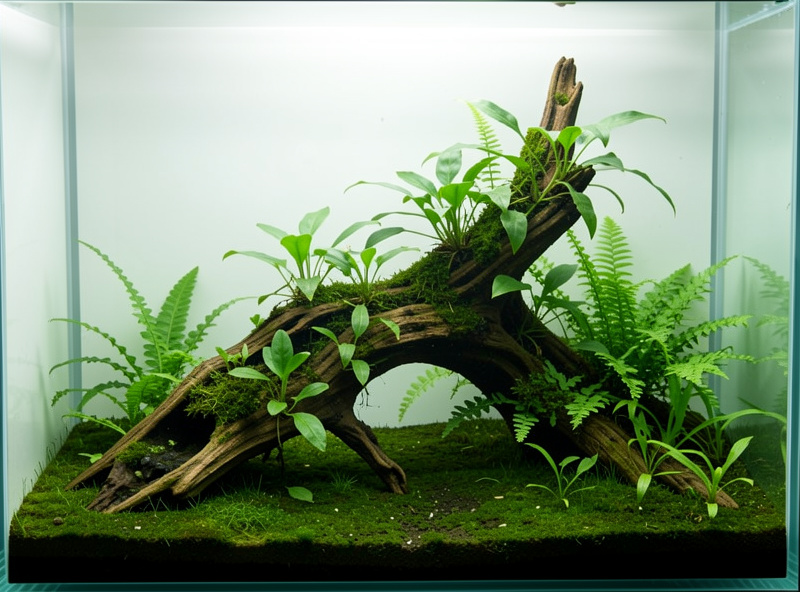
This is the style I recommend to most people and the one I lean on when I want a tank that looks finished and does not run my life. It is built around a strong piece of wood — spider wood, Malaysian driftwood, manzanita — dressed with slow epiphytes that attach to the hardscape: Anubias, Bucephalandra, Java fern, Christmas moss. No carpet, no CO2, modest light, almost no trimming.
The reason it works so well in a nano is that epiphytes hold their scale. Anubias nana ‘petite’ stays small forever; it never outgrows a 20-litre layout the way a stem plant does. Because the plants live on the wood and not in the substrate, you can use shallow inert substrate and never worry about root feeding. It looks good from week one and better at year two. The trade-off is that it is calmer than a lush nature scape — fewer colours, slower change. For a shrimp tank or a busy keeper, that calm is the feature. This is the backbone of my low-maintenance nano aquascaping approach.
Why Dutch Style Rarely Works in a Nano
The Dutch style is the flower-bed approach: dense terraces of many stem-plant species arranged by colour and texture, no hardscape, ruler-straight “streets” between groups. It is stunning in a long, tall tank — and it fails in a nano because it needs length to lay out the streets and many species to create the colour contrast that defines it. Cram that into 20 or 30 litres and it reads as crowded, not composed.
It is also the highest-maintenance style of all: a wall of fast stem plants means constant trimming, heavy dosing, CO2, and strong light. If you love stem plants, a small Dutch-influenced scape can work in a larger nano (45-60 litres) with a disciplined three-or-four-species palette, but a true Dutch layout wants a bigger footprint than nano keeping offers. I mention it mainly so you do not chase it and blame yourself when the proportions never click.
Comparing the Styles at Nano Scale
Here is how the four stack up for a small tank. The single most useful column is maintenance — be honest with yourself about it, because the gap between an Iwagumi and a wood-and-epiphyte scape is the gap between a weekly commitment and a monthly glance.
| Style | Hardscape | Plants | CO2 | Maintenance | Best For |
|---|---|---|---|---|---|
| Iwagumi | Stone only | Single carpet | Usually required | High | Display, patient keepers |
| Nature / jungle | Rock + wood | Mixed, layered | Helpful | Medium-high | Planted-tank hobbyists |
| Wood & epiphyte | Wood-led | Slow epiphytes | Not needed | Low | Beginners, shrimp, busy keepers |
| Dutch | None | Many stems | Required | Very high | Larger nanos, stem-plant lovers |
How to Choose Your Style
Work backward from two answers: how much time will you genuinely give the tank each week, and what livestock do you want? A shrimp colony pairs beautifully with a calm wood-and-epiphyte scape and inert hardscape; a showpiece display you will fuss over suits an Iwagumi or a lush nature scape with CO2. The single most common regret I hear is picking the style from a photo instead of from an honest look at the calendar.
Whatever you choose, the principles underneath are the same — asymmetry, a clear focal point, and protected negative space — and they all start with hardscape, not plants. Once the style is set, the next decision is the rock and wood that build its skeleton. Everything flows from there, which is why I plan the whole thing dry before a drop of water goes in.
Adapting a Style to Your Nano’s Shape
The same style behaves differently in a cube than in a long, low tank, and ignoring the footprint is how good intentions end up cramped. A cube — common in nanos at 20 to 30 litres — has depth front-to-back, which favours a single bold focal point you view almost head-on: an Iwagumi main stone or one dramatic piece of wood angled toward the front corner. The depth lets you build a real slope and stage hardscape in layers, so a cube rewards the nature and wood-and-epiphyte styles too.
A long, shallow nano — the shoebox shape — gives you width to work with and is the only nano footprint where a restrained Dutch or a multi-island nature scape has a chance. Use the length to separate two focal points with negative space between them, or to run a single ridgeline of stone across the tank. What a long tank lacks is height, so tall background stems will hit the surface fast; lean on midground epiphytes and keep the tall material to one end. Whatever the shape, measure it before you shop. I sketch the footprint to scale and place the focal point a third of the way in on paper first — it costs nothing to move a rock on a sketch, and a weekend to move it after you have planted around it. That planning step is its own discipline, covered in the scape planning guide.
Frequently Asked Questions
What is the easiest aquascaping style for a nano tank?
The wood-and-epiphyte style is easiest. A strong piece of wood dressed with slow epiphytes like Anubias and Java fern needs no CO2, modest light, and almost no trimming, yet looks finished from the first week and only improves over time.
Can you do an Iwagumi in a nano tank?
Yes, and nanos are a classic Iwagumi size, but it is the hardest style. It relies on flawless stone placement and a carpet, which realistically means high light and pressurised CO2 plus weekly trimming. Skip it if you want low maintenance.
Why does the Dutch style not work in small tanks?
Dutch scaping needs length to lay out its plant streets and many species for colour contrast. In under 60 litres it reads as crowded rather than composed, and the wall of stem plants demands very high maintenance, CO2, and dosing.
Do I need CO2 for a nature-style nano?
No. CO2 helps a lush nature scape grow faster and denser, but a low-tech nature nano built on epiphytes and undemanding stems works well. The key is restraint in species count and matching plant height to depth zones.
How many plant species should a nano scape have?
Fewer than you think. In a nano, three or four well-placed species read as intentional, while eight or more look like a salad. Restraint in species count is one of the biggest differences between a designed scape and a green mess.