Cherry shrimp water parameters break down to five numbers: GH 6-8, KH 2-4, TDS 150-250 ppm, pH 6.8-7.6, and 70-76°F. Hit that band, keep it steady, and Neocaridina thrive. The single most important rule is that stability beats any perfect target — a flat line at slightly-off numbers outlives a tank that yo-yos through the ideal range.
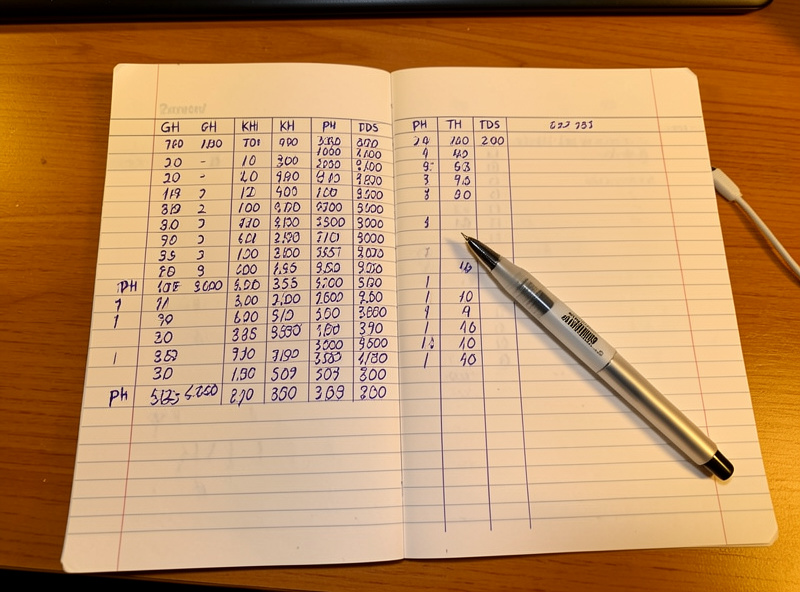
I keep these numbers in a parameter log the same way I logged nutrient reservoirs in hydroponics, because the lesson crosses over exactly: you cannot manage what you do not measure. Below I break down each parameter, what it actually controls, how to test it without getting fooled, and the swings that kill colonies. This is the detail layer under my complete Neocaridina shrimp care guide — start there for the full picture, come here for the chemistry.
One thing to settle before parameters even matter: the tank has to be cycled. Every reading below assumes ammonia and nitrite already read zero. If yours do not, fix that first with my aquarium nitrogen cycle guide — no parameter tuning saves a colony in an uncycled tank. And because small volumes swing fastest, the routines in my nano tank stability guide are what keep these numbers flat once you have dialed them in.
What Is the Ideal GH for Cherry Shrimp?
The ideal general hardness for cherry shrimp is GH 6-8 dGH. GH measures dissolved calcium and magnesium — the exact minerals a shrimp pulls from the water to build new exoskeleton every time it molts. Too low and molts fail; too high and the shell hardens awkwardly. GH is the parameter most directly tied to whether your colony grows.
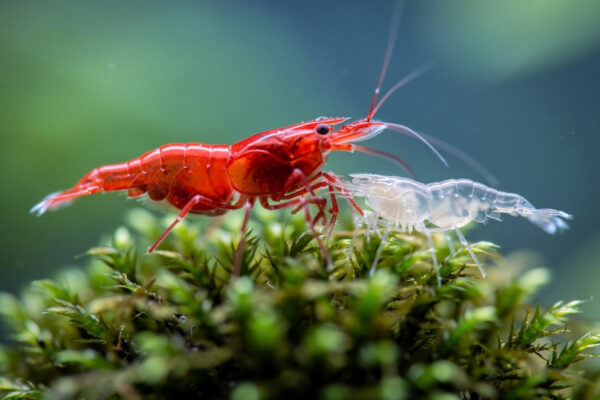
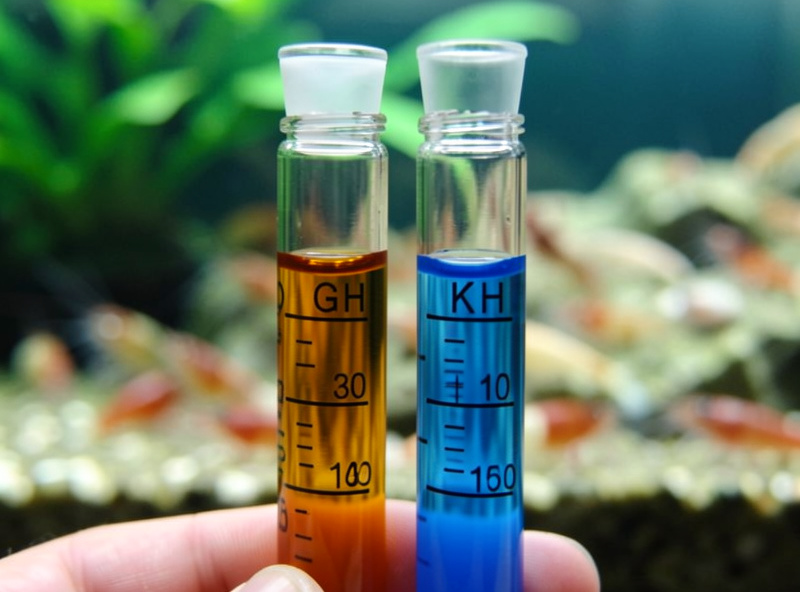
When keepers report “white ring of death” molting failures, GH is usually the first number I check. A GH below about 4 starves the molt; the shrimp cannot complete the new shell and dies mid-process. The fix is never a panic additive — it is bringing GH into the 6-8 band with a proper remineralizer or harder source water and then holding it there. I test GH with a liquid drop kit, counting drops to the color change, because TDS alone cannot tell you whether your dissolved solids are the right minerals. A GH and KH test kit is the one purchase I would not run a shrimp tank without.
As an Amazon Associate I earn from qualifying purchases.
What KH Do Cherry Shrimp Need?
Cherry shrimp need KH 2-4 dKH. Carbonate hardness is the buffer that holds your pH steady — it is the chemistry that absorbs acids before they can crash the pH. A tank with KH at or near zero is a tank one bad night away from a pH plummet that kills the whole colony at once.
KH is the parameter beginners ignore until it bites them. They chase a target pH directly, not realizing that without KH buffer the pH is unanchored and will swing with every feeding, every CO2 fluctuation, every bit of decaying matter. I keep KH at 3 in my colony tank and check it whenever I notice pH drifting. If your KH is testing zero, that is the real problem behind “random” pH swings — raise KH gently into the 2-4 band and the pH stabilizes on its own. Never try to fix a low pH by adding pH-down chemicals to a zero-KH tank; you are treating the symptom and the swing will only get worse.
What TDS Should a Cherry Shrimp Tank Be?
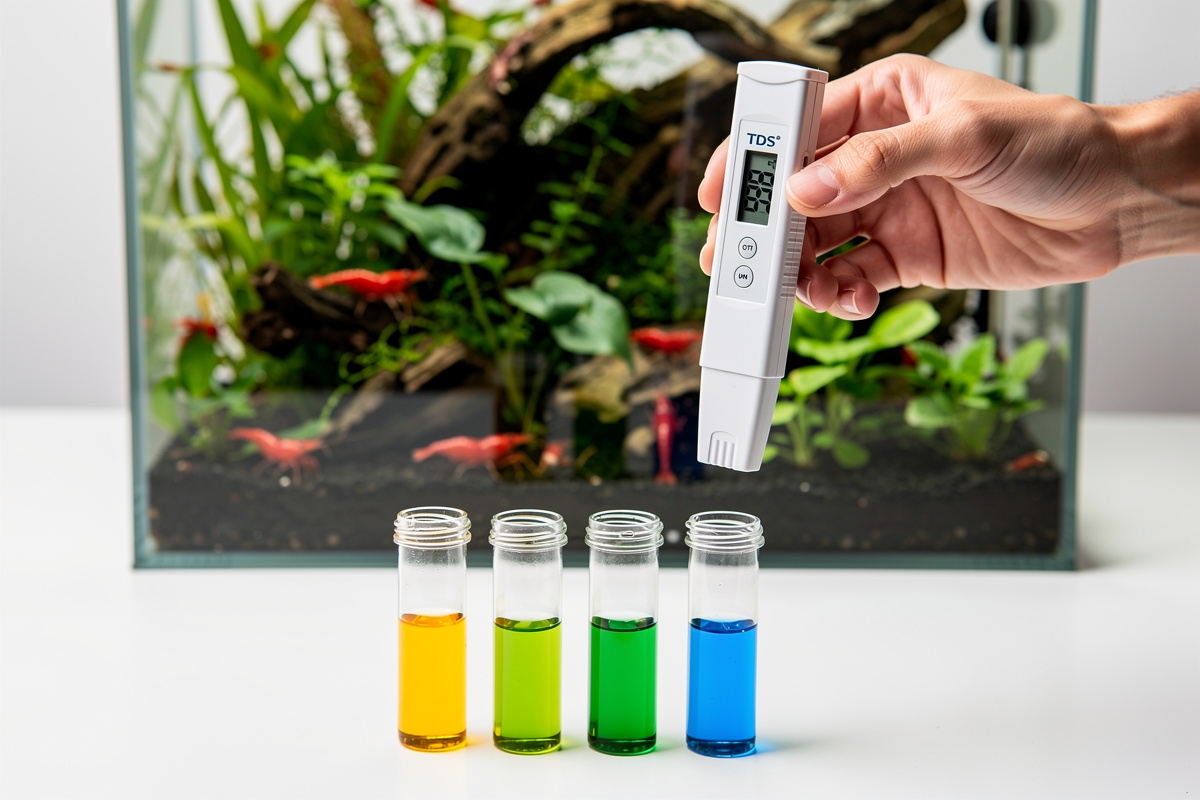
Cherry shrimp do well at TDS 150-250 ppm. Total dissolved solids is the sum of everything dissolved in the water, and it is the fastest daily stability check you have. A TDS pen reads in two seconds; a flat TDS line week over week tells you nothing dangerous is accumulating or leaching.
The catch with TDS is that it is a quantity, not an identity — it tells you how much is dissolved, not what. Two tanks at 200 TDS can have completely different GH and KH. That is why I treat TDS as my early-warning trend line and the liquid GH/KH kits as my diagnostic tools. A creeping TDS often means evaporation has concentrated minerals (you topped off with the wrong water) or something is decaying. A dropping TDS can mean shrimp are stripping minerals faster than your water changes replace them. A calibrated TDS meter pen is cheap and it is the instrument I read most often.
Cherry Shrimp Parameter Comparison Table
Here is every parameter at a glance with its band, its job, and the swing that does damage. Print it, tape it by the tank, and check against it before you ever add a chemical.
| Parameter | Target | Controls | Dangerous swing |
|---|---|---|---|
| GH | 6-8 dGH | Shell building at molt | Below 4 = failed molts |
| KH | 2-4 dKH | pH buffer / stability | Near 0 = pH crash risk |
| TDS | 150-250 ppm | Overall dissolved-solid trend | Sudden rise or fall of 50+ |
| pH | 6.8-7.6 | General acidity | Fast moves more than slow drift |
| Temperature | 70-76°F | Metabolism / breeding rate | Spikes above 80°F |
| Ammonia | 0 ppm | Toxicity | Any reading is an emergency |
| Nitrite | 0 ppm | Toxicity | Any reading is an emergency |
How Often Should You Test Shrimp Water?
Test TDS daily (it takes seconds), and run the full liquid panel — GH, KH, pH, ammonia, nitrite, nitrate — weekly on an established tank, or every 2-3 days on a new one. The point is not the schedule for its own sake; it is building a baseline so a drift jumps out at you before it becomes a death.
An established, stable shrimp tank genuinely needs little hands-on testing once you know its rhythm. My mature colony tank gets a daily TDS glance and a proper weekly panel, and I only escalate when a number moves. A new tank, or any tank after a change, gets tested far more often because that is when things drift. The full liquid master liquid test kit covers the toxic trio plus pH; pair it with the GH/KH kit and you can diagnose almost any shrimp-tank problem from the readings alone. Crucially, if your shrimp look unwell, the first move is always to test — not to dose. Cherry shrimp ailments are overwhelmingly a chemistry story, and genuine disease is specialist territory, not something you treat by guessing with medications.
Frequently Asked Questions
What is the best GH for cherry shrimp?
GH 6-8 dGH is ideal for Neocaridina cherry shrimp. General hardness supplies the calcium and magnesium they use to build new shell at every molt. Below GH 4, molts begin to fail, which is a leading cause of shrimp deaths in soft water.
What TDS is best for cherry shrimp?
Aim for TDS 150-250 ppm and, above all, keep it stable. TDS is a fast daily proxy for overall water consistency but does not identify which minerals are present, so confirm GH and KH with liquid tests rather than relying on TDS alone.
Why is KH important for shrimp?
KH 2-4 dKH buffers the water and holds pH steady. A tank with near-zero KH can suffer a sudden pH crash that kills a whole colony. Fixing low pH by adding acids to a zero-KH tank makes swings worse, not better.
Can I use tap water for cherry shrimp?
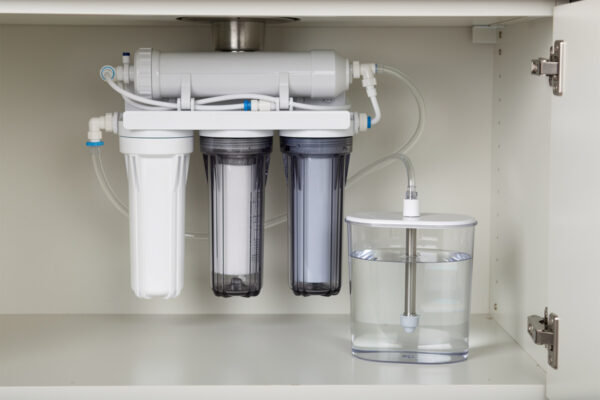
Often yes, if your dechlorinated tap already sits near GH 6-8 and KH 2-4. Test your tap first. If it is too hard, too soft, or variable, remineralized RO water gives the steadiness Neocaridina need far more than any exact target value.
How do I raise GH for shrimp?
Use a shrimp-specific GH/KH remineralizer mixed into the water before it enters the tank, then test to the 6-8 band before adding it. Never add minerals directly to the tank in a rush; raise hardness gradually so the colony is not shocked by a fast swing.
How often should I test shrimp water parameters?
Glance at TDS daily and run a full liquid panel weekly on an established tank, or every 2-3 days on a new one. The goal is a baseline so any drift in GH, KH, ammonia or nitrite is caught early, before it harms the colony.
Related Reading
- Neocaridina Shrimp Care: The Complete Cherry Shrimp Guide — the full hub covering cycling, breeding, tankmates and gear.
- The Aquarium Nitrogen Cycle, Honestly — the foundation every parameter assumes is already in place.
- Nano Tank Stability Guide — why small volumes swing fastest and how to hold a flat line.