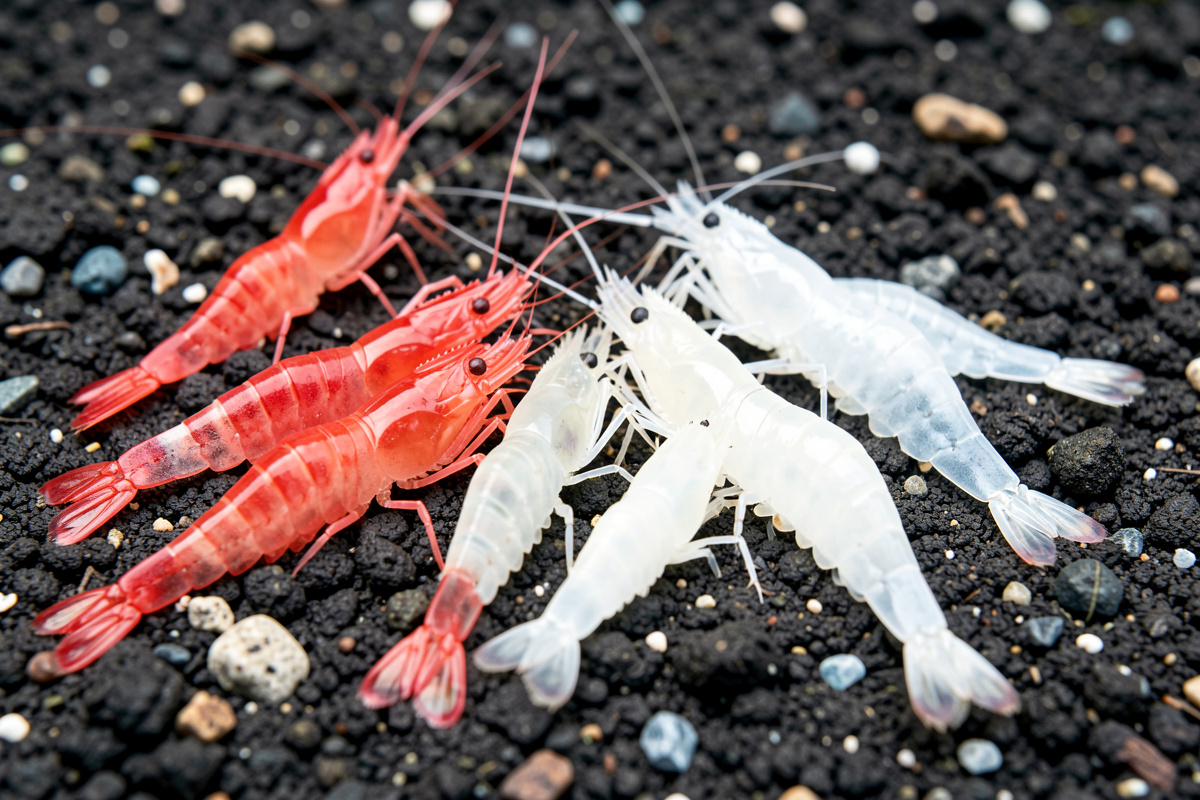
Shrimp grading is a system for ranking ornamental shrimp by the coverage, opacity and pattern of their colour — not by health or hardiness. A low-grade Crystal Red shows thin, see-through bands; a high-grade one shows thick, chalk-opaque white in a clean named pattern, and the price can differ tenfold for shrimp that are equally easy to keep. Understanding the grade ladder is mostly about understanding what you are paying for.
I keep this in honest perspective: grading is a market and breeder language built on top of genetics, and the vocabulary is public, well-documented hobby consensus rather than anything I invented at my own bench. What I can tell you plainly is that grade is genetic and cosmetic — a C-grade shrimp is not a weaker animal than an SSS, just a less decorated one. Here is how the main grading systems actually work so you can read a price list without being mystified by it.
What Grade Measures — and What It Does Not
Grade measures appearance: how much of the body is coloured, how opaque that colour is, and how clean the pattern. It does not measure health, hardiness, or how easy the shrimp is to keep. This is the single most important thing a buyer can understand, because it means a beginner is not buying a more fragile animal by choosing a low grade — a low-grade Crystal Red wants the exact same soft, RO-built water as a top-grade one, covered in my Crystal Red care guide.
Because grade is genetic, it also cannot be improved by water tricks or feeding. A high-grade shrimp comes from breeding high-grade parents, which is why graded stock costs what it does — you are buying genetics, not a temporary look. That genetic basis is exactly why breeders keep lines separate and cull carefully, a process I touch on in the Caridina breeding guide. For a beginner, the practical takeaway is freeing: buy the grade you like at the price you can afford, and keep it with the same care either way.
Where the Grading Habit Came From
The whole grading culture grew out of the Crystal Red itself. The shrimp began as a red mutation of the ordinary black bee shrimp (Caridina cantonensis), fixed and bred up in Japan in the 1990s, and as keepers selected for more and cleaner white, they needed a shared way to describe what they were producing. The C-to-SSS ladder and the pattern names are that language — a hobby standardising on terms so a shrimp could be described and priced consistently between breeder and buyer.
That origin is worth knowing because it explains the system’s logic. Grading was never about welfare or hardiness; it was about cataloguing the results of selective breeding for appearance. Every later system — Taiwan Bee colour names, cherry shrimp intensity grades — copied the same idea onto a different trait. Once you see grading as a breeder’s descriptive shorthand rather than a quality-of-life rating, the terms stop feeling like gatekeeping and start working as the useful map they were meant to be.
The Crystal Red and Crystal Black Grade Ladder
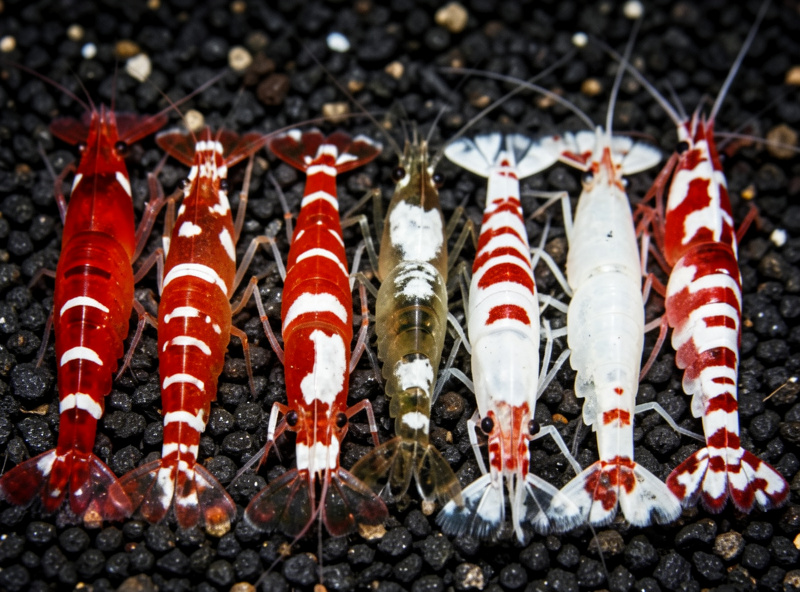
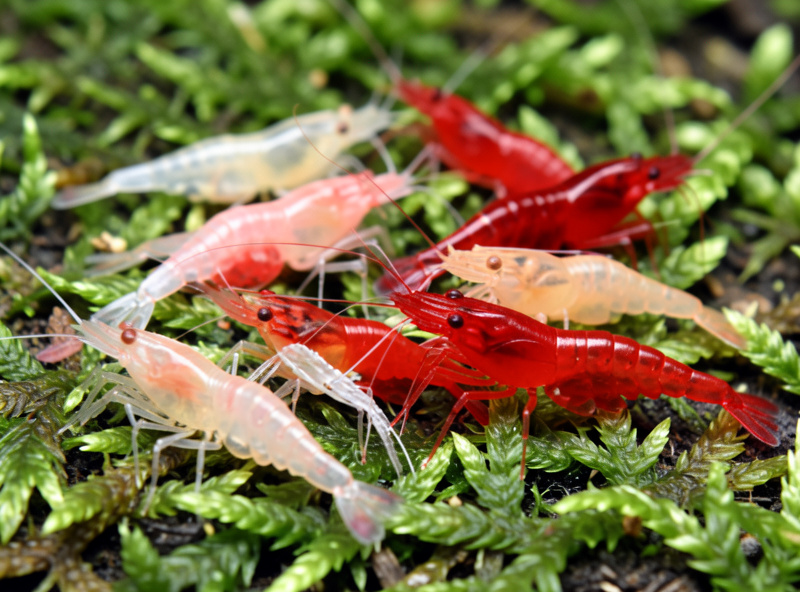
Crystal Reds and Crystal Blacks (the same shrimp in red-white and black-white) use the most established grading ladder in the hobby. It runs from low grades defined by sparse, translucent white up to high grades defined by heavy, opaque white in named patterns. The table lays out the common rungs.
| Grade | White coverage | Typical pattern name |
|---|---|---|
| C (lowest) | Minimal, translucent | Mostly red/black, thin white |
| B | More white, still thin | Banded |
| A | Solid bands | Clean banding |
| S | Heavy white | Tiger-tooth, Crown |
| SS | Dominant white | Hinomaru (red dot on white back) |
| SSS (highest) | Mostly opaque white | Mosura, flower-head |
Reading up the ladder, two things increase together: the proportion of white and how opaque (chalky rather than glassy) that white is. The named patterns at the top — Hinomaru for a single red dot on a white back, Mosura for a near-all-white shrimp with colour only on the head and saddle, Crown and tiger-tooth for specific band shapes — are just labels for the most prized white distributions. A “no-entry” describes a Hinomaru whose red dot has no white breaking into it, a particularly clean look. None of these terms is mysterious once you know they are all describing the same thing: where the opaque white sits.
Taiwan Bee Grades: A Different Vocabulary
Taiwan Bees descend from the same Caridina cantonensis line but are bred for solid, saturated colour rather than red-and-white banding, so they use their own names instead of the C-to-SSS ladder. The grading here is about depth and coverage of a solid colour. Common types include King Kong and Black King Kong (deep solid black), Panda (black and white in panda blocks), Wine Red and Red Ruby (deep solid red), and Blue Bolt and Shadow Panda on the blue side. A “full-body” or “extreme” version of any of these — where the solid colour covers the whole shrimp with no fading — sits at the top of its type.
Taiwan Bees are genetically more complex than standard Crystals, involving recessive traits, which is why they command higher prices and why breeders treat them as a serious project. For care they are the fussiest Caridina — the same soft, RO-built water as Crystal Reds but held even more tightly, often on RO/DI water as covered in my RO water guide. The grade names tell you the look; the care requirement is uniformly demanding regardless of which Taiwan Bee you choose.
Why High Grades Cost So Much
The price gap between a C-grade and an SSS Crystal Red, or a standard bee and an extreme Black King Kong, is not arbitrary markup — it reflects how hard the genetics are to produce and hold. High grades are recessive-leaning: breed two top-grade shrimp and you still throw a spread of lower-grade offspring that have to be sorted out, so every premium animal sits on top of a much larger pile of culls the breeder raised and did not sell at that price. You are paying for the selection work, not just the shrimp in the bag.
That economics explains a few things buyers notice. Why a single high-grade Taiwan Bee can cost more than a whole starter group of cherries — the breeding pyramid behind it is steep. Why grades from a serious breeder hold up better than bargain “high-grade” shrimp from an unknown source — an established line breeds truer, so more of its offspring stay near the parent grade. And why a colony you breed yourself slowly drifts toward lower grades unless you cull actively, because without selection the recessive premium traits get diluted generation by generation. None of this changes the care, but all of it changes the price, and knowing it stops you overpaying for a grade claim that the genetics behind it will not actually hold.
Tigers and Other Caridina
Tiger shrimp are graded far more loosely — there is no formal letter ladder, just a general sense of colour intensity and clarity of striping. A Blue Tiger with deeper blue and crisper stripes, or an Orange-Eye Blue Tiger with more vivid eyes, is considered higher quality, but it is a softer, less codified scale than the Crystal Red ladder. My Tiger shrimp guide covers the varieties. The practical point is that with Tigers you are mostly judging by eye rather than buying to a named grade.
Neocaridina Have Grades Too
Grading is not only a Caridina thing — cherry shrimp use their own intensity ladder, even if it is less formal. It runs roughly from plain Cherry (patchy, translucent red) up through Sakura (more solid red), Fire Red (deep red over most of the body), Painted Fire Red (opaque red including the legs), to lines like Bloody Mary. As with Caridina, the ladder measures colour coverage and opacity, not hardiness, and the same genetics-not-tricks rule applies. My Neocaridina care guide and culling guide cover how keepers hold and improve those grades in a colony. If you want the broader context for all of this, the Caridina care hub ties the grading, water and species pieces together.
How to Use Grading as a Buyer
Grading exists to set price, so use it that way and nothing more. Decide the look you want, decide what you will spend, and buy the grade that meets both — knowing the shrimp will need identical care whatever the grade. If you are learning the soft-water routine, a lower grade is the smart place to make your early mistakes, because losing a cheap shrimp to a parameter wobble teaches the same lesson as losing an expensive one without the sting. Step up in grade once your water is locked and logged.
One caution worth repeating: grade is fragile in a mixed tank. Crossbreeding Caridina with Neocaridina, or mixing distinct lines, produces gradeless offspring that are worth little to anyone, so any grade you pay for is only protected by keeping one clean line per tank. The grade on the price tag reflects generations of careful breeding — respect that by not undoing it in a community tank. Beyond price, grading is simply a shared language for describing beautiful shrimp, and once you can read it, the whole market stops looking like jargon and starts looking like a menu.