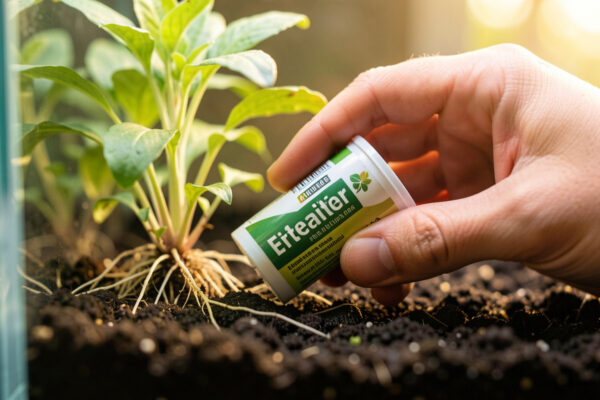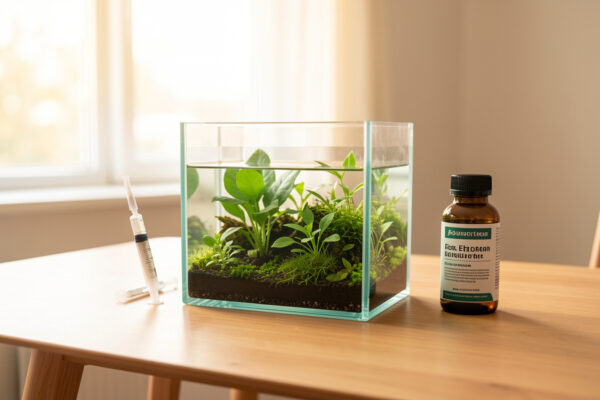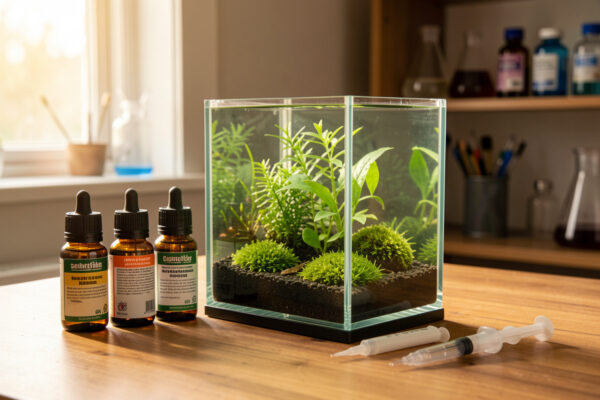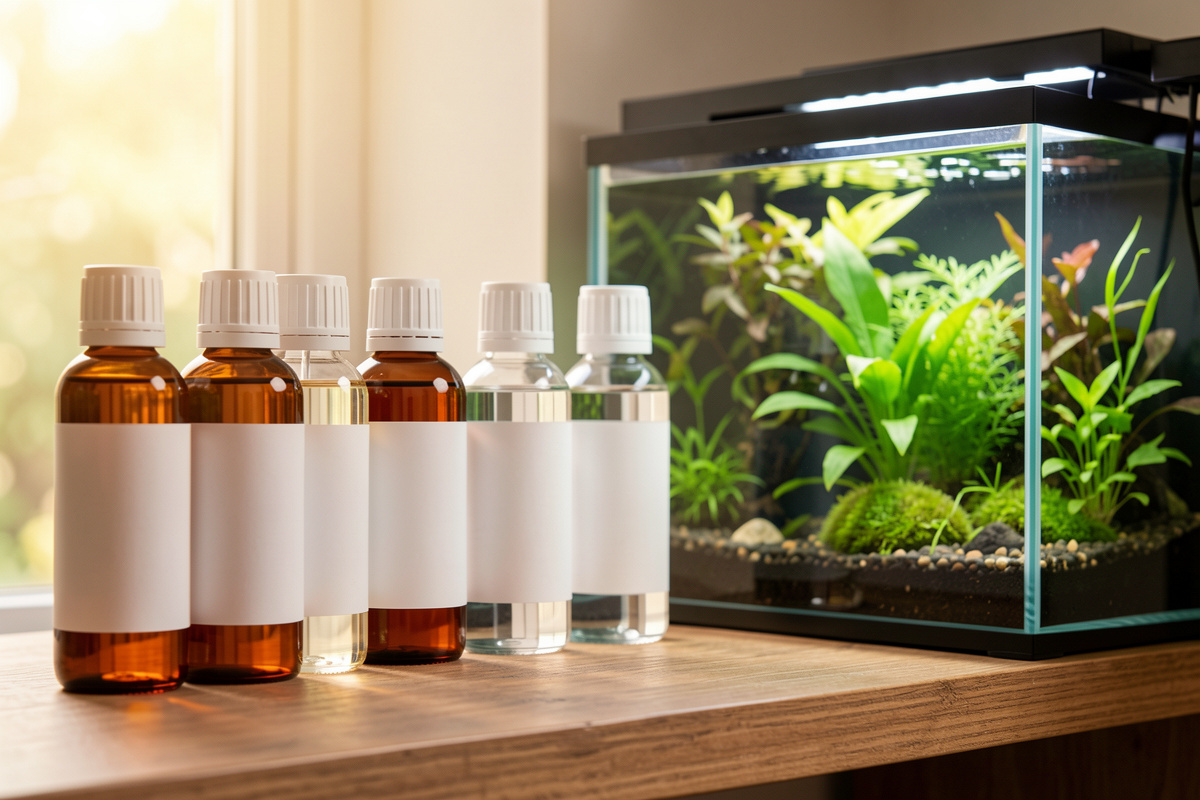
The best all-in-one aquarium fertilizer is the one whose nitrogen level matches your tank’s stocking and light. For most planted nanos that means a nitrogen-forward liquid on a low-tech tank and a concentrated macro-plus-micro blend on a high-tech one. I run three different bottles across four tanks, and the choice comes down to one number: how much nitrogen the tank actually needs.
“All-in-one” gets slapped on bottles that aren’t. A true all-in-one carries macros — nitrogen, phosphorus, potassium — and the trace micros in a single dose. Plenty of famous bottles are trace-only supplements wearing the label, and if you dose one expecting it to feed a hungry stem tank, you’ll watch the plants pale while you’re convinced you’re “fertilizing.” I’ve made that exact mistake, and it’s the first thing this guide clears up.
Here’s what actually lives on my shelf, which tank each one runs, and the one bottle people buy as an all-in-one that isn’t one.
What Makes a True All-in-One Fertilizer?
It has to supply nitrogen and phosphorus in the same bottle as potassium and the trace elements — otherwise it’s a partial fertilizer, and your plants will be short exactly whatever it leaves out. The usual gap is nitrogen. Manufacturers leave it out or keep it low so the same bottle is safe for shrimp tanks and low-demand setups, which is sensible, but it means “comprehensive” on a label doesn’t guarantee a complete diet.
The reason this matters is the same principle behind reading a deficiency: a plant fed everything except nitrogen still yellows from the bottom up. Before I trust a bottle, I check whether it lists nitrogen at all, and roughly how much relative to the trace load. The manufacturers who publish full dosing and composition data — Tropica and 2Hr Aquarist both do — make this easy to check; the ones that only say “comprehensive” make you guess. If your plants are already yellowing, sort the diagnosis with the plant nutrient deficiency chart before you assume the fertilizer is the fix, because the wrong bottle and the wrong diagnosis compound each other.
The All-in-One Fertilizers I Actually Run
Here’s the working comparison from my own shelf. I’ve kept the columns to what actually drives the choice — nitrogen level and the tank it suits — because that’s the decision, not the marketing copy.
| Fertilizer | Type | Nitrogen | Best for |
|---|---|---|---|
| Aquarium Co-Op Easy Green | All-in-one | Nitrogen-forward | Low-tech, beginner dosing by pump |
| Tropica Specialised Nutrition | All-in-one | Contains N and P | Low-to-medium tech planted tanks |
| NilocG Thrive / ThriveC | All-in-one (concentrated) | Thrive high, ThriveC lower | Thrive: high-tech; ThriveC: low-tech |
| 2Hr Aquarist APT 3 / Complete | All-in-one | APT 3 has N; Complete is N-free | APT 3: high-tech; Complete: shrimp-safe |
| Seachem Flourish (Comprehensive) | Trace supplement | Minimal | Micro top-up, not a full diet |
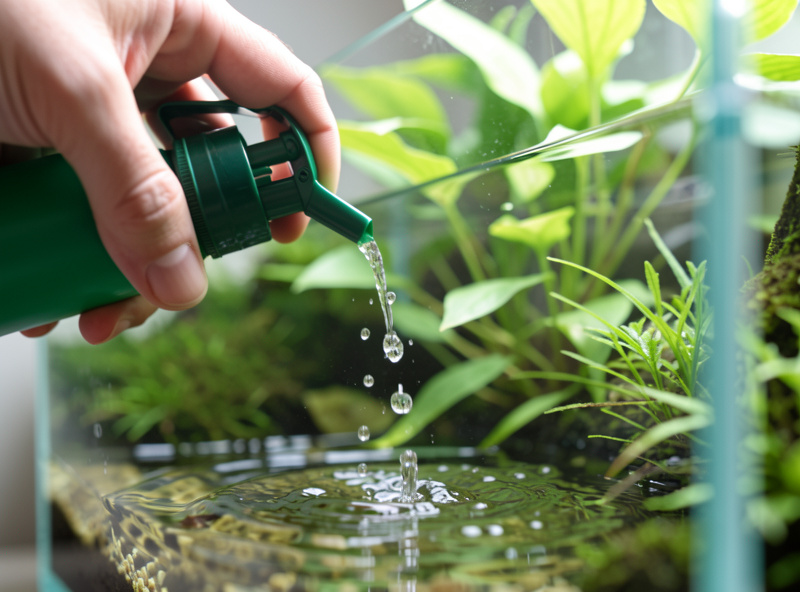
On my low-tech 20-liter reference tank I run Aquarium Co-Op Easy Green. It’s nitrogen-forward, which suits a lightly stocked planted nano that trends toward zero nitrate, and the pump bottle doses one press per roughly ten gallons — dead simple, hard to get badly wrong. It’s the bottle I hand beginners because the dosing math is a non-issue: no scale, no measuring, just a pump and a rough tank volume.
As an Amazon Associate I earn from qualifying purchases.
On the high-tech 60-liter showpiece I run a concentrated blend — my current bottle is 2Hr Aquarist APT, and I’ve run NilocG Thrive before it. Both carry enough nitrogen to feed fast growth under pressurized CO2, which a low-tech-tuned fertilizer simply can’t keep up with. The difference between running a CO2 tank and a low-tech one is exactly why one bottle doesn’t cover both, and I lay out that gap in the low-tech vs high-tech CO2 guide. Tropica Specialised Nutrition sits between the two for me — it’s what I reach for on a medium-light tank that has more demand than Easy Green covers but no CO2 to justify the concentrated stuff.
Which All-in-One Is Best for a Shrimp Tank?
The nitrogen-free one. My Neocaridina colony tank gets a shrimp-safe all-in-one — APT’s nitrogen-free variant or a similarly low-copper, low-nitrogen blend — because the plants in there are undemanding epiphytes and the priority is not shocking the colony. Shrimp are sensitive to copper, which is present in the trace portion of every fertilizer, so I dose lean and steady rather than to a plant-growth target.
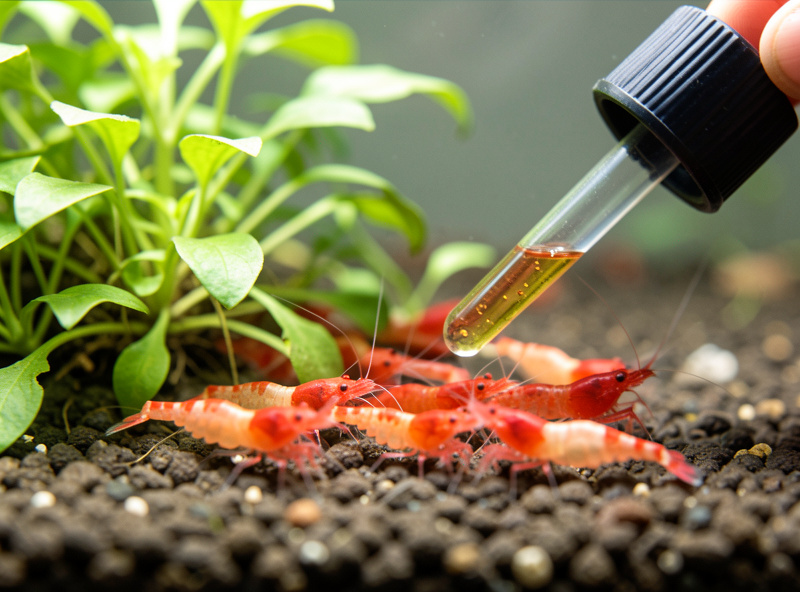
The copper worry is real but overblown when you dose sensibly — the trace copper in a normal fertilizer dose is far below what harms an established colony, and I’ve kept mine berried and molting cleanly for years dosing a standard shrimp-safe fertilizer at half the plant-tank rate. What I won’t do is run a high-nitrogen, high-dose bottle in there; the plants don’t need it and the margin for error in a small shrimp tank is thin. My colony’s actual parameters and how lean I keep the whole tank are in the cherry shrimp water parameters guide.
Is Seachem Flourish an All-in-One?
No — and this is the label trap. Flourish Comprehensive is a trace-element supplement with minimal nitrogen and phosphorus. It’s a fine micro top-up, but dose it as your only fertilizer on a nitrogen-hungry planted tank and the plants starve for macros while you congratulate yourself on fertilizing. Seachem sells the macro components — nitrogen, phosphorus, potassium — as separate bottles precisely because Comprehensive doesn’t cover them.
I keep a bottle of Flourish around, but as what it is: a trace supplement I might add alongside a macro source, not a standalone diet. The confusion costs beginners months. If you’ve been dosing “Flourish” faithfully and your oldest leaves keep yellowing, this is very likely why — you’ve been feeding traces to a plant that’s out of nitrogen. That’s the exact failure the nitrate too low in a planted tank guide walks through.
The All-in-One Mistake That Cost Me a Month of Growth
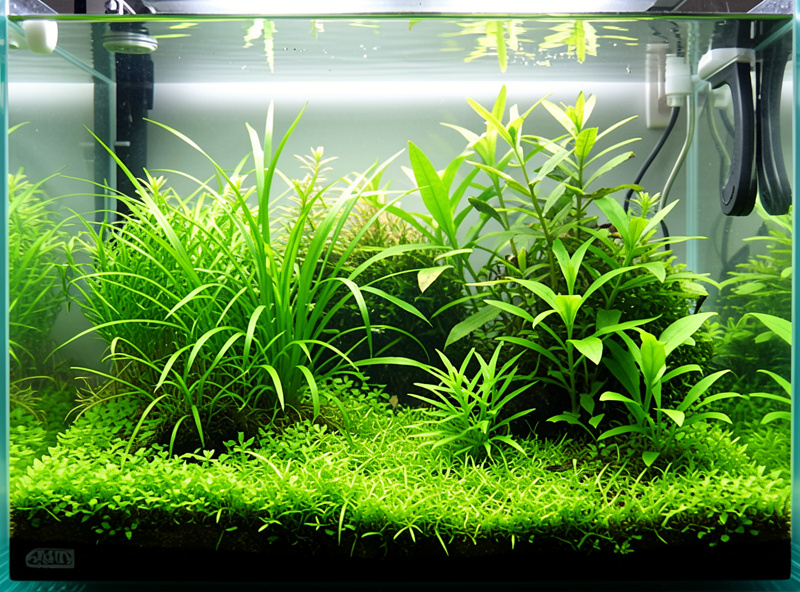
My worst run with these bottles was self-inflicted. When I set up the high-tech 60-liter, I kept dosing it with the same Easy Green I loved on the low-tech tank, because it had worked so well I didn’t question it. Under pressurized CO2 and bright light the plants tore through nitrogen faster than a low-tech-tuned bottle could deliver, and within three weeks the Rotala tops thinned out and the lower leaves started dropping. I stood at the tank one evening, glass fogged with condensation, and could actually smell the faint sourness of decaying leaf matter drifting off the surface — the tank was consuming itself faster than I was feeding it.
I’d matched the bottle to my habit instead of to the tank. Switching to a concentrated blend with real nitrogen fixed it inside a fortnight — new growth came in tight and dark green — but I’d lost a month and a good chunk of a scape to loyalty to the wrong bottle. The lesson stuck: a fertilizer isn’t good or bad in the abstract, only right or wrong for the demand in front of it. A CO2 tank on a low-tech fertilizer starves in plain sight.
How Long Does a Bottle of All-in-One Last?
Longer than you’d think, and it depends entirely on concentration. Ready-to-dose bottles like Easy Green get used up faster because you’re dosing more volume; concentrated blends like APT or Thrive last a nano keeper a very long time because a nano only needs a few drops to a couple of milliliters per dose. On my 20-liter I go through a pump bottle over a few months; a concentrated bottle on the same tank would last most of a year.
This is where nano keepers actually save money: buy the concentrate, dose tiny amounts, and one bottle outlives several ready-to-dose ones. The catch is precision — a concentrated bottle punishes a heavy hand, so I dose it with a syringe rather than a glug. For a single small tank the convenience of a pump bottle often wins anyway; the economics only tilt toward concentrate once you’re dosing several tanks like I am.
How Much All-in-One Should I Dose?
Start at the bottle’s label rate for your volume, then adjust to what your tank tells you, not to what the marketing promises. Label rates are a sensible middle ground, and on a low-tech tank I often dose a touch under while watching nitrate. The whole point of an all-in-one is that you’re not measuring separate salts — but that convenience comes with a locked ratio, so if your tank runs short on one nutrient, an all-in-one can’t fix just that one without overdosing the rest.
That trade-off — convenience versus precision — is the real reason to choose between a single bottle and a separate-salts approach, and it’s worth understanding before you commit; the all-in-one vs separate fertilizers comparison lays out when each wins. Whatever you dose, more is not better: a locked-ratio bottle pushed past label rate to chase one nutrient is the fast route to an algae bloom, which the can you overdose aquarium fertilizer guide covers in detail.
What I’d do starting today: match the bottle to the tank, not the tank to the bottle. Low-tech and lightly stocked — a nitrogen-forward pump bottle. High-tech under CO2 — a concentrated blend with real nitrogen. Shrimp — a lean, nitrogen-free all-in-one. And if a label just says “comprehensive,” check whether it lists nitrogen before you trust it to feed anything.
What is the best all-in-one aquarium fertilizer for a low-tech tank?
A nitrogen-forward pump bottle such as Aquarium Co-Op Easy Green suits most low-tech planted nanos, which tend to run low on nitrate. It doses by the pump without any measuring, so the dosing math is a non-issue for beginners. Tropica Specialised Nutrition is a solid step up for a medium-light tank.
Is Seachem Flourish a complete fertilizer?
No. Flourish Comprehensive is a trace-element supplement with minimal nitrogen and phosphorus, not a full all-in-one. Dosing it as your only fertilizer on a nitrogen-hungry tank leaves the plants short on macros. Seachem sells the macro components as separate bottles because Comprehensive does not cover them.
Which all-in-one fertilizer is safe for shrimp?
A nitrogen-free, low-copper all-in-one such as the nitrogen-free variant of 2Hr Aquarist APT. Shrimp are sensitive to copper, present in the trace portion of every fertilizer, so dose lean and steady at a reduced rate. Avoid high-nitrogen, high-dose bottles in a small shrimp tank where the margin for error is thin.
How long does a bottle of all-in-one fertilizer last in a nano tank?
Concentrated blends like APT or Thrive can last a nano keeper close to a year because a small tank needs only a few drops to a couple of milliliters per dose. Ready-to-dose pump bottles get used faster because you dose more volume. Buying concentrate and dosing tiny amounts is where nano keepers save money.
Can I use one all-in-one fertilizer for both a low-tech and a high-tech tank?
Usually not well. A high-tech tank under pressurized CO2 burns through nitrogen far faster than a low-tech-tuned bottle can deliver, so it starves on a low-tech fertilizer. Match a concentrated, nitrogen-rich blend to the CO2 tank and a nitrogen-forward everyday bottle to the low-tech one.