EI dosing on a nano tank means taking the Estimative Index method — deliberately dosing nutrients past what plants can use, then resetting the excess with a big weekly water change — and shrinking it to fit small water without letting nutrients pile up. For an 18L tank that is roughly a tenth of the volume a standard EI recipe assumes, so the honest answer is that most nanos should not run full EI at all.
I came to aquariums from years of hydroponics, where you measure the water daily because guessing kills the plants instead of the fish. That habit is what makes me cautious here. EI is a brilliant system for the right tank, and a slow accumulation problem for the wrong one. Below is exactly what EI is, why the water change is the part you cannot skip, and how I scale it down for the one nano where I actually use a version of it.
What EI actually is
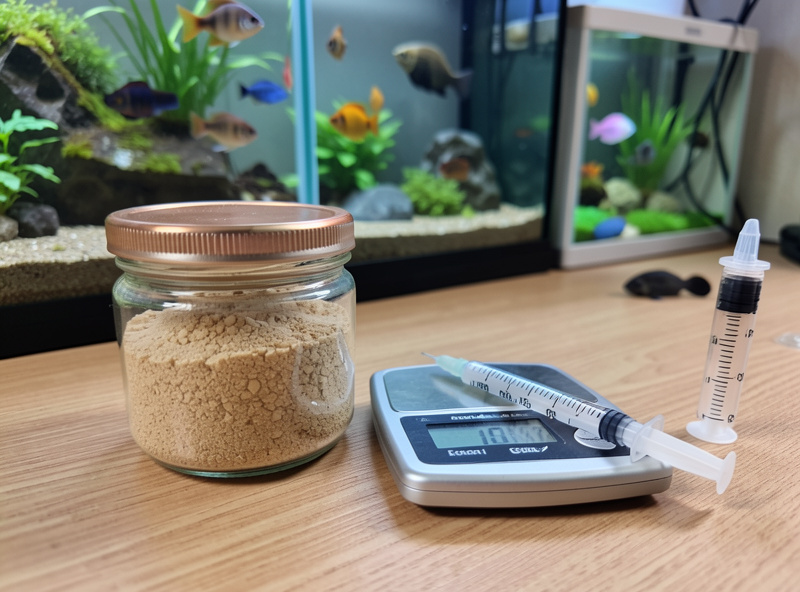
Estimative Index is a dosing philosophy, not a product. The idea: instead of measuring nitrate and phosphate and topping up to a target, you deliberately dose every macro and micronutrient to non-limiting levels — past the point any nutrient could hold plant growth back. You accept that this leaves an excess in the water column. Then, once a week, you do a large water change to reset that excess back to a known baseline.
The “estimative” part is the whole point. You are not estimating what the plants need each day; you are guaranteeing they never run short, and using the water change as the eraser. That is why classic EI recipes never talk about test kits for dosing — the method is designed to make daily testing unnecessary. What they assume, and rarely say loudly, is a specific kind of tank underneath.
Why the weekly water change is non-negotiable
People hear “dose past the limiting point” and remember that half. Then they skip or shrink the water change because it is the tedious part. That is not a lean version of EI — it is a nutrient trap. Without the reset, you are adding macros and micros every week on top of last week’s leftovers, and the water column climbs with no ceiling.
In my parameter log, the water change is the single most protective thing I do, and under EI it is structural, not housekeeping. The whole safety of the method rests on that ~50% weekly reset holding the maximum concentration in check. Remove it and EI stops being self-correcting. If you cannot commit to the water change, you have not chosen a lighter version of EI; you have chosen slow overdosing. I go deeper on why cadence matters more in small water in my water change cadence guide.
EI was built for high light and pressurised CO2
EI assumes plants are growing fast enough to consume the nutrients you are flooding in. That only happens with high light plus injected CO2. On my high-tech 60L rimless with pressurised CO2 and proper PAR, the plants pull hard, growth is quick, and the excess between water changes stays reasonable because it is genuinely being used.
Take away the CO2 and drop the light — the low-tech situation — and plant uptake collapses to a fraction. Now the same EI dose is not feeding fast growth; it is just sitting in the water. If you are weighing whether your nano even wants that firehose, my breakdown of low-tech versus high-tech CO2 and the broader nano CO2 guide are the honest place to start. Running full EI on a low-light nano is the classic mismatch: you are dosing for a garden and running a windowbox.
Scaling the numbers down: a 200L recipe on 18L of water
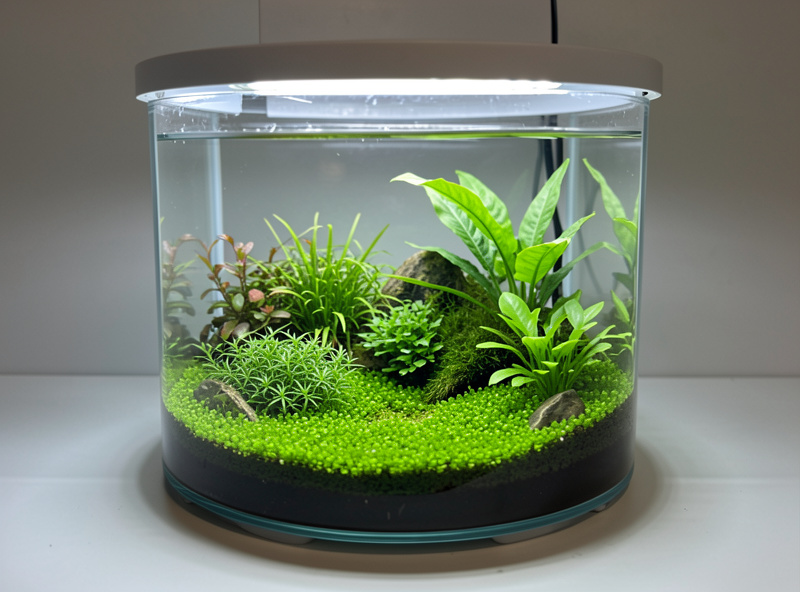
Here is where the arithmetic gets uncomfortable. Standard EI recipes are written per dose for a big tank — commonly quoted around a 200L target because that is the scale it was designed at. Your nano is a fraction of that. Measure your REAL volume first: my “20L” low-tech tank holds about 18L once substrate and hardscape displace the rest, and dosing for the sticker number would over-dose it before I started.
The table below shows how the same weekly nutrient target shrinks when the water volume does. I do not give you precise ppm here on purpose — I cannot justify an exact figure for your salts, your plant mass, and your uptake. What I can show is the honest proportion: the fraction of a standard dose that an 18L tank should see, and why you cannot deliver that fraction with a dry-scoop.
| Factor | Standard tank (~200L) | Nano (~18L) |
|---|---|---|
| Real water volume | ~200L (measured, not sticker) | ~18L (after substrate/hardscape) |
| Relative dose fraction of the 200L recipe | 1x (the reference) | roughly 1/11 of the same dose |
| How the dose is delivered | a measured dry scoop of salts | ml from a diluted stock solution, 1ml syringe |
| Weekly dosing rhythm | a few larger doses across the week | tiny daily splits to keep levels flat |
| Weekly reset water change | ~50% (non-negotiable) | ~50% (still non-negotiable) |
| Sensible default for most keepers | full EI works if light + CO2 are high | lean / all-in-one, not EI |
The point of the table is not the number 1/11 — it is that a nano wants such a small quantity of dry salt per dose that you physically cannot weigh it accurately on a hobby scale. That is the real reason nano EI fails: not the chemistry, the measurement.
How to scale EI down safely, if you insist
If you have a genuinely high-light, CO2-injected nano and still want an EI approach, do it through dilution, not tiny dry scoops. Make a diluted stock solution: dissolve a known mass of salts into a known volume of water so that a measurable amount of liquid carries the tiny dose your tank needs. Then you are dosing a couple of ml, not a pinch of powder you cannot weigh.
Dose it with a 1ml syringe so the amount is repeatable and logged, and split the week into small daily doses instead of one slug. Small water swings fast — flat is safer than spiky, and daily splits keep the concentration curve nearly level between water changes. This is the same “change one variable, log the number” discipline I lean on for parameter swings in small tanks. Whether you even want separate salts versus one bottle is its own decision, which I lay out in all-in-one versus separate fertilizer.
As an Amazon Associate I earn from qualifying purchases. If you are building a stock solution the two things worth having are dry aquarium fertilizer salts and a 1ml dosing syringe for repeatable measurement.
The shrimp-tank caution
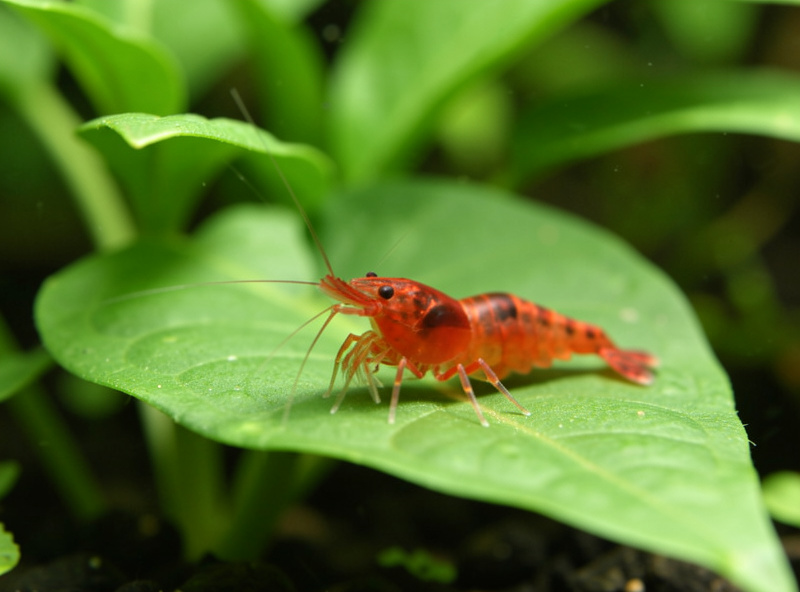
My Neocaridina colony lives in its own tank, and it is the one place I dose leanest of all. A cherry shrimp colony is stable within a comfortable range, but a big single nutrient dose is a fast parameter swing, and swings are what stress a colony — you can see it in reduced molting and skittish behaviour long before anything worse. I keep Neocaridina, not Caridina, and even that hardier genus does not want EI-scale spikes.
So where shrimp live, I dose lean and split, never one large slug, and I let the plant mass and the shrimp’s own waste carry a lot of the load. If you are still cycling that tank or reading its numbers, my planted nano guide covers the plant side of keeping a shrimp-safe scape ticking over.
The honest verdict: most nanos should not run EI
I will say it plainly because the hobby often does not: for the great majority of nano tanks, EI is the wrong tool. If your tank is low-tech or even moderately lit without CO2, a lean regime or a good all-in-one is not a compromise — it is the correct answer. You dose modestly, you change water on a sane cadence, and you never build the accumulation that EI’s water change exists to erase.
I reserve my scaled-down EI for the 60L, where the light and CO2 justify it, and I run the shrimp tank and the low-tech 18L lean. Start from your real volume, match the dosing to the actual growth rate, and reach for the full method only when the tank is genuinely demanding it. The full picture of how these choices fit together lives in the nano tank fertilizer dosing guide.
Frequently Asked Questions
Can I run EI dosing on a nano tank?
You can, but most nanos should not. Full EI assumes high light plus pressurised CO2 driving fast uptake. On a low-tech or low-light nano the excess simply accumulates, so a lean regime or all-in-one is usually the right call.
Why is the weekly water change part of EI non-negotiable?
EI deliberately doses nutrients past the limiting point, so the large weekly water change is what resets that excess to baseline. Skip or shrink it and each week’s dose stacks on the last, turning EI into slow overdosing rather than a self-correcting method.
How do I measure the tiny dose an 18L nano needs?
You cannot weigh it accurately as dry salt on a hobby scale. Instead dissolve a known mass of salts into a known volume of water to make a diluted stock solution, then dose a couple of ml with a 1ml syringe for repeatable, logged amounts.
Should I dose EI in a shrimp tank?
Dose leaner where a Neocaridina colony lives. A big single nutrient dose is a fast parameter swing, and swings stress shrimp before anything visible. Split doses small, lean on plant mass and bioload, and never deliver one large slug.
Why does EI need high light and CO2?
EI floods the water with nutrients on the assumption plants consume them quickly. That fast growth only happens with high light plus injected CO2. Take those away and uptake collapses, so the same dose sits unused in the water column and builds up.
What should I use instead of EI on a low-tech nano?
A lean dosing regime or a quality all-in-one fertilizer. You dose modestly, change water on a sensible cadence, and never build the accumulation EI’s water change exists to erase. It matches the slow growth of a low-light tank far better.