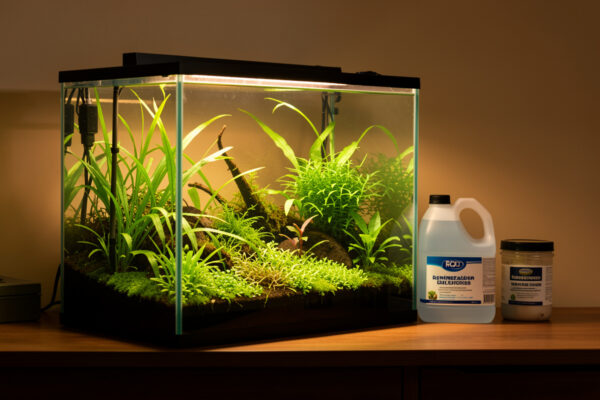
Do you need RO water for your aquarium? Most beginners with hardy stock do not. If your tap runs moderate — roughly GH 6 to 10, KH 3 to 6 — and you keep community fish or Neocaridina shrimp, dechlorinated tap makes a stable tank for years. RO becomes essential only for extreme tap or sensitive softwater species.
I say that as someone who owns an RO/DI unit and uses it daily, so this isn’t a “you don’t need gear” cop-out. It’s the opposite. RO is a powerful tool, and like any powerful tool it solves specific problems and creates new ones if you deploy it blindly. I’ve watched more nano keepers hurt their tanks by rushing into pure RO than by staying on well-treated tap. My own low-tech reference nano ran eighteen happy months on conditioned tap before I ever touched a membrane. So let’s answer the real question underneath yours: not “is RO good,” but “does my water, my stock, and my patience actually call for it.”
Get this decision right and you either save $150 or save a colony. Get it wrong in the expensive direction and you’ve bought a unit you resent filling; get it wrong in the cheap direction and you’re slowly poisoning something that deserved better. This is the anchor decision for the whole RO and water-source system, so it’s worth twenty minutes.
What Does RO Water Actually Change?
Reverse osmosis strips your water down to near-zero total dissolved solids — my RO/DI output reads under 5 ppm where my tap reads 310 — which hands you a blank slate to rebuild. That’s the entire value proposition: not “purer” water in some vague wellness sense, but control. You subtract everything, then add back exactly the general hardness and carbonate hardness your inhabitants want.
The two numbers that matter are GH and KH. GH (general hardness) is the calcium and magnesium content — shrimp build their shells from it and plants pull it to grow. KH (carbonate hardness) is the buffer that stops your pH from crashing. Tap water hands you whatever GH and KH the local aquifer holds, and that value drifts with the seasons and after utility maintenance. RO hands you zero of both, so you set them yourself and they stay set. If your stock is happy across a wide parameter range, that control is overkill. If your stock is fussy, it’s the whole point.
What RO does not do is make a bad keeper into a good one. It won’t fix overstocking, skipped water changes, or an uncycled tank. I’ve read too many forum posts blaming tap water for problems that were plainly husbandry. RO is a lever on one variable — mineral content. If that variable isn’t your problem, RO isn’t your solution.
When Is Tap Water Genuinely Fine?
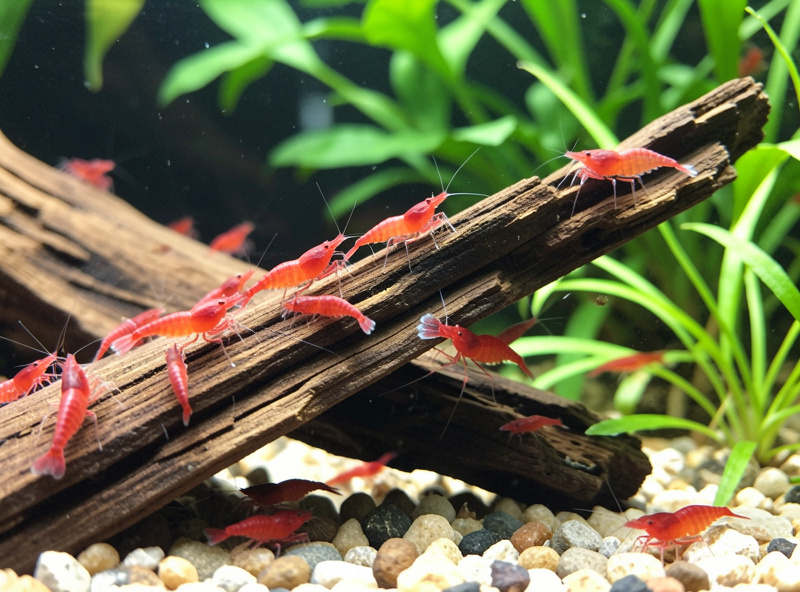
Treated tap is genuinely fine, not merely tolerable, in a large slice of nano keeping. If your tap tests moderate and reasonably stable, and you keep hardy species, you’re done — dechlorinate and go. Neocaridina shrimp (the common cherry, blue, yellow strains) thrive across GH 6 to 8, KH 2 to 4, TDS 150 to 250, and a lot of municipal tap sits right in or near that window. Hardy community fish are even more forgiving.
The tell that your tap is fine is boring stability: your parameters read the same in July and January, your shrimp molt cleanly and berry up, your plants grow. My reference nano ran on nothing but conditioned tap and a liquid test kit for a year and a half, and the shrimp colony climbed past a hundred animals in that time. I only switched that tank to remineralized RO when I wanted to standardize water across a growing rack — a convenience upgrade, not a rescue.
Here’s the honest framing: tap water is the default, and RO is the exception you justify. The burden of proof is on the membrane, not the faucet. If you can’t name a specific reason your tap is failing you — a test number, a species requirement, a stability problem — you probably don’t need RO yet. Save the money for a better light or more plants.
When Does RO Become Non-Negotiable?
RO stops being optional in three situations, and each one is about a mismatch between what your tap gives and what your stock demands. First, extreme tap. Some municipalities and most well sources push 400-plus ppm out of the faucet — I’ve seen utility reports in the 500s — and no dechlorinator on earth softens rock-hard water. If you want softwater species and your tap is a limestone milkshake, RO is the only path.
Second, sensitive species with narrow requirements. Caridina bee shrimp are the classic case: breeders report they want soft, low-KH water around GH 4 to 6, KH 0 to 1, TDS 100 to 150 — parameters most tap water simply cannot hit, because you can’t remove KH from tap, only add to it. My own colony is Neocaridina, which is why I keep it on a Neocaridina recipe; if I ever moved to Caridina, RO would be mandatory from day one. Wild-caught softwater fish and dedicated blackwater scapes fall in the same bucket.
Third, repeatability across multiple tanks. Once you run a fishroom, letting the utility’s seasonal drift move your baseline becomes maddening. RO lets every tank on the rack start from the same zero, so a water change on tank three is chemically identical to a water change on tank one. That consistency is worth real money and effort to me now, though it would have been pointless when I had a single tank.
How Do I Test Whether My Tap Is a Problem?
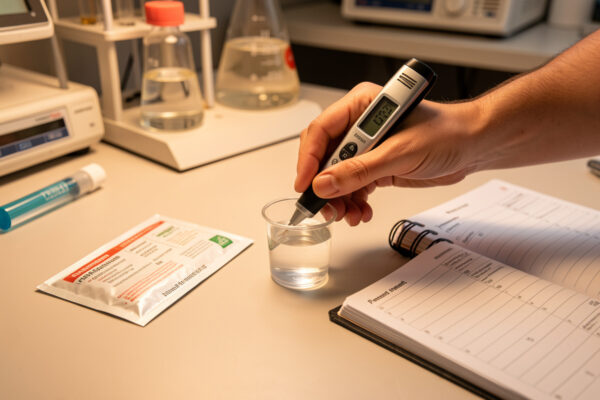
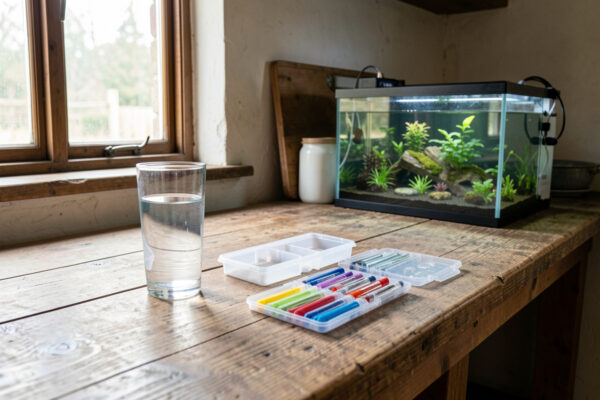
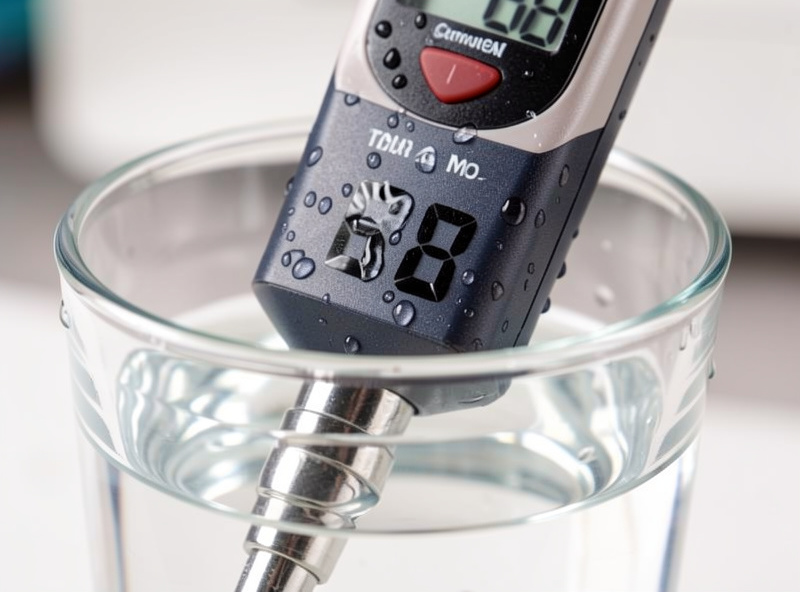
Don’t guess your tap — measure it, the same way I metered every nutrient reservoir back in my hydroponics years. You need three cheap things: a TDS pen, a liquid GH/KH test kit, and five minutes. Run a sample of tap that’s sat out or been aerated (fresh-from-the-tap water can read differently because of dissolved gases), and log the TDS, GH, KH, and pH. That’s your baseline.
Then compare against your intended stock’s range. If your tap TDS is 180 and you want Neocaridina at 150 to 250, you’re already home — no RO needed. If your tap TDS is 480 and you want it anywhere near shrimp-friendly, RO is the honest answer. Watch KH especially: it’s the parameter you cannot reduce with additives, only with dilution or RO, so high-KH tap is the classic RO trigger for softwater goals. Your municipal water quality report (published annually, free, online) gives you a second data point, though your household plumbing can add copper and lead the utility report won’t show.
The United States Geological Survey publishes a clear primer on what water hardness actually is if you want to understand the numbers rather than just react to them — the USGS Water Science School is my go-to non-commercial reference. And the EPA’s secondary drinking water standards put a number on what “high TDS” even means for context.
As an Amazon Associate I earn from qualifying purchases.
The one purchase I’d make before deciding anything is a digital TDS meter — it costs less than a bag of substrate and answers the RO question directly.
The Middle Path: Cutting Tap With RO
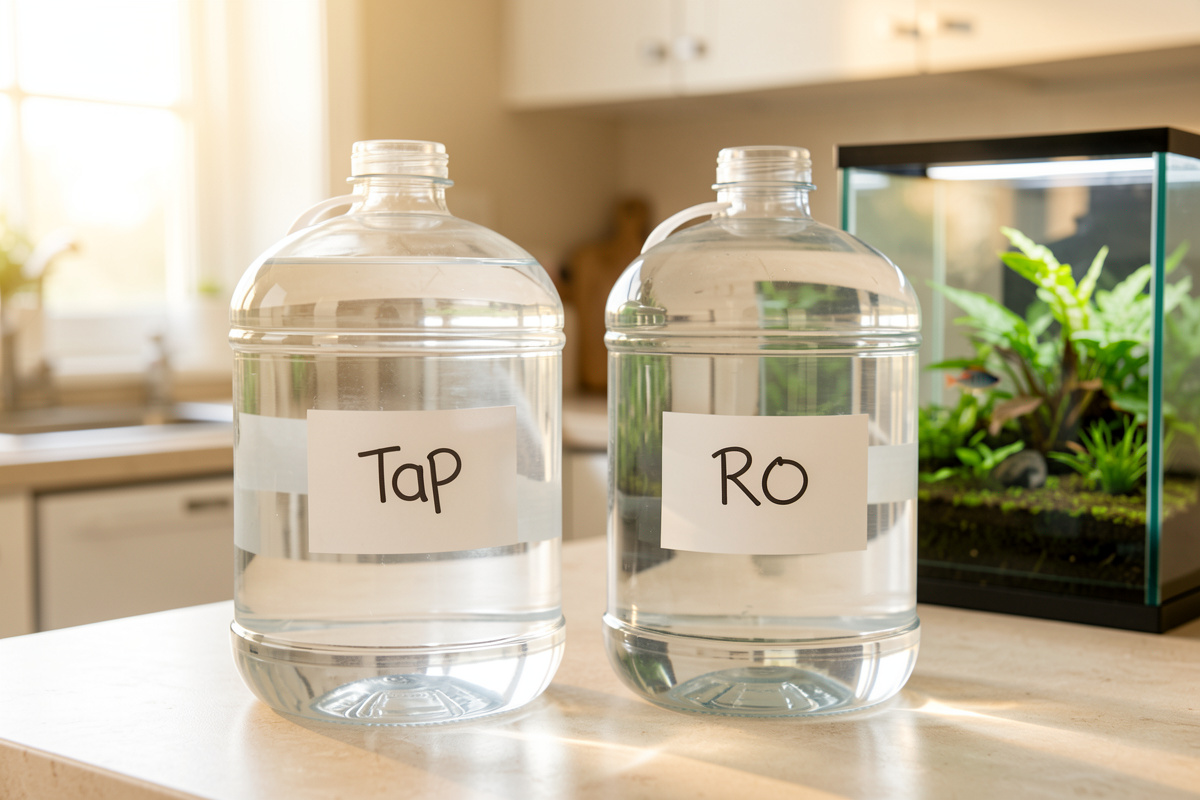
You don’t have to choose all-tap or all-RO. My favorite trick for keepers with borderline tap is blending — mixing RO into tap to hit a target, rather than replacing tap entirely. If your tap is TDS 350 and you want 200 for a shrimp tank, a roughly 40/60 tap-to-RO blend lands you there while keeping some of the tap’s natural mineral profile and buffer. It also stretches your RO membrane and cuts your waste water, because you’re producing less pure RO.
This blending approach is genuinely underrated for planted tanks, where a little tap-derived KH stabilizes pH against a CO2 system’s daily swing. My high-tech 60-liter doesn’t run on pure remineralized RO by accident — I dialed the recipe deliberately — but a blend gets a beginner most of the way there with less equipment. The catch is that blending re-introduces the utility’s drift, so you re-test seasonally. Once you’re comfortable, the full RO system guide walks the whole build.
What RO Costs You in Money and Attention
Let me be blunt about the true cost, because the sticker price is the small part. A decent RO/DI unit runs $70 to $200. Then there’s remineralizer, replacement filters and DI resin on a schedule, and the water itself — a standard membrane wastes roughly four liters to make one, which shows up on a metered bill. None of that is ruinous, but it’s real, ongoing, and easy to underestimate at the register.
The bigger cost is attention, and this is where I’ve watched people fail. An RO system is a small standing ritual: jugs to fill, a recipe to mix, a pen to calibrate, resin to swap. Here’s my confession — the first month I owned my unit, I got lazy and remineralized a shrimp batch by eye instead of by pen, hit the GH wrong, and lost shrimp to failed molts. The tool was sitting there uncalibrated and ignored. The lesson wasn’t “RO is hard,” it was “RO only pays off if you actually run the discipline.” If you’ll do the ritual, RO gives you total control over the one thing that governs everything else in a nano. If you won’t, keep hardy stock on well-treated tap and sleep fine.
So — Do You Need It?
Walk the decision plainly. Test your tap. If the numbers match your stock and stay stable, keep your money — treated tap is a legitimate, even excellent, choice, and I’ll defend it against anyone who sneers at it. If your tap is extreme, or you want Caridina or another narrow-range species, or you’re scaling to a fishroom that demands repeatability, buy the unit and commit to the ritual that makes it worthwhile. What I’d do starting today: spend $18 on a TDS pen, test the tap, and let the number decide before your wallet does. The water doesn’t care about your intentions — only your measurements.
Do beginners need RO water for a first aquarium?
Usually not. If your tap water tests moderate in hardness and stays stable through the seasons, and you keep hardy fish or Neocaridina shrimp, dechlorinated tap water runs a healthy tank for years. RO is an exception you justify with a specific reason, not a default first purchase. Test your tap before spending on a unit.
What tap water is too hard for shrimp?
Neocaridina shrimp are happy around TDS 150 to 250 with GH 6 to 8 and KH 2 to 4. Tap water pushing 400 ppm or more, or with very high KH you cannot reduce, is the classic trigger for reverse osmosis. Carbonate hardness matters most because you cannot lower it with additives, only by diluting with RO.
Can I mix RO water with tap water?
Yes, and blending is often the smartest middle path. Mixing RO into tap lets you hit a target TDS while keeping some natural mineral buffer, and it stretches your membrane and reduces waste water. A borderline tap at 350 ppm blended toward 200 ppm suits many shrimp and planted setups without going fully to pure RO.
How do I test if my tap water needs RO?
Use a TDS meter and a liquid GH and KH test kit on an aerated tap sample, then compare the readings to your intended stock’s parameter range. Your annual municipal water report gives a second data point, though it will not show copper or lead added by household plumbing. Let the measured numbers make the decision.