When a nano tank goes wrong, it rarely announces itself politely. It lurches. The reason is that small volume amplifies parameter swings — temperature, pH, ammonia, hardness — until what would be a gentle drift in a big tank becomes a sharp move in a nano. The keepers who run stable small tanks aren’t luckier; they understand which parameters swing, how fast, and which ones their livestock actually cares about. That’s the difference between reacting to a crisis and never having one.
This is the parameter-by-parameter companion to the nano tank stability guide. It assumes you’ve internalised the dilution math from why small aquariums are harder and the evaporation discipline from the top-off article — now we get specific about what moves and why.
The parameters that move — ranked by speed
Not every parameter is equally dangerous on small water, so it’s worth knowing the running order. Temperature is the fastest mover because thermal mass is purely a function of volume, and a nano has almost none. A heater fault or a cold room moves the number in hours. Ammonia and nitrite come next: any bioload event — overfeeding, a death, an overstocked tank — produces a concentration spike that the small volume can’t dilute. pH is fast too, but only when KH is low; the carbonate buffer is what holds pH steady, and a nano’s small reserve gets used up quickly. General hardness and TDS are the slow movers, creeping up with evaporation over days.
The practical takeaway is to match your vigilance to the speed. Temperature deserves a permanent independent thermometer because it can hurt you before your next test. Ammonia and nitrite deserve testing during cycling and after any change to stocking or feeding. pH and KH deserve a check whenever you suspect a crash or run a tank on soft water. And hardness creep is handled almost entirely by the top-off discipline. You don’t test everything constantly — you test the fast movers often and the slow movers occasionally.
Why the rate of change matters as much as the number
Here’s the insight that took me a few bad molts to fully absorb on my shrimp tank: livestock often tolerate a parameter being “wrong” far better than they tolerate it moving fast. A Neocaridina colony will happily live across a fairly broad hardness range as long as that range is stable. What triggers bad molts and culls isn’t usually a slightly off number — it’s a sudden swing, like a clumsy water change with mismatched water, that jolts the osmotic balance the shrimp had adapted to.
This reframes the whole stability project. The goal isn’t to chase a perfect number; it’s to hold whatever number you’re at as steady as possible, then change it slowly if you need to. A fish or shrimp acclimated to a stable, slightly imperfect parameter is in far better shape than one whipsawed around the “ideal” value. Stability beats perfection. That’s why every routine in this cluster is about reducing swings, not micromanaging set points.
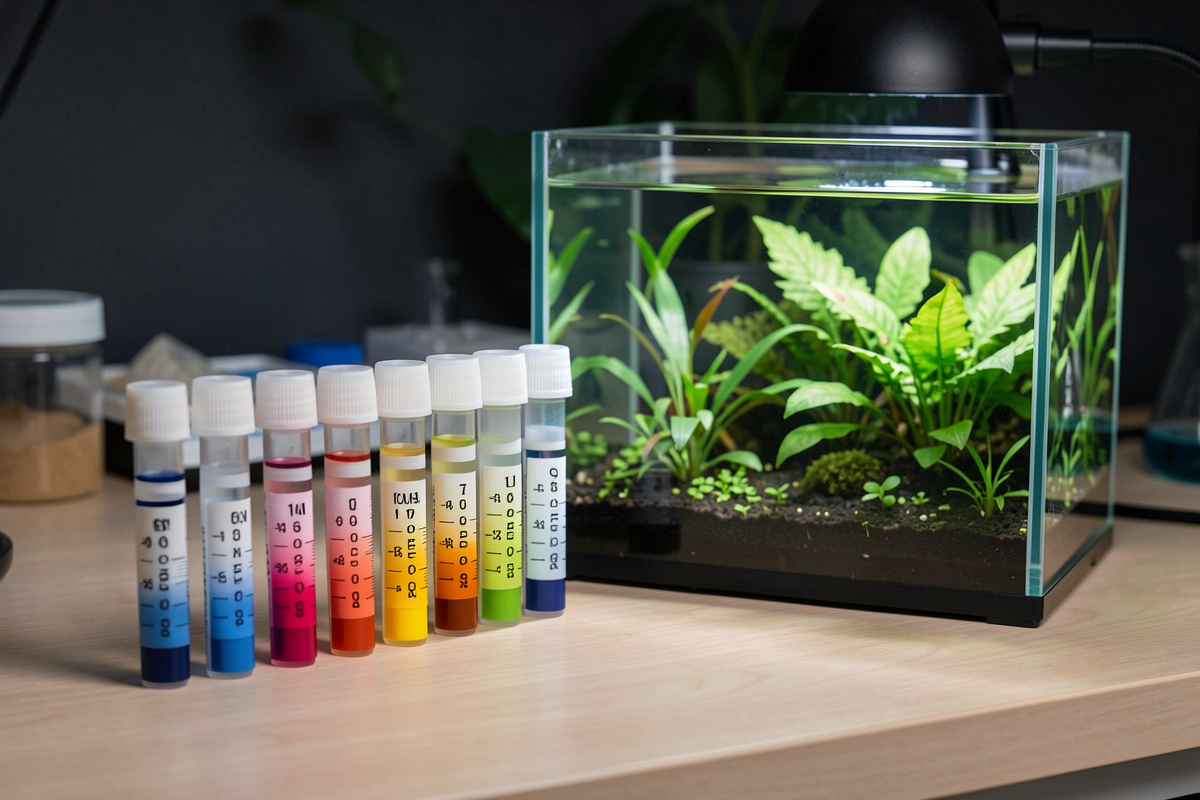
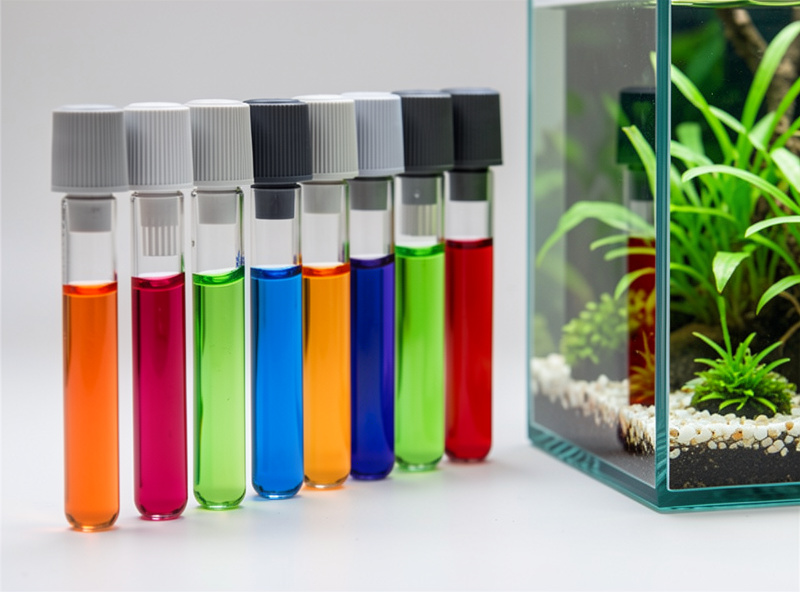
You cannot manage a swing you can’t see, which is why the one piece of gear I consider non-negotiable for nano stability is a liquid master test kit. Strips are convenient but coarse; the liquid drops give you the resolution to spot a parameter starting to move before it’s a problem. It’s the same instinct as a calibrated meter on a hydro reservoir — the number is the early-warning system.
- A liquid master test kit — reads ammonia, nitrite, nitrate, and pH with the resolution to catch a swing early. Browse master test kits on Amazon.
Comparison: how each parameter swings in a nano
| Parameter | Swing speed | What drives it | How to keep it steady |
|---|---|---|---|
| Temperature | Fastest (hours) | Heater fault, cold room, tiny thermal mass | Reliable heater + independent thermometer |
| Ammonia / nitrite | Fast (hours–days) | Overfeeding, death, overstocking | Light stocking, cycled filter, testing |
| pH | Fast if KH low | Buffer reserve exhausted | Maintain adequate KH, steady changes |
| GH / TDS | Slow (days) | Evaporation concentrating minerals | Consistent fresh-water top-off |
| Nitrate | Slow climb | Bioload accumulating between changes | Right-sized regular water changes |
Building the parameter log habit
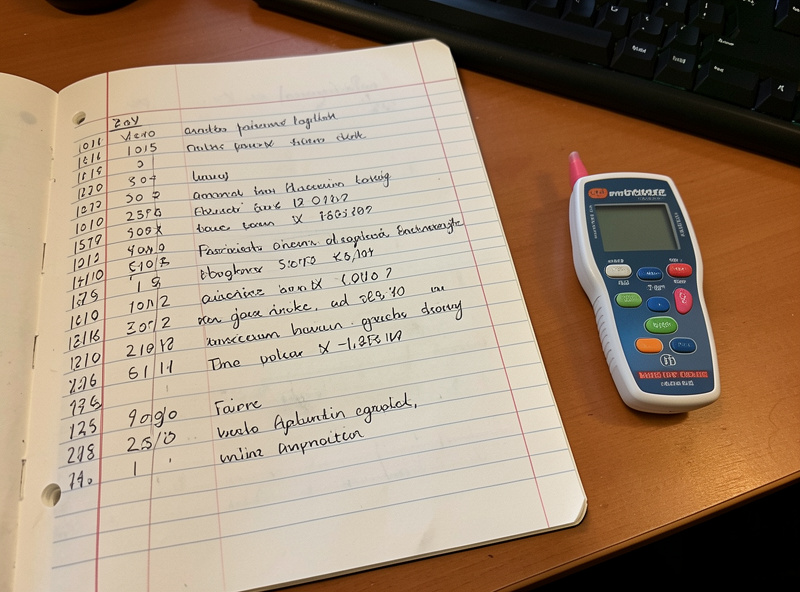
The single tool that ties all of this together is a written log. It doesn’t need to be fancy — a notebook beside the tank with date, the parameters you tested, and any change you made. The power isn’t in any single reading; it’s in the trend. A pH that reads a little low once is noise. A pH that reads lower every week is a KH problem developing, and the log is what lets you see the slope before the crash. This is the exact discipline I carried over from logging nutrient reservoirs: one number is data, a column of numbers is a diagnosis.
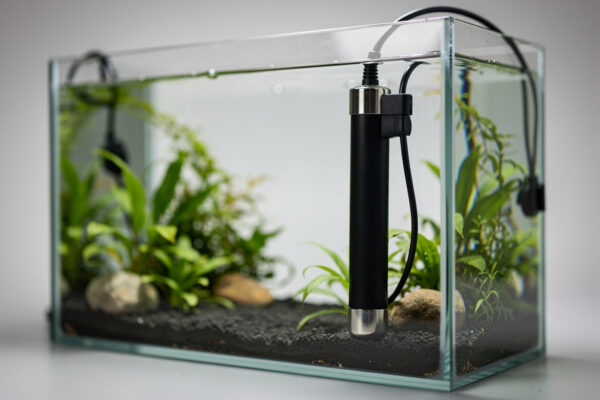
The log also enforces the cardinal rule of stable keeping: change one thing at a time. When you only ever adjust a single variable between log entries, the next reading tells you exactly what that change did. Adjust three things at once and you’ve learned nothing when the tank shifts. Running a nano as a controlled experiment is what turns “the tank looks off” into “nitrate’s been climbing three weeks, I need a bigger change” — a problem you can name and solve instead of panic over. Keeping temperature steady is the fastest-swinging variable — picking the right heater for the tank size is the foundation, and the best heater for nano tanks guide covers what to look for at small volume.
A note on livestock health
Everything here is about keeping the water stable so animals stay well — husbandry and prevention. If a fish or shrimp shows actual signs of disease, that’s diagnosis and treatment territory that belongs with an aquatic vet or species specialist, not a parameter chart. Stable water prevents the vast majority of problems; it isn’t a cure for the ones that have already started.
More from the stability cluster
- The nano tank stability guide — the full overview of running small water well.
- Why small aquariums are harder — the volume math behind the swings.
- Evaporation and top-off discipline — taming the slowest, sneakiest swing.
Frequently Asked Questions
Which parameter swings fastest in a small tank?
Temperature, because thermal mass is a function of volume and a nano has very little. A heater fault or a cold room can move the number within hours, faster than your next scheduled test. That is why a permanent independent thermometer matters more on small water than on a large tank.
Why do my parameters swing more in a nano than a big tank?
Because there is less water to dilute any change. The same bioload event, evaporation, or buffer loss is concentrated into a smaller volume, so the resulting swing is sharper. The chemistry is identical to a big tank; the small denominator just makes every move land harder.
Is a stable wrong number better than a swinging right one?
Usually yes, within reason. Livestock, and shrimp especially, tolerate a parameter being slightly off far better than they tolerate it moving fast. A colony acclimated to a stable, slightly imperfect hardness is healthier than one whipsawed toward the ideal value. Hold steady first, then adjust slowly if needed.
How often should I test a nano tank?
Match testing to swing speed. Test ammonia and nitrite frequently during cycling and after any stocking or feeding change, check pH and KH when you suspect a crash or run soft water, and check hardness occasionally since top-off handles most of it. You do not need to test everything constantly, just the fast movers often.
What causes a sudden pH crash in a nano?
Almost always low KH, the carbonate buffer that holds pH steady. A nano has a small buffer reserve, so once it is exhausted pH can fall overnight. Maintaining adequate KH and changing water on a steady cadence keeps the buffer topped up and prevents the crash.
Do I really need a parameter log for a small tank?
It is the single most useful habit for stability. One reading is just data, but a dated column of readings reveals the trend, so you see a parameter sloping toward trouble before it crashes. The log also enforces changing one thing at a time, which is what lets you actually learn what each adjustment does.