The water change is the single most important maintenance act on any aquarium, but on a nano it carries a twist almost no guide mentions. Getting your water change cadence right on small water isn’t just about how often — it’s about reconciling two opposing facts: nanos accumulate nitrate and lose buffer just like big tanks, but a water change on a nano is a much larger fraction of the system, which makes the change itself a swing. Run the cadence wrong and the very thing meant to stabilise the tank becomes its biggest disruption.
This is the maintenance-rhythm piece of the nano tank stability guide. It builds on the volume math from why small aquariums are harder and the swing logic from the parameter swings article — here we turn that understanding into an actual schedule.
Why the water change is both cure and risk on a nano
A water change does two jobs. It physically removes accumulated nitrate and other dissolved waste that the filter can’t process out, and it tops the buffer (KH) and minerals back up to where they belong. On every tank, that’s how you keep nitrate from climbing into stress territory and stop pH from drifting as the buffer gets consumed. Skip changes long enough and nitrate rises, KH falls, and eventually the tank destabilises. So far, identical to a big tank.
The nano twist is the fraction. Changing twenty litres on a two-hundred-litre tank swaps a tenth of the water — gentle. Changing ten litres on a twenty-litre nano swaps half the water at once, and if that replacement water is even slightly off on temperature, pH, or hardness, you’ve just delivered a large, sudden swing to everything living in there. The cure and the risk are the same action; the difference is entirely in how you do it.
Smaller and more frequent beats big and rare
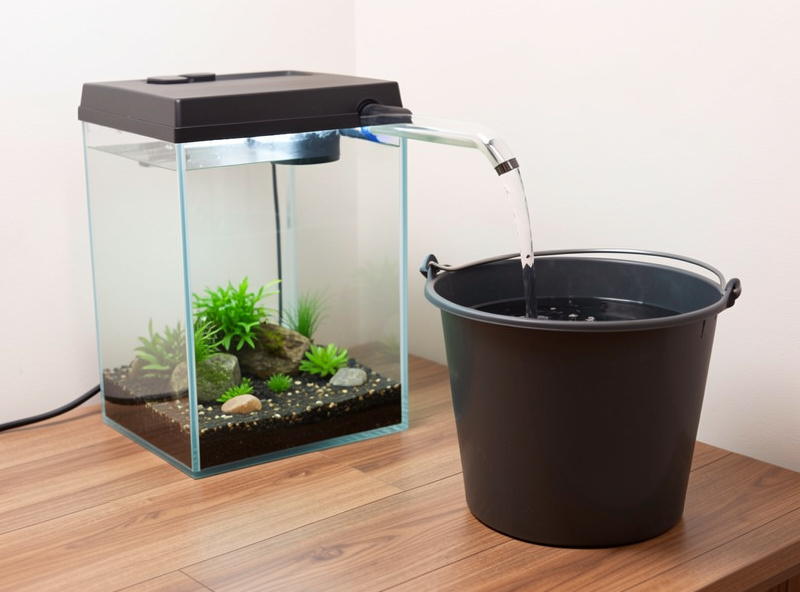
The resolution to that tension is to favour smaller, more frequent changes over large infrequent ones. A modest weekly change removes a sensible slice of nitrate while only swapping a small fraction of the water, so the parameter shift at any one time stays gentle. Doing a giant change once a month, by contrast, lets nitrate climb high between changes and then yanks it down sharply — a swing in the wrong direction at both ends. Steady beats dramatic, every time.
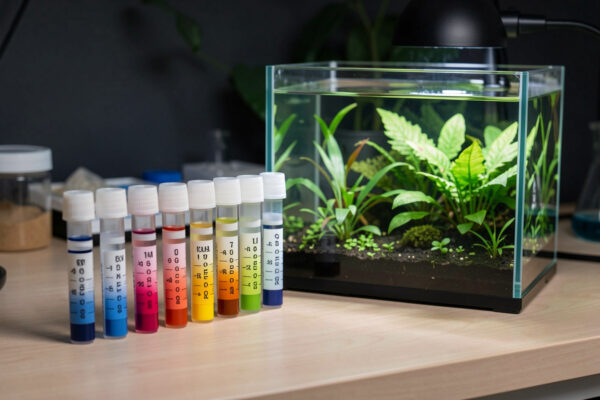
How much and how often depends on your stocking, which is where the parameter log earns its place again. A lightly stocked planted nano might need only a modest weekly change to hold nitrate steady. A heavily stocked tank or a shrimp colony being fed well may want a smaller change more often. The honest method is to pick a starting cadence, test nitrate before each change for a few weeks, and adjust until the pre-change number sits where you want it. The log tells you whether your cadence is actually working — guessing doesn’t.
Comparison: water-change cadence options for a nano
| Approach | Swing risk | Nitrate control | Best for |
|---|---|---|---|
| Small weekly change | Low | Good, steady | Most lightly stocked planted nanos |
| Small twice-weekly | Very low | Excellent | Shrimp colonies, heavier stocking |
| Large monthly change | High | Swings high then low | Not recommended on nanos |
| Top-off only, no changes | None from changes | Poor — nitrate climbs | Only very lightly stocked, heavily planted |
Precision is what makes small frequent changes painless, and a nano-scale gravel vacuum or small siphon kit is the tool that gives it to you. A slim siphon lets you pull a measured small volume and spot-clean the substrate without disturbing plants or stressing shrimp — exactly the controlled, low-drama change a nano wants.
- A nano gravel vacuum / siphon kit — pulls a measured small volume and spot-cleans substrate without disturbing the scape. Browse nano siphons on Amazon.
Matching the replacement water — the step that prevents the swing
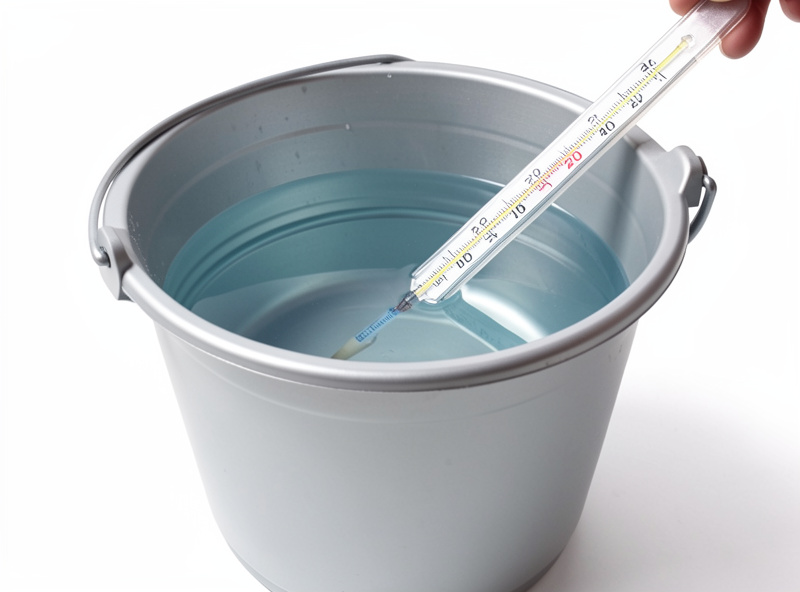
This is the part that turns a water change from a risk back into pure benefit: match the new water to the tank. Temperature first — replacement water at the tank’s temperature, checked with a thermometer, not guessed by hand, because a cold slug into a nano is an instant temperature swing. Then parameters: for a tank on conditioned tap, fresh dechlorinated tap of the same general character is fine; for a soft-water or shrimp tank, RO remineralised to the tank’s exact target so hardness and TDS land where the livestock expects.
Get this right and even a fairly large change becomes gentle, because nothing the inhabitants experience actually moved much — you swapped old water for new water at the same conditions. Get it wrong and you’ve created exactly the swing the change was supposed to prevent. The discipline is identical to the top-off rule: control what’s going in so the tank only ever sees steady conditions. A water change should feel like nothing happened to the fish, even though the chemistry just got reset.
The “top-off only” temptation, and why it usually fails
Heavily planted, very lightly stocked nanos sometimes run a long time on top-off alone, with plants consuming enough nitrogen that nitrate barely climbs. It’s a real thing, and it tempts people into skipping water changes entirely. The problem is that water changes do more than export nitrate — they replenish the buffer (KH) and the trace minerals that plants and livestock steadily consume, and they dilute the dissolved organics that no test kit shows but that slowly accumulate. A tank running on top-off only can look fine for months and then crash when the buffer finally runs out or organics tip the balance.
My honest position: top-off-only is a knife-edge technique for experienced keepers with a heavily planted, barely stocked tank and a parameter log proving it works — not a routine to default into because changes feel like a chore. For almost everyone, a small regular change is cheap insurance against the slow, invisible drift that top-off can’t touch. The whole point of running a nano as a controlled system is to not bet the tank on the one variable you can’t easily see.
Reading your nitrate trend, not a single number
The right cadence isn’t a fixed rule you copy from a forum; it’s whatever holds your nitrate where you want it given your stocking and planting. The way you find it is the log again. Test nitrate just before each change for two or three weeks. If the pre-change number keeps climbing week over week, your cadence isn’t keeping up — change a bit more or a bit more often. If it’s flat and low, you’ve found your rhythm, and you can stop fiddling. This is the same closed-loop tuning I used on hydroponic reservoirs: measure, adjust one variable, measure again.
What you’re aiming for is a stable pre-change nitrate that never spikes into stress territory between changes. Once you’ve dialled that in, the cadence becomes invisible maintenance — you’re not reacting to problems, you’re preventing them on a schedule. Automating your evaporation top-off removes one of the biggest variables between changes — the auto top-off for nano aquariums guide covers which systems work reliably at small scale. That’s the difference between keeping a nano and fighting one.
Building the routine into a rhythm
The last piece is consistency. A nano rewards a predictable rhythm — same day, same approximate volume, same prepared water — because the tank’s chemistry settles into a stable cycle around it. Erratic changes (a big one when you remember, then nothing for weeks) create exactly the boom-and-bust nitrate pattern you’re trying to avoid. Pick a cadence you’ll actually keep, write it in the log, and let the routine do the stabilising.
That’s the whole philosophy of this site in one maintenance task: small water done right is about steady, repeatable routines, not heroic interventions. A nano on a calm weekly rhythm of small, matched changes is as stable as any big tank — and a lot less work than people fear, once the habit is in place.
More from the stability cluster
- The nano tank stability guide — the full overview of running small water well.
- Why small aquariums are harder — the volume math behind nano maintenance.
- Parameter swings in a small tank — what moves, and why matched water matters.