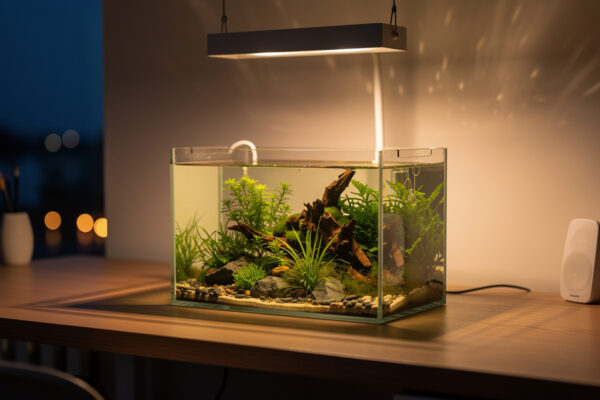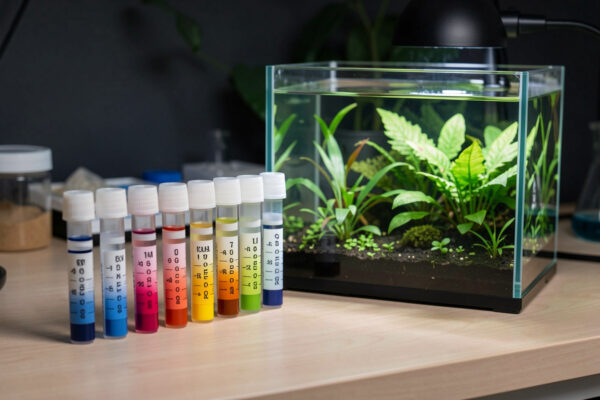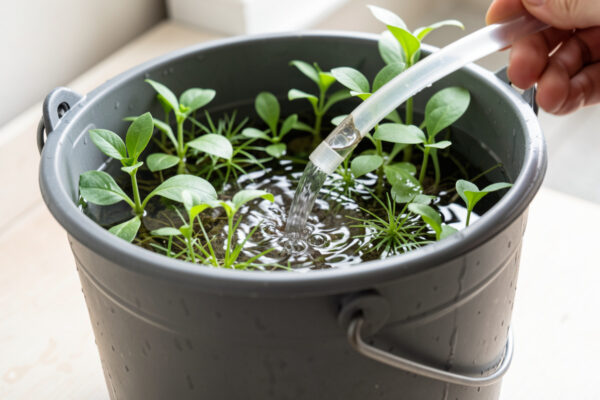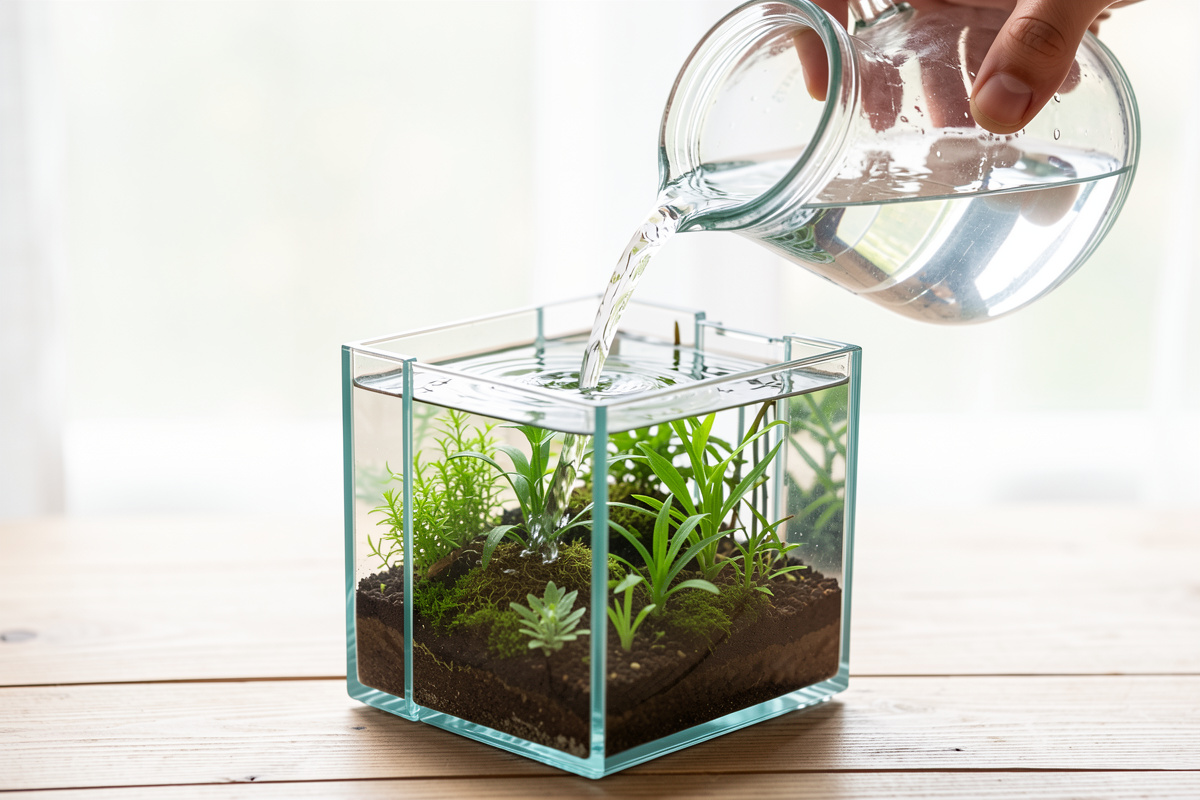
If I had to name the one nano habit that separates a stable tank from a slowly failing one, it wouldn’t be anything glamorous. It’s evaporation top off — the boring daily act of replacing the water that quietly disappears. Nobody warns beginners about it because it sounds trivial, but on small water it is one of the biggest hidden drivers of parameter drift. I learned to respect it the same way I learned to respect a falling reservoir level in hydroponics: when only the water leaves, everything dissolved in it gets more concentrated, and your livestock is the last to know.
This article is the discipline behind that habit — what evaporation actually does to your chemistry, how to top off correctly, and the cheap gear that makes it foolproof. It builds directly on the volume math from why small aquariums are harder and sits under the broader nano tank stability guide.
What evaporation actually does to your water
Here’s the part the “just add water” advice glosses over. When water evaporates, the H₂O leaves as vapour and the dissolved stuff — calcium, magnesium, carbonates, sodium, any minerals you remineralised in — stays behind in a now-smaller volume. So the concentration of everything climbs. Your general hardness creeps up, your TDS reads higher week over week, and on a remineralised shrimp tank the target you carefully dialled in slowly drifts off. The water looks identical. The numbers don’t.
On a big tank this is a slow background process you can largely ignore. On a nano, where a visible fraction of the water can vanish in a week, it’s fast enough to matter on the timescale your livestock experiences. This is the dilution math from the foundation article running in reverse: small volume means the same evaporation concentrates the minerals far more sharply. It is the single most common reason a keeper’s hardness “mysteriously” climbs — and the fix costs nothing.
The golden rule: top off with the right water
The whole discipline comes down to one rule: replace evaporated water with water that won’t change the concentration. Because evaporation only removed pure water, what you add back should be as close to pure as the tank wants — fresh dechlorinated tap water for a tank that runs on conditioned tap, or RO water remineralised to your tank’s exact target for a shrimp or soft-water setup. What you must never do is top off with mineral-rich water on a tank that’s already concentrating; that’s pouring more solute into a solution that’s already getting stronger.
This is where two cheap items earn their keep. A good dechlorinator makes tap water safe to add instantly, so topping off is never an excuse to skip. And for soft-water and shrimp tanks, an RO unit with a remineraliser lets you top off with water at exactly the TDS the tank is meant to hold — the same “make your water to spec” discipline I ran on nutrient solutions for years.
- A water conditioner / dechlorinator — makes tap top-off water safe instantly so you never put off the daily fill. Browse dechlorinators on Amazon.
- An RO system with remineraliser — top off soft-water and shrimp tanks with water made to your exact target TDS. Browse RO systems on Amazon.
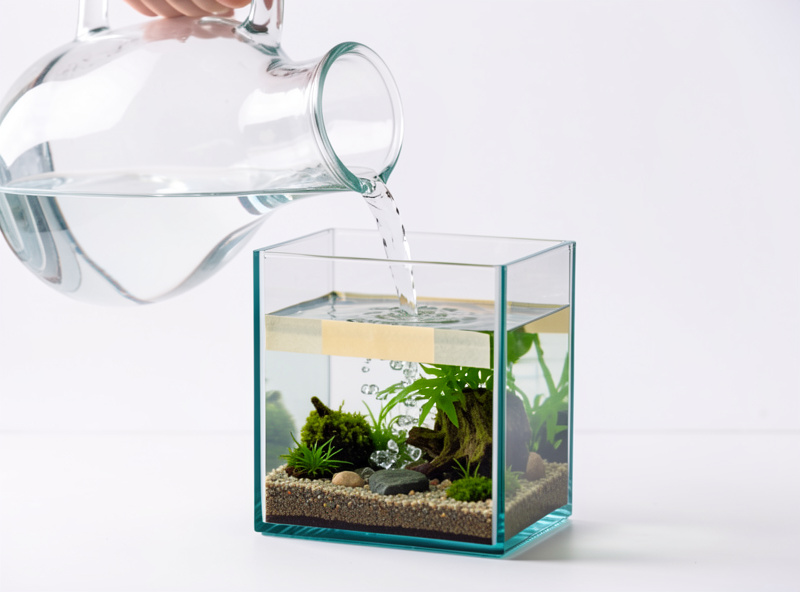
Little and often beats a big rescue fill
Timing matters as much as the water itself. Topping off small amounts daily keeps the concentration close to flat the whole time. Letting the tank evaporate down for two weeks and then dumping in a big slug of water does the opposite — the concentration climbs the whole fortnight, then drops sharply when you refill, which is itself a swing your livestock has to absorb. The goal of stability is to avoid swings, and a neglected-then-rescued top-off creates exactly the kind it’s meant to prevent.
The trick that makes daily top-off effortless is a marked fill line — a strip of tape or an etched mark on the glass at the correct level. Now “is it low?” is answered at a glance, and you add water back to the line without thinking about it. I keep a small jug of pre-conditioned water beside each tank so the whole ritual takes ten seconds. Make it frictionless and you’ll actually do it; make it a chore and you won’t.
When manual top-off isn’t realistic
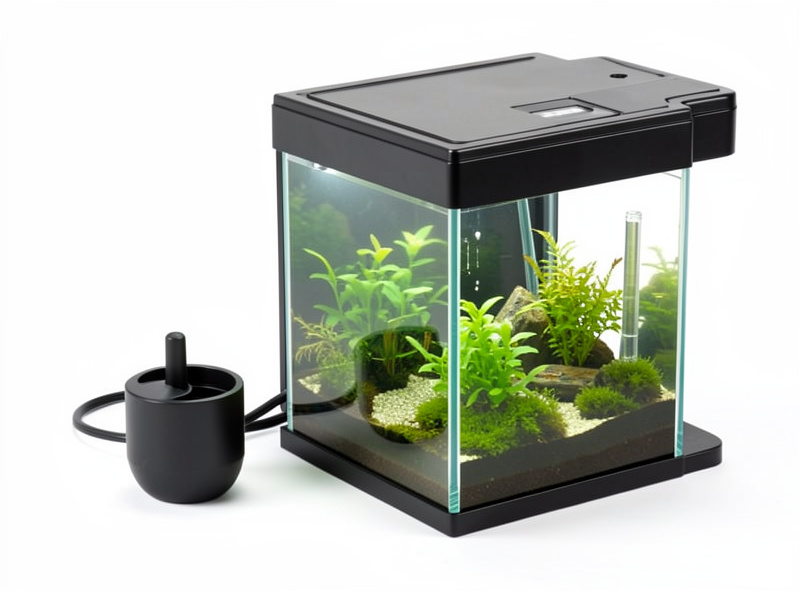
Daily top-off assumes you’re home daily. Travel, busy stretches, or simply forgetting all break the routine, and on a fast-evaporating nano even a few skipped days let the concentration drift. That’s the legitimate case for an auto top-off (ATO): a small reservoir and a sensor that adds fresh water automatically to hold the level — and therefore the concentration — dead steady, including while you’re away.
An ATO isn’t mandatory; a disciplined keeper with a fill line does the same job for free. But it’s one of the few nano gadgets I genuinely rate, because it directly defends the parameter that evaporation attacks. If you’re keeping neocaridina shrimp, stable water is even more critical — the neocaridina shrimp guide covers why these invertebrates react faster to parameter swings than fish and what that means for your top-off discipline. Whether it’s worth it for your tank is its own decision, which I weigh in detail in the dedicated auto top-off article. For now, the principle stands: hold the level steady, by hand or by machine, and you’ve removed one of the biggest sources of nano drift.
More from the stability cluster
- The nano tank stability guide — the full overview of running small water well.
- Why small aquariums are harder — the volume math behind every nano routine.
Frequently Asked Questions
What water should I use to top off a nano tank?
Use fresh dechlorinated tap water for a tank that runs on conditioned tap, or RO water remineralised to your tank’s target for soft-water and shrimp tanks. The water you add back should not change the concentration, because evaporation only removed pure water. Never top off with mineral-rich water on a tank whose hardness is already creeping up.
Why does evaporation raise my tank’s hardness?
Because only the water leaves when it evaporates, while every dissolved mineral stays behind in a smaller volume. That concentrates the calcium, magnesium, and carbonates, so your general hardness and TDS climb even though you have added nothing. On a fast-evaporating nano this happens within days, which is why consistent top-off matters so much.
How often should I top off evaporated water?
Little and often, ideally daily, in small amounts. Topping off daily keeps the concentration close to flat, while letting the tank drop for two weeks and then refilling creates a swing in both directions. A marked fill line and a jug of pre-conditioned water make the daily habit take about ten seconds.
Can I top off with tap water?
Yes, as long as it is dechlorinated first and your tank is meant to run on tap-water parameters. Add a water conditioner so the chlorine or chloramine cannot harm livestock or your filter bacteria. The exception is a soft-water or shrimp tank dialled in on RO, where tap top-off would slowly drive the hardness up off target.
Is an auto top-off necessary for a nano?
Not necessary, but genuinely useful. A disciplined keeper with a marked fill line and daily top-off achieves the same steady level for free. An auto top-off earns its place when you travel, when the tank evaporates fast enough that a few skipped days drift the parameters, or when you know you will not keep up the manual habit.