Of all the nano gadgets people ask me about, the auto top-off is the one I’m most positive about — with caveats. So let’s answer the real question directly: is an auto top off worth it on a nano? My honest verdict is that it’s one of the few small-tank gadgets that genuinely pays for itself, because it defends the exact parameter that small water is worst at holding — but only if you’re honest about whether you’d do the manual version reliably. A disciplined keeper with a fill line gets the same result for free. An ATO buys consistency for the rest of us.
This is the gear-decision piece of the nano tank stability guide. It follows directly from the evaporation and top-off article (read that first for why top-off matters at all) and shares the reliability mindset of the heater article — because an ATO, like a heater, is a device that needs to fail safe.
What an ATO actually does for stability
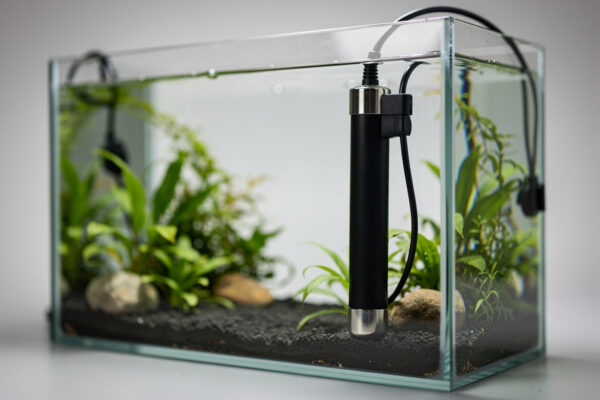
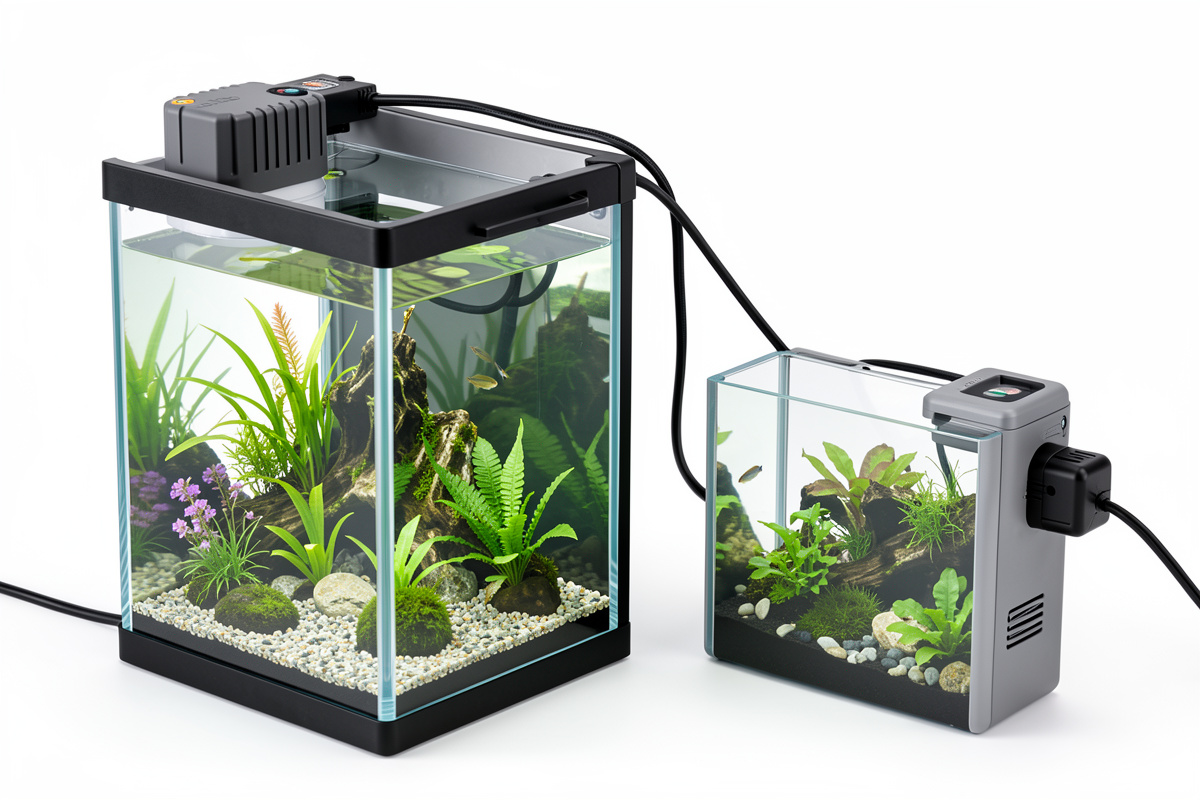
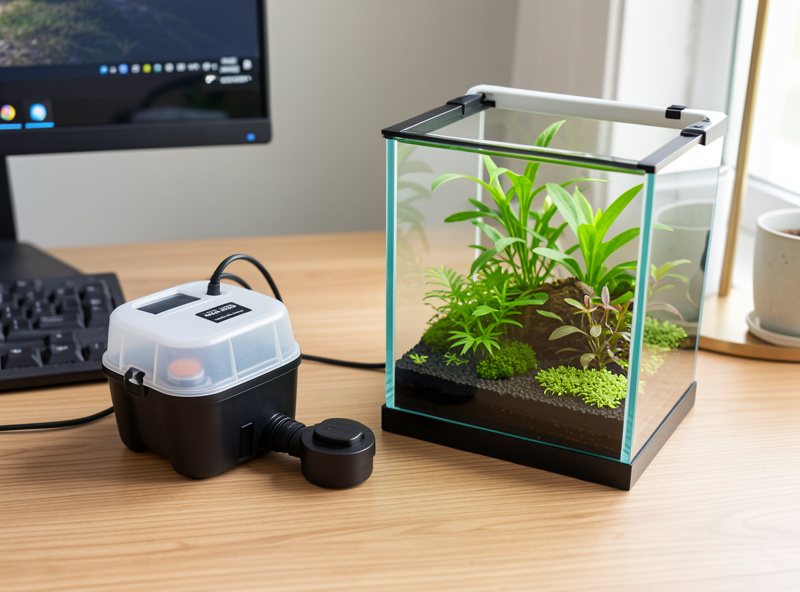
An auto top-off is simple: a reservoir of fresh top-off water, a sensor that detects the tank’s water level, and a small pump that adds water whenever the level drops. The effect is that your tank level — and with it the concentration of every dissolved mineral — stays essentially constant between water changes, instead of drifting up as evaporation does its work. It’s a machine that performs the daily top-off habit perfectly, every day, without you.
On a nano this matters more than on any other size, for the reason this whole site keeps returning to: small volume concentrates evaporation’s effect fast. A big tank barely notices a few days of evaporation; a nano’s hardness and TDS measurably creep. The ATO turns that fast creep into a flat line. It directly attacks the slowest, sneakiest swing in the stability picture — the one that builds up silently while the water looks fine.
The honest cost-benefit
Here’s where I refuse to oversell. An ATO is not magic — it’s a convenience and consistency device, not a capability you can’t get any other way. A keeper who tops off daily to a marked fill line with the right water achieves the identical steady level for zero cost. So the real question isn’t “is an ATO better than nothing” — it’s “is an ATO better than the manual habit I would actually keep?” For people who genuinely top off every day, the honest answer is no, save your money.
The ATO earns its place in three clear cases. First, travel: it keeps a fast-evaporating nano stable while you’re away, which a fill line cannot. Second, very small tanks, where a single day’s evaporation moves the parameters meaningfully and daily-isn’t-enough. Third, and most honestly, keepers who know themselves — if you won’t reliably do the daily jug, the ATO buys you the consistency your routine lacks. That’s not a failing; matching your system to your actual habits is good keeping.
- A nano auto top-off kit — reservoir, sensor, and pump that hold the water level and concentration steady automatically. Browse nano ATO kits on Amazon.
- A backup float switch — a second sensor that guards against an overfill if the primary sensor sticks. Browse float switches on Amazon.
Comparison: ATO vs manual top-off for a nano
| Approach | Stability | Cost | Best for |
|---|---|---|---|
| Auto top-off (ATO) | Excellent, constant | Moderate | Travel, tiny tanks, inconsistent keepers |
| Manual daily + fill line | Excellent if done daily | Free | Reliably hands-on keepers |
| Manual, irregular | Poor — concentration drifts | Free | Nobody — the failure case |
| No top-off | Bad — minerals climb | Free | Never on a nano |
The one rule: it must fail safe
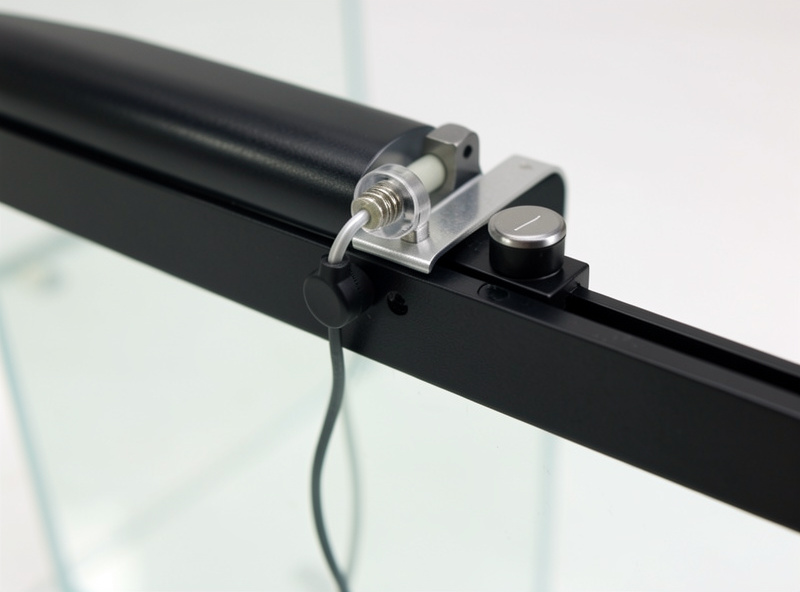
An ATO is a device adding water to your tank automatically, which means a sensor failure can mean an overfill — or, if the reservoir runs dry unnoticed, no top-off at all. So I apply the same reliability mindset I use for heaters: it must fail safe. That means a backup float switch as a second line of defence against overfilling, a reservoir sized so you’ll notice and refill it before it empties, and a sensible placement so a leak or overflow can’t flood anything. An unattended water device deserves the same paranoia as an unattended heater.
The good news is that a well-set-up ATO is genuinely reliable, and the redundancy is cheap. A primary sensor plus a backup float switch covers the realistic failure modes for a few extra dollars. Skip the backup and you’re trusting a single sensor not to stick — the same mistake as trusting a single heater thermostat. Build in the redundancy and the ATO becomes exactly what you want: a quiet, dependable machine holding one important parameter perfectly steady.
My verdict, plainly
If you’re the kind of keeper who reliably tops off by hand every day, you don’t need an ATO — a fill line and a jug do the job, and the money is better spent elsewhere. If you travel, run a very small tank, or know you’ll skip the manual habit, the ATO is one of the genuinely worthwhile nano purchases, because it defends the parameter small water is worst at holding and does it perfectly. Just set it up to fail safe.
That nuance is the whole point of this site: gear is worth it when it solves a real stability problem for your actual situation, not because it’s clever. The ATO clears that bar more often than most nano gadgets — which is high praise from someone who thinks most of them are solutions in search of a problem.
More from the stability cluster
- The nano tank stability guide — the full overview of running small water well.
- Evaporation and top-off discipline — why top-off matters and what water to use.
- Heater reliability on small tanks — the same fail-safe mindset for the other key device.
Frequently Asked Questions
Is an auto top-off worth it for a nano tank?
It is one of the few nano gadgets I think genuinely pays for itself, because it holds the water level and therefore the dissolved-mineral concentration dead steady, which small water is worst at maintaining. It is worth it if you travel, run a very small tank, or know you will not keep up daily manual top-off. If you reliably top off by hand, a marked fill line does the same job for free.
How does an auto top-off work?
A reservoir holds fresh top-off water, a sensor detects when the tank level drops from evaporation, and a small pump adds water back to the set level. The result is a constant water level and a flat dissolved-mineral concentration between water changes, instead of the upward creep that evaporation causes on a nano.
Can an auto top-off overfill or fail?
Yes, which is why it must be set up to fail safe. A stuck sensor could overfill, or an empty reservoir means no top-off at all. Add a backup float switch as a second line of defence against overfilling, size the reservoir so you notice before it empties, and place everything so a leak cannot flood anything.
What water do I put in the ATO reservoir?
The same fresh water you would top off with by hand: dechlorinated tap for a tank on conditioned tap, or RO remineralised to your target for a soft-water or shrimp tank. The ATO only replaces evaporated water, so the reservoir should hold near-pure or correctly remineralised water that keeps the concentration flat.