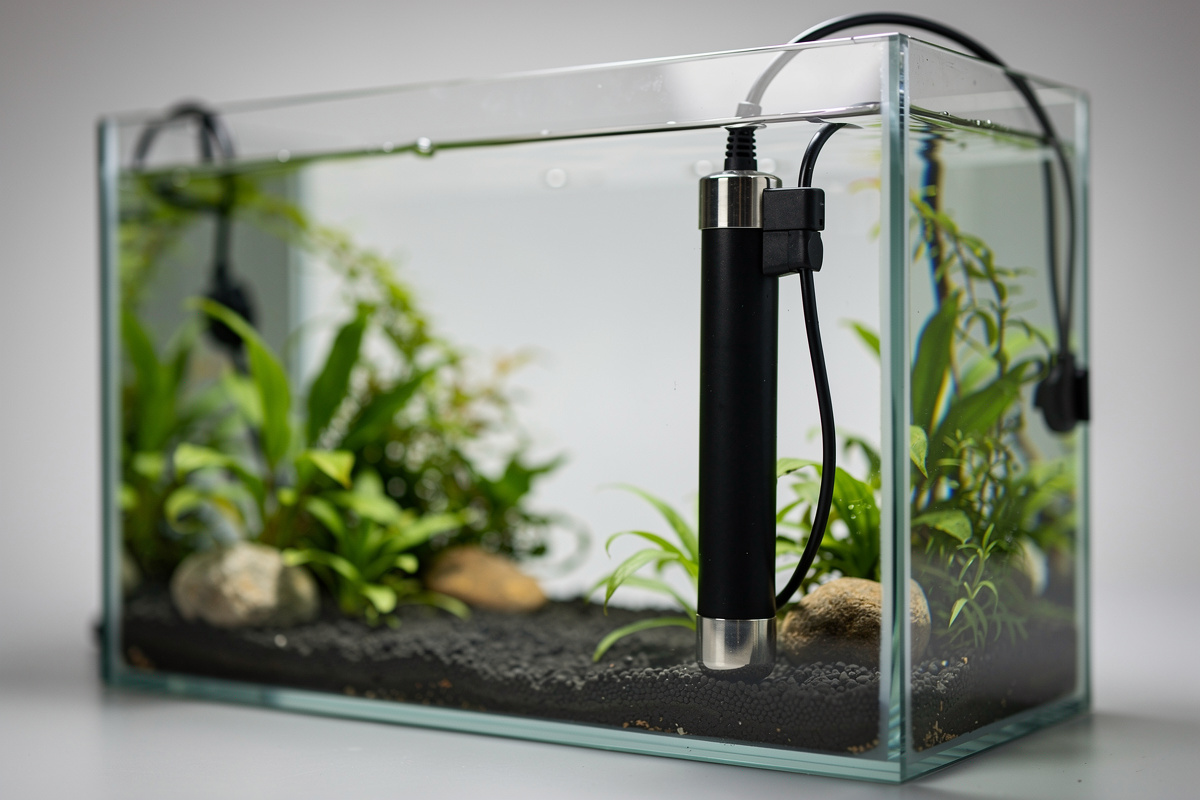
There is exactly one component on a nano where I refuse to buy cheap, and it’s the heater. Heater reliability matters more on small tanks than on any other size, for one unforgiving reason: a nano has almost no thermal mass, so a heater that fails doesn’t give you the slow, catchable warning a big tank does. A stuck-on heater can cook a small tank to lethal temperatures in hours; a failed-off one lets it chill fast in a cold room. The heater is the component most likely to wipe a nano overnight — so it’s the one I treat with the most paranoia.
This is the temperature-stability piece of the nano tank stability guide. It builds on the swing analysis in parameter swings in a small tank (where temperature ranks as the fastest mover) and pairs with the matched-water discipline from the water-change cadence article.
Why heater failure is the nano’s deadliest fault
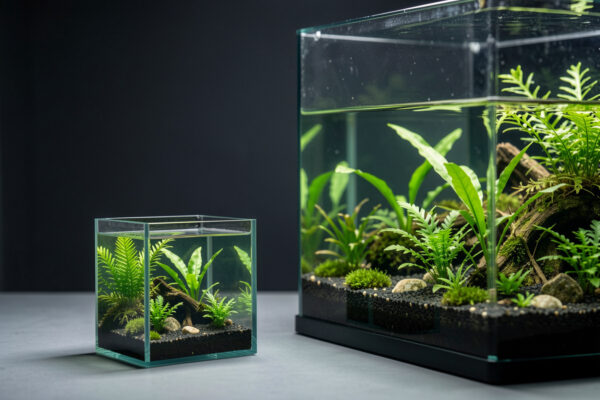
Run the thermal math the same way we ran the dilution math. Heat capacity scales with volume, so a nano holds very little thermal energy. When a heater’s thermostat sticks closed and it just keeps heating, a big tank’s large water mass absorbs the extra energy slowly, buying you hours or days to notice. A nano has no such buffer — the temperature climbs fast, and “fast” in a small enough tank can mean dangerous before you’re home. The same is true in reverse: lose the heat in a cold room and a nano cools quickly because there’s so little warm water to coast on.
Heaters fail in two classic ways, and both are worse on small water. Failing “on” (thermostat stuck closed) is the cooker — the dangerous one, because elevated temperature is acutely lethal to fish and shrimp. Failing “off” (thermostat stuck open or the element dead) is the chiller — slower to harm but still a stressor, especially through a Swedish winter when room temperature alone won’t hold a tropical tank. On a big tank you might catch either before harm. On a nano, you need the failure to be caught by a backstop, not by luck.
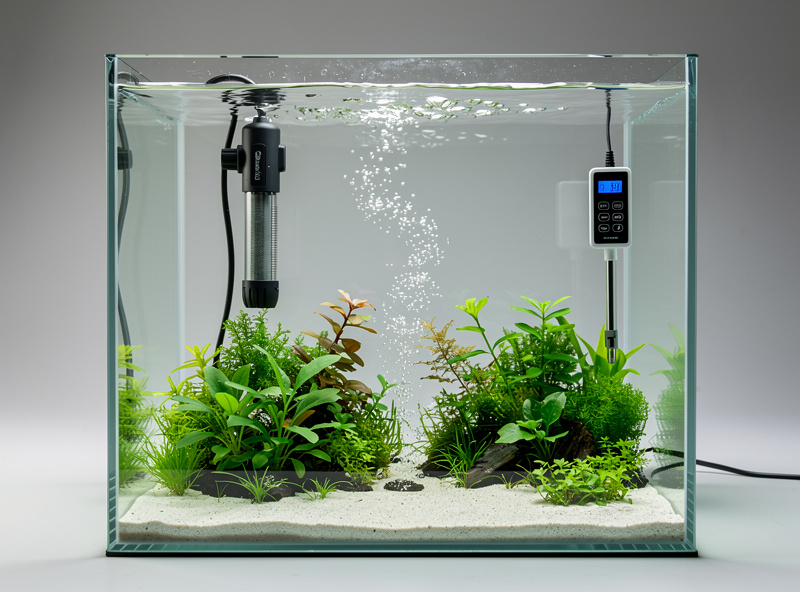
The cardinal rule: never trust the dial
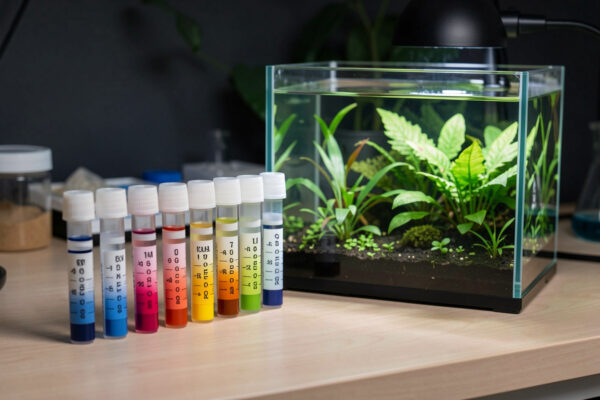
The single most important habit with any aquarium heater, and doubly so on a nano, is this: the heater’s own thermostat is not a measurement, it’s a guess. The dial says one thing; the actual water can be reading something else entirely, and on a small volume that gap matters fast. I verify every heater with a separate, independent thermometer — the same instinct as never trusting a single uncalibrated meter on a hydro reservoir. The heater controls; the thermometer tells the truth.
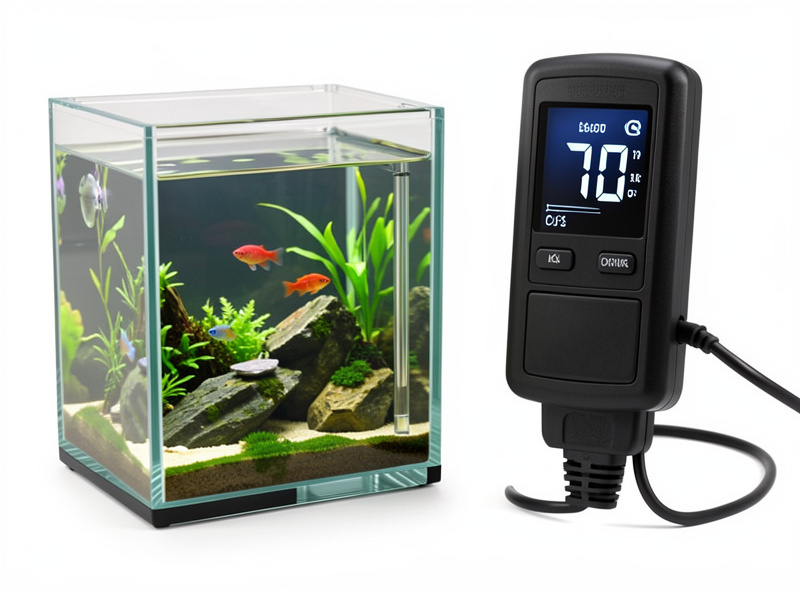
A cheap stick-on or digital probe thermometer is the cheapest insurance in the hobby. Glance at it daily and a creeping or dropping number tells you the heater is misbehaving long before the fish do. For a tank I genuinely can’t afford to lose, I go a step further and run the heater through an external temperature controller — an outlet thermostat that cuts power if the water exceeds a set ceiling, overriding a stuck heater entirely. On a tiny, valuable tank that backstop is the difference between a scare and a wipeout.
- A reliable nano heater — sized for small volumes, chosen for a dependable thermostat over raw wattage. Browse nano heaters on Amazon.
- An independent digital thermometer — verifies the real water temperature instead of trusting the heater’s dial. Browse aquarium thermometers on Amazon.
- An external temperature controller — cuts power if the water exceeds a set ceiling, overriding a stuck heater. Browse heater controllers on Amazon.
Sizing a nano heater — reliability over wattage
The instinct to buy the most powerful heater that fits is backwards on a nano. An oversized heater puts a lot of heating power into a tiny volume, so if it sticks on, it cooks the tank faster — the very failure mode you most want to avoid. The goal is a heater matched to the volume that can comfortably hold temperature against your room’s lowest temperature, no more. A modestly sized, well-regulated heater that can’t overpower the tank is safer than a powerful one that can.
Quality of the thermostat matters more than the wattage number on the box. Cheap heaters are exactly the ones that stick, and on a nano a stuck cheap heater is a tank-ending event, not an inconvenience. This is the one place I tell people to spend up: a well-made heater with a reliable thermostat, correctly sized, and verified by an external thermometer. The premium over a bargain heater is trivial next to the cost of restocking a wiped tank — and the lives in it.
Comparison: nano heater setups by reliability
| Setup | Stuck-on protection | Cost | My verdict |
|---|---|---|---|
| Cheap heater, dial only | None | Lowest | The classic tank-killer — avoid |
| Quality heater + thermometer | Manual (you catch it) | Low–moderate | The sensible minimum |
| Quality heater + external controller | Automatic cut-off | Moderate | Best for valuable / tiny tanks |
| Heater with hard temp ceiling | Built-in limit | Moderate | Good for very small nanos |
What I actually run, and the daily check
On my tanks the pattern is consistent: a correctly sized, well-regulated heater, a separate digital thermometer on every tank, and an external controller on the ones I most care about — including the shrimp colony, where a temperature spike during a molt window is the kind of swing that causes culls. None of it is expensive; all of it is deliberate. The heater that quietly works for years is worth ten that were cheaper on the shelf.
The habit that ties it together is a two-second daily glance at the thermometer, logged when anything looks off. Temperature is the fastest-moving parameter on a nano, so it’s the one most worth watching daily. A number that’s drifting is a heater telling you it’s about to fail — and on small water, catching that a day early is the whole game. Stable temperature isn’t luck; it’s a good heater, a thermometer that doesn’t lie, and the discipline to look.
More from the stability cluster
- The nano tank stability guide — the full overview of running small water well.
- Parameter swings in a small tank — why temperature is the fastest mover.
- Water change cadence for nano tanks — matching water temperature on every change.
Frequently Asked Questions
Why is heater reliability more important on a nano tank?
Because a nano has very little thermal mass, so a heater fault becomes a temperature crisis fast. A stuck-on heater can reach lethal temperatures within hours, where a large tank’s water mass would absorb the extra heat slowly enough to catch. The small volume removes the safety margin a big tank gives you.
Should I trust the heater’s built-in thermostat?
No. The dial is a control setting, not a measurement, and the actual water temperature can differ from it. Always verify with a separate, independent thermometer. On a nano that gap matters quickly, so the thermometer is what tells you the truth while the heater just does the heating.
What size heater does a nano tank need?
One matched to the volume that can comfortably hold temperature against your room’s coldest point, and no more. Oversized heaters are actually riskier on a nano because if they stick on they cook the small volume faster. A modest, well-regulated heater that cannot overpower the tank is safer than a powerful one.
Is an external temperature controller worth it?
On a valuable or very small tank, yes. An external controller is an outlet thermostat that cuts power if the water exceeds a set ceiling, overriding a stuck heater entirely. It is the automatic backstop against the deadliest heater failure, and the cost is trivial next to restocking a wiped tank.
How do I know if my nano heater is failing?
Watch the independent thermometer daily. A temperature that is creeping up or drifting down from your set point is a heater starting to misbehave, often a day or more before the fish show stress. On fast-moving small water, catching that early glance is what prevents a loss, which is why temperature is the parameter most worth a daily check.