Liquid carbon is a glutaraldehyde-based additive that works as a strong algae spot-treatment and, at best, a very mild carbon supplement — it is not a replacement for pressurized CO2. In my nano tanks it earns its keep killing black beard algae, not growing carpets. Sold as “liquid CO2,” it does a fraction of what real CO2 does, and understanding that gap saves you money and dead plants.
The marketing on these bottles is the problem. “Liquid CO2” implies you can skip a pressurized system and still run demanding plants, and that’s simply not true. What you’re actually buying is glutaraldehyde — a well-known biocide — that plants can use as a small carbon source and that kills algae on contact. Treat it as an algae tool with a mild fertilizing side effect and it’s genuinely useful. Treat it as a CO2 substitute and you’ll watch a carpet stall while you dose faithfully.
Here’s what it actually does, what it doesn’t, and which plants and animals it will hurt if you overreach.
What Is Liquid Carbon, and Is It Really Carbon?
The active ingredient in nearly every “liquid carbon” product is glutaraldehyde (or a closely related polycycloglutaracetal, which breaks down toward the same thing). Glutaraldehyde is an industrial biocide and disinfectant, and the claim is that as it breaks down in the tank, plants can access some of the carbon. Whether that carbon uptake is meaningful for growth is genuinely debated among planted-tank keepers — the algae-killing effect is not debated at all.
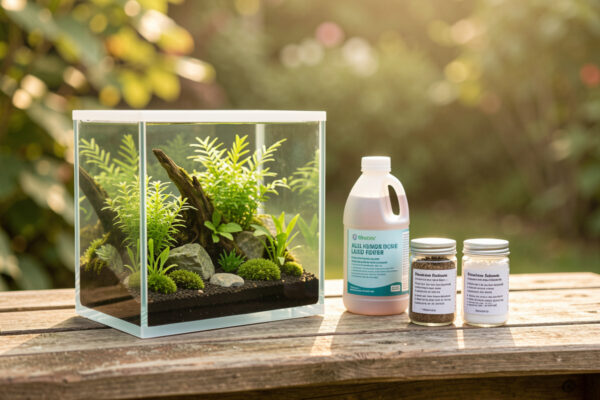
So the honest framing: the “carbon” part is marginal and disputed; the biocide part is real and potent. Because glutaraldehyde is a recognized hazardous chemical with documented handling precautions — the kind of data compiled on PubChem — I treat the bottle with respect: I don’t splash it, I keep it off my skin, and I dose with a syringe rather than pouring. The two products I’ve run are Seachem Excel and API CO2 Booster, and both smell faintly sharp and chemical when you open them, which is your reminder that this is not plant food in the fertilizer sense. If you want the nutrient side of dosing, that lives in the nano tank fertilizer and dosing guide; liquid carbon sits alongside that, not inside it.
What Does Liquid Carbon Actually Do Well?
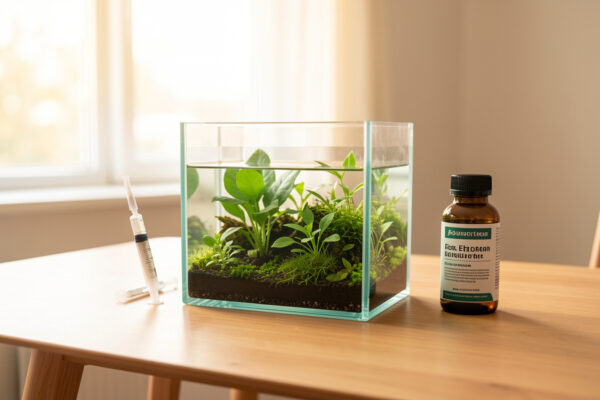
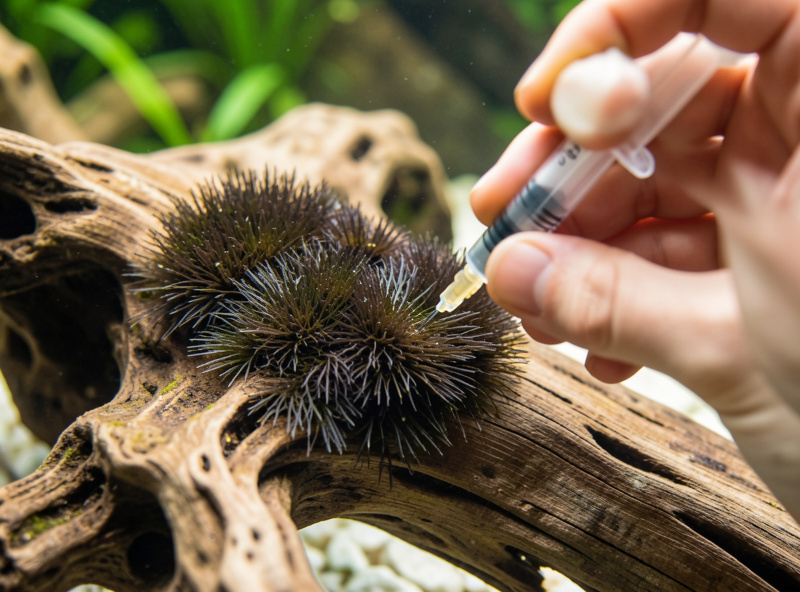
It destroys certain algae, and it’s the best in-tank tool I have for the ones that resist everything else. Black beard algae (BBA) and staghorn — the wiry, dark tufts that colonize slow-flow spots and hardscape — melt under a direct dose. I turn off the filter, draw up a syringe of liquid carbon, and squirt it straight onto the tuft. Within a day or two the algae flushes red or pink and dies, and the cleanup crew grazes off the remains.
That spot-treatment ability is the number-one reason a bottle sits in my cabinet. BBA laughs at most approaches; a targeted glutaraldehyde hit is one of the few things that reliably kills it in place. I still fix the underlying cause — BBA is almost always a symptom of unstable CO2 or poor flow, which the nano tank algae guide diagnoses — but liquid carbon buys me time and clears the visible damage while I correct the balance. As a general water-column dose it also provides mild ongoing algae suppression, which is why some low-tech keepers run it daily even knowing the carbon benefit is small.
What Liquid Carbon Does NOT Do
It does not replace pressurized CO2 for demanding plants, and no dose gets you there safely. A carpeting plant like Monte Carlo or Dwarf Baby Tears wants far more carbon than glutaraldehyde can deliver at any tank-safe concentration — push the dose high enough to matter and you cross into harming livestock long before you feed the carpet. This is the core misunderstanding the “liquid CO2” name creates.
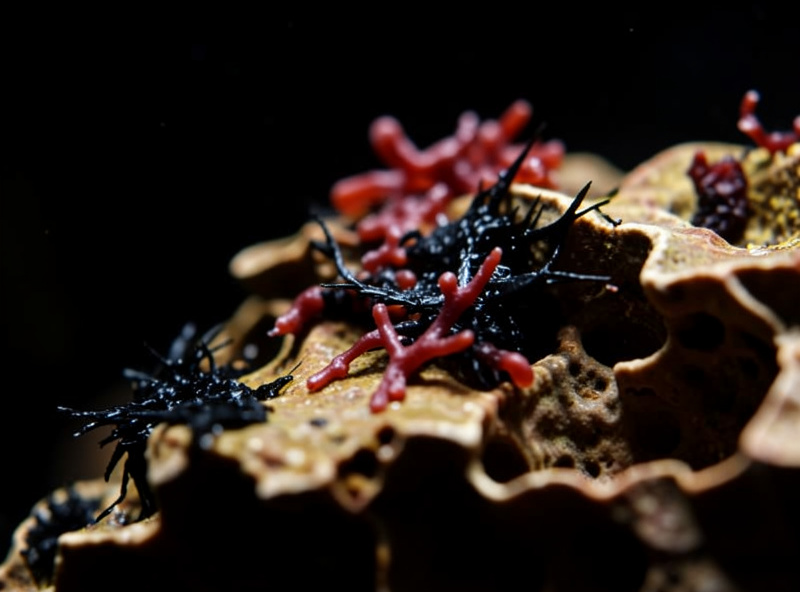
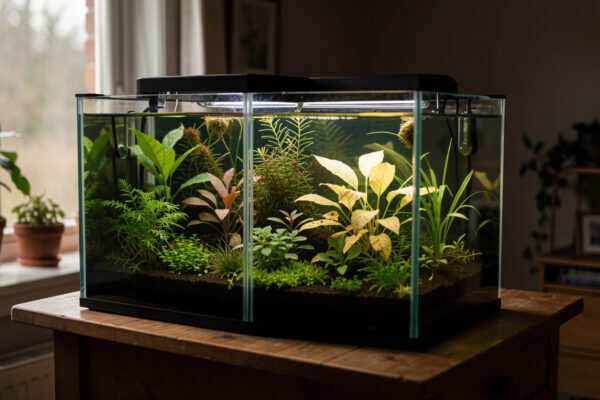
The photo above is what success actually looks like — algae dying, not plants pearling. Real pressurized CO2 makes demanding plants pearl with oxygen and grow tight and compact; liquid carbon does not reproduce that. If your goal is a lush carpet or fast, dense stem growth, a proper CO2 system is the honest path, and the trade-offs between running one and going low-tech are in the low-tech vs high-tech CO2 guide. Liquid carbon lives in the low-tech world; it makes an easy plant a bit happier and keeps algae down, and that’s the ceiling.
Which Plants and Animals Does Liquid Carbon Harm?
Several popular plants melt from glutaraldehyde even at normal doses. Vallisneria is the notorious one — it can dissolve into mush from a standard dose — and some mosses, liverworts, and delicate stems react badly too. Certain crypts sulk. So before you commit to daily dosing, check that your plant list can take it, because a bottle meant to fight algae can wipe out a foreground overnight.
For livestock, the margin is dose-dependent. At label rates, glutaraldehyde is generally tolerated by fish and shrimp, but overdose it and you’re dosing a biocide into a small volume where there’s little room for error. My Neocaridina colony gets liquid carbon only as a careful spot-treatment with the filter briefly off, never as a heavy water-column dose, because shrimp in a nano feel a swing faster than anything. I keep their tank on the lean, stable regime described in the cherry shrimp water parameters guide, and a biocide overdose is exactly the kind of shock that regime exists to avoid.
| Option | Feeds demanding plants? | Kills algae? | Main risk |
|---|---|---|---|
| Pressurized CO2 | Yes — fully | Indirectly (via plant health) | Cost, gas dosing errors |
| Liquid carbon | Barely | Yes — directly, potent on BBA | Melts vals/mosses; overdose harms livestock |
| Neither (low-tech) | Easy plants only | No | Slow growth; algae from imbalance |
How I Use Liquid Carbon in My Nano Tanks
Spot-treatment first, daily dosing rarely. My method for a BBA outbreak: filter off, syringe loaded with a small measured amount of aquarium liquid carbon, squirt directly onto the algae, wait a few minutes, then turn the filter back on. I only spot-dose what a tank’s livestock can safely absorb into the whole volume, because that squirt does eventually mix in. On the low-tech 20-liter I’ll sometimes run a small daily water-column dose for background algae control, but I’ve stopped pretending it’s feeding the plants.
As an Amazon Associate I earn from qualifying purchases.
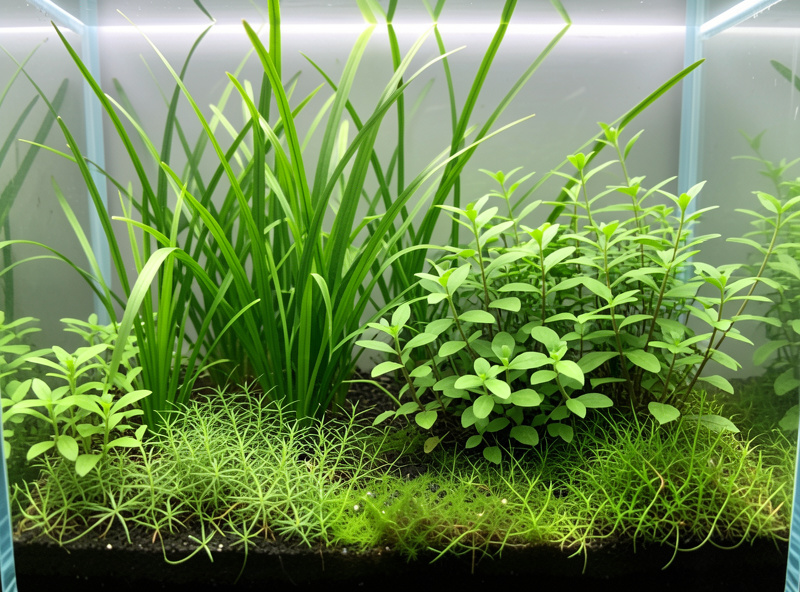
The Vallisneria and moss above are exactly the plants I have to be careful around — which brings me to my mistake. Early on I ran a daily liquid-carbon dose on a tank I’d just planted with vals for a background wall, figuring more carbon meant faster establishment. Within a week the vals were transparent ribbons collapsing off the substrate, sliming apart when I tried to pull them. I’d dosed a biocide onto one of the most glutaraldehyde-sensitive plants in the hobby and blamed the plants for being “weak.” They weren’t; I’d poisoned them. Now I check every new plant against the sensitive list before liquid carbon goes anywhere near it, and I keep the vals in a tank that never sees the bottle.
How Often Can You Dose Liquid Carbon Safely?
Daily at the label rate is the common routine for a water-column dose, but I’d rather you think in terms of what the tank needs than a fixed schedule. For background algae suppression on a low-tech tank, a small daily dose at or below the label amount is generally safe for hardy plants and standard livestock. For a spot-treatment, I dose the target amount onto the algae and then don’t add more that day, because the squirt still counts toward the whole tank’s load once it mixes.
The mistake is stacking doses — spot-treating an algae patch and running the full daily water-column dose on the same day, which quietly doubles what your shrimp are sitting in. In a nano, that doubling matters because the volume is so small that a modest overpour becomes a real concentration spike fast. I keep a note in my parameter log of when and how much I dosed, the same way I log ferts and water changes, so I never lose track and accidentally double up. Small water punishes the “I think I already dosed today” guess.
Is Liquid Carbon the Same as Excel or API CO2 Booster?
Functionally, mostly yes — the mainstream “liquid carbon” products are all glutaraldehyde or a glutaraldehyde precursor, so they behave alike: algae control strong, carbon contribution weak. Seachem Excel and API CO2 Booster are the two I’ve used, and I couldn’t tell you a meaningful performance difference between them on black beard algae. Concentration and dosing instructions vary between brands, so the one thing you can’t do is assume the same volume across bottles — always dose to the specific product’s label, not to a number you remember from a different bottle.
Generic or store-brand “liquid CO2” bottles are usually the same active ingredient at a lower price, and I’ve run those too without issue. Where I’d be cautious is any product making outsized “replaces CO2” claims — the chemistry doesn’t support it regardless of the label, and paying a premium for that promise buys you nothing a cheaper glutaraldehyde bottle doesn’t already do. Buy on price and concentration, dose to the label, and keep your expectations set on algae, not carpets.
What I’d do starting today: keep a bottle for spot-killing black beard algae, dose it with a syringe and the filter off, and never expect it to grow a demanding carpet. If your plant list includes Vallisneria or fussy mosses, dose with extreme caution or skip it entirely. And if you keep reaching for it to fight recurring algae, treat that as a signal to fix your CO2 stability and flow — the bottle is a bandage, not a cure. Test and correct the cause; the glutaraldehyde just cleans up the evidence.