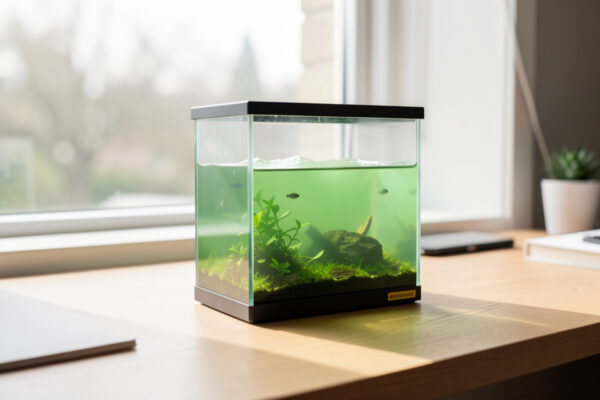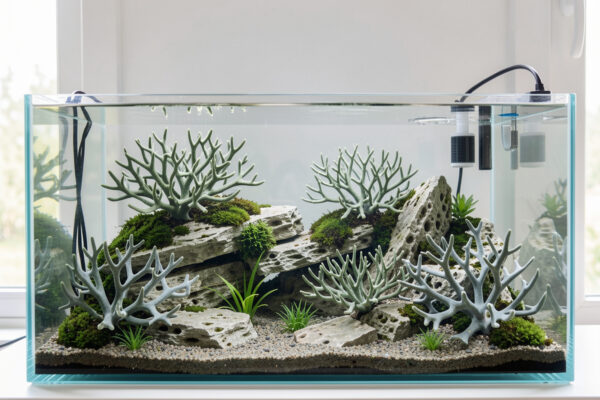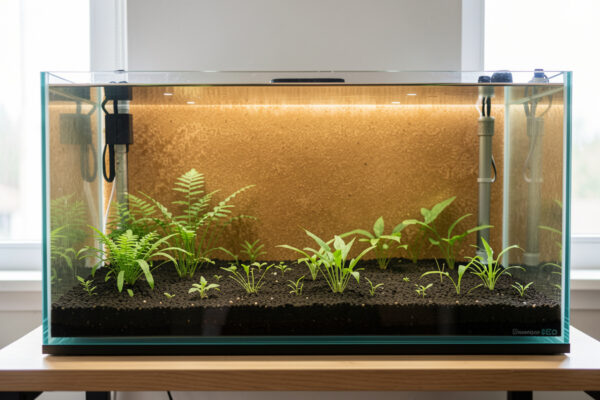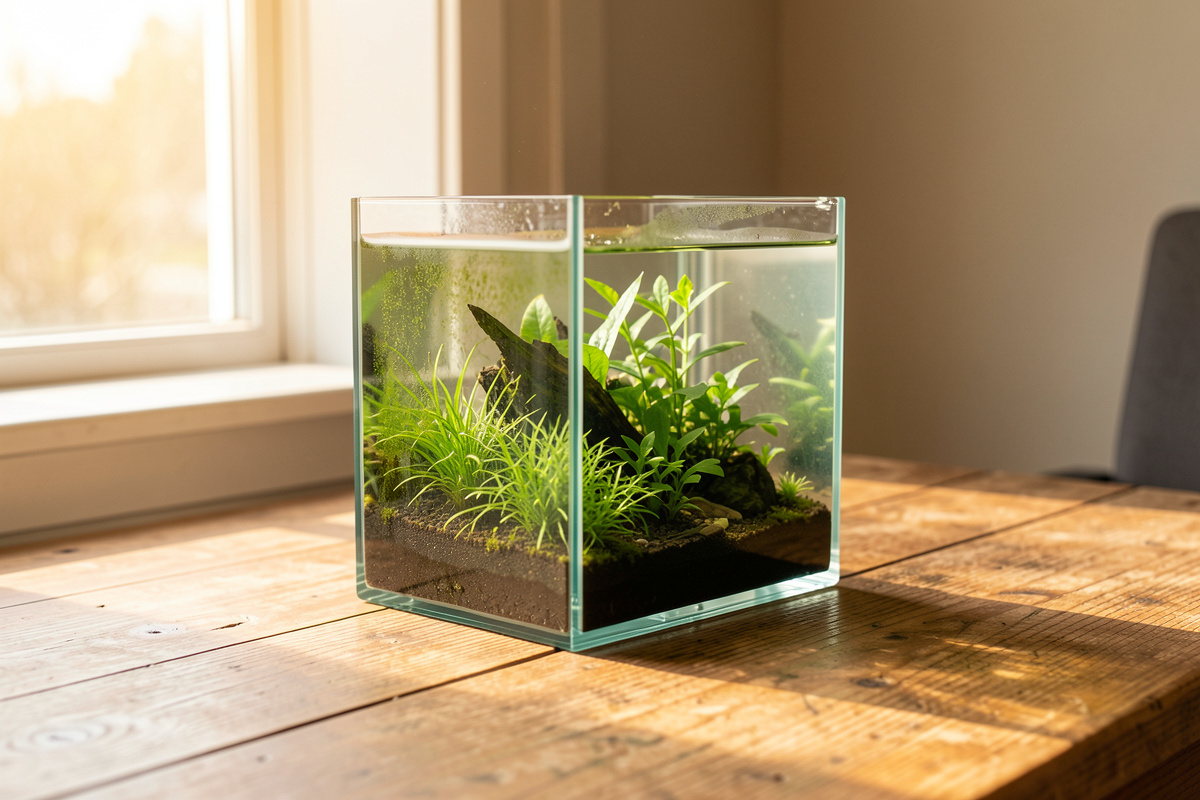
An aquarium algae guide that actually works starts with one fact: algae is a symptom, not a disease. In a nano tank, algae appears when light, nutrients, CO2, and flow fall out of balance — and small water, often just 10 to 30 litres, swings out of balance fast. Diagnose the cause, fix the parameter, and the algae starves. No bottle required.
I run four small tanks in Sweden as parallel experiments — a low-tech planted nano, a high-tech 60L showpiece on pressurised CO2, a dedicated Neocaridina shrimp tank, and a spare bench — and every one of them has grown algae at some point. The difference between the keeper who panics and the keeper who fixes it is simple: the second one reads the algae like a meter. Green spot on the glass tells you one thing. Black beard on the filter outflow tells you something completely different. This guide teaches you to read it, because the same chemistry discipline I imported from years of hydroponics — test, don’t guess — is what ended my algae wars for good.
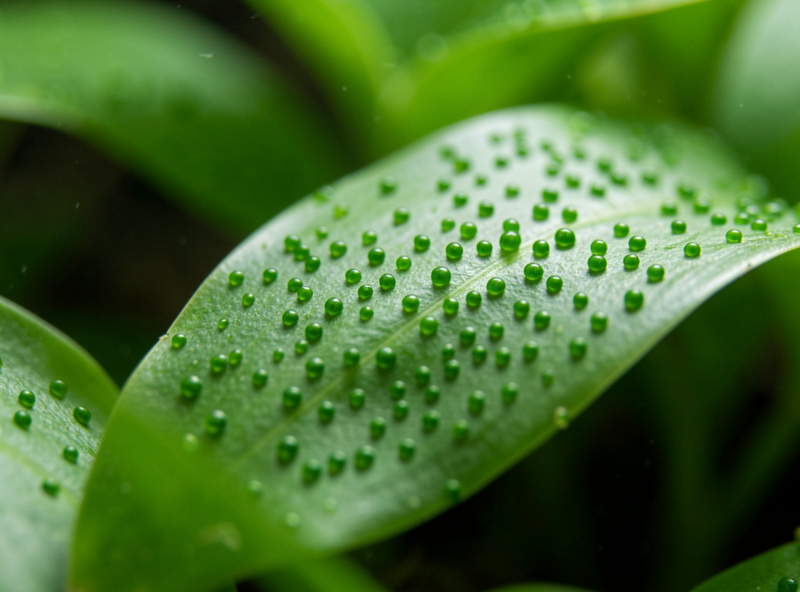
Algae Is a Symptom, Not a Disease
Every algae problem is the tank telling you that the supply of light and nutrients exceeds what your plants and bacteria are consuming. Algae are simply the fastest organisms in the tank to exploit a surplus. They do not “invade” a healthy system; they bloom in an unbalanced one. That single reframe changes everything about how you respond.
The bottle aisle at the fish store sells algae as an enemy to be killed. It is not. Killing visible algae with a chemical while leaving the surplus in place is like mopping a floor under a running tap — the algae returns in a week, and now you have dead organic matter rotting in a tiny volume, which spikes ammonia and feeds the next bloom. I have watched new keepers chase one algae type with a treatment, trigger a different type, and end up with a tank uglier than where they started. The chemistry never lies: remove the surplus, and the algae has nothing to eat.
This is why my approach is diagnostic, not chemical. When algae appears, I do not reach for a bottle. I open my parameter log, check what changed — a longer photoperiod, a skipped water change, a dead snail, a new fish that doubled the bioload — and I correct the input. The algae fades on its own timeline as the surplus disappears. It is slower than a chemical hit, but it is permanent, and it never costs an animal its life.
The Four Drivers Behind Every Bloom
Algae growth is governed by four inputs, and an excess of any one — relative to plant demand — triggers a bloom. Light energy is the trigger; nitrate and phosphate are the fuel; CO2 sets how fast your plants can compete; and flow decides whether nutrients reach the plants or stagnate in dead zones. Get these into balance and algae has no opening.
Light is the single most common cause in nano tanks. A small tank sits close to its light, and modern LED fixtures are far brighter than the dim units of a decade ago. Too long a photoperiod, or intensity your plants cannot use, hands the surplus straight to algae. This is the root of light-driven algae, and it is why I treat the photoperiod as the first dial to turn, not the last.
Nutrients — mainly nitrate and phosphate — are the fuel. In a nano they accumulate fast from feeding and fish waste because the dilution volume is tiny. A skipped water change in a 20L tank moves the needle more than a skipped change in a 200L tank ever could. The water change cadence is your main lever on nutrient surplus.
CO2 is the variable most keepers ignore. Carbon is the nutrient plants need in the largest quantity, and when it swings or runs short, plants slow down and stop competing — algae fills the gap. Unstable CO2 in a high-tech tank causes more algae than no CO2 at all in a low-tech one. My 60L showpiece taught me that lesson the expensive way.
Flow distributes everything. Dead spots — behind rocks, under broad leaves, in the corner the filter never reaches — are where detritus settles and the slow-growing nuisance algae take hold. Good circulation is not about a hurricane; it is about no stagnant pockets. I cover this balance in depth in the guide to controlling algae with plants and flow.
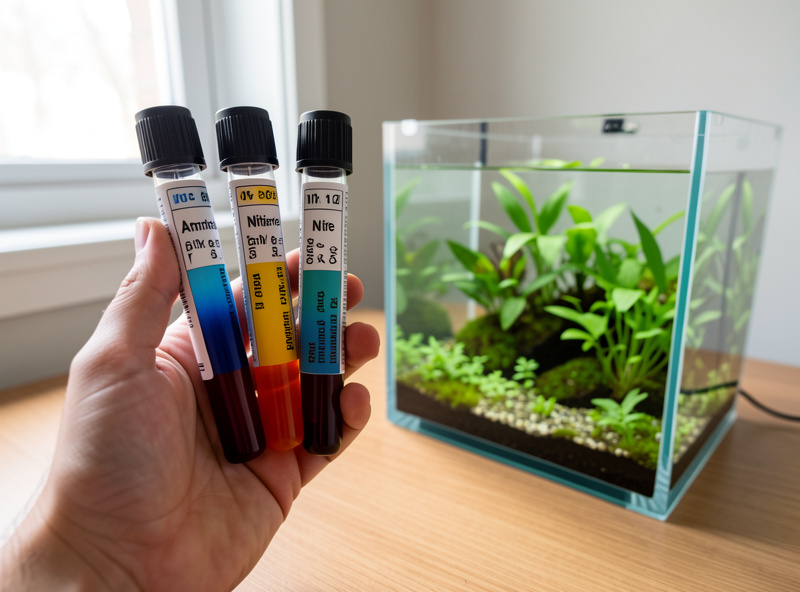
Why Nano Tanks Grow Algae Faster
A nano tank is not a small version of a big tank — it is a less forgiving one. The volume math is unforgiving: in 20 litres, a single overfed pinch of food, one dead shrimp, or one hot afternoon raises the nutrient and temperature surplus far faster than the same event would in a large aquarium. Small water swings, and algae exploits swings.
I have made the case at length that small aquariums are harder, and algae is the clearest proof. Dilution is your friend in aquarium keeping, and a nano tank gives you almost none of it. A nitrate reading that climbs from 10 to 40 ppm between water changes is normal in a neglected nano and would take weeks in a big tank. That climb is an algae buffet.
The flip side is that a nano responds to correction just as fast. A 30% water change in a 20L tank is six litres — trivial to do twice a week — and it resets the nutrient surplus immediately. The same leverage that lets a nano spiral into an algae mess lets a disciplined keeper pull it straight in days. Speed cuts both ways. This is the entire argument for the stability-first approach I build every tank around.
Identify Your Algae by Cause
The fastest path out of an algae problem is correct identification, because each type points at a specific surplus. Green spot algae means light and low phosphate; black beard means unstable CO2 and flow; green water means an ammonia or light spike; diatoms mean a new, uncycled tank. Match the algae to the cause and you know exactly which input to correct.
Below is the diagnostic table I use as a quick reference. Each row links to the full cause-and-prevention guide for that algae type. None of these guides prescribe a treatment chemical — they tell you which parameter created the bloom and how to remove it, because that is the only fix that lasts.
| Algae type | Looks like | Primary cause | First parameter to check |
|---|---|---|---|
| Green spot algae | Hard green dots on glass and old leaves | High light, low phosphate | Photoperiod and phosphate dosing |
| Black beard algae | Dark tufts on edges, wood, outflow | Unstable or low CO2, poor flow | CO2 stability and circulation |
| Green water | Pea-soup cloudy green water | Ammonia spike or excess light | Ammonia and photoperiod |
| Staghorn algae | Grey-green branching strands | Low CO2, high organic waste | CO2 and maintenance cadence |
| Diatoms | Brown dusty film on everything | New tank, silicates, immature cycle | Cycle maturity (this is normal) |
| Green film on glass | Thin green haze you wipe weekly | Light and minor nutrient surplus | Photoperiod and glass cleaning |
Notice the pattern: three of the six point back to light or CO2, and two point back to maintenance. Almost nothing here is solved by a product. The exception that proves the rule is diatoms, which are not a problem at all — they are a milestone, and I will explain why.
New-Tank Algae Is a Milestone, Not a Failure
If your tank is under two months old and covered in a brown dust, you do not have an algae problem — you have a cycling tank doing exactly what it should. Brown diatoms bloom in nearly every new aquarium as silicates leach from fresh substrate and the biofilm establishes, then they fade on their own once the system matures. Wiping them off and waiting is the whole treatment.
This is the single most misdiagnosed algae in the hobby. New keepers see the brown film, panic, and start dosing or scrubbing aggressively, which only delays the maturation that ends the bloom. The diatom phase is tied directly to the nitrogen cycle: until your biofilter is fully colonised and the tank has settled, the surplus that feeds diatoms is unavoidable. Reading when a tank is truly cycled tells you when the diatom clock should run out — usually four to eight weeks.
I always tell new keepers to expect diatoms and to be patient through them, the same way I tell them not to chase the nitrite spike during a fishless cycle. Both are normal stages. The full breakdown lives in the guide to diatoms in a new nano tank, but the headline is this: do not treat a milestone like a disease.
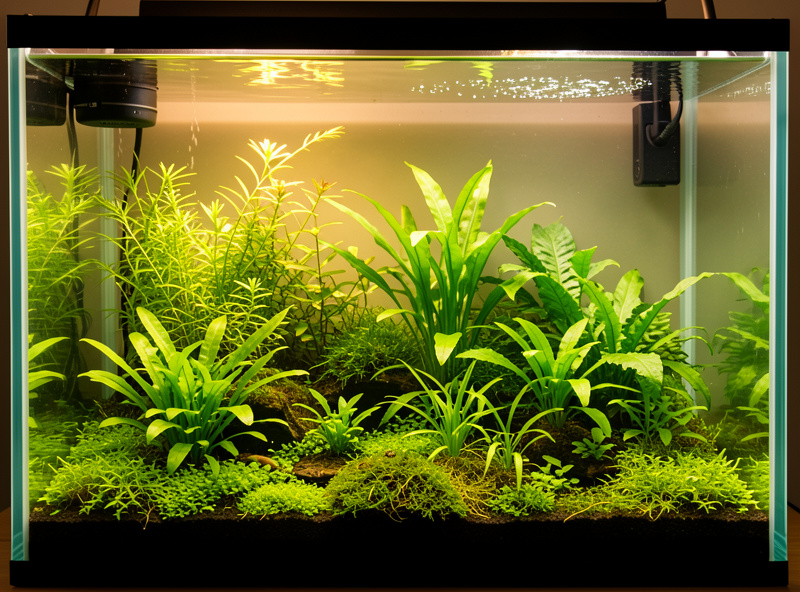
The Prevention System: Parameters and Husbandry
Algae prevention is not a product you add — it is a routine you keep. The three habits that have kept my established tanks essentially algae-free are a fixed photoperiod, a matched water-change cadence, and a parameter log that catches surplus before it becomes a bloom. None of them cost more than a test kit and ten minutes a week.
Start with the photoperiod. A planted nano needs six to eight hours of light a day, on a timer, every day. More than that does not grow plants faster — it grows algae. I run my low-tech nano at six hours and my CO2 tank at eight, both on cheap mechanical timers, and I do not deviate. Inconsistent light is as bad as too much: a tank that gets afternoon sun on top of its fixture is getting an uncontrolled dose, and direct sun is the most reliable green-water trigger I know.
Next, water changes. In a nano, small and frequent beats large and rare. I do 25–30% twice a week on the planted tanks and match the new water’s temperature and remineralisation so nothing swings. This is the single most powerful anti-algae habit there is, because it physically exports the nutrient surplus before algae can use it. My full method is in the water change cadence guide, and the top-off discipline that keeps parameters steady between changes matters just as much.
Finally, the parameter log. This is the habit I carried over from hydroponics, and it is the one that separates measuring from guessing. Once a week I test nitrate, and on the shrimp tank I also log KH, GH, and TDS. A liquid test kit — I keep a standard ammonia/nitrite/nitrate/KH/GH set on the shelf — tells me when nitrate is creeping up before algae does. As an Amazon Associate I earn from qualifying purchases. If you keep one piece of gear beyond the basics, make it a liquid aquarium test kit; the test strips are too imprecise to catch a slow surplus, and in a nano, slow surpluses are exactly what you are fighting.
Plants and Flow: Your Living Algae Control
The most effective algae control in any tank is a thriving population of plants, because plants and algae compete for the exact same light and nutrients — and healthy plants win. A well-planted nano with good circulation starves algae automatically by consuming the surplus first. This is why my low-tech nano, packed with easy plants, goes months without a visible algae problem despite minimal intervention.
The trick is plant density and plant health, not plant variety. A handful of struggling stems leaves plenty of surplus for algae; a tank stuffed with fast-growing, healthy plants leaves almost none. Floating plants in particular are algae assassins because they have unlimited CO2 at the surface and shade the water column, and the hardy low-tech plants that actually survive are the ones I lean on. I cover the full strategy — which plants, how much flow, how to read the balance — in controlling algae with plants and flow.
Flow is the silent partner. Plants can only consume nutrients that reach them, and a dead spot is a nutrient reservoir for algae. I aim for gentle, complete circulation — no leaf left permanently still, no corner the current never touches — without blasting delicate plants or stressing shrimp. On a shrimp tank that balance is delicate, which is one more reason the Neocaridina setup rewards careful flow tuning.
My Algae Audit: The Checklist I Run on Every Bloom
When algae appears on any of my tanks, I run the same audit before I change anything, because the cause is almost always in the recent history. The audit takes five minutes and a glance at the log, and it has solved every algae problem I have had without a single chemical. Diagnose the change, reverse the change, wait.
- What changed in the last two weeks? New light, longer photoperiod, new fish, heavier feeding, a missed water change, a dead animal? The trigger is almost always here.
- What is my nitrate reading? Climbing nitrate means the water-change cadence is losing to the bioload. Export more, feed less.
- Is the light too long or too bright? Cut the photoperiod by an hour before anything else. It is free and reversible.
- Is there a dead zone? Move the outflow, add a small powerhead, or reposition hardscape so nothing stagnates.
- How are the plants doing? Algae thrives when plants stall. Sick plants are both a symptom and a cause — fix the plants and you fix the algae.
- Is the tank simply new? If it is under two months old, the answer may be patience. Diatoms and the first film are part of a tank finding its balance.
That is the entire system. No bottles, no treatments, no livestock risk — just a keeper reading the tank like a set of instruments and correcting the input that fed the bloom. Algae is honest. It only ever tells you that something is in surplus, and the surplus is always something you can measure and remove.
Frequently Asked Questions
What is the number one cause of algae in a nano tank?
Excess light relative to plant demand is the most common cause in small tanks, because nano tanks sit close to bright modern LED fixtures. Cutting the photoperiod to six to eight hours on a timer is the first and cheapest correction to make.
Will an algae-killing chemical fix my tank?
No. A chemical kills the visible algae but leaves the nutrient or light surplus that caused it, so the algae returns within a week. It also leaves dead organic matter rotting in a tiny volume, which spikes ammonia and feeds the next bloom. Remove the surplus instead.
Why does my brand new tank have brown algae everywhere?
Brown diatoms bloom in nearly every new aquarium as silicates leach from fresh substrate and the biofilter matures. It is a normal cycling milestone, not a failure. Wipe it off and wait four to eight weeks for the tank to mature, and it fades on its own.
Do live plants really prevent algae?
Yes. Plants and algae compete for the same light and nutrients, and healthy, dense planting consumes the surplus first so algae has nothing to grow on. A heavily planted nano with good flow often goes months with no visible algae despite minimal intervention.
How often should I do water changes to control algae?
In a nano tank, 25 to 30 percent twice a week beats one large change, because small frequent changes export the nutrient surplus before algae can use it. Always match the new water’s temperature and hardness so nothing swings, since swings themselves feed algae.
Is some algae in a nano tank normal?
Yes. A thin film on the glass that you wipe at each water change is completely normal and harmless in any established tank. The goal is balance, not a sterile tank. Algae only becomes a problem when one type takes over, which always points to a specific surplus you can correct.
Related Guides
Each algae type has its own cause-and-prevention guide. Diagnose yours, then read the matching breakdown:
- Green spot algae in nano tanks — high light and low phosphate
- Black beard algae — unstable CO2 and poor flow
- Green water — ammonia spikes and excess light
- Staghorn algae — low CO2 and organic waste
- Diatoms in a new tank — the normal cycling milestone
- Green film on glass — the harmless one you just wipe
- Controlling algae with plants and flow — the prevention strategy