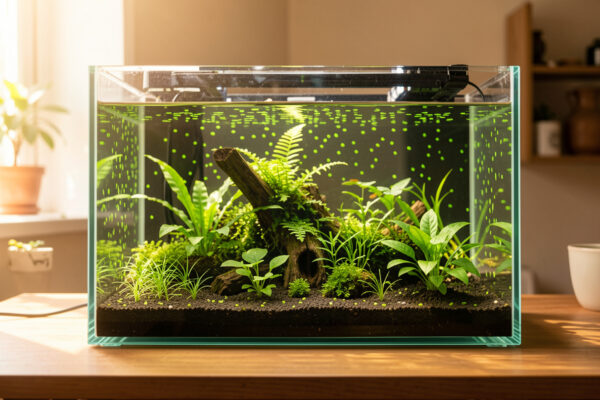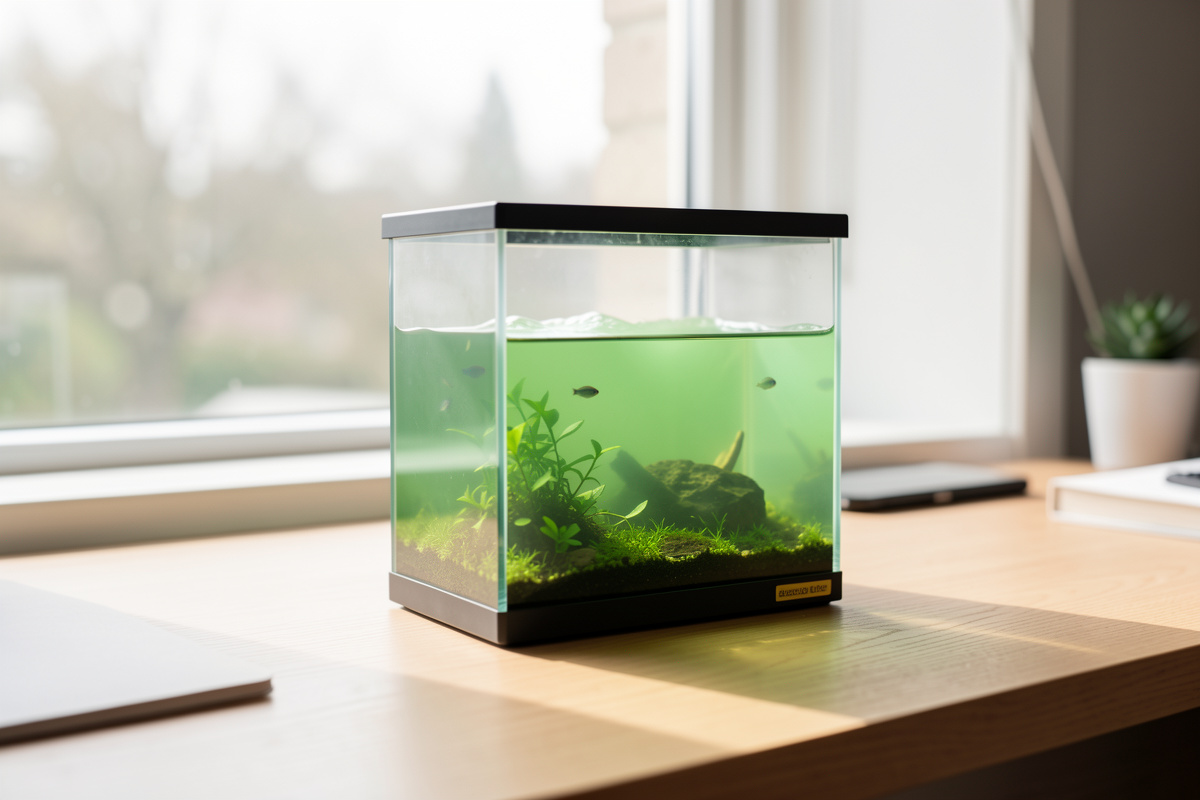
Green water in a nano tank turns the whole volume into pea soup within a day or two — a free-floating algae bloom that water changes barely dent. The cause is rarely mysterious: a spike in ammonia or a flood of light, usually direct sun, gives single-celled algae the surplus to multiply faster than anything can export them. Fix the trigger and the bloom collapses.
Green water is the one algae that genuinely unsettles new keepers, because it appears fast and ignores the usual reflex. You do a big water change, the tank clears for an hour, and by evening it is green again — the cells reproduce too quickly for dilution to win. I have triggered it on purpose and by accident over the years, and every single bloom traced back to the same two causes: an ammonia event the nitrogen cycle had not yet absorbed, or an uncontrolled dose of light. This guide is the cause-and-prevention map, not a bottle of clearer.
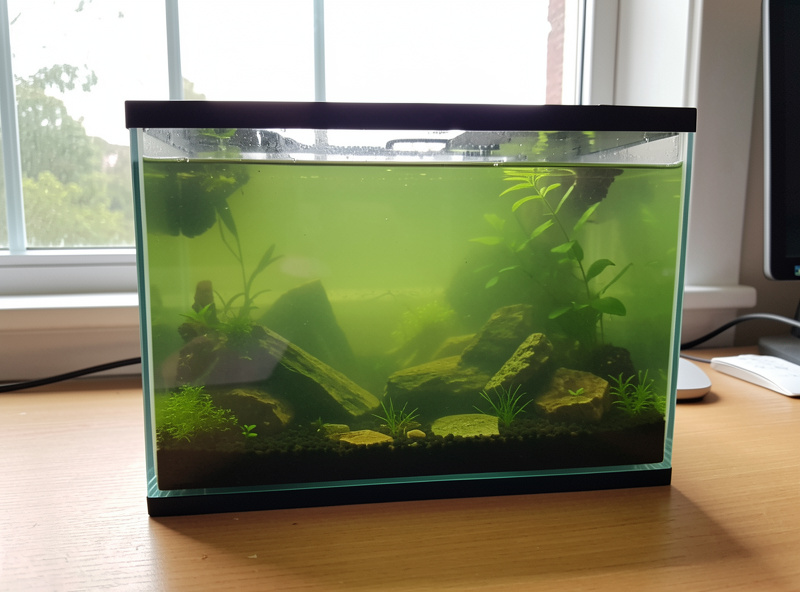
Green Water Versus a Cloudy Tank
Green water is a green, opaque cloudiness caused by suspended algae — distinct from the white-grey haze of a bacterial bloom or the brown tint of tannins. The colour is the first diagnosis: a true algae bloom is unmistakably green and gets worse in bright light, while a bacterial bloom is milky white and usually clears on its own in a few days. Telling them apart decides whether you act or wait.
This distinction matters because the responses are opposite. A bacterial bloom in a new tank is part of the system settling and needs only patience — the same way diatoms are a normal stage. Green water is a genuine surplus that will persist until you remove its cause. The table below is the quick reference I use to tell which cloudy tank I am looking at.
| Sign | Green water (algae) | Bacterial bloom |
|---|---|---|
| Colour | Distinctly green | Milky white-grey |
| Trigger | Ammonia spike or strong light | New tank, disturbed substrate |
| Light response | Worse in bright light | Unaffected by light |
| Clears on its own? | No — needs the cause removed | Usually within days |
If your water is white rather than green and the tank is new, you are most likely watching a normal bloom that resolves itself, and the broader picture is in the aquarium algae guide. If it is unmistakably green and brightening by the day, read on.
Cause One: An Ammonia Spike the Tank Could Not Absorb
The most common green-water trigger in a nano is a sudden release of ammonia that the biofilter cannot process fast enough. Free-floating algae feed directly on that ammonia, and in a small volume even a modest spike — a dead shrimp, an overfeeding, a disturbed substrate, or an incomplete cycle — is enough to launch a bloom. The green is the tank converting a nutrient surplus into algae cells.
This is why green water so often hits new or recently disturbed tanks. A tank that is not fully cycled has no buffer for an ammonia event, and the small volume of a nano means concentrations climb steeply. I once triggered a bloom by uprooting a heavily rooted plant in an established nano — the disturbance released trapped organics and dissolved nutrients, and the tank went green within two days despite being years old. Anything that dumps ammonia or nutrients into the water column is a candidate, and the cycle’s normal spikes during establishment make a young tank especially vulnerable.
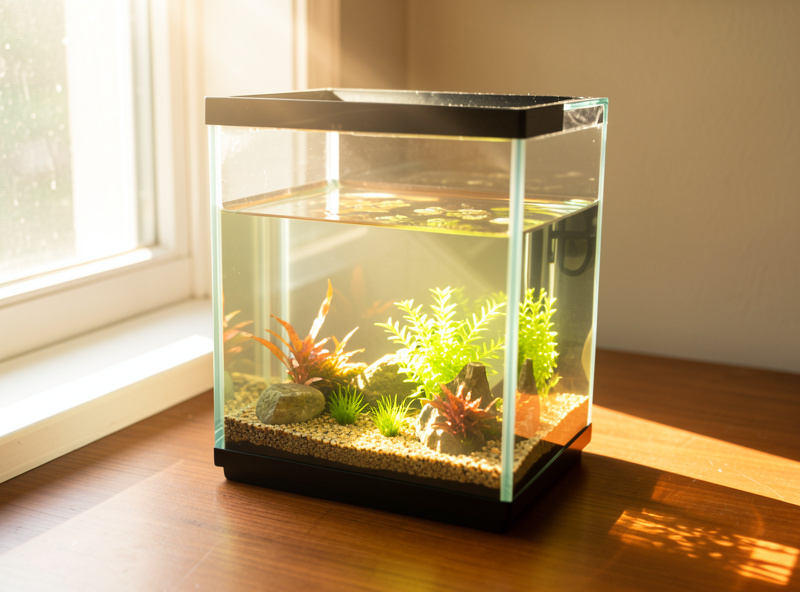
Cause Two: Too Much Light, Especially Direct Sun
The second trigger is excess light, and direct sunlight is the most reliable green-water cause there is. A nano placed near a window catches an uncontrolled, high-intensity dose that no timer governs, and suspended algae bloom in exactly those conditions. Even without sun, an overlong photoperiod on a strong fixture supplies the energy a bloom needs.
Sunlight is uniquely dangerous because it is both intense and variable — a bright afternoon can deliver more light in two hours than your fixture does all day, and it lands precisely when the tank is warmest. I never site a nano where direct sun can reach it, and on the tanks I have, the photoperiod runs on a timer at six to eight hours with no exceptions. This is the same light-surplus mechanism behind algae from too much light; green water is just the free-floating expression of it. Controlling light is the cheapest, most reliable green-water prevention you have.
Prevention: Remove the Trigger, Not Just the Cells
Preventing green water means closing off both triggers: keep ammonia at zero with a mature cycle and steady husbandry, and keep light controlled with a timer and no direct sun. Because the cells reproduce faster than water changes can remove them, prevention is entirely about denying the surplus that starts a bloom — once it begins, you are managing it, not curing it with a bucket.
On the ammonia side, the foundation is a fully cycled tank and the habits that keep it stable: do not overfeed, remove dead livestock promptly, avoid disturbing the substrate, and keep your water change cadence consistent so nutrients never accumulate. A heavily planted tank helps enormously, because fast-growing and floating plants consume ammonia before algae can — the strategy in controlling algae with plants and flow applies directly here.
On the light side, move the tank out of any direct sun, put the fixture on a timer, and shorten the photoperiod if a bloom has started. The well-known blackout method — covering the tank in total darkness for a few days while keeping it well-oxygenated and the plants healthy — works precisely because it removes the light half of the equation; it is a husbandry technique, not a chemical treatment. A UV clarifier is the hardware option that clears suspended algae as water passes through it, useful on a persistent bloom, but it treats the symptom. The lasting fix is always the trigger: no ammonia surplus, no excess light, no green water.
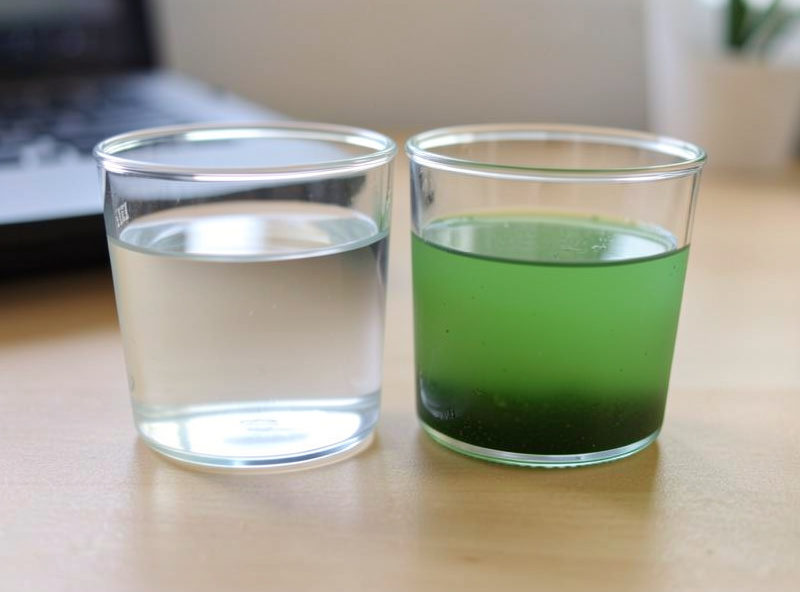
Why Nano Tanks Bloom Fast and Clear Slow
A nano tank is unusually prone to green water because its small volume lets both ammonia and light translate into a bloom within a day or two, while its limited filtration and dilution make the bloom slow to clear once established. The same volume math that makes nanos swing fast makes green water a particularly frustrating version of that swing — quick to arrive, stubborn to leave.
The discipline that prevents it is the discipline that prevents every nano problem: a stable cycle, controlled light, and a parameter log that catches an ammonia reading before it becomes a green tank. I treat a green-water bloom the way I treat any algae — as a reading that something spiked or the light got loose. Find the trigger, remove it, support the plants, and the water clears for good rather than for an hour. For the foundation under all of it, the stability guide is where the routines live.
Frequently Asked Questions
Why does green water come back after a water change?
Suspended green-water algae reproduce faster than dilution can remove them, so a water change clears the tank only briefly before the remaining cells multiply again. Water changes do not address the ammonia or light surplus driving the bloom, so the cause has to be removed instead.
What is the difference between green water and a bacterial bloom?
Green water is distinctly green, worsens in bright light, and persists until its cause is removed. A bacterial bloom is milky white-grey, is unaffected by light, and usually clears on its own within a few days as a new tank settles. The colour is the quickest way to tell them apart.
Does sunlight cause green water in aquariums?
Yes, direct sunlight is the most reliable green-water trigger because it delivers an intense, uncontrolled dose of light no timer governs, often when the tank is warmest. Never site a nano where direct sun can reach it, and run the fixture on a timer at six to eight hours.
Will green water hurt my fish or shrimp?
Green water itself is not directly harmful and livestock often tolerate it, but the conditions that cause it — an ammonia spike in particular — can be. The bigger risk is the underlying trigger, so treat a green tank as a signal to check ammonia and light rather than ignore it.
How do I prevent green water from coming back?
Keep the tank fully cycled with zero ammonia, avoid overfeeding and substrate disturbance, remove dead livestock promptly, and keep light controlled with a timer and no direct sun. Dense, fast-growing plants help by consuming ammonia before free-floating algae can use it.
Related Guides
- The aquarium algae guide — diagnose every algae type by cause
- Diatoms in a new tank — the other new-tank cloudiness, and why it is normal
- The nitrogen cycle, honestly — keep ammonia at zero and starve the bloom
- Controlling algae with plants and flow — let plants out-compete the cells
- Nano tank stability — the routines that prevent the spikes behind a bloom