Controlling aquarium algae naturally comes down to one principle: plants and algae want the same light and nutrients, and a tank full of thriving plants with good circulation consumes the surplus before algae ever gets it. Get the plant mass, the flow, and the light schedule into balance — for a planted nano that means roughly six to eight hours of light a day and a steady weekly water change — and you starve algae out without a single chemical. This is the prevention strategy every other algae guide on this site points back to.
After years of running planted nanos — a low-tech reference tank, a high-tech CO2 showpiece, and a shrimp colony — I have come to treat algae control as plant husbandry, not algae warfare. The tanks of mine that stay clean are not the ones I scrub hardest; they are the ones with the densest, healthiest planting and the most complete flow. Algae is opportunistic, and a well-planted tank simply does not leave it an opportunity. Here is how to build that balance deliberately.
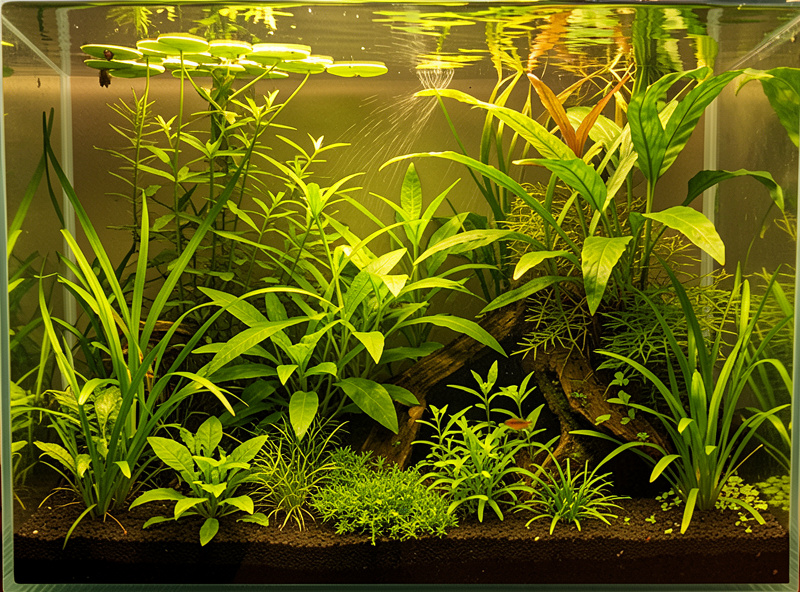
Why Plants Beat Algae
Plants and algae are direct competitors for light, nitrogen, phosphorus, and carbon (the same nutrient loop that drives the aquarium nitrogen cycle) — and higher plants, when healthy, are more efficient at consuming those resources than algae is. The moment your plants are thriving and taking up the available nutrients, there is no surplus left for algae to exploit. This is the entire mechanism behind natural algae control: not killing algae, but out-competing it for the resources it needs.
The corollary is the part keepers miss: struggling plants cause algae. A tank with a few melting, nutrient-starved stems leaves most of the light and nutrients on the table, and algae takes the surplus the plants failed to use. That is why algae so often blooms in tanks that are technically “planted” but whose plants are not actually growing well. Healthy plant growth is both the goal and the tool — and it is why nearly every algae problem in the aquarium algae guide traces back to plants stalling for some reason. Fix the plants and you fix the algae.
Build the Plant Mass: Density, Speed, and Floaters
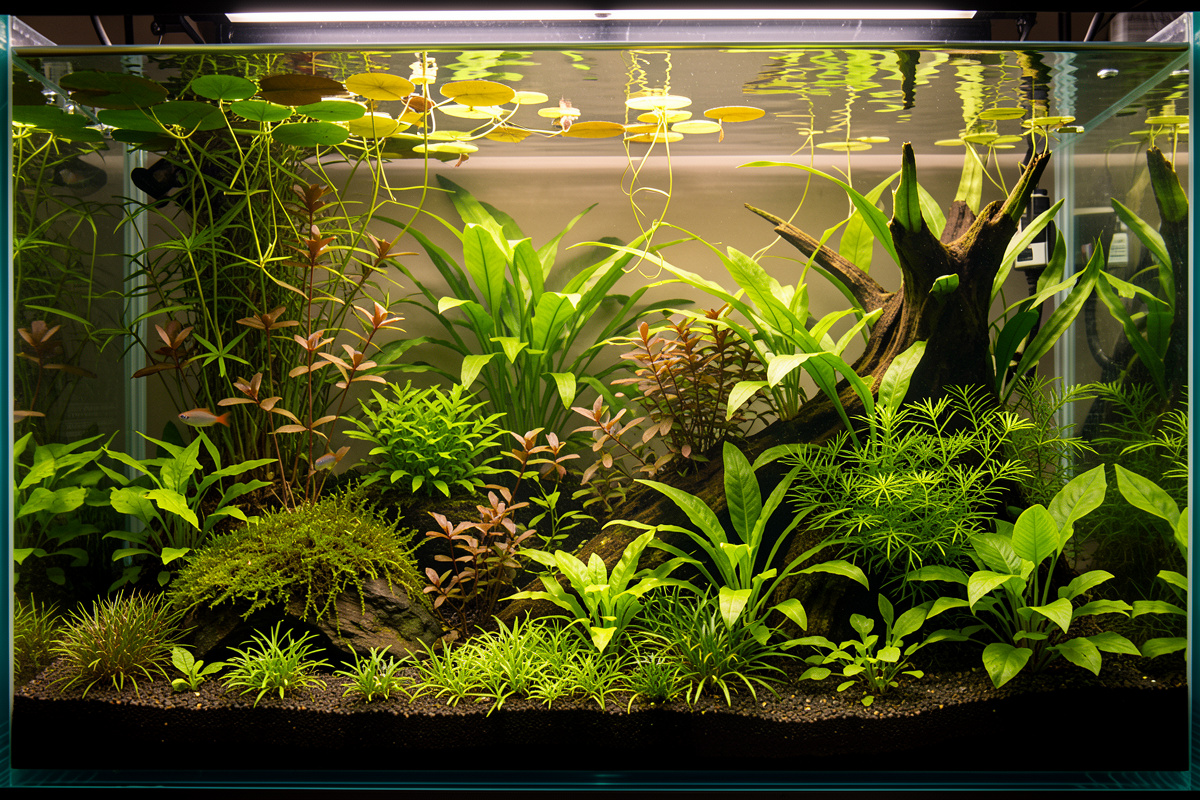
The most algae-resistant tanks are heavily planted from day one, with a deliberate mix of fast-growing stems, hardy epiphytes, and floating plants. Density matters more than variety: a tank stuffed with growing plants leaves almost no surplus, while a sparse layout — however pretty — hands algae the gap. Plant more than looks necessary at setup, because the early weeks are when a new tank is most algae-prone.
Different plants pull their weight in different ways, and a good algae-control layout uses several roles at once.
| Plant role | Examples | How it fights algae |
|---|---|---|
| Fast-growing stems | Hornwort, water sprite, stem plants | Consume nutrients quickly, soaking up surplus |
| Floating plants | Frogbit, salvinia, duckweed | Unlimited surface CO2, shade the water column |
| Hardy epiphytes | Anubias, Bucephalandra, Java fern | Reliable steady growth, cover hardscape |
| Carpets and low cover | Easy carpets, mosses | Cover open substrate where algae would settle |
Floating plants deserve special mention as algae assassins: with their leaves at the surface they have unlimited access to atmospheric CO2, so they grow fast and consume nutrients aggressively, and they shade the water column to take light away from algae below. The trade-off is that they can shade your other plants too, so you thin them regularly. The hardy low-tech plants that survive without fuss are the backbone I build around, with floating plants on top for fast nutrient export. The point is a tank where every nutrient has a plant waiting to take it.
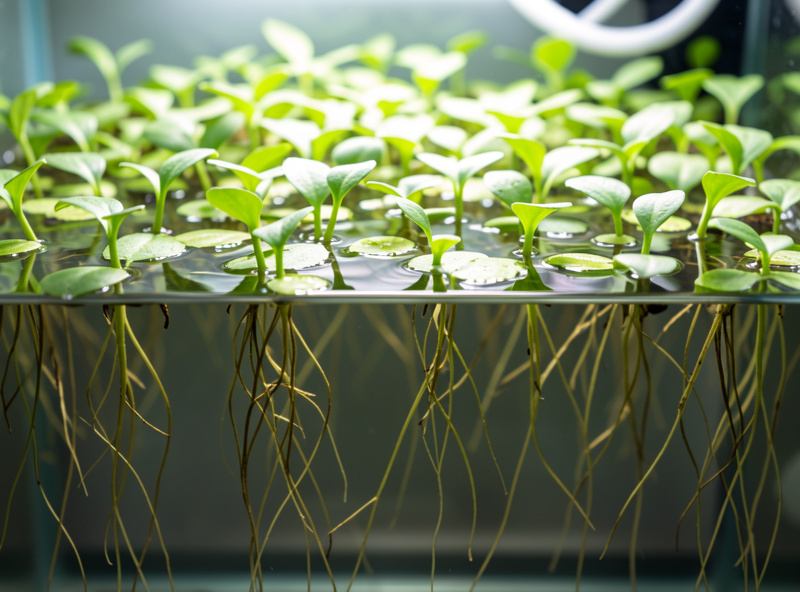
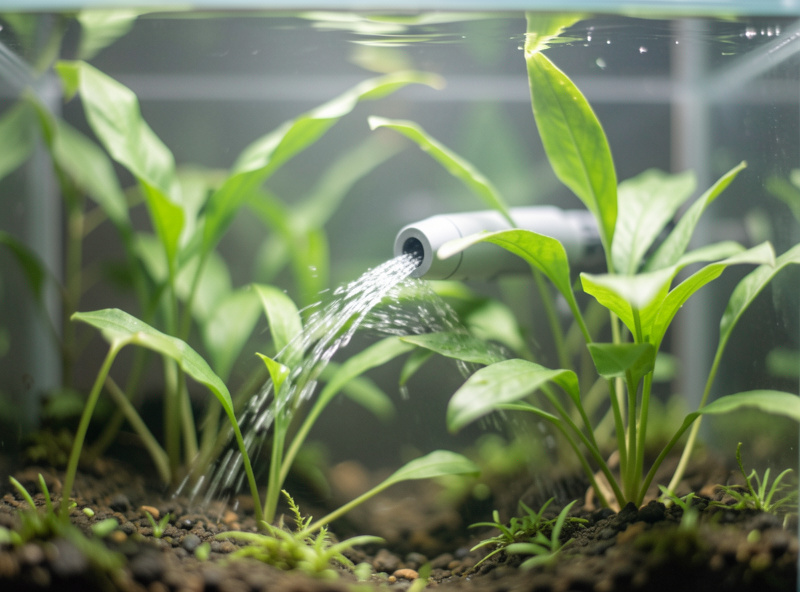
Flow: Delivering Nutrients to the Plants, Not the Algae
Good circulation is the silent half of natural algae control, because plants can only consume the nutrients that actually reach them — and a dead spot is a nutrient reservoir that feeds algae instead. The goal is gentle, complete flow with no stagnant pockets: every leaf gently moving, no corner the current never touches, and no detritus settling in still water behind the hardscape. Flow turns your plant mass into an effective filter for the whole volume.
This is not about a powerful current — delicate plants and shrimp do not want a torrent — but about coverage. I position the filter outflow so the flow circulates around the whole tank and returns, rather than blasting one wall and leaving the opposite corner dead. Dead zones are where black beard algae, staghorn, and settling detritus take hold, so eliminating them removes several algae problems at once. On a shrimp tank the balance is delicate, since the colony wants gentle water, so I tune flow to reach everywhere without battering anything. Complete circulation also distributes CO2 and ferts evenly, keeping plant growth uniform rather than patchy — and patchy growth is where algae moves in.
Light and Nutrients: Match Supply to Plant Demand
The final piece is keeping light and nutrients matched to what your plants can actually use — too much of either, relative to plant uptake, is the surplus algae feeds on. A planted nano wants six to eight hours of controlled light on a timer, and a nutrient supply that keeps plants fed without flooding the tank. Balance, not maximisation, is the target.
On light, more is not better. A long photoperiod or an over-bright fixture pushes the system past what the plants can consume, and the excess goes to algae — the mechanism behind light-driven algae. Run the light on a timer, keep it to a sensible duration, and never let direct sun add an uncontrolled dose. The nano lighting guide covers dialling this in. On nutrients, the aim is a steady, modest supply: enough that plants never starve (a starved plant stops competing), but not so much that a surplus accumulates. A consistent water change cadence keeps the nutrient load in the sweet spot, exporting excess before algae can use it while replacing what the plants consume.
The Living Cleanup Crew
A well-chosen cleanup crew is the natural complement to plants and flow, grazing the low-level algae that always exists at the margins. Neocaridina shrimp, nerite snails, and otocinclus catfish each graze film, soft algae, and biofilm, keeping glass and hardscape clean as a matter of course. They are not a fix for an imbalance — a hungry crew cannot out-eat a real surplus — but in a balanced tank they handle the residual algae so you rarely see it.
The key is that the crew works with the plant-and-flow balance, not instead of it. I add grazers because they are good tank inhabitants and because they keep the inevitable trace of algae off the glass, not as a rescue for a tank that is fundamentally over-lit or under-planted. A shrimp colony in particular grazes constantly and gently, and on my low-tech nano the shrimp keep film algae so low I barely notice it. Build the balance first; let the crew polish it.
Putting It Together: The Naturally Balanced Nano
A naturally algae-resistant nano is a single integrated system: dense healthy plants consuming the nutrients, complete flow delivering those nutrients everywhere, controlled light and steady water changes keeping supply matched to demand, and a cleanup crew grazing the margins. No one element does it alone, but together they leave algae no surplus and no foothold. That is what “natural control” actually means — not a product, but a balance you build and maintain.
When algae does appear in a balanced tank, I read it as a signal that one element has drifted — the light crept longer, a water change got skipped, the plants stalled, a dead zone formed — and I correct that element rather than attacking the algae. The parameter log catches the drift, and the stability routines hold the balance in place. Every specific algae type, from green spot to black beard, is just this same balance expressed through a different surplus — which is why getting the plants, flow, and light right prevents nearly all of them at once.
Frequently Asked Questions
How do plants control algae in an aquarium?
Plants and algae compete for the same light and nutrients, and healthy plants consume those resources more efficiently. A densely planted tank takes up the available nutrients before algae can, leaving no surplus for algae to grow on. Struggling plants, by contrast, leave a surplus that feeds algae.
What are the best plants to fight algae in a nano tank?
Use a mix: fast-growing stems like hornwort and water sprite for quick nutrient uptake, floating plants like frogbit for surface CO2 and shading, and hardy epiphytes like Anubias and Java fern for reliable steady growth. Density and plant health matter more than the specific species.
Do floating plants help with algae?
Yes, floating plants are among the most effective natural algae control because they have unlimited access to atmospheric CO2, grow fast, and consume nutrients aggressively while shading the water column below. Thin them regularly so they do not over-shade your other plants.
Why does flow matter for algae control?
Plants can only consume nutrients that reach them, so a stagnant dead spot becomes a nutrient reservoir that feeds algae and traps detritus. Gentle, complete circulation with no still pockets delivers nutrients to the plants instead and prevents the dead zones where algae like black beard take hold.
Can a cleanup crew get rid of algae on its own?
No. Shrimp, nerite snails, and otocinclus graze film and soft algae and keep a balanced tank clean at the margins, but they cannot out-eat a real surplus caused by too much light or too few plants. Build the plant, flow, and light balance first, then let the crew polish it.
How much light should a planted nano get to avoid algae?
Six to eight hours a day on a timer suits most planted nanos. More light is not better — a long photoperiod or over-bright fixture creates a surplus the plants cannot use, and algae takes it. Keep direct sunlight off the tank entirely, since it adds an uncontrolled dose.
Related Guides
- The aquarium algae guide — diagnose every algae type by cause
- Low-tech plants that actually survive — the backbone of a planted nano
- Floating plants for a nano tank — the fastest natural nutrient export
- Diatoms in a new tank — the one algae plants cannot prevent (yet)
- Nano tank stability — the routines that hold the balance