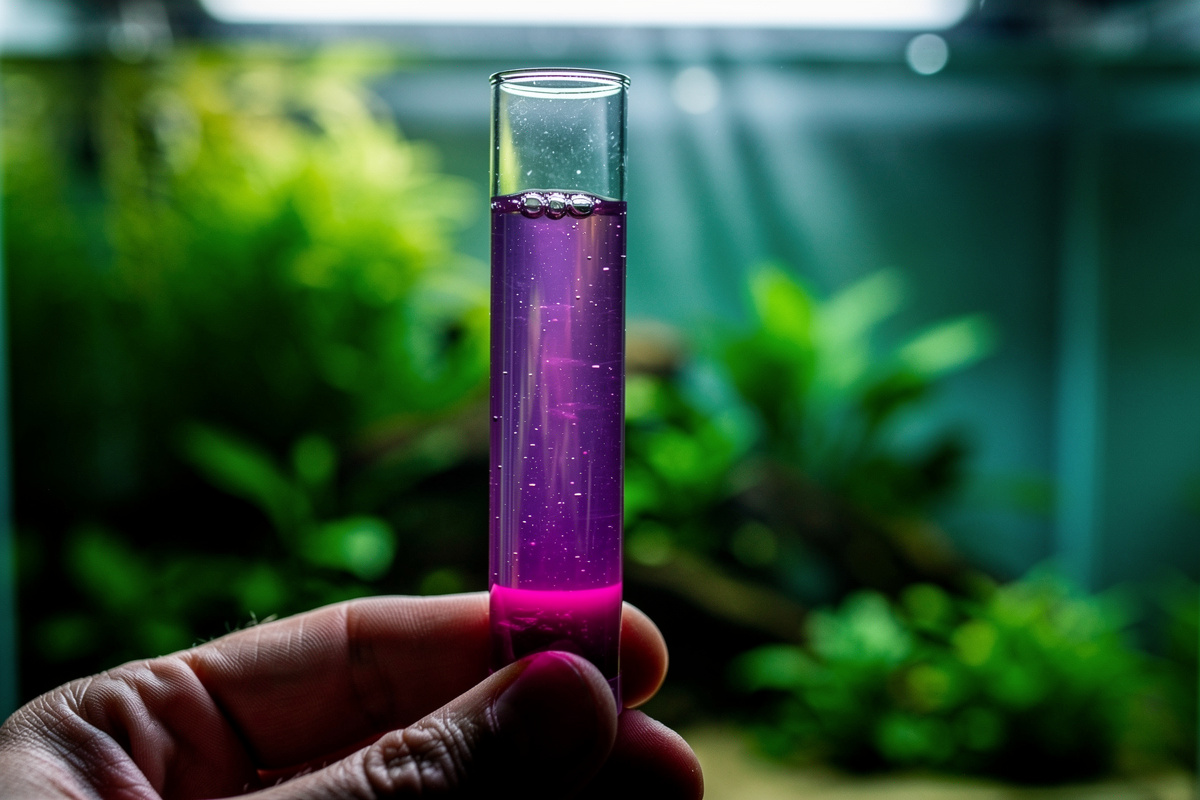
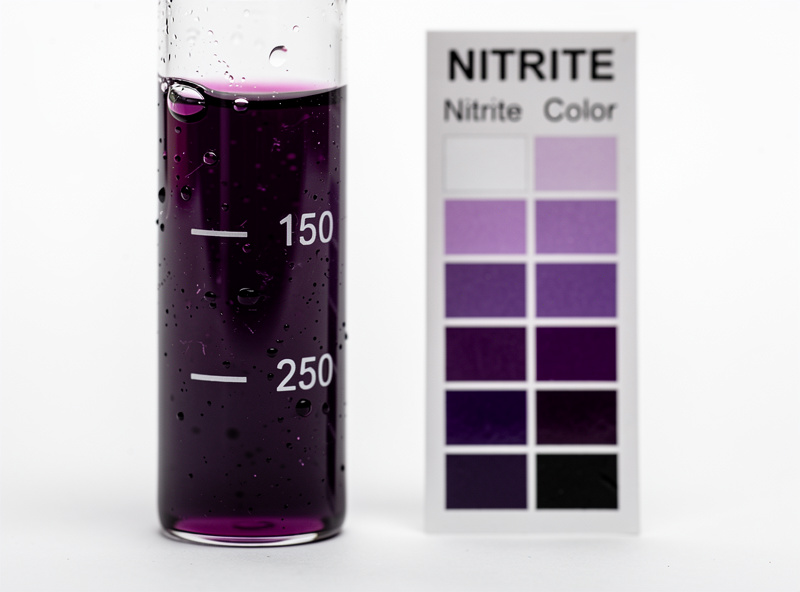
A nitrite spike in your aquarium is the phase that empties the most beginner inboxes into panic. You’ve been cycling for a couple of weeks, ammonia is finally dropping, and then nitrite climbs — and climbs — until the test vial is the darkest purple the chart can show. It looks like a disaster. In a fishless cycle, it is exactly the opposite: it is the clearest sign your cycle is working. Let me explain what’s actually happening in the water, why the reading looks so alarming, and when a spike is genuinely a problem versus simply the cycle doing its job.
This is the calm-down article. If you want the full process around it, the fishless cycle walkthrough shows where the spike fits, and the nitrogen cycle guide covers the underlying chemistry.
What nitrite actually is
The cycle runs in two bacterial stages. The first group converts ammonia into nitrite. The second group converts nitrite into nitrate, the relatively harmless end product. Nitrite is the intermediate — the halfway house between the toxic ammonia you started with and the manageable nitrate you finish with. It only exists because the first stage is up and running while the second stage is still building.
That timing gap is the whole reason for the spike. The ammonia-eating bacteria colonize first and start pumping out nitrite. The nitrite-eating bacteria are slower to establish, so for a while nitrite is being produced faster than it’s consumed and it accumulates. Eventually the second group catches up, nitrite consumption overtakes production, and the reading falls to zero. The spike isn’t a malfunction; it’s the visible signature of one colony waiting for the other to arrive.
Why the reading looks terrifying
Two things make the nitrite spike scarier than it is. First, liquid test kits top out at a fairly low number, so nitrite frequently reads “off the chart” — the darkest color on the card — for a week or more. You can’t tell whether you’re a little over the top of the scale or wildly over it; it all reads as the same maximum purple. That visual maximum feels like an emergency even when it’s a perfectly ordinary cycling spike.
Second, the spike lingers. Nitrite can sit pinned at the top of the chart for one to two weeks, which feels like forever when you’re checking it daily and willing it to drop. This is the patience test of the whole cycle. The instinct is to “do something” — change water, dose products, panic-buy. In a fishless cycle, the right move is almost always to keep feeding ammonia to your target and wait. The second bacterial group is building; you just can’t see it until the numbers tip.
Fishless vs. fish-in: when a spike is a real problem
Here’s the crucial distinction. In a fishless cycle, there’s no animal exposed to the nitrite, so a sky-high reading is harmless — it’s just data telling you the cycle is mid-stride. You let it ride. In a fish-in situation, where livestock is already in an uncycled tank, nitrite is acutely toxic: it interferes with the blood’s ability to carry oxygen, effectively suffocating the fish even in well-oxygenated water. There, a nitrite spike is a genuine emergency and your job is to dilute it.
If you have fish and nitrite is climbing, do partial water changes to keep the concentration down — you’re manually buying the fish time while the bacteria catch up. Test daily, feed lightly to reduce the waste load, and add nothing new to the tank. This is precisely why I cycle fishless and say so bluntly: the nitrite phase is survivable-with-effort for fish, but it’s weeks of stress and vigilance that a fishless cycle avoids entirely. If you’re reading this before buying fish, the lesson is to finish the cycle first.
- A liquid nitrite test — you need to actually read nitrite to know which phase you’re in; strips are too coarse for this. Browse nitrite test kits on Amazon.
- A dechlorinator — mandatory for any water changes during a fish-in nitrite emergency. Browse dechlorinators on Amazon.
Reading the spike at a glance
| Situation | What the spike means | What to do |
|---|---|---|
| Fishless cycle, nitrite high | Normal — cycle is mid-stride | Keep dosing ammonia, wait it out |
| Fishless cycle, nitrite falling | Second bacteria group catching up | You’re near the finish line |
| Fish-in, nitrite climbing | Genuine emergency — toxic to fish | Partial water changes, test daily |
| Nitrite stuck high for 3+ weeks | Possible stall (KH, temp, overdose) | Check the conditions, then wait |
When the spike won’t end
Sometimes nitrite parks at maximum and refuses to drop for far longer than the usual one-to-two weeks. At that point you’re not looking at a normal spike anymore — you’re looking at a possible stall, and the same conditions that stall any cycle apply here: a crashed pH from low KH, a tank that’s too cold, or an ammonia overdose so high that the nitrite produced is itself toxic to the second bacterial group. Test your KH, check your temperature, and make sure you haven’t been over-dosing. The full diagnostic walk lives in the stalled-cycle article.
One nano-specific note: in small water, a nitrite spike reads higher than the same waste would in a big tank, because there’s less volume to dilute it. That’s not a bigger problem in a fishless cycle — it’s just a louder signal. It does mean nano keepers see the scariest-looking readings, which is exactly why the calm framing matters here.
How the spike ends
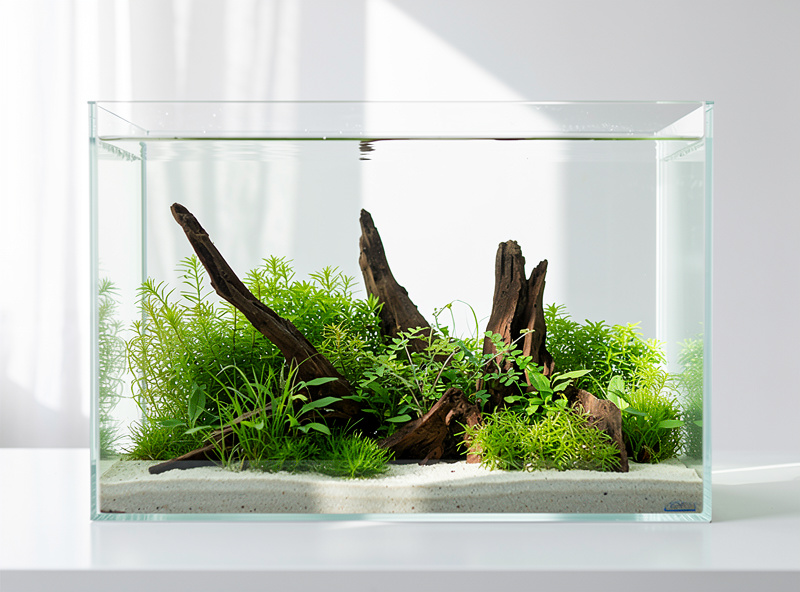
The end is undramatic, which is the point. One day you test and nitrite has dropped from maximum to a mid-range reading; a day or two later it’s near zero, with nitrate now clearly present. That downward turn means the second bacterial group has reached critical mass and is consuming nitrite faster than the first group produces it. From there it falls quickly. Keep feeding ammonia to your target, and once the tank clears both ammonia and nitrite to zero within 24 hours of a dose — the double-zero — the cycle is complete. The terrifying purple was just the cycle’s middle chapter all along.
More from the cycle cluster
- The nitrogen cycle, honestly — the full overview and chemistry.
- Fishless cycle, step by step — where the spike fits in the process.
- When your cycle stalls — if the spike never ends.
- Nano tank stability guide — keeping parameters steady after the cycle completes.
Frequently Asked Questions
What does a nitrite spike mean during cycling?
It means the cycle is working. The bacteria that turn ammonia into nitrite establish faster than the bacteria that turn nitrite into nitrate, so nitrite accumulates for a while. In a fishless cycle a high nitrite reading is normal and expected; it falls once the second bacterial group catches up.
Is a high nitrite reading dangerous?
In a fishless cycle, no, because there are no animals exposed to it. With fish in the tank, yes, nitrite is acutely toxic because it interferes with the blood’s ability to carry oxygen. In that case you must dilute it with partial water changes until the cycle finishes.
How long does the nitrite spike last?
Typically one to two weeks, often pinned at the top of the test chart the whole time. If it lasts much longer than three weeks, treat it as a possible stall and check your KH, temperature, and whether you have over-dosed ammonia.
Should I do water changes during a nitrite spike?
Not in a fishless cycle, where the spike is harmless and water changes just slow the process by removing the food the bacteria need. In a fish-in situation, yes, do partial water changes to keep nitrite diluted and protect the fish until the cycle completes.