Choosing your ammonia source for fishless cycling is the one decision that quietly determines how readable — and how fast — your whole cycle is. I treat it the way I treated a nutrient stock solution back in my hydroponics years: if I can’t dose it precisely and predict the result, it’s the wrong product. Get this right and a fishless cycle becomes a clean, controlled experiment you can actually read off the test kit. Get it wrong and you’ll spend weeks wondering why the numbers won’t move.
This article is the deep-dive on the ammonia itself — what to use, what to avoid, the target reading I aim for, and why dumping in more ammonia is the most common self-inflicted stall. It pairs with the full fishless cycle walkthrough and the broader nitrogen cycle guide, which cover the rest of the process.
What “pure ammonia” actually means
The cleanest fishless-cycle source is plain aqueous ammonia — ammonium hydroxide and water, nothing else. The trap is that household ammonia cleaners often add surfactants (so they foam and cling to surfaces), colorants, and fragrance. Those additives are great for cleaning a countertop and terrible for a tank: surfactants foam your filter and stress livestock later, and the perfumes are exactly the kind of unknown variable a bench-minded keeper refuses to introduce.
The test for a clean source is simple — shake the bottle. If it foams up like soap, it has surfactants; put it back. A pure product barely foams at all. Aquarium-specific ammonia products exist and take the guesswork out, but a plain unscented household ammonia that passes the shake test works identically. What matters is that the only thing going into your water is ammonia, so the only thing your test kit reads is the variable you’re controlling.
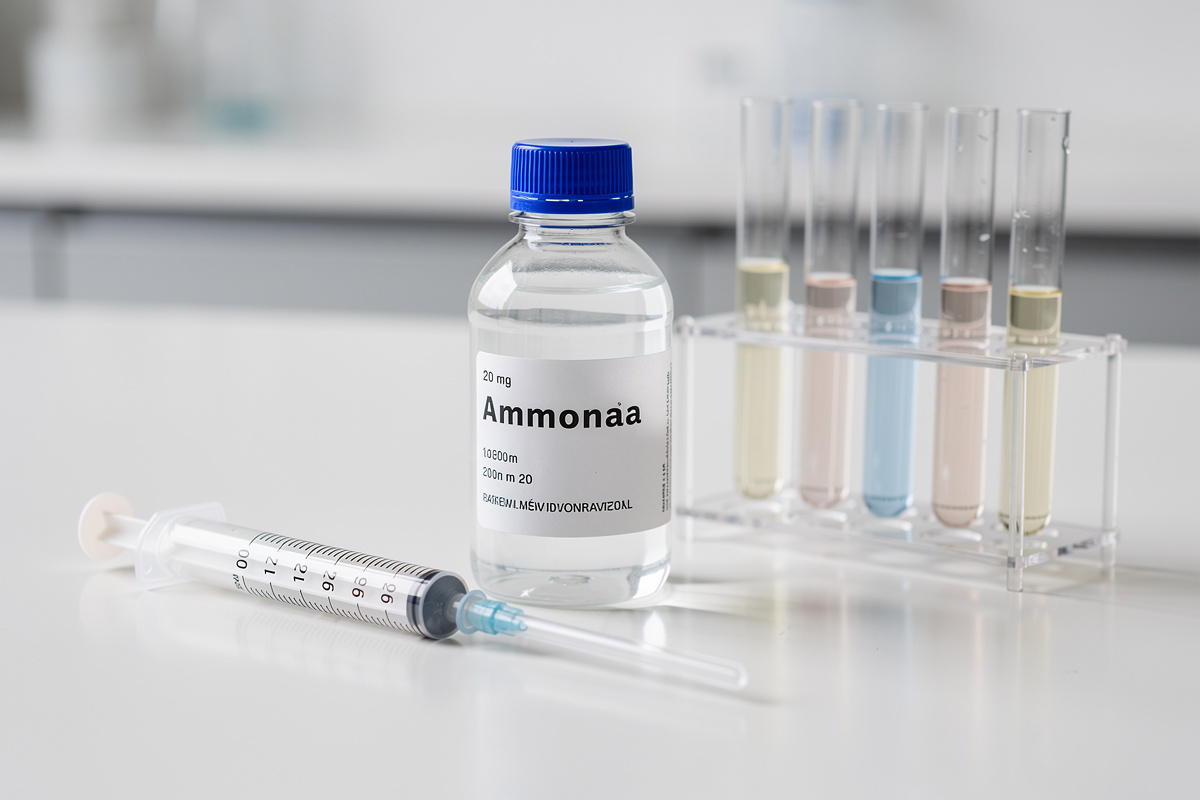
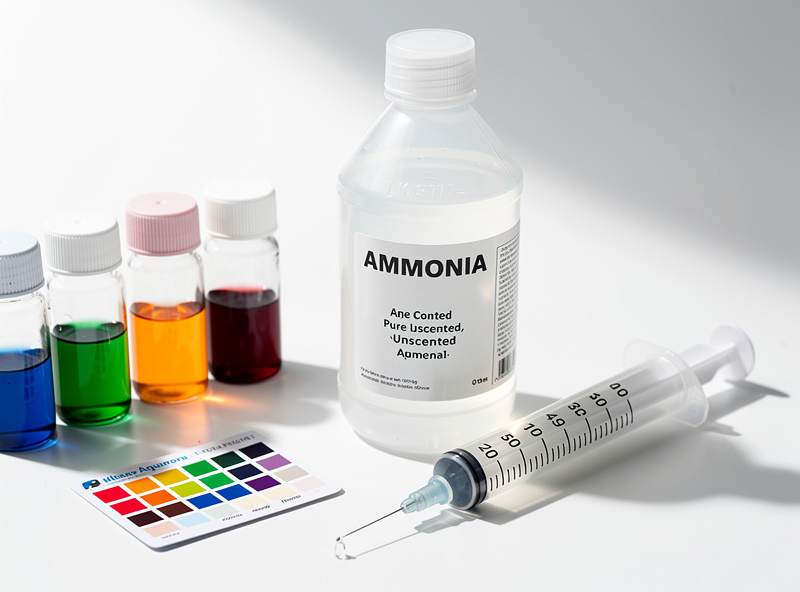
- Pure unscented ammonia — the cleanest dosable source, no surfactants or perfume. Browse fishless-cycle ammonia on Amazon.
- A liquid ammonia test — you cannot dose to a target you can’t read; the liquid drops beat strips for resolution. Browse ammonia test kits on Amazon.
- A dosing syringe — small graduated syringes let you add ammonia by the millilitre and repeat the dose exactly. Browse dosing syringes on Amazon.
The food method, and why I rarely use it
The alternative to dosed ammonia is letting organic matter rot to produce it — a pinch of fish food left to decay, or a raw cocktail shrimp suspended in the tank. As the matter breaks down, bacteria release ammonia, which then feeds the nitrifying colony. It genuinely works, and it’s the fallback if you truly cannot get clean ammonia.
But it gives up everything the bench mindset values. You can’t control the dose, so you can’t predict the ammonia reading. The decay invites bacterial blooms (cloudy water) and mold, which look alarming and muddy your readings. And a rotting shrimp in a small nano can foul the water enough to need a change, which then removes the food. I’ll use the food method to seed a tank I’m being lazy about, but for a cycle I actually want to read, dosed liquid ammonia wins every time. Control the variable, read the result.
Comparison: ammonia sources for cycling
| Source | Precision | Mess / risk | Best for | My verdict |
|---|---|---|---|---|
| Pure liquid ammonia | High — dose to an exact reading | Low (if truly pure) | A readable, controlled cycle | Default choice |
| Aquarium ammonia product | High — often pre-formulated | Low | Beginners who want no guesswork | Fine, just costs more |
| Fish food (rotting) | Low — uncontrolled release | Medium — blooms, mold | When no clean ammonia available | Fallback only |
| Raw shrimp / prawn | Very low | High — fouls small water | Larger tanks, hands-off keepers | Avoid on nanos |
| Scented household ammonia | n/a | High — surfactants, perfume | Nothing aquarium | Never |
The target reading — and why moderate beats heavy
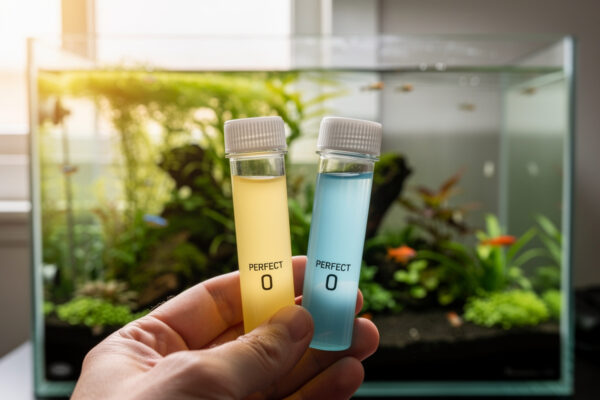
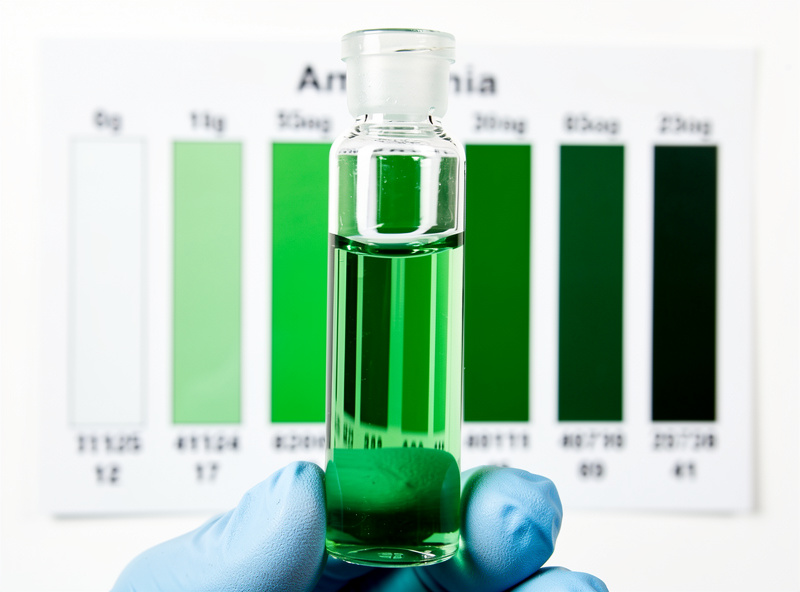
Here’s the single most important number in this article: dose to a moderate ammonia reading, not a heavy one. The instinct is that more ammonia feeds more bacteria faster, so people pour it in until the test vial goes dark green. That backfires. At high concentrations, ammonia (and the nitrite it becomes) turns toxic to the nitrifying bacteria themselves — you stall the colony you’re trying to build. The cycle that looks “stuck” with sky-high ammonia is very often just over-dosed.
I aim for a modest target that gives a clear, mid-range color on the test — enough to feed a colony that will comfortably handle a normal nano bioload, no more. The exact number matters less than the principle: pick a moderate target, hit it with a measured dose, record that dose, and re-dose to the same level each time ammonia clears to zero. Consistency is what lets you read the cycle’s progress; a flailing, ever-changing dose just adds noise.
How to dose, in practice
Use a small graduated syringe so you’re adding ammonia by the millilitre rather than glugging from the bottle. Add a small amount, wait a few minutes for it to mix, then test. Repeat until you hit your target color, noting the running total. That total is now your dose — every time ammonia reads zero during the cycle, add exactly that amount to refeed the colony. Because nano volumes are small, the right dose is often surprisingly tiny; a careless splash can blow straight past your target into the toxic range. This is the small-water lesson again: precision matters more, not less, in a nano.
Keep dosing to that target until you reach the finish line — the day the tank clears a full dose of ammonia and the resulting nitrite to zero within 24 hours, with nitrate present. At that point the colony can handle your dose overnight, the tank is cycled, and you stop feeding ammonia, do a big water change, and stock. The dosing discipline you built here is the same discipline that keeps a stocked nano stable later.
More from the cycle cluster
- The nitrogen cycle, honestly — the full overview and chemistry.
- Fishless cycle, step by step — the week-by-week walkthrough this dosing feeds.
Frequently Asked Questions
What kind of ammonia do I use for a fishless cycle?
Pure, unscented aqueous ammonia with no surfactants, dyes, or perfume. Shake the bottle: if it foams like soap it has surfactants and you should not use it. Aquarium-specific ammonia products work too and remove the guesswork, just at a higher price.
How much ammonia should I add?
Dose in small increments to a moderate, mid-range reading on your test kit, recording the total amount used. Then re-dose to that same level each time ammonia clears to zero. A heavy dose does not speed things up; very high ammonia is toxic to the nitrifying bacteria and stalls the cycle.
Can I cycle with fish food instead of liquid ammonia?
Yes, decaying fish food or a raw shrimp releases ammonia and will cycle a tank. The downside is no dose control, plus bacterial blooms and mold that muddy your readings and can foul a small nano. I keep it as a fallback for when clean ammonia is not available.
Why won’t my ammonia go down even after weeks?
The most common cause is over-dosing. At high concentrations ammonia and nitrite become toxic to the very bacteria you are culturing, so the colony stalls. A crashed pH from low KH, cold water, or chlorinated top-up water will do the same. Ease the ammonia down and check the buffer and temperature.
Is household ammonia safe for aquarium cycling?
Only if it is genuinely pure — plain ammonia and water, no scent, no colorant, no surfactant. The shake test is the quick check: minimal foam means it is likely clean. Anything labeled as a cleaner with added ingredients should never go in a tank.