An aquarium cycle stalled partway through is one of the most common — and most misunderstood — frustrations in the hobby. You dose ammonia, you wait, you test, and the numbers just sit there. Ammonia parked high with no nitrite appearing, or nitrite pinned off the top of the chart for weeks. It feels like bad luck. It almost never is. A stall is the bacteria telling you something about their environment is wrong, and once you read the conditions like a bench problem, the fix is usually obvious.
I’ve diagnosed stalls on my own nanos and walked friends through theirs, and they collapse into a short list of causes. This is the diagnostic tree — what to check, in what order, and how to read your way out. If you’re new to the process, the nitrogen cycle guide covers the why, and the fishless cycle walkthrough covers the normal rhythm a stall is deviating from.
First, confirm it’s actually stalled
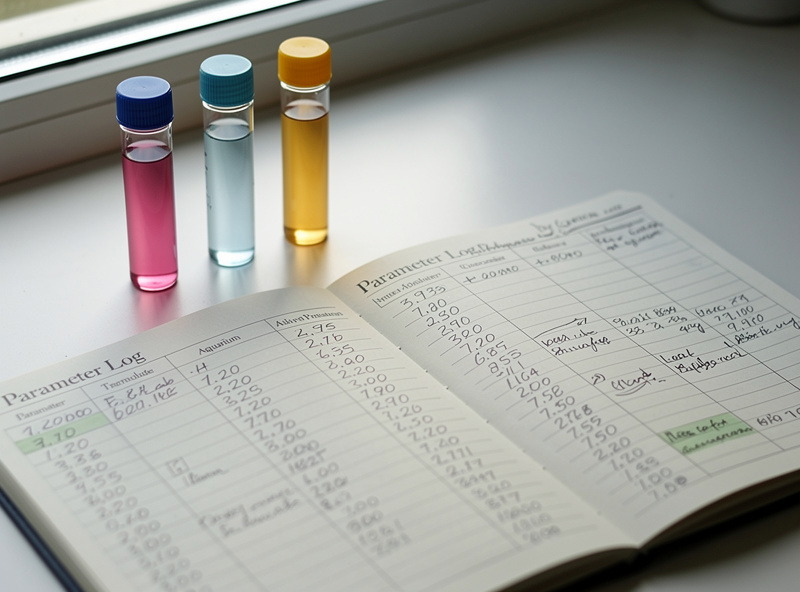
Before you change anything, make sure you’re not just impatient. A cycle that’s “stuck” for four days is not stalled — that’s a normal lull, especially during the nitrite phase, which can sit high for one to two weeks while the second bacterial group catches up. A genuine stall is two-plus weeks of zero movement: ammonia not dropping at all, or nitrite frozen with no nitrate appearing. Read your log. If the numbers were moving and then stopped, something changed. If they never moved, the conditions were wrong from the start.
Cause 1: The buffer crashed (the most common stall)
This is the one that catches the most people, and it’s pure chemistry. Nitrification produces acid, steadily consuming your KH (carbonate hardness). KH is what holds pH stable; when it runs out, pH falls — and below roughly the low sixes, the nitrifying bacteria slow dramatically, then effectively stop. The cycle looks frozen, but the real story is a pH crash starving the bacteria of the conditions they need.
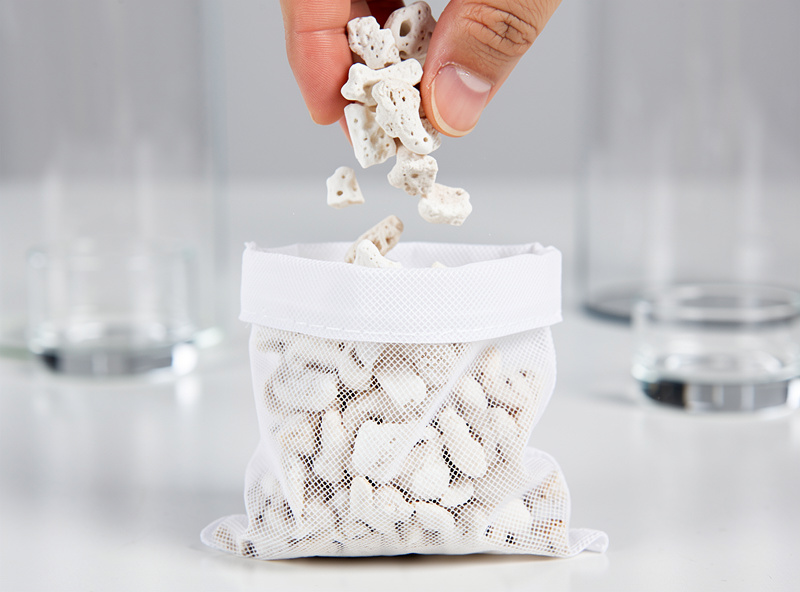
This bites hardest on soft water. My Swedish tap is soft, and on RO water (which I use for the shrimp tank) KH starts at essentially zero, so a crash is almost guaranteed without intervention. The fix: test your KH. If it’s very low, raise it — a small dose of carbonate buffer, or a bit of crushed coral or aragonite in the filter as a slow-release source — to bring pH back into a range the bacteria tolerate. Within a day or two of restoring the buffer, a “dead” cycle often springs back to life. This is exactly the crossover lesson from my hydroponics years: a parameter you don’t measure is the one that surprises you.
Comparison: the four common stall causes
| Cause | Tell-tale sign | How to confirm | The fix |
|---|---|---|---|
| Buffer crash (low KH) | pH dropped into the low sixes or below | Test KH and pH | Raise KH with buffer or crushed coral |
| Too cold | Tank below low twenties Celsius | Check thermometer (not the heater dial) | Raise temperature into mid-upper twenties |
| Ammonia overdose | Very high ammonia / nitrite, no progress | Test ammonia and nitrite | Large water change to dilute back to moderate |
| Chlorine / chloramine | Cycle never started at all | Did you dechlorinate every top-up? | Dechlorinate all water going in |
Cause 2: The tank is too cold
Nitrifying bacteria are temperature-sensitive. They grow briskly in the mid-to-upper twenties Celsius and crawl when the water is cool. A tank cycling at room temperature in a chilly room — very real in a Swedish winter — can take far longer or appear to stall outright. The fix is trivial: put a heater on it and bring the water into the mid-twenties. Verify with an external thermometer rather than trusting the heater’s dial, because nano heaters are notoriously optimistic about their own settings. Warmth alone has un-stuck more cycles than any product.
- A KH/GH test kit — the single most useful instrument for diagnosing a stall, because the buffer crash is the top cause. Browse KH/GH test kits on Amazon.
- A nano heater — to lift a cold tank into the bacteria’s happy range; verify with a separate thermometer. Browse nano heaters on Amazon.
- A dechlorinator — mandatory on every drop of water if chlorine is the culprit. Browse dechlorinators on Amazon.
Cause 3: You over-dosed ammonia
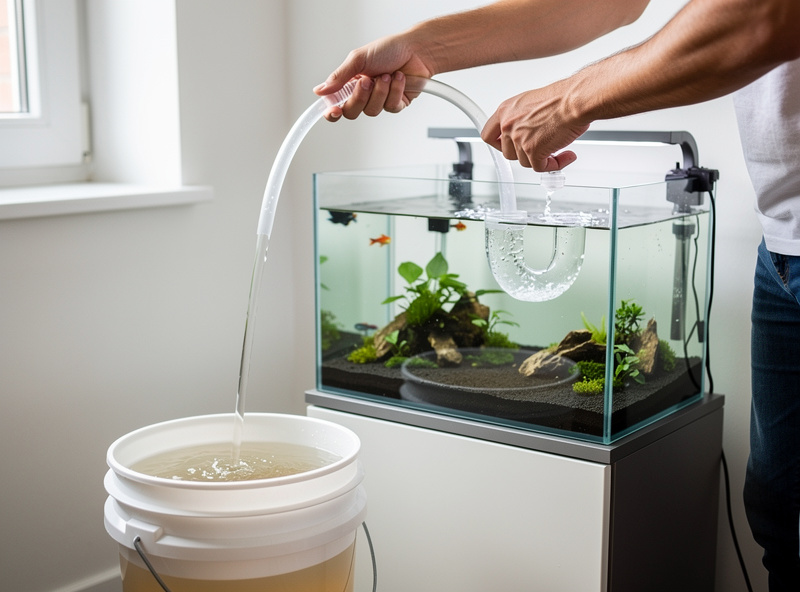
If your ammonia or nitrite is reading absurdly high — off the top of the chart and staying there — you may have poisoned your own bacteria. At extreme concentrations, ammonia and nitrite become toxic to the nitrifiers themselves, so the colony you’re trying to build can’t establish. This is the classic “more must be better” mistake, and on small nano volumes it’s easy to overshoot with a careless splash. The fix is a large water change to dilute ammonia and nitrite back down to a moderate range, then resume dosing conservatively to a sensible target. I cover picking that target in the ammonia source article — moderate beats heavy, every time.
Cause 4: Chlorine or chloramine is sterilizing the tank
If the cycle never started at all — ammonia dosed, weeks passed, nothing converted — suspect your water source. Municipal water is treated with chlorine or chloramine specifically to kill bacteria, and it does its job in your tank too, wiping out the nitrifiers before they can establish. The fix is to dechlorinate every drop of water that goes in, every time, at the bottle’s dose. Chloramine is especially persistent and won’t gas off on its own the way chlorine partly does, so a conditioner rated for chloramine is the safe default. Once the water stops being sterilizing, the colony can finally take hold.
Cause 5: You stripped the colony cleaning
A subtler stall happens after a cycle was progressing: you cleaned the filter and the numbers reset. The bacteria live on the filter media, and rinsing media under hot chlorinated tap water kills them. If your cycle regressed right after a “good clean,” that’s almost certainly the cause. Going forward, only ever rinse media gently in old tank water, never under the tap, and never replace all the media at once. The colony is the most valuable thing in the filter — treat it that way.
What not to do
Don’t throw products at a stall. The reflex to dose “cycle starters” and clarifiers and conditioners on top of each other just adds variables and, in some cases, antibacterial agents that make things worse. A stall is diagnosed, not medicated. Test the buffer, check the temperature, confirm the ammonia isn’t sky-high, and verify you’re dechlorinating — in that order. One change at a time, then re-test. That’s the bench method, and it’s the fastest route out of a stall precisely because it isolates the actual cause instead of guessing.
Patience still matters too. Once you fix the underlying condition, the colony needs a few days to respond — don’t fix the KH on Monday and declare it broken again on Tuesday. Restore the environment, hold steady, and let the biology recover at its own pace. It almost always does.
More from the cycle cluster
- The nitrogen cycle, honestly — the full overview and chemistry.
- Fishless cycle, step by step — the normal rhythm a stall departs from.
- Choosing and dosing your ammonia — avoid the overdose stall.
- Are small aquariums harder? — why nano volume makes every problem louder.
Frequently Asked Questions
Why is my aquarium cycle stalled?
The four common causes are a crashed pH from depleted KH, water that is too cold for the bacteria, an ammonia overdose that has gone toxic to the nitrifiers, and chlorine or chloramine from un-dechlorinated water sterilizing the tank. Check those four conditions in order; a stall is an environment problem, not bad luck.
How do I fix a cycle stalled by low pH?
Test your KH. If it is very low the pH has likely crashed, which slows or stops the bacteria. Raise the buffer with a carbonate product or some crushed coral in the filter to bring pH back into a tolerable range. Within a day or two the cycle usually resumes.
Can ammonia be too high for a cycle to progress?
Yes. At extreme concentrations ammonia and the nitrite it becomes are toxic to the nitrifying bacteria themselves, so the colony cannot establish. If your readings are pinned off the top of the chart, do a large water change to dilute them back to a moderate range, then dose conservatively.
My cycle was going and then stopped after I cleaned the filter. Why?
You likely killed the colony. Nitrifying bacteria live on the filter media, and rinsing media under hot chlorinated tap water destroys them. Only ever rinse media gently in old tank water, never replace it all at once, and the cycle will rebuild.
Should I use a bottled bacteria product to fix a stall?
Fix the underlying condition first. Throwing products at a stall adds variables and some contain antibacterial agents that make things worse. A stall is diagnosed, not medicated: check the buffer, temperature, ammonia level, and dechlorination, change one thing, and re-test.
How long after fixing the cause should the cycle resume?
Give it a few days. Once you restore the buffer, raise the temperature, or correct the water, the surviving bacteria need a short window to respond and multiply. Restore the environment, hold steady, and re-test after several days rather than expecting an instant change.