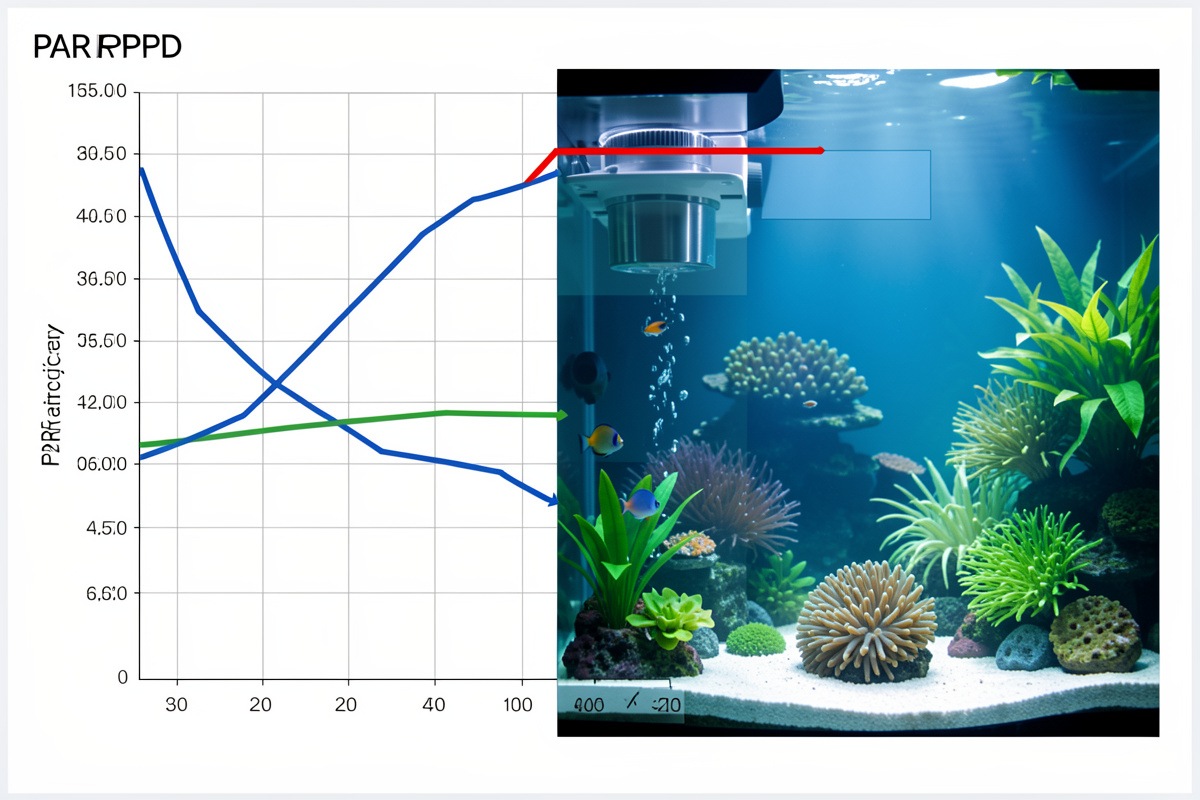
PAR is how much usable light energy reaches your plants; PUR is the slice of that light your plants can actually absorb and use. The practical takeaway for a nano keeper: two lights with the same PAR can grow very differently because their spectrum — their PUR — differs. A full-spectrum light with good PUR grows plants at lower intensity, which means less algae in a small tank.
I came to aquariums through years of hydroponics, where light and spectrum are measured rather than guessed, and the same instinct applies here: understand what the numbers mean before you trust them. This is the guide I wish I had when I first saw “PAR” on a fixture box and assumed bigger was better. It is not — not in a nano, where light is a dose and the spectrum decides how cleanly that dose is spent.
PAR: The Number Manufacturers Advertise
PAR (Photosynthetically Active Radiation) measures the light in the 400–700 nanometre range that plants use for photosynthesis, usually quoted as PPFD at a given depth — the same metric Aquarium Co-Op uses when rating fixtures. It is the number on the marketing chart, and it is genuinely useful — but only if you read it at the right depth and remember it says nothing about spectrum quality.
A fixture might advertise a high PAR figure measured at the surface, which collapses by the time light reaches the substrate of even a shallow nano. Water, glass and distance all cut it. This is why a “high PAR” light over a deeper tank can still under-light the foreground, and why coverage and mounting height matter as much as the headline number — a point I make throughout the nano lighting guide. Read PAR as PAR-at-the-substrate, not PAR-at-the-lens.
PUR: The Number That Actually Grows Plants
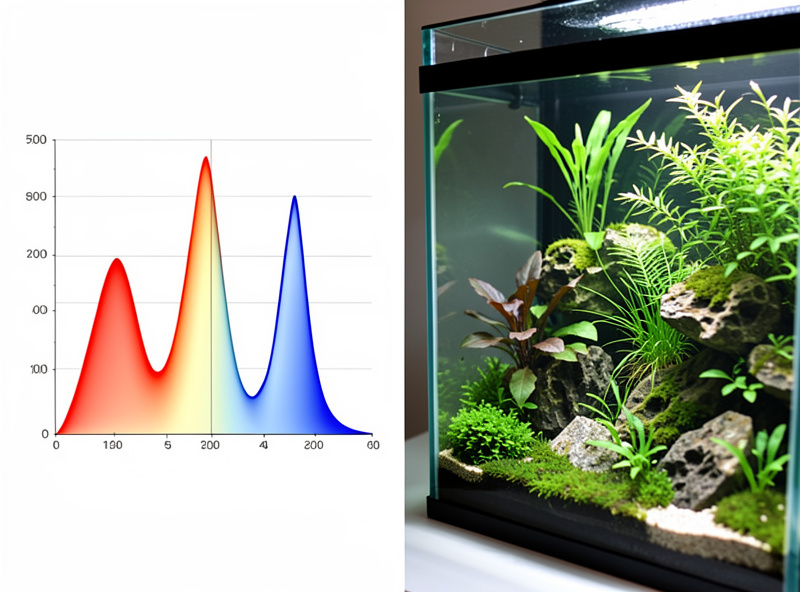
PUR (Photosynthetically Usable Radiation) is the portion of PAR that falls on the wavelengths chlorophyll and accessory pigments actually absorb — chiefly red and blue, with less use of green. A light can post big PAR while wasting much of it on wavelengths plants barely touch, so its effective output for growth is lower than the number suggests.
This is why spectrum matters more than raw brightness. A full-spectrum LED with strong red and blue peaks (good PUR) drives photosynthesis efficiently, so you can run it at lower overall intensity and still grow well — which starves algae of the surplus energy it needs. A cheap cool-white fixture may read bright to your eye and feed algae while underwhelming your plants. The colour-balance choices that follow from this are covered in choosing your nano planted LED.
PAR vs PUR at a Glance
| Aspect | PAR | PUR |
|---|---|---|
| What it measures | Total usable light energy (400–700nm) reaching plants | The fraction of that light plants actually absorb |
| How it is quoted | PPFD number on manufacturer charts | Rarely quoted; inferred from spectrum graph |
| Driven by | Intensity and distance | Spectrum / colour mix (red & blue peaks) |
| Nano keeper takeaway | Read it at substrate depth, not at the lens | Good PUR lets you run lower intensity, less algae |
| Can mislead when | Measured at surface, ignores spectrum | n/a — it is the honest growth metric |
Do You Need a PAR Meter for a Nano?
Almost certainly not. A proper PAR meter (an Apogee-class unit) costs more than most nano lighting setups, and for a single small tank it is hard to justify. I do not run one on my tanks, and I would not tell a reader to buy one to light a 20-litre box.
Instead, read the plants — the budget keeper’s PAR meter. Tight, coloured new growth and gentle pearling mean the dose is right; stretching, leggy stems mean too little; algae on leaves and glass means too much. This is the same observe-and-log discipline I apply to every parameter, just without a $300 instrument. The plant response integrates PAR and PUR and depth and photoperiod into one honest signal you can actually act on. For the hours half of that signal, see the light duration guide.
Why the Eye Is a Bad Light Meter
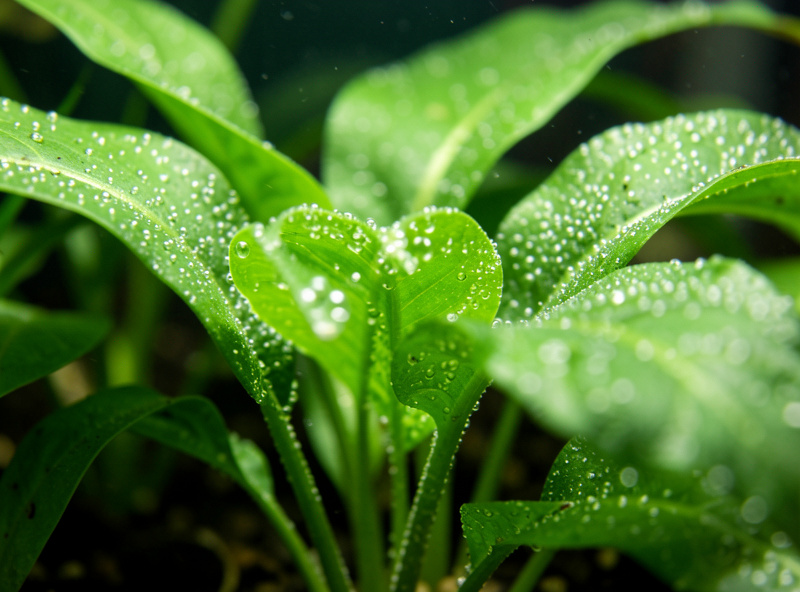
Human eyes are most sensitive to green light, the very wavelength plants use least, so a fixture that looks dazzling to you may be mediocre for growth and great for algae. This mismatch is the root of countless lighting mistakes: keepers buy the light that looks brightest on the shelf and end up over-lighting their plants while under-feeding them.
A cool-white fixture leans on a green-blue spike that reads brilliant to your eye but carries weak red, so plants stretch while algae thrives on the surplus — the spectrum-and-balance trap detailed in the 2Hr Aquarist algae library. A warmer, balanced light can look softer yet grow plants better because more of its output lands on the red and blue your plants actually absorb. Trust the plants and the spectrum graph over your own impression of brightness — the same “measure, do not guess” reflex I bring to every stability decision.
How to Use This When Buying a Light
When you compare fixtures, weight spectrum and dimmability over the single biggest PAR number. A full-spectrum, dimmable light with good red and blue output lets you dial the dose to your plants and pull it back when algae appears — far more useful than a fixture that only knows how to be bright.
If a manufacturer publishes a spectrum graph, glance for real red and blue peaks rather than a flat cool-white spike. If they only publish a PAR number, ask at what depth. And remember the nano-specific truth: you want enough usable light for your plant tier and not a milliwatt more, because the surplus does not grow better plants — it grows algae, as the too-much-light algae guide spells out. Match the light to low-tech or high-tech plants, keep the tank stable, and the spectrum question takes care of itself.
Frequently Asked Questions
What is the difference between PAR and PUR?
PAR is the total usable light energy reaching your plants; PUR is the fraction of that light plants can actually absorb, mostly red and blue wavelengths. Two lights with the same PAR grow differently if their spectrum, and therefore PUR, differs.
Which matters more for a nano tank, PAR or PUR?
Both, but spectrum (PUR) is the lever most keepers ignore. A full-spectrum light with good PUR grows plants efficiently at lower intensity, letting you run less light and starve algae in a small tank.
Do I need a PAR meter for a nano aquarium?
No. A PAR meter costs more than most nano setups. Read the plants instead: tight coloured growth means the dose is right, leggy stems mean too little, and algae on leaves means too much light.
Why do two lights with the same PAR grow plants differently?
Because PAR ignores spectrum. A light can post high PAR while wasting energy on wavelengths plants barely use. The one with better red and blue peaks has higher PUR and grows plants more efficiently.
At what depth should I read a PAR chart?
At your substrate depth, not at the light’s lens. PAR drops sharply through water, glass and distance, so a high surface number can still under-light the foreground of a nano. Always read PAR where the plants actually sit.
Does more PAR mean better plant growth?
Only up to your plant tier’s needs. Beyond that, extra PAR does not grow better plants; it feeds algae. In a nano you want just enough usable light for your plants and no more, ideally on a dimmer.