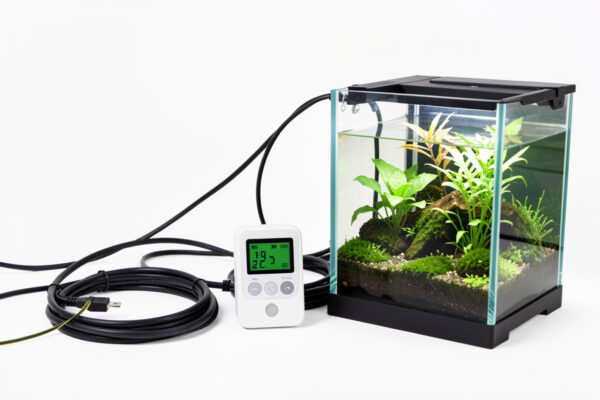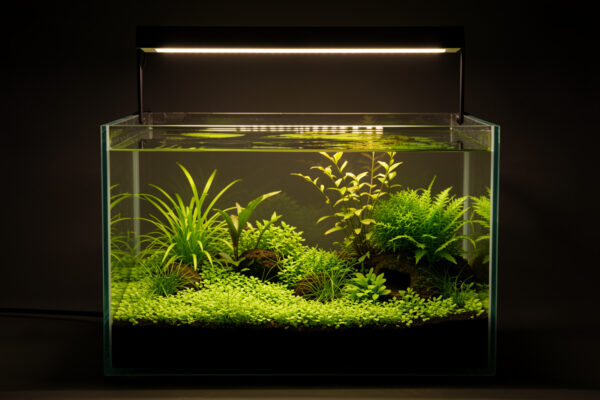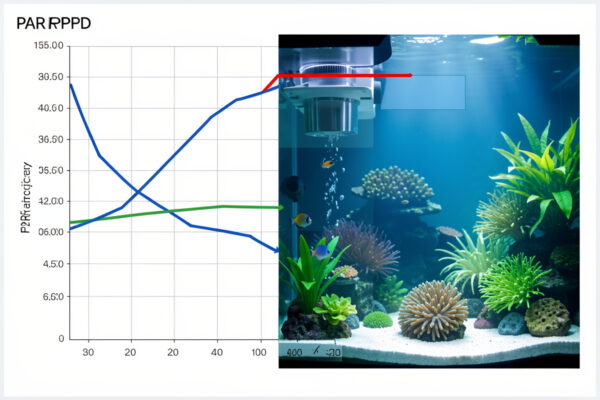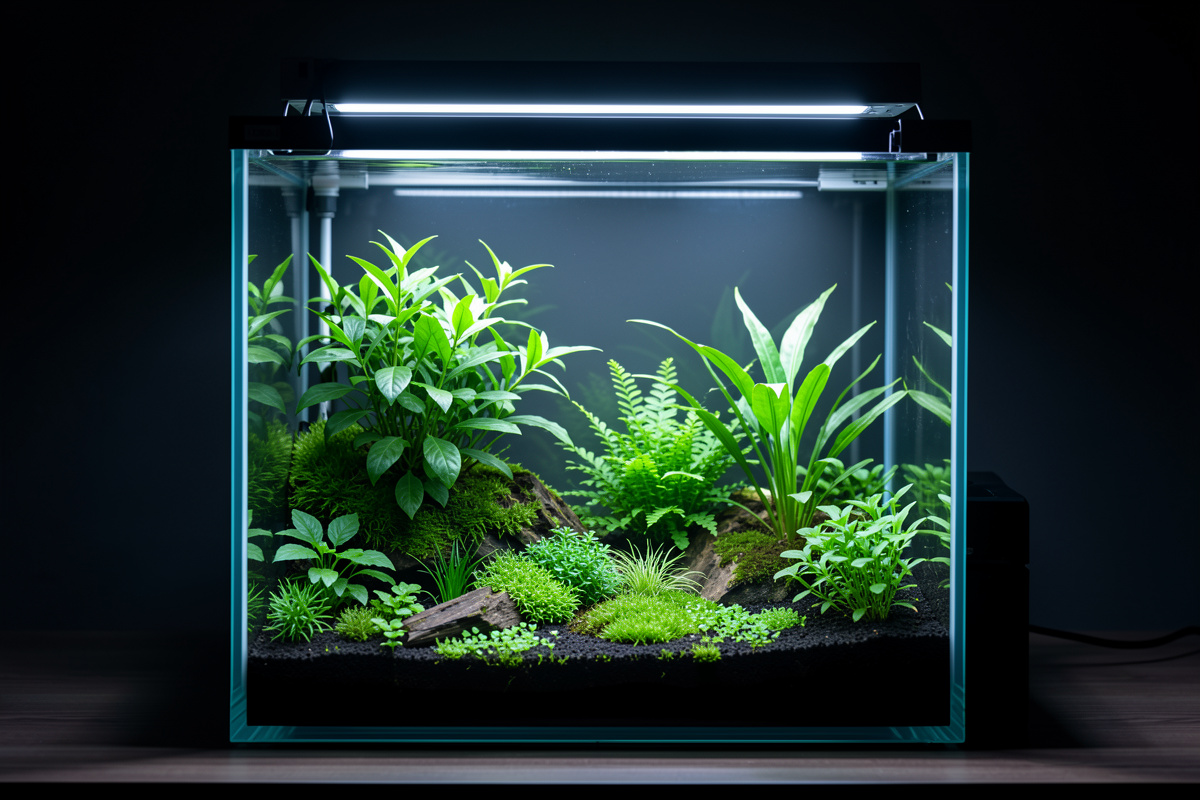
The best LED light for a nano planted tank is the one matched to your plants, not the brightest one on the shelf. For a low-tech nano a $25–40 budget LED grows Anubias, mosses and crypts beautifully; only a CO2 carpet justifies a $120+ high-PAR bar. Buying too much light is the most common reason a new nano fills with algae.
I run two very different nanos and they prove the point. My low-tech ~20-litre reference tank has stayed stable for years under a modest LED, while my high-tech ~60-litre rimless needs a strong, dimmable bar because the carpet under pressurised CO2 demands it. Same hobby, two completely different light budgets. Here is how I actually choose, tier by tier, with the honest trade-offs. As an Amazon Associate I earn from qualifying purchases.
Pick the Light to Match Your Plant Ambition
Decide what you want to grow before you spend a krona on lighting. Low-tech epiphytes and slow plants want a modest fixture; a demanding carpet or red stems want high PAR plus CO2 and dosing. Matching the light to the plants is the entire game — the fixture that grows a carpet will grow an algae lawn over Anubias.
This is the same dose logic the nano lighting guide lays out: light drives demand for everything else. If you have not yet picked plants, read low light plants for a nano tank and low-tech aquarium plants that actually survive first, because the plant list decides the light. Then come back and buy accordingly.
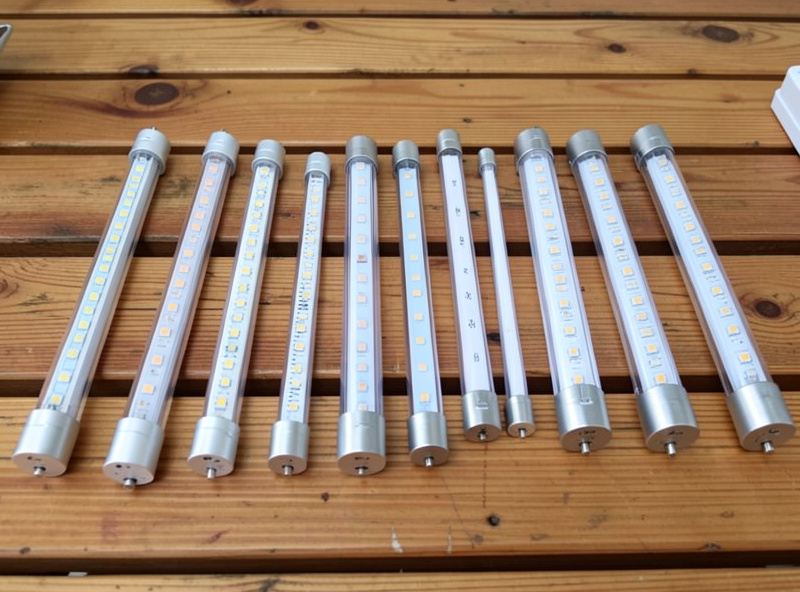
The Budget Tier: NICREW, Hygger, AQUANEAT
Budget LEDs in the $20–40 range grow every low-tech plant worth keeping, and for most nano keepers they are the right answer. A NICREW ClassicLED or a Hygger clip light puts out enough usable light for Anubias, Java fern, Bucephalandra, mosses and many crypts with zero CO2 and minimal algae risk.
What you give up is colour tuning and even spread. Cheap fixtures fix the spectrum for you and can throw an uneven cone, so plant placement matters more. On my low-tech tank a budget LED on a timer has carried a Neocaridina colony and a slow scape for years — proof you do not need to spend more to keep a healthy planted nano. If cost is the priority, my budget nano lighting guide goes deeper on where to save and where not to. You can browse budget nano LED lights on Amazon to compare sizes.
The Mid Tier: Fluval Plant 3.0 Nano, NICREW SkyLED
Mid-tier tunable fixtures in the $60–100 range add app or controller dimming, full-spectrum colour, and enough output for most stem plants and easier carpets. The Fluval Plant 3.0 Nano and NICREW SkyLED are the fixtures I point people to when they want room to grow without committing to a full high-tech build.
The real value here is control. A dimmable light lets you start low, ramp up as the scape matures, and pull intensity back the moment algae appears — the single most useful lever in a nano. If you think you might add CO2 later, a mid-tier tunable light is the smart middle path; it grows low-tech plants happily today and has headroom for tomorrow. Compare tunable nano planted LEDs on Amazon.
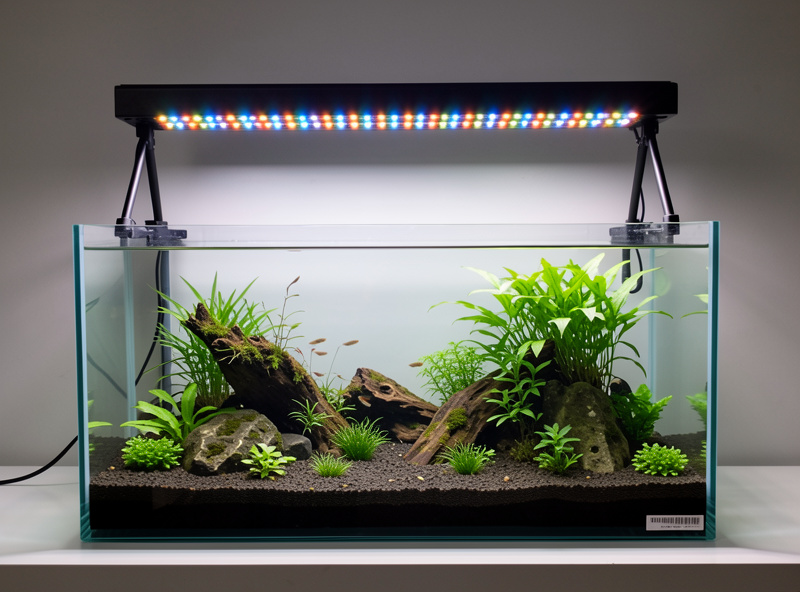
The High-Tech Tier: Chihiros WRGB II, Twinstar, Week Aqua
High-tech bars in the $120–250 range deliver the PAR and rich spectrum a demanding carpet or red stems require — and they will grow ferocious algae if you run them without CO2 and dosing, exactly the imbalance the 2Hr Aquarist algae library documents. These fixtures are a commitment, not an upgrade you bolt onto a low-tech tank for nicer colour.
On my rimless 60-litre a Chihiros-class bar over pressurised CO2 is what makes the carpet pearl, but I run it dimmed and on a ramp, never at full output all day. The mistake I see constantly is someone buying a premium bar for the looks, running the “RGB max” preset, and wondering why the glass goes green. If you are not dosing CO2, you do not need this tier — and the too-much-light algae guide explains exactly why it backfires. Browse high-PAR nano aquarium bars on Amazon.
Nano LED Light Comparison
| Tier | Examples | Street price | Dimmable? | Best for | CO2 required? |
|---|---|---|---|---|---|
| Budget | NICREW ClassicLED, Hygger, AQUANEAT | $20–40 | Rarely | Low-tech: Anubias, ferns, moss, crypts | No |
| Mid | Fluval Plant 3.0 Nano, NICREW SkyLED | $60–100 | Yes (app/controller) | Stems, easier carpets, future CO2 | Optional |
| High-tech | Chihiros WRGB II, Twinstar, Week Aqua | $120–250 | Yes (precise) | Demanding carpets, red stems, dense scapes | Yes |
Features That Actually Matter (and Ones That Do Not)
Two features earn their cost: dimmability and even coverage across the tank’s length — the same priorities Aquarium Co-Op’s lighting primer stresses over headline PAR. A dimmer is your algae brake and your ramp control; a bar that spans the tank prevents the bright-middle, dark-corners problem that makes plants grow unevenly and algae colonise the shade.
Features that are mostly marketing on a nano: extreme peak PAR you will never run, “shimmer” effects that look good on video and feed algae in practice, and app ecosystems you will set once and forget. Buy for the dimmer and the spread, set a sane spectrum, and put it on a timer. The colour science behind “good spectrum” is in PAR vs PUR in nano tank lighting, and how long to run whatever you buy is in the light duration guide.
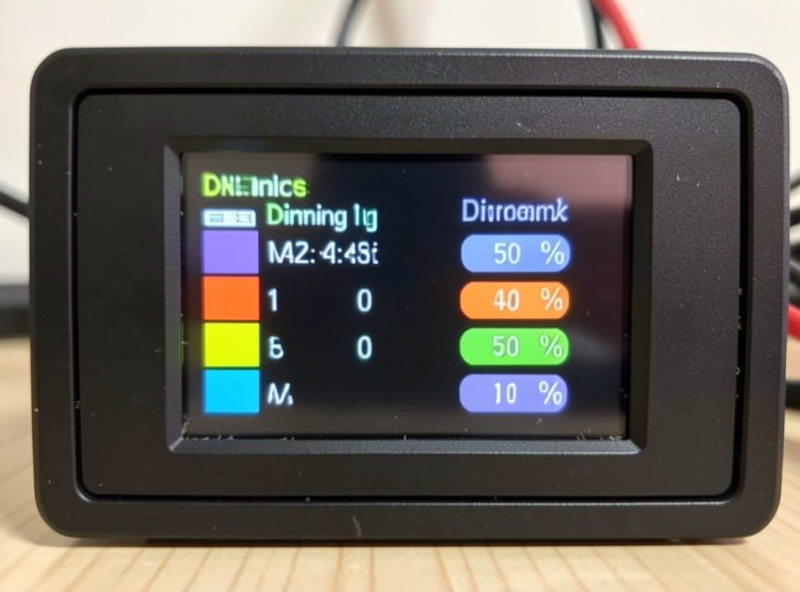
My Honest Recommendation by Keeper Type
If you are new and want a low-tech planted nano, buy a budget LED and a timer, full stop — spend the saved money on plants and a good test kit. If you want room to grow and might add CO2, get a mid-tier dimmable fixture. Only buy a high-tech bar if you are committing to pressurised CO2 and dosing from the start.
Whatever tier you choose, the light is one input in a balanced system. It will only grow plants instead of algae if the tank is cycled and stable, so keep the nitrogen cycle and stability fundamentals tight. Light is the most powerful lever in a nano precisely because it is wired to everything else in the box.
Frequently Asked Questions
What is the best LED light for a low-tech nano planted tank?
A budget full-spectrum LED in the $20 to $40 range, such as a NICREW ClassicLED, grows every low-tech plant worth keeping. Low-tech tanks do not need high PAR, and an over-bright light just feeds algae.
Do I need a dimmable light for a nano tank?
A dimmer is the single most useful feature on a nano light. It lets you start low, ramp up as the scape matures, and pull intensity back the instant algae appears, without uprooting plants or rescaping.
Is a high-PAR light like the Chihiros WRGB worth it?
Only if you are committing to pressurised CO2 and dosing. A high-PAR bar over a low-tech tank with no CO2 will grow ferocious algae. Match the light tier to your plant ambition, not to looks.
How big a light do I need for a 20 litre nano?
A bar-style LED that spans the tank length gives even coverage; a single clip spotlight leaves dark corners where algae colonises. Coverage matters more than raw wattage on a small footprint.
Can I grow a carpet with a cheap nano light?
Usually not. Carpets need high PAR plus CO2 and dosing. A budget LED grows low-tech epiphytes and stems reliably, but a demanding carpet under a cheap light tends to melt or grow leggy and algae-covered.