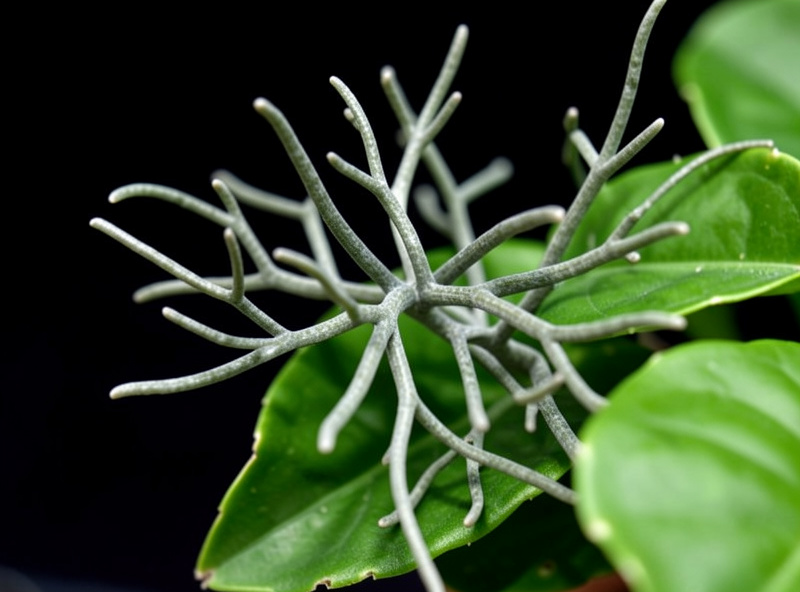
Staghorn algae in a nano tank looks exactly like its name — grey-green branching strands, like tiny antlers, that grip leaf edges and hardscape. It is a close relative of black beard algae and it tells the same story: low or unstable CO2 and a tank carrying too much organic waste. Stabilise the carbon, clean up the load, and within a week or two staghorn has nowhere to grow.
I see staghorn far less often than other algae, and almost always on a tank in transition — a new high-tech setup not yet dialled in, or an established tank that drifted on maintenance. On my 60L it showed up during the same unstable-CO2 stretch that grew black beard, just on different surfaces. Like every algae I deal with, I read it as a parameter signal rather than a pest, and the fix lives in husbandry, not a treatment bottle. This is the cause-and-prevention guide.
Identifying Staghorn Algae
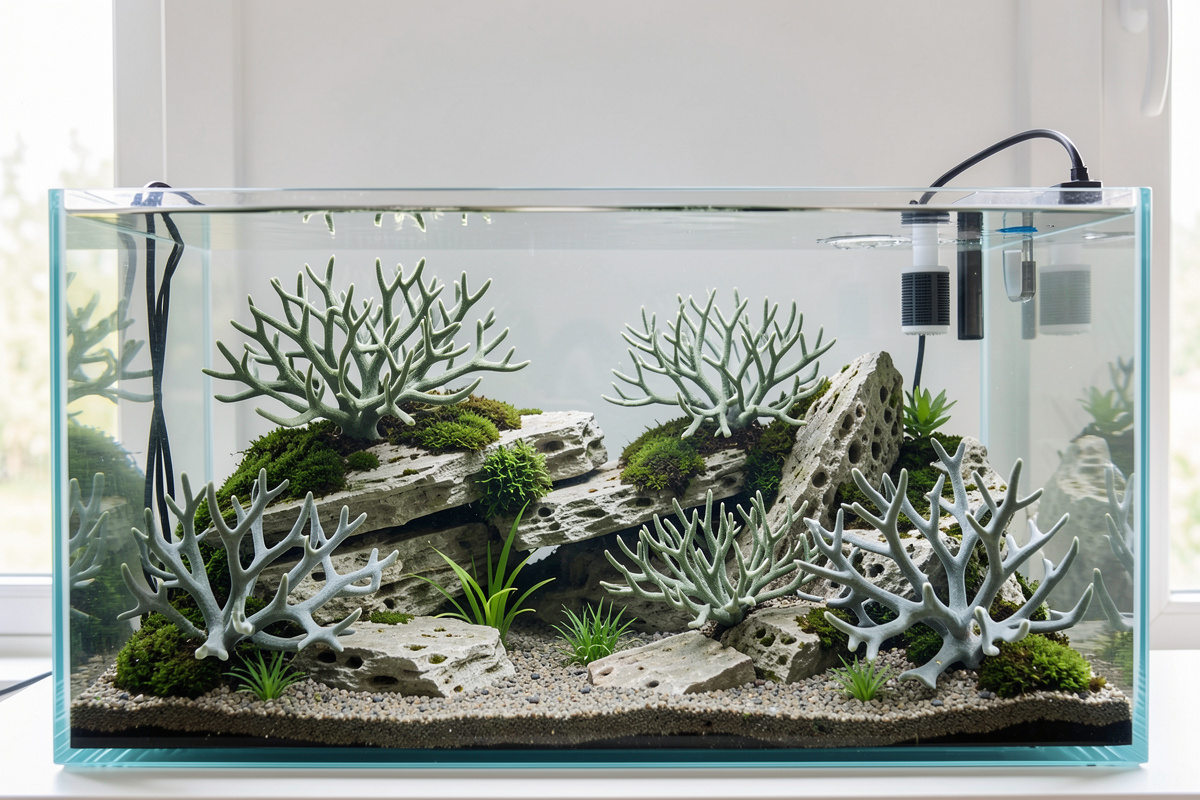
Staghorn algae grows as stiff, branching grey-green to greenish strands that fork like antlers and feel coarse, attaching firmly to leaf margins, driftwood, and equipment. Unlike the soft tufts of black beard algae, staghorn is more rigid and individual strands branch visibly, and it often appears on the same high-flow, high-organic surfaces. If you rub a strand between your fingers it feels wiry rather than slippery.
The branching shape is the identifier. Where black beard forms a dense dark mat and hair algae makes fine soft threads, staghorn makes coarse forking antlers, usually grey-green and sometimes turning reddish under certain light. It frequently shows up alongside black beard because the two share a cause, so a tank with one often has a little of the other. For the full side-by-side of every type, the aquarium algae guide is the reference, and the black beard algae guide covers the cousin you will most often see with it.
The Cause: Low CO2 and a Dirty Tank
Staghorn algae is driven by a shortage of available carbon combined with a build-up of organic waste and ammonia in the water column. When plants cannot get steady CO2 they slow down and stop competing, and staghorn — tolerant of low carbon and rich in dissolved organics — claims the surplus. It is fundamentally a sign that the tank’s carbon supply and its waste export are both out of balance.
The CO2 half mirrors black beard: instability hurts more than a low average. A pressurised tank where the gas lags the lights, or a planted tank pushed with strong light but no reliable carbon source, leaves plants carbon-starved during peak light — staghorn’s opening. The organic half is the accomplice that tips a tank from “a little” to “a lot”: detritus trapped in dead spots, an overdue filter clean, heavy feeding, or decaying plant matter all raise the dissolved organic load. In a small nano volume, that load concentrates quickly, and an ammonia trace from an immature or disturbed cycle feeds the strands directly.
Prevention: Steady Carbon, Clean Water, Good Flow
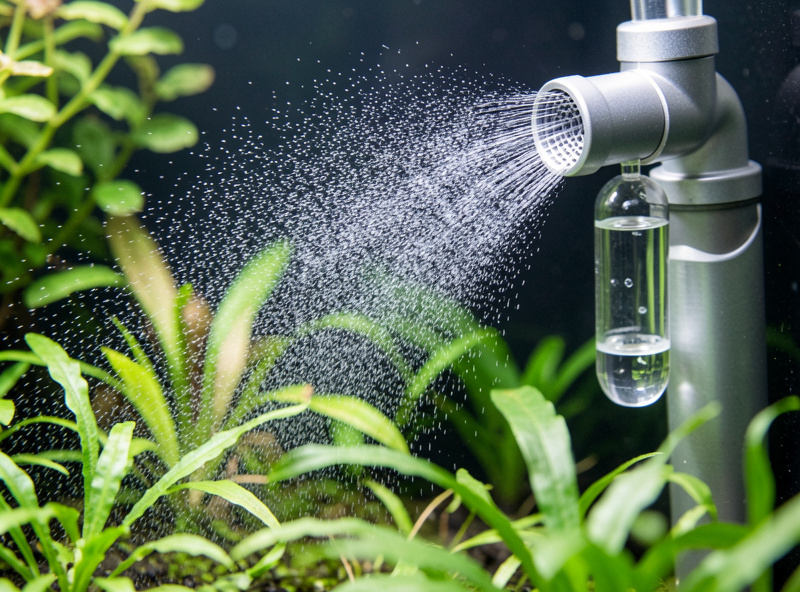
Preventing staghorn algae comes down to three husbandry levers: a stable carbon supply, a low organic load, and complete circulation. Give plants reliable CO2, export waste before it accumulates, and keep flow reaching every corner, and the tank stays firmly in the plants’ favour. None of it involves a chemical — it is the same maintenance discipline that prevents black beard and most other algae.
For carbon, consistency is everything. On a CO2 tank, get the gas to target before the lights come on and hold it level so plants never spend the bright hours starved. On a low-tech tank, you are not promising carbon you cannot deliver, so the priority shifts to not over-lighting plants that have only ambient CO2 to work with — match the light to what the plants can actually use.
For the organic load, the routine is straightforward: rinse your filter media on schedule in old tank water, vacuum detritus from dead spots, feed conservatively, and keep a consistent water change cadence that exports dissolved waste before it can feed the strands. For flow, position the outflow so there are no stagnant pockets where detritus settles — the circulation strategy in controlling algae with plants and flow applies here directly. To remove staghorn already present, trim affected leaves and manually pull strands off hardscape; a healthy, well-fed tank then keeps it from returning. As with every algae on this site, the lasting fix is the parameter, tracked in the log, not a bottle poured into the water.
Why Nano Tanks Get Staghorn Faster
A nano tank amplifies both of staghorn’s triggers: its small volume lets organic waste concentrate within days, and a small CO2 system reaches and loses its target faster than a large one, sharpening the carbon swings that staghorn exploits. The same volume math that makes every nano problem move quickly applies here — a missed filter clean or an overdue water change tips the organic load over the edge far sooner than it would in a big tank.
There is a maintenance angle that catches a lot of keepers, too. Because a nano looks tidy with so little water, it is easy to stretch the cleaning schedule and let detritus quietly build behind the hardscape. That hidden organic reservoir is exactly what staghorn feeds on, which is why the algae so often appears on a tank that “looks clean” from the front. I check the dead spots behind rock and wood at every water change on my tanks, because in a nano the difference between balanced and overloaded is a single skipped session.
The upside, as always, is speed in your favour once you correct course. Stabilise the carbon, strip the organic load, and a nano responds within a week or two — the strands stop branching, weaken, and pull away easily. Staghorn on a small tank is a fast warning and a fast fix, provided you read it as the husbandry signal it is and reach for the maintenance routine rather than a bottle. The foundation routines that prevent it sit in the stability guide.
Frequently Asked Questions
What causes staghorn algae in a nano tank?
Staghorn algae is caused by low or unstable CO2 combined with a build-up of organic waste and ammonia. Plants starved of carbon stop competing, and staghorn claims the surplus. It is a sign the tank’s carbon supply and waste export are both out of balance.
Is staghorn algae the same as black beard algae?
They are close relatives with the same cause, so they often appear together, but they look different. Staghorn forms coarse, wiry, branching grey-green strands like antlers, while black beard forms soft, dense, dark tufts. Both are driven by unstable CO2 and high organic load.
How do I get rid of staghorn algae without chemicals?
Stabilise your CO2 so plants are never carbon-starved, lower the organic load with regular filter cleaning and detritus removal, and keep flow complete with no dead spots. Then manually trim affected leaves and pull strands off hardscape while the corrected parameters starve the cause.
Why does my new high-tech tank have staghorn algae?
A new CO2 tank often has the light and ferts dialled up before the carbon supply is stable, leaving plants starved during peak light — exactly the window staghorn exploits. It usually fades once the CO2 is consistent from lights-on and the tank matures.
Related Guides
- The aquarium algae guide — every algae type mapped to its cause
- Black beard algae — staghorn’s cousin with the same CO2 story
- Controlling algae with plants and flow — the circulation half of the fix
- Water change cadence — exporting the organic load that feeds it