A 10 litre nano tank holds about 2.6 US gallons, and that volume makes the stocking decision for you: it is an invertebrate tank or a single-specimen tank, not a community. The honest, sustainable options are a Neocaridina shrimp colony, a single betta with snails, or a planted invert display — and nothing that schools. This is the stocking 10 litre nano tank guide I wish more shops handed out before the impulse buy.
Ten litres is the size most people start with because it is cheap and it fits on a shelf. It is also the size where the small-water penalty bites hardest. My honesty bench — the little spare I keep for exactly this kind of testing — is around this volume, and it has taught me that 10 litres rewards restraint and punishes ambition faster than any tank I own. The volume math behind that is the whole story, so let us start there.
What 10 litres can actually carry
The realistic stocking ceiling for a 10 litre nano is one of three options: a shrimp colony, a single betta with a snail cleanup crew, or an invertebrate-and-snail display. None of these includes a school of fish, because 10 litres cannot give a shoaling species the swimming length or the bioload headroom it needs. Volume, not how empty the tank looks, sets this limit.
It feels counter-intuitive when you are staring at what looks like a lot of empty water. But the constraint is not space for the fish to occupy — it is the dissolved waste each animal adds and how fast 10 litres concentrates it. A small bioload in a small volume stays stable; a moderate bioload in the same volume swings all week. The general framework for matching litres to livestock is in the main nano stocking guide, and the waste side is broken down in the bioload guide.
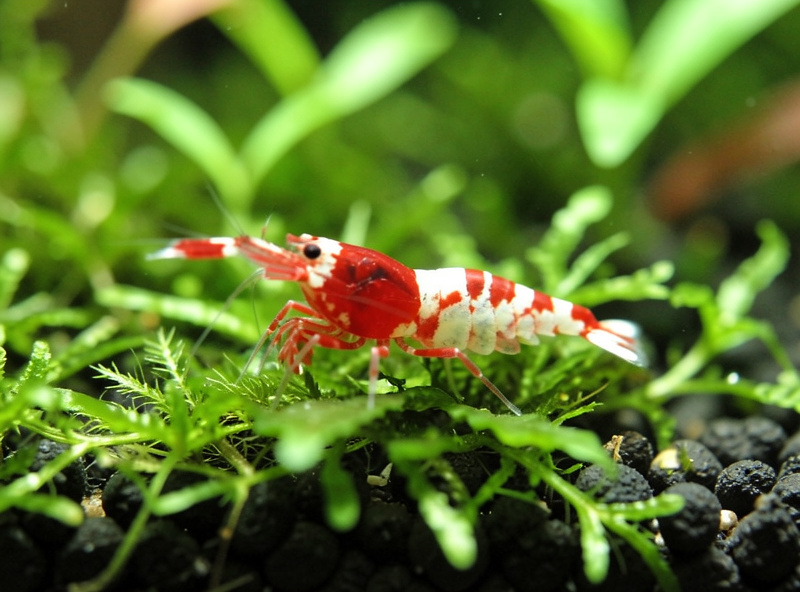
Option one: a shrimp colony (my recommendation)
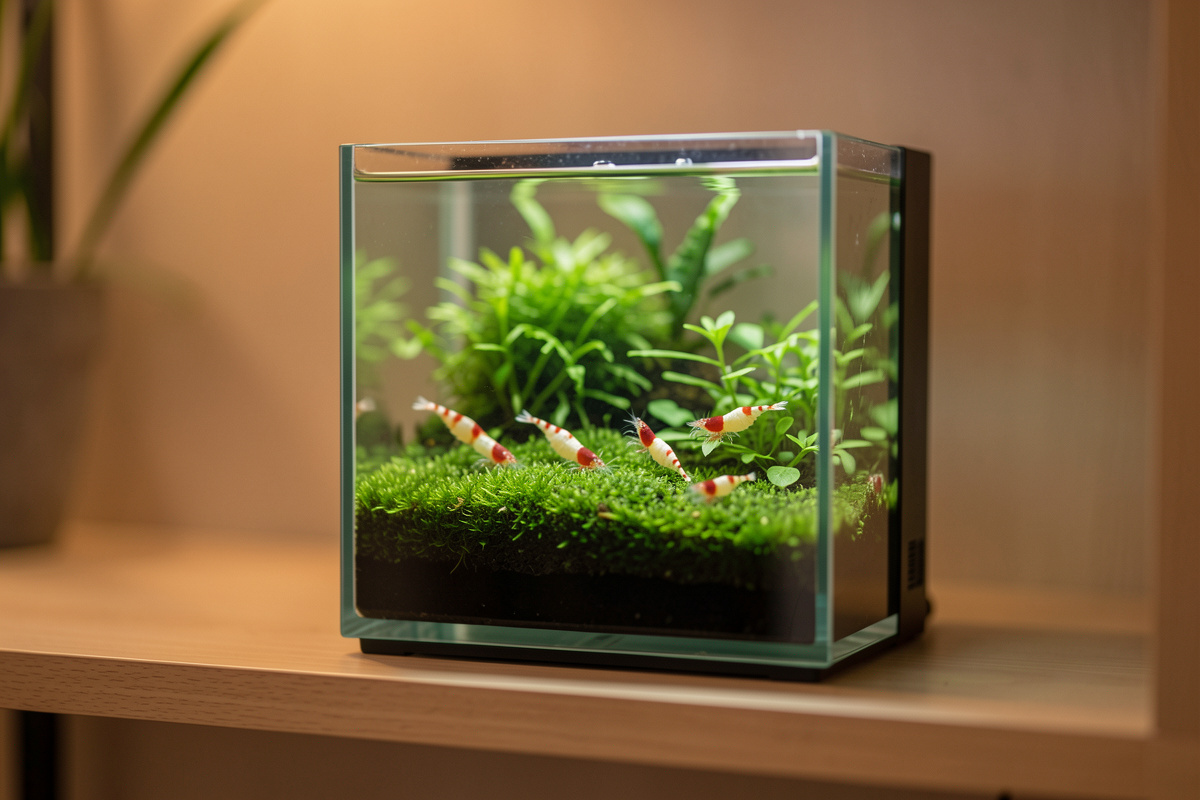
The best use of 10 litres is a Neocaridina shrimp colony, full stop. Cherry shrimp and their colour variants add almost no measurable bioload, breed readily in stable water, and turn a small tank into a living, self-sustaining display. A 10 litre planted tank can comfortably hold a starting group that grows into a colony of dozens, and the cleanup work they do keeps the system tidy.
Shrimp are also the most forgiving livestock for the small-water beginner, with one condition: parameter stability. Neocaridina want steady KH, GH and TDS, and the swings a 10 litre tank is prone to are exactly what stresses a colony into bad molts. I cover the targets in the cherry shrimp water-parameter guide and the full husbandry in the Neocaridina shrimp guide. If you remineralize RO water for them, the stability gets easier, not harder, because you control the starting point.
The payoff is that a shrimp-only 10 litre is the rare nano that gets more stable over time. The colony self-regulates, the bioload stays tiny, and a small weekly water change holds everything flat. It is the closest thing to a hands-off nano that honestly exists — and it still needs a test kit, because “hands-off” never means “eyes-off.”
Option two: a single betta with snails
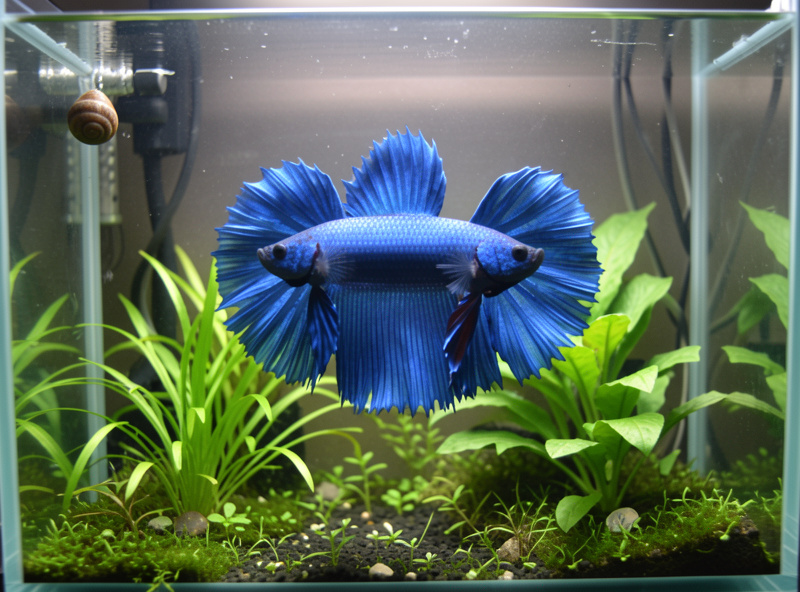
A single male betta in a heated, filtered, planted 10 litre is a legitimate and humane setup — the bowl is not. A betta needs warmth, gentle filtration, and cover, and 10 litres provides all three while keeping his modest bioload inside what the volume can clear. Add a few nerite or ramshorn snails for cleanup and you have a complete, low-stress tank built around one characterful fish.
The non-negotiables are a reliable heater and gentle flow. Bettas come from warm, still water, so a steady tropical temperature matters, and I never trust a heater dial — I verify with an external thermometer, for the reasons in the nano heater write-up. Keep the filter output soft so his long fins are not fighting current all day. One betta plus snails is the entire stock list; resist the urge to add “just a couple” of anything else.
What does not belong in 10 litres
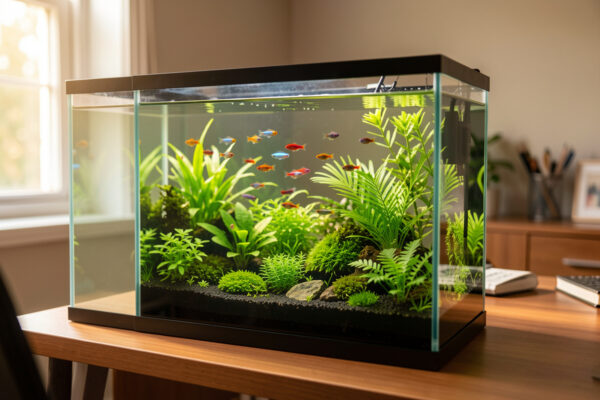
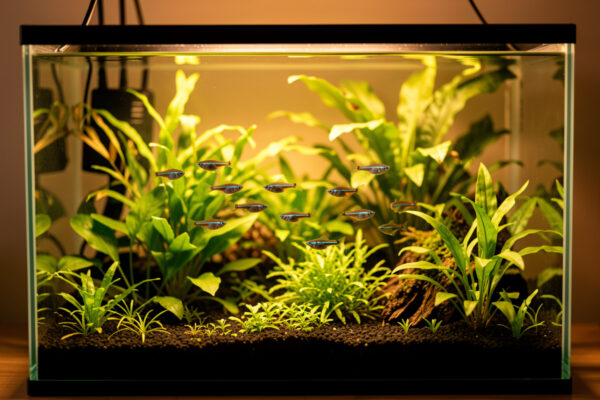
The fish sold for 10 litre tanks that do not belong are the ones that school, grow, or feed heavily. Neon tetras, danios, most barbs, corydoras groups, and anything labelled “community” need either more swimming length or more bioload headroom than 10 litres provides. They may survive for a while, but survival in a tank that is wrong for them is not the standard.
This is where the heartbreak happens. A group of six neons looks fine in the store and looks fine for a month, then the nitrate climbs, the fish stress, and the keeper blames bad luck instead of the volume. The honest answer is that a true schooling group is a 20 litre conversation at minimum — which is exactly why the next step up exists. If you want a school, read the 20 litre stocking guide before you buy.
| 10 L stocking idea | Verdict | Why |
|---|---|---|
| Neocaridina shrimp colony | Best choice | Tiny bioload, breeds, self-sustaining |
| 1 betta + snails | Good | Modest bioload, humane with heat and cover |
| Snail / invert display | Good | Lowest bioload of all |
| Small school of nano fish | Avoid | Needs swimming length and headroom |
| Any cory / loach group | Avoid | Active bottom-dwellers, group bioload |
Cycle and stability come first
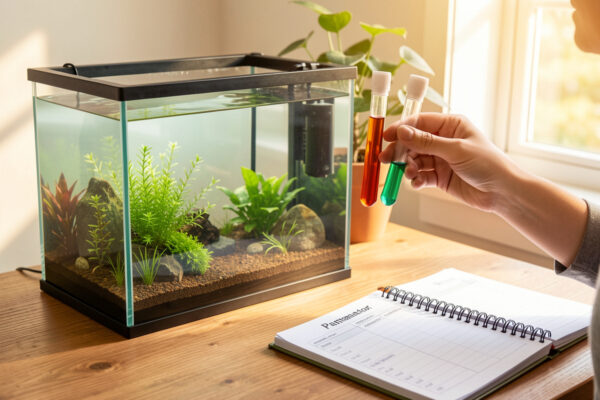
No livestock goes into a 10 litre tank until it is cycled and stable. A nano this small gives no margin for an ammonia spike, so the biofilter has to be established — passing the double-zero test — before a single shrimp or betta arrives. Cycling first is not optional in small water; it is the difference between a stable tank and a chemistry emergency.
Run a fishless cycle and confirm it the honest way before stocking. Then accept that 10 litres will always swing more than a bigger tank — the volume math in my case that small tanks are harder explains why. The defence against those swings is maintenance: a small, regular, parameter-matched water change, the cadence I argue for in the water-change guide. A 10 litre tank is forgiving only when it is lightly stocked and steadily maintained.
Stocking the tank, slowly
Even a 10 litre tank gets stocked in stages. With a shrimp colony you start with a small group and let them breed into the tank rather than buying dozens at once, which spreads the bioload increase across weeks and lets the biofilter keep pace. With a betta, the fish is the whole stock list, so the only staging is adding the snail cleanup crew first to season the tank.
Acclimation matters more in small water because the shop water and your water are rarely the same. Drip-acclimate shrimp especially — a sudden parameter jump is what triggers a bad molt, the failure pattern I walk through in the molting checklist. The general method for getting new livestock in without shocking it is in my guide to introducing new fish, and it applies to inverts just as much as fish.
Frequently Asked Questions
Can I keep fish in a 10 litre nano tank?
A single betta with snails works in a heated, filtered, planted 10 litre. Schooling fish do not, because 10 litres cannot give a shoal the swimming length or bioload headroom it needs. For shoaling species, step up to at least 20 litres.
How many cherry shrimp can a 10 litre tank hold?
Start with around 10 to 15 Neocaridina shrimp and let them breed into a colony of dozens. Their bioload is tiny, so the practical limit is set by stable KH, GH and TDS and your water-change routine rather than a hard headcount.
Is a 10 litre tank too small for a betta?
No. A 10 litre tank that is heated, gently filtered and planted is a humane home for one male betta plus snails. The bowl is the problem, not the volume. He needs warmth, cover and soft flow, and that modest bioload sits well inside what 10 litres can clear.
Do I need to cycle a 10 litre nano tank?
Yes. A 10 litre tank gives no margin for an ammonia spike, so the biofilter must be established and pass the double-zero test before any livestock arrives. Cycle fishless first, then stock lightly and stage the additions.
Why can’t I keep a small school of tetras in 10 litres?
Schooling fish need swimming length and add a group bioload that 10 litres cannot buffer. They may survive a few weeks, then nitrate climbs and they stress. A true school is a 20 litre setup at minimum, not a 10 litre one.