An overstocked nano tank shows it in the water chemistry days or weeks before it shows it in the fish. The single most reliable sign is nitrate climbing faster than your water changes can reset it, usually paired with a slow KH sag as the system burns through its buffer. By the time you see fish gulping at the surface, the tank has been telling you for a while — you just were not reading the numbers.
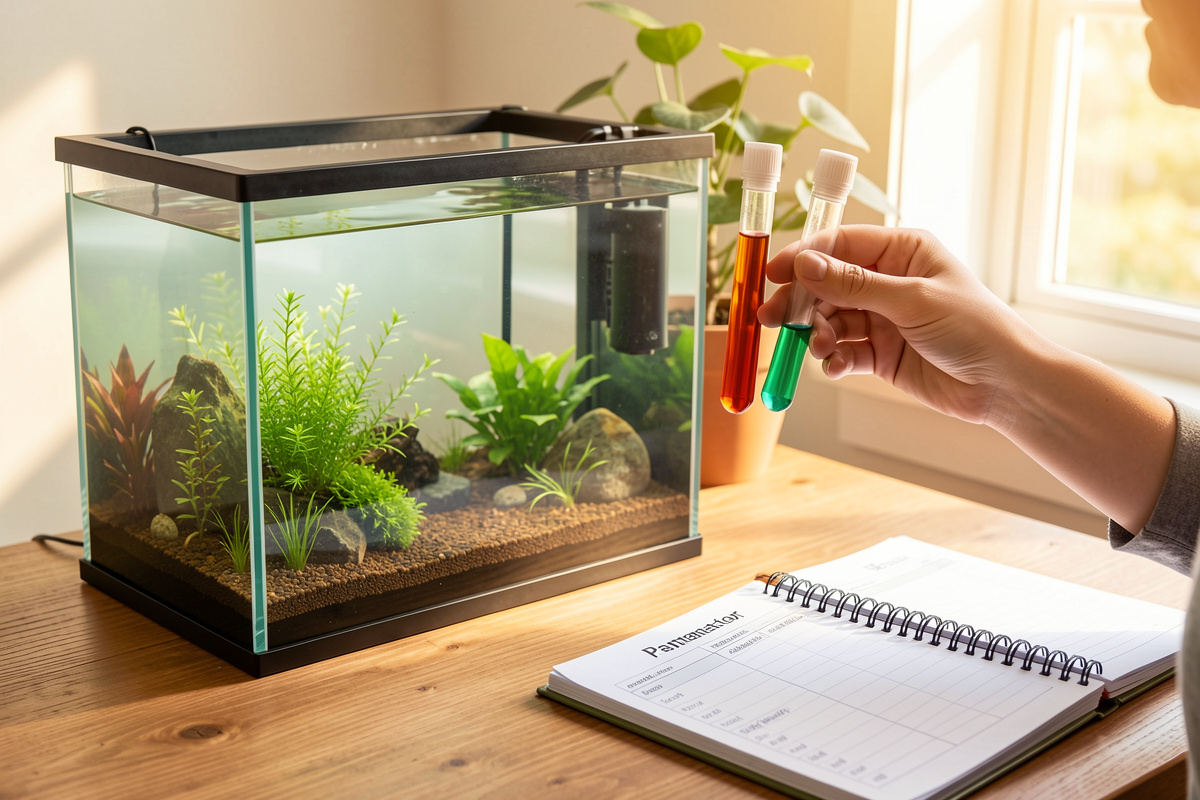
I catch overstocking in my own tanks the same way I caught nutrient drift in my hydroponic reservoirs: by logging parameters and watching the trend, not the snapshot. A single test tells you where you are; a fortnight of tests tells you where you are heading. This guide walks the overstocking nano tank signs in the order they actually appear — chemistry first, behaviour second, algae third — so you can act on the early ones instead of reacting to the late ones.
Sign one: nitrate that outruns your water changes
The earliest measurable sign of overstocking is nitrate rising faster than your routine removes it. In a correctly stocked nano, a weekly water change resets nitrate and it climbs gently over the following days; in an overstocked one, it climbs steeply and never returns to your baseline. If you are testing each week and the number keeps ratcheting up, the bioload is producing more waste than the volume and your maintenance can absorb.
This is why a log beats a memory. One nitrate reading is just a number, but a rising line across three or four weeks is a diagnosis. When I see that line in a tank, I count the livestock before I touch anything else, because more often than not the problem is simply too much animal for the litres. The mechanics of why nitrate behaves this way in small water are in the parameter-swings write-up, and the maintenance side is in the water-change guide.
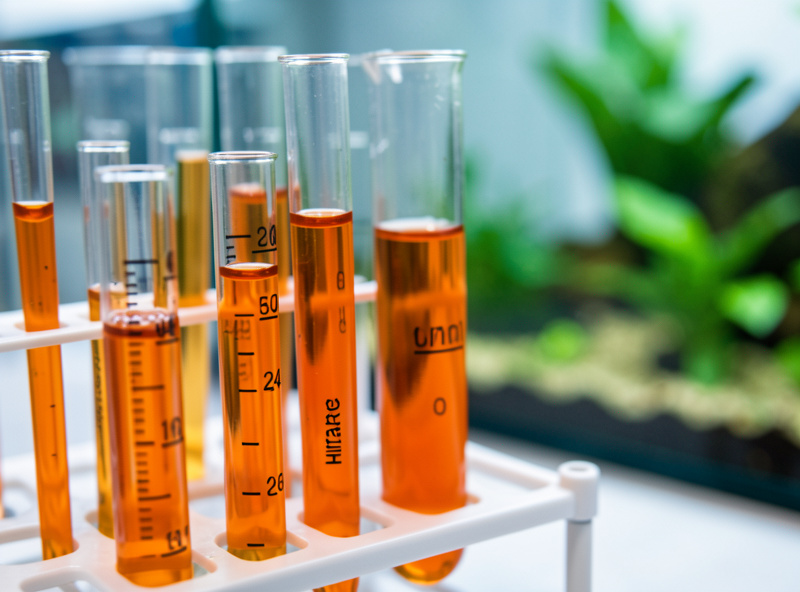
Sign two: KH sagging and pH drifting
Overstocking quietly eats your buffer. The biological processing of all that extra waste consumes carbonate hardness (KH), and as KH falls the pH loses its anchor and starts to drift — often downward, sometimes in daily swings. A nano that used to hold a steady pH and now wanders is frequently a tank carrying more bioload than its buffering can support between water changes.
This matters because KH is the shock absorber of the whole system. When it sags, the tank becomes prone to faster, larger swings in everything else, which is the opposite of what you want in a small volume. If your KH is trending down week over week and you have not changed your source water, suspect the stocking load. Re-establishing a sensible bioload and a matched water-change routine is the fix; chasing the pH directly is not.
Sign three: ammonia or nitrite reappearing
If ammonia or nitrite ever reappears in a tank that was fully cycled, the bioload has outrun the biofilter. This is the most serious chemistry sign because ammonia is the form that actually harms gills. It typically happens after adding too much livestock at once, but a steadily creeping overstock can also push a small, fixed bacterial colony past what it can process, especially if feeding is heavy.
A reading above zero on either test is an immediate-action signal, not a trend to watch: increase water changes, stop overfeeding, and do not add anything else. A reappearing nitrite spike in particular means the cycle is struggling to keep up, and the honest long-term answer is usually fewer animals rather than a bigger filter. The cycle fundamentals, if you need to re-confirm yours, are in the nitrogen cycle guide.
Sign four: behaviour at the surface
The clearest behavioural sign of overstocking is fish hanging near the surface and gulping, especially in the early morning. Overnight, plants and the tank stop producing oxygen and the respiring bioload draws it down, so an overstocked nano hits its lowest dissolved oxygen just before the lights come on. Fish crowding the surface at dawn are telling you the oxygen demand of the stock has outgrown what the surface can resupply.
Morning surface-gulping should be read as a stocking-and-oxygen problem, not a one-off. Increasing surface agitation buys time, but it treats the symptom; the cause is too much respiring animal in too little water. If you see it, count your stock honestly and consider rehoming rather than relying on an air stone to paper over an overstocked tank. Lethargy, faded colour, and fish that never quite settle are the slower-burn versions of the same stress.
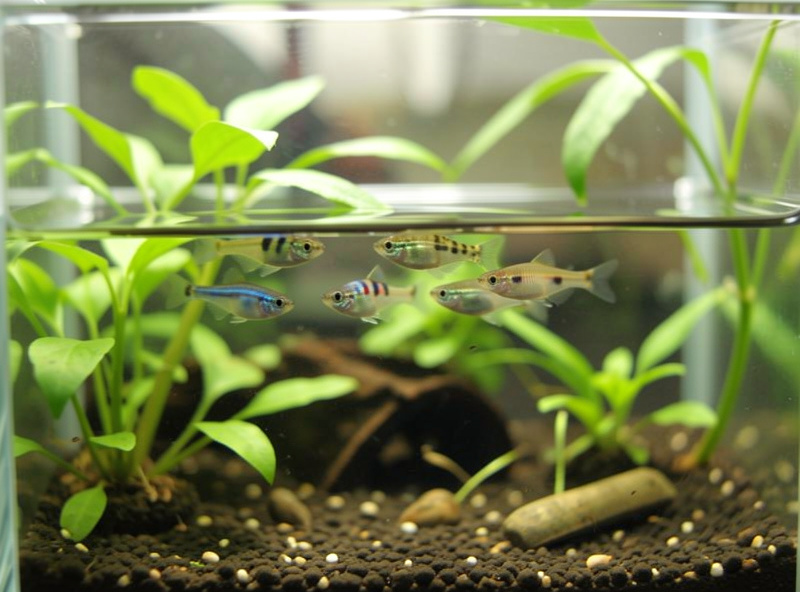
Sign five: algae the chemistry is feeding
Persistent algae that resists your usual control is often an overstocking signal in disguise. The excess nutrients an overstocked tank pumps out — nitrate and phosphate from waste and heavy feeding — are exactly what fuels an algae bloom. When a tank that used to stay clean suddenly battles green film or hair algae despite stable light, the nutrient input has usually gone up, and the most common reason is more livestock and more food.
I diagnose algae by cause, not by the bottle aisle, and overstocking is one of the causes I check first. Before blaming the light, I ask whether the bioload or the feeding changed. If they did, the algae is downstream of the stocking, and reducing the load and the feeding does more than any algaecide. The full cause-based approach is in the main stocking guide, which ties the bioload to the nutrient budget the whole tank runs on.
What to do when you spot the signs
The fix for overstocking is to reduce the load, not to out-engineer it. The durable solutions are rehoming livestock to get back inside the volume’s limit, feeding less so there is less waste to process, planting more heavily so plants pull nutrients, and increasing water-change frequency in the meantime. A bigger filter helps a little, but it cannot change the fact that a small volume concentrates waste — only fewer animals and better maintenance do that.
Work in that order: stabilise first with extra water changes and reduced feeding, then solve permanently by getting the stocking right. If you are planning a tank rather than rescuing one, the prevention is simply to stock conservatively from the start using the bioload guide and the volume map in the stocking guide. And if any fish looks genuinely unwell rather than merely stressed, that is a question for an aquatic vet, not a stocking adjustment.
Frequently Asked Questions
What is the first sign a nano tank is overstocked?
Nitrate that climbs faster than your water changes can reset it. In a correctly stocked nano, nitrate returns to baseline after a weekly change. In an overstocked one it ratchets up week after week. A parameter log makes the rising trend obvious before fish show stress.
Why do my fish gather at the surface in the morning?
Overnight the tank stops producing oxygen while the bioload keeps consuming it, so dissolved oxygen is lowest at dawn. Fish gulping at the surface in the morning usually means the oxygen demand of the stock has outgrown the tank, a classic overstocking sign.
Can overstocking cause algae in a nano tank?
Yes. An overstocked tank releases more nitrate and phosphate from waste and feeding, and those nutrients fuel algae. If a previously clean tank suddenly battles algae with no change in lighting, check whether the bioload or feeding went up.
Does a bigger filter fix an overstocked nano tank?
Only partly. A bigger filter adds biological capacity but cannot change the fact that a small volume concentrates waste. The durable fixes are rehoming livestock, feeding less, planting more, and changing water more often. Reduce the load rather than out-engineering it.
Is rising nitrate dangerous in a nano tank?
Steadily rising nitrate is a sign the waste output exceeds what your maintenance removes, and chronically high nitrate stresses livestock and feeds algae. It is a signal to reduce the bioload and increase water changes. Ammonia or nitrite reappearing is far more urgent.
How quickly do overstocking problems appear in small tanks?
Faster than in large tanks. Small volumes concentrate waste and have less buffer, so nitrate climbs and KH sags within weeks rather than months. That speed is why logging parameters matters more in a nano, so you catch the trend early.