When an aquarium filter stops, the emergency isn’t the loss of filtration — it’s falling oxygen and a bacteria colony beginning to starve. The five-minute diagnosis is almost always the same short list: no power, a jammed or calcified impeller, a clogged intake, or an air-locked pump. Check those four, in that order, and you’ll revive most dead nano filters.
I’ve torn down more small filters than I can count across four tanks and a decade of logs, and the pattern barely changes. A filter rarely dies dramatically. It just goes quiet, the surface stills, a faint film creeps across the top, and if you don’t notice for a day the tank starts telling you in worse ways. On a nano the clock is shorter than most keepers expect, so the first thing to internalize is what actually endangers the livestock when flow stops.
This is the fast, ordered diagnosis I run every time, plus the one emergency move that buys you all the time you need to do the repair calmly. If your filter is silent right now, do the emergency step first and read the rest after.
What’s the Real Emergency When a Filter Stops?
Oxygen, not filtration. A stopped filter ends surface agitation and gas exchange, so dissolved oxygen falls — fastest in a warm, small, well-stocked tank. Fish can be gasping at the surface within an hour on a hot day. The nitrifying bacteria matter too, but they outlast the fish by a wide margin.
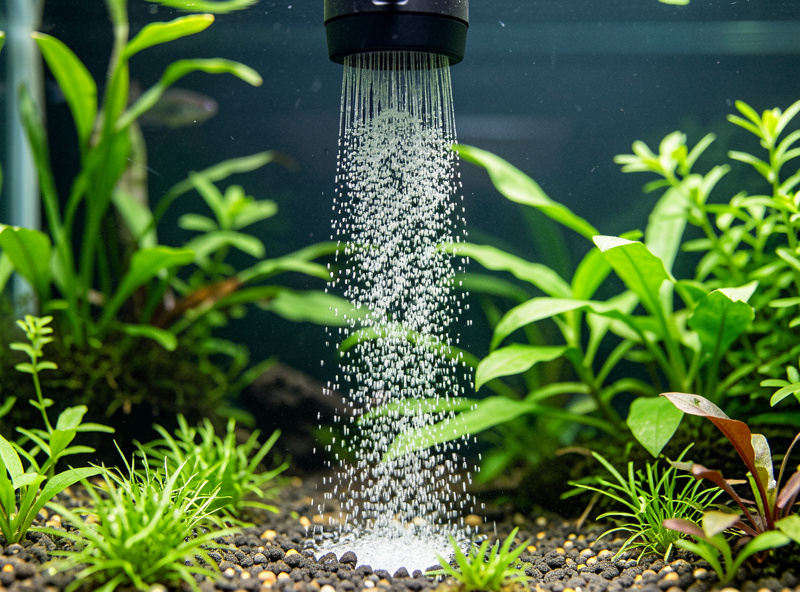
Here’s the physics that makes people panic about the wrong thing. Your biofilter — the colony of nitrifying bacteria living in the filter media — is aerobic and it does slowly begin to die back without oxygenated flow. But that die-off takes many hours to become significant, and even a badly knocked-back colony rebuilds. The fish, meanwhile, need oxygen continuously, and a nano has little surface area and a small total oxygen reserve to coast on. Warmer water holds less oxygen to begin with, a relationship the USGS Water Science School dissolved-oxygen data spells out clearly — solubility drops measurably for every degree you climb. So the correct emergency response is to restore oxygen and water movement immediately — then take your time diagnosing the filter. Get that priority backward and you’ll be so focused on the pump that you lose fish to suffocation while it sits on the towel. Drop in an airstone or a spare sponge filter the moment the main filter goes down.
How Do You Run the Five-Minute Filter Diagnosis?
Work from the outlet inward: confirm power at the socket, then the impeller, then the intake, then air-lock. Each check takes under a minute and rules out the most common failure before the rarer ones. The impeller is the culprit in the majority of dead nano filters, so don’t skip straight to blaming the motor.
Run it in this order every time, because doing it out of order is how you replace a perfectly good pump. Here’s the diagnostic table I keep in my head:
| Symptom | Most likely cause | Fix |
|---|---|---|
| Dead silent, no hum | No power — socket, plug, tripped GFCI | Test outlet, reset GFCI, check the plug |
| Hums but nothing spins | Jammed or calcified impeller | Pull and clean the impeller and its well |
| Runs weak, low flow | Clogged intake or dirty media | Clear the intake, rinse media in tank water |
| Runs but no water moves | Air-locked pump chamber | Tilt or restart to burp the trapped air |
| Grinding or rattling | Worn impeller shaft or bushing | Inspect and replace the impeller |
Notice that four of the five fixes cost nothing and take minutes. Only the worn-shaft case needs a part, and even that is a cheap impeller, not a new filter. Confirm power first because a tripped GFCI or a socket knocked loose during maintenance is embarrassingly common — I’ve “diagnosed” a dead filter that was simply unplugged behind the stand more than once.
Why Is the Impeller the Usual Suspect?
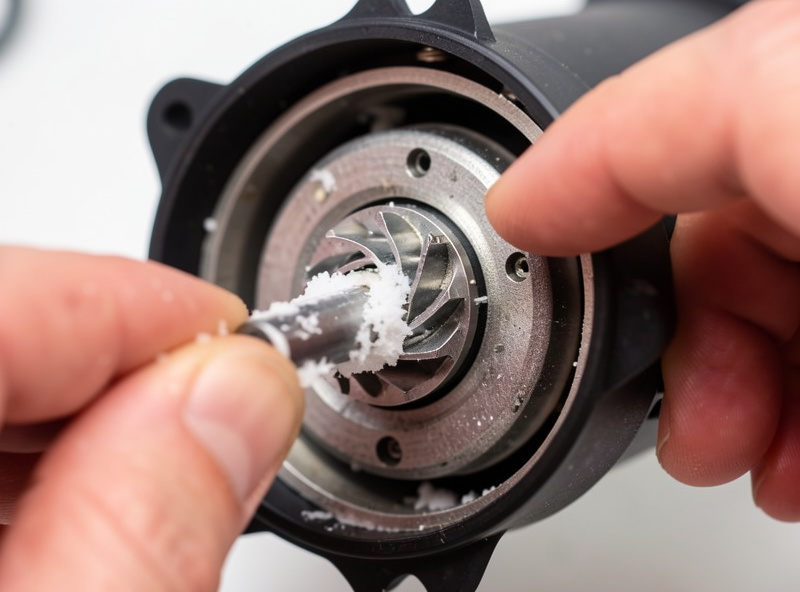
A nano filter drives a tiny magnetic impeller in a narrow well, and that well is a magnet for trouble: calcium scale in hard water, snail shells, plant fragments, and shrimp molts all lodge there and stop it turning. When a filter hums but pushes no water, a jammed impeller is the cause roughly nine times in ten.
The repair is genuinely five minutes. Unplug, lift the motor block, and pull the impeller — it’s usually a small magnetic rotor with a ceramic or steel shaft that slides straight out. On my hard-water Fluval Spec the shaft and well fur up with white calcium scale that binds the rotor; a cotton swab and a rinse clears it. Check the shaft for grooving and the impeller vanes for chips, because a worn shaft is what turns a smooth filter into a grinder. Reseat everything, prime it, and it runs. I clean every impeller in my rack monthly precisely so this failure never becomes an emergency — it’s the single highest-value maintenance task on a small filter. If yours grinds even after cleaning, the shaft or bushing is worn and a replacement impeller is the honest fix.
What If the Filter Runs but Barely Moves Water?
Weak flow usually means a clogged intake, packed media, or an air lock — not a dying motor. Clear the intake tube and sponge, rinse the media in old tank water (never tap), and burp any trapped air by tilting the filter. Restoring flow is almost always a cleaning job, not a replacement.
Media maintenance is where good intentions kill filters slowly. A media cartridge or sponge packed solid with mulm chokes flow to a trickle, and the reflex to rinse it under a hot tap destroys the bacteria colony you spent weeks growing. I rinse filter media in a jug of tank water pulled during a water change — enough to clear the gunk, gentle enough to keep the biofilter alive. Air lock is the sneaky one: after a water change the pump chamber traps a bubble and the impeller spins in air, moving nothing. A firm tilt or a quick off-on cycle burps it out. Weak flow can also stress fish that don’t want much current in the first place — the flip side of that problem, when the flow is too strong for a betta or shrimp, I cover in betta and filter flow.
Does a Stopped Filter Wreck My Nitrogen Cycle?
Briefly and recoverably, not catastrophically. The nitrifying bacteria in your media start losing oxygen when flow stops, but a colony survives a short outage — hours — and rebuilds quickly once flow returns. The real risk is a long, unnoticed stoppage: media sitting in dead, deoxygenated water for a day can knock the colony back enough to cause a small ammonia or nitrite bump.
This is where the parameter log earns its place. If a filter was down overnight, I run my API liquid test kit on ammonia and nitrite for the next few days rather than assuming, because a knocked-back biofilter shows up as a small nitrite blip before it becomes a problem — and even low, chronic ammonia is toxic to fish at the thresholds EPA sets for aquatic life. On a nano, small problems get big fast. If you’re unsure how a healthy cycle should read, my baseline is in the aquarium nitrogen cycle, honestly. The key habit: keep the media wet and, ideally, oxygenated even while the filter is off. If you have to open a filter for a repair that’ll take a while, drop the media into a cup of tank water with an airstone running. Bacteria are hardier than beginners fear, but they are not immortal, and a nano gives you less margin than a big tank does for any mistake — the theme I lay out in why small water is the advanced class.
How Do You Keep a Filter Failure From Becoming a Crisis?
Redundancy and routine. Keep a spare air pump and airstone or a cheap sponge filter on the shelf so you can restore oxygen in ninety seconds, clean the impeller monthly, and rinse media in tank water. A filter failure with a backup in the drawer is an inconvenience; without one it’s a countdown.
The backup half of that is the piece most keepers skip until they’ve lost fish once. A battery-powered or spare air pump with an airstone is the cheapest insurance in the hobby — I keep a Tetra Whisper on the shelf — and it doubles as your power-outage kit. When my main filter has failed — and it has, at the worst possible times — the spare sponge filter under the stand meant the tank never noticed. This whole failure sits inside the bigger equipment picture in my nano tank troubleshooting hub, and it shares a root cause with the heater failures: small volume, fast consequences. If you don’t own emergency oxygenation yet, a quick search for a battery aquarium air pump covers you for both a dead filter and a power cut. Buy it before you need it.
As an Amazon Associate I earn from qualifying purchases.
How long can fish survive if the aquarium filter stops?
Often several hours, sometimes longer, provided the water stays oxygenated. The danger when a filter stops is falling dissolved oxygen from the loss of surface movement, not the loss of filtration. Add an airstone or spare air pump immediately, and fish will usually be fine while you diagnose and repair the filter.
Why does my filter hum but not pump water?
That almost always means a jammed or calcified impeller. The small magnetic rotor is stuck in its well, often bound by calcium scale, a snail shell, or plant debris. Unplug the filter, pull the impeller, clean it and the well with a cotton swab, check the shaft for wear, and reseat it.
Can I rinse my filter media under the tap?
No. Tap water contains chlorine or chloramine that kills the nitrifying bacteria living in the media, which is your biological filter. Always rinse media in old tank water saved during a water change. Rinse only enough to clear the clog, so you keep the bacteria colony alive while restoring flow.
Will a stopped filter ruin my cycle?
A short stoppage of a few hours is recoverable and the bacteria colony rebuilds quickly. The risk is a long, unnoticed outage where media sits in deoxygenated water for a day or more, which can knock the colony back enough to cause a small ammonia or nitrite rise. Test for a few days afterward to be safe.