Nano tank equipment troubleshooting comes down to one habit: test and isolate before you touch anything. On a 5-gallon (19-liter) tank, a stuck heater can climb from a safe 76°F to a lethal 92°F in under three hours — roughly four times faster than on a 55-gallon. Small water forgives nothing, so diagnosis has to be fast and methodical.
I keep four small systems running as parallel experiments — a low-tech planted 20-liter, a high-tech 60-liter with pressurized CO2, a dedicated Neocaridina shrimp tank, and a spare I abuse for testing. Every one of them has failed on me at some point. A heater that wouldn’t shut off, an impeller welded with calcium, a seam that wept a thin line down the stand. What separated the near-misses from the disasters was never luck. It was having a diagnostic order and following it instead of panicking.
This is the hub for that discipline. Below is the map of how nano gear fails, how fast each failure turns dangerous, and where to go for the five-minute fix on each one. The industry sells small tanks as beginner toys. They are the advanced class. Treat the gear like the life-support system it is, and you will lose far fewer animals to a $12 part than to your own hesitation.
Why Do Nano Tanks Break Their Keepers More Than Big Tanks Do?
Small volume means fast swings. A 5-gallon nano holds about 19 liters of thermal mass; a 55-gallon holds 208. When a heater sticks on, the small tank absorbs the same watts into one-tenth the water, so temperature, pH, and dissolved oxygen all move four to ten times faster toward the danger line. Physics, not bad luck.
This is the standing thesis of everything I write here, and it is not marketing pessimism — it is volume math. Heat capacity scales with mass. A 50-watt heater dumping its full output into 19 liters raises temperature far faster than the same wattage into 200 liters. The same asymmetry applies to a filter failure: when flow stops, the biofilm in your media starts consuming oxygen while producing nothing, and a nano’s small surface area and low total oxygen reserve mean fish can be gasping at the surface within an hour on a warm day. In my parameter log, the tanks that scared me were always the smallest.
There is an upside hidden in that fragility. Because a nano reacts fast, it also tells you fast. A big tank can hide a dying filter for a week behind sheer dilution; a nano will show you rising nitrite in two days. If you test on a rhythm, small water becomes a high-resolution instrument. If you guess, it becomes a coffin. The gear troubleshooting in this cluster is written around that reality: move quickly, but move in the right order.
What Belongs in a Nano Tank Troubleshooting Kit?
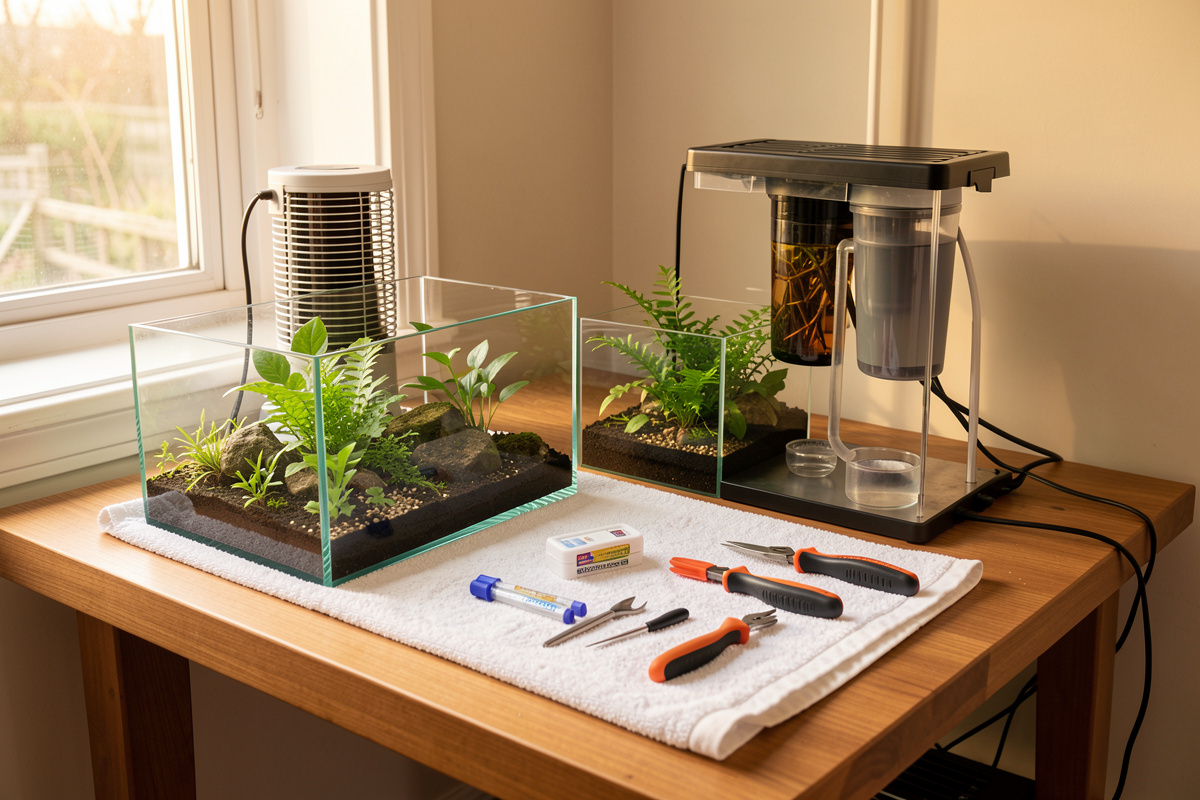
The minimum diagnostic kit is a liquid test kit (ammonia, nitrite, nitrate, KH, GH), an independent digital thermometer, a spare air pump with airline and a sponge filter, and a turkey baster. That’s under $60 and it resolves the majority of nano emergencies faster than any single gadget you’ll panic-buy at 11 p.m.
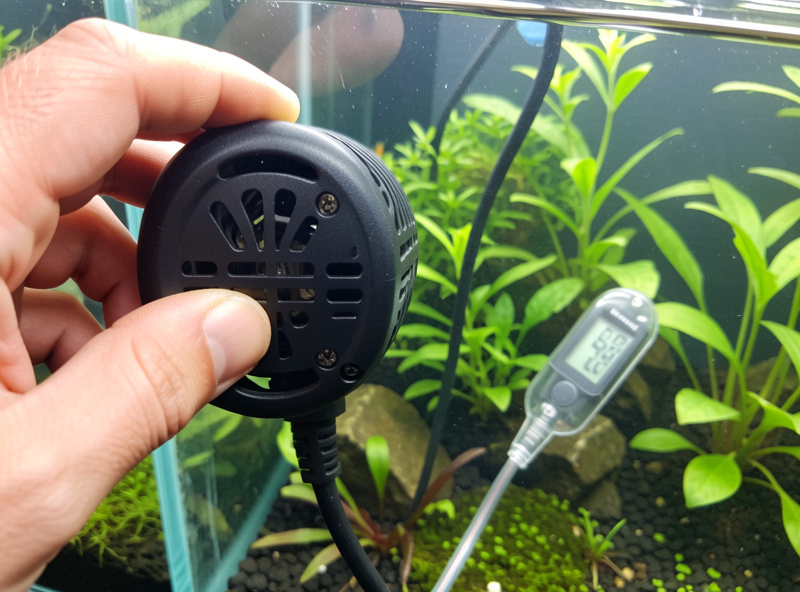
Notice what is not on that list: a $150 all-in-one controller. I own reliable meters — a calibrated pH pen and a TDS meter that came over from my hydroponics bench, the same instruments I used on nutrient reservoirs for years — but the workhorse of every emergency is the cheap liquid test kit and a thermometer I trust more than any heater dial. The dial on a submersible heater is a suggestion, not a measurement; I have caught heaters running 4°F off their setting more than once. Verify with glass, never trust the knob.
The spare-equipment half of the kit is what turns a disaster into an inconvenience. A backup air pump and a cheap sponge filter mean that when your main filter dies, you can keep the bacteria colony breathing and the water moving in ninety seconds. I keep one boxed under every stand. The single best habit I ever imported from hydroponics is redundancy on the things that keep the system alive: a $15 spare beats a $40 replacement fish every time. Below, each failure mode links out to its own five-minute walkthrough.
Which Equipment Failures Are Most Urgent on a Nano?
Urgency is a function of how fast the failure reaches a lethal parameter. A stuck-on heater and a total filter stop are the two that can kill within hours; a flickering light or a slow seam weep gives you days. Triage by time-to-danger, then act. The table below is the map I keep in my head.
| Failure | First symptom | Time to danger (nano) | First move |
|---|---|---|---|
| Heater stuck ON | Fish at surface, glass warm | 2–4 hours | Unplug heater, float ice bag, catch it early |
| Heater failed OFF | Temp drifting to room | 12–24 hours | Verify with thermometer, swap heater |
| Filter stopped | No flow, quiet, film on surface | 1–6 hours (oxygen) | Five-minute diagnosis, add airstone |
| Filter loud/grinding | Rattle, hum, cavitation | Days (nuisance) | Silence the impeller |
| Air pump dead | Sponge filter silent, no bubbles | 1–6 hours (oxygen) | Revive the pump, check valve |
| Seam leaking | Wet line on stand, drop in level | Hours to days | Assess, don’t panic |
| LED dead/flickering | Dark tank, strobing | Days (plant stress) | Check driver and contacts |
| Power outage | Everything off | 2–8 hours | Battery air pump first |
Read that middle column carefully. The two rows measured in hours — a stuck heater and lost oxygen — are where nano keepers lose animals. Everything else buys you a night’s sleep. When a failure hits, place it on this table first, and let the clock decide how fast you move.
Aquarium Heater Stuck On or Dead: How Do You Catch It in Time?
A stuck-on heater is the deadliest common nano failure. The relay welds closed, the element runs continuously, and on 19 liters the temperature can pass 90°F (32°C) — where most tropical fish and all Neocaridina shrimp are in real distress — within a few hours. The catch is early detection: an independent thermometer checked daily is your only warning.
I run a cheap glass alcohol thermometer at the far end of every tank, opposite the heater, and I glance at it the same way I glance at the clock. The dial on the heater itself is irrelevant to me. The failure I dread is the silent one: heater sticks on at 2 a.m., I wake to shrimp piled at the cool corner and a tank reading 89°F. My rule is that a heater on a nano should be slightly undersized — roughly 3 to 5 watts per gallon — specifically so that a stuck relay heats slowly enough to give me a detection window. Manufacturers like Eheim publish sizing guidance in that same range. Undersizing costs you nothing in a warm room and buys you hours in a failure. The full early-warning routine, including the ice-bag emergency cooldown that won’t crack your glass, is in the heater-stuck-on walkthrough. A heater that fails off is far less urgent — you’re drifting toward room temperature over half a day, and a spare heater fixes it.
Filter Stopped or Gone Noisy: What’s the Fast Diagnosis?
When a filter stops, you have two problems on a clock: falling oxygen and a bacteria colony starting to starve. The five-minute diagnosis is almost always the same short list — power at the outlet, a jammed or calcified impeller, a clogged intake, or an air-locked pump. Four checks, in that order, resolve the vast majority of dead nano filters.
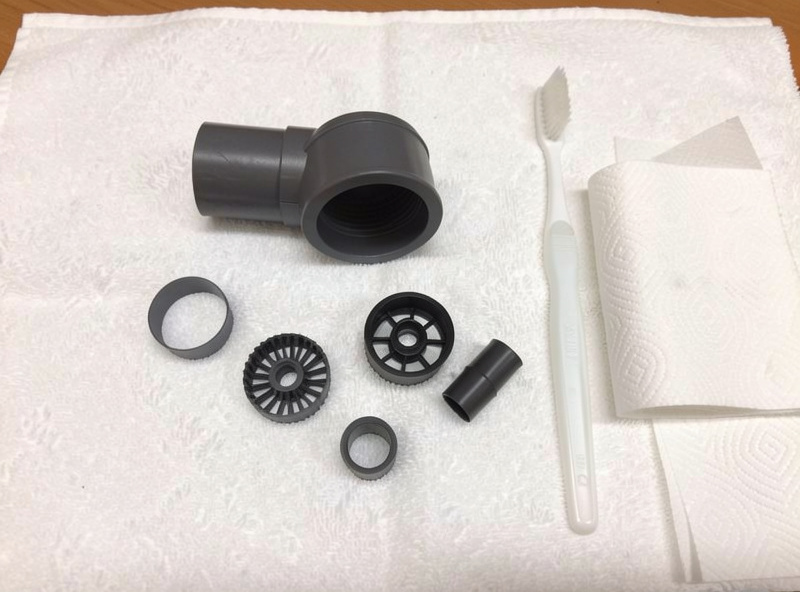
I have torn down more small filters than I can count, and the failure is nearly always the impeller. A nano hang-on-back or internal runs a tiny magnetic impeller in a well that scales up with calcium and traps snail shells and plant fragments. Pull it, clean the well with a cotton swab, check the shaft for wear, reseat it. If the motor hums but nothing spins, that’s a jam nine times in ten. The five-minute filter diagnosis walks the full order with the exact checks. The instant you confirm the filter is down, drop in an airstone or spare sponge filter — oxygen is the emergency, the filter is the repair. A filter that runs but has turned loud is a different animal: usually a worn impeller, trapped air, or a vibration path into the cabinet, all solvable. That noise fix lives in why your nano filter is noisy.
Air Pump and Sponge Filter Failures: What Keeps the Colony Breathing?
A sponge filter is only as alive as its air pump. When the pump quits, the sponge stops pulling water and its bacteria colony — the actual biofilter — starts to suffocate within hours. The fix is usually a perished diaphragm, a cracked check valve, or a kinked airline, and a $10 rebuild kit brings most pumps back.
My shrimp tank runs entirely on a sponge filter and a small air pump, because Neocaridina hate strong flow and a sponge can’t chop a molting shrimp the way an impeller can. That makes the air pump the single point of failure for my colony, so I keep a spare on the shelf and a rebuild kit in the drawer. The classic mistake is forgetting the check valve: pump fails or unplugs below water level, and the tank siphons back down the airline onto your floor. I learned that one the hard way, mopping at midnight. The full revive-and-prevent routine is in air pump problems. Because oxygen loss is the shared emergency across every filtration failure, a battery-powered air pump is the one piece of backup gear I tell every nano keeper to own.
Leaks and Seams: When Should You Panic, and When Not?
A leaking seam is loud in your head and usually quiet in reality. Most nano “leaks” are condensation, a splashing return, or a hairline weep in the silicone bead — not the glass letting go. The move is to dry everything, find the true source, and assess whether it’s a surface silicone issue or a structural seam failure before you drain anything.
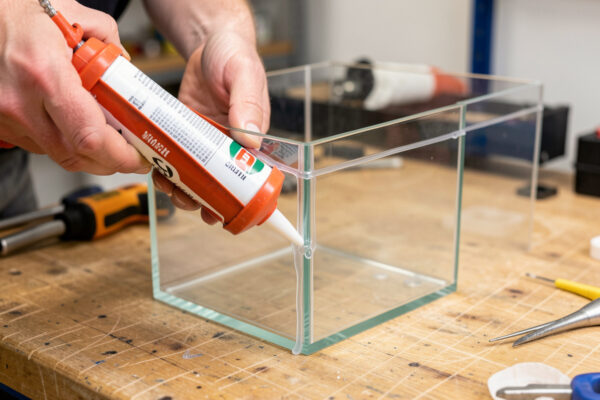
Modern small tanks are silicone-sealed glass, and the silicone is a gasket, not structural glue — the water pressure holds the panels together and the bead just stops the water finding the gap. That means a weeping seam is often reparable without the tank being a lost cause, but you have to be honest about what you’re looking at. A thin wet line that returns after you dry it is a seam issue; a bulge or a crack in the glass is a replace-the-tank situation. My assess-don’t-panic leak guide walks the diagnosis. If it truly is the bead, resealing is a real fix — but only with the right material and full honesty about the failure rate. I cover the whole job, including why you must use 100% RTV silicone with no mold inhibitors, in resealing a small aquarium with silicone. Rushing a reseal is how you turn a weep into a flood a week later.
LED Lighting Failures: Dead, Dim, or Flickering?
An LED failure rarely kills livestock, but a strobing or dead light stresses plants and, at CO2-injected tank light levels, can tip an algae balance within days. The usual culprits are a failing driver (the power brick), oxidized barrel-jack contacts, or a loose connection — not the diodes themselves, which outlast everything.
On my high-tech 60-liter, light is one leg of the CO2-light-fertilizer trilogy, and an unstable photoperiod is a fast route to diatoms and blackbeard algae. When a light flickers, I check the cheapest failure first: the plug and the barrel jack, where corrosion and a loose fit cause most intermittent strobing. Next is the driver, which is a sealed brick that either works or doesn’t and is usually replaceable on its own. The diodes are almost never the problem. The full check order — and how to test a driver safely without electrocuting yourself over a tank of water — is in aquarium LED flickering or dead. Water and mains electricity share a cabinet here, which is exactly why every one of my tanks runs through a GFCI outlet.
Power Outages: What Actually Keeps a Nano Alive?
In an outage, the priority order is oxygen, then heat, then filtration bacteria — in that sequence. A nano can coast without a filter for hours if the water is moving and oxygenated, so a single battery-powered air pump does more to keep animals alive than any expensive backup. Everything else is comfort.
Sweden’s winters make this personal — a storm knocks the power and a 19-liter tank in a cool house starts shedding heat fast. But heat loss is slower than oxygen loss, so I don’t panic about temperature first. My outage kit is deliberately cheap: two battery air pumps (the kind that auto-start when mains power drops), a stack of spare batteries, and a wrapped emergency blanket to insulate the tank and slow the temperature drift. A large tank has thermal inertia on its side; a nano does not, which is the whole theme of this site. Whether a full UPS is worth it, how to size one, and why I don’t bother heating during short outages is all in power outage backup for a nano tank. The bacteria colony, incidentally, survives a surprisingly long outage — it’s the fish that need the oxygen.
What’s the Troubleshooting Mindset That Prevents Most of This?
Test, isolate, change one thing at a time. Ninety percent of equipment disasters I’ve seen — mine and other keepers’ — trace to guessing instead of measuring, or changing three variables at once so you never learn what actually failed. A parameter log turns your tank from a mystery into an instrument.
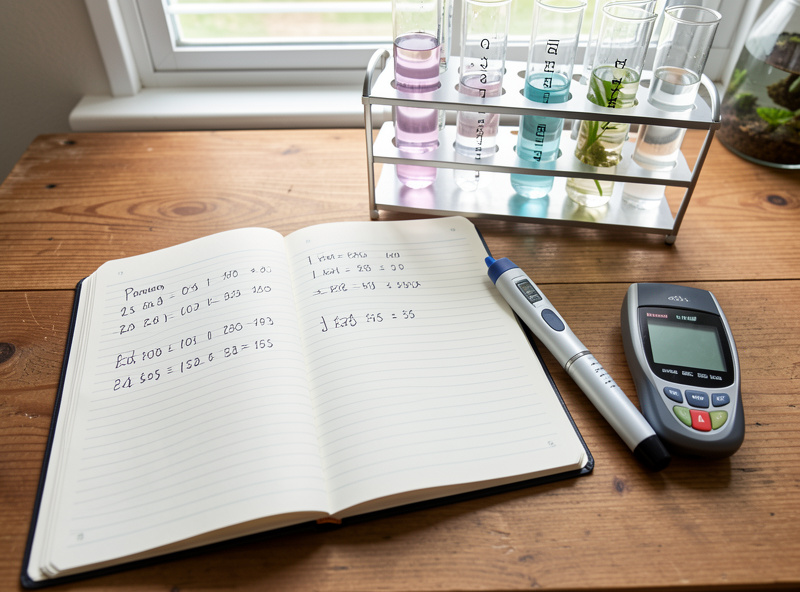
This is the method I imported wholesale from years of hydroponics, where the same TDS pen now sitting in my aquarium drawer used to check nutrient reservoirs. Water chemistry does not care whether the roots have fins. I log temperature, ammonia, nitrite, nitrate, KH, GH, and TDS on a cadence, and when something breaks, the log tells me what was normal so I can see what changed. My worst self-inflicted disaster came from ignoring this: I once swapped a heater, added a new filter, and did a big water change all in one afternoon, then spent two panicked days chasing a nitrite spike I couldn’t attribute to anything because I’d changed everything at once. Now I change one variable, wait, and read the result. For readers who want the deeper instrumentation logic — calibration, meters, the test-don’t-guess discipline — the water-chemistry bench I share with my hydroponics work lives over at SmartHydroLab. The tank is just chemistry with a heartbeat, and the heartbeat is why you measure before you touch.
How Do You Prevent Equipment Failures Before They Happen?
Prevention is redundancy plus a schedule. Keep a spare air pump and heater on the shelf, run every device through a GFCI outlet, clean impellers and check seams monthly, and log your parameters so drift shows up before it becomes an emergency. Most nano disasters are predictable failures that announced themselves early.
Electrical safety is the non-negotiable I’ll repeat as often as it takes: water and mains power in the same cabinet is exactly the hazard ground-fault protection exists for. The U.S. National Electrical Code (NEC Article 210.8) has required GFCI protection for receptacles in damp and wet locations for decades, and the National Fire Protection Association that publishes the code is unambiguous about it. A $20 GFCI outlet or plug-in adapter is the cheapest life insurance in this hobby — for you, not the fish. Beyond that, my prevention routine is dull and effective: monthly impeller cleaning, a monthly finger-check along every seam for tackiness or a weep, thermometer verification against the heater dial each week, and the parameter log underneath all of it. Boring maintenance is what makes the exciting failures rare.
If you want a starting shopping list for the redundant gear — a backup battery air pump, a spare nano heater, an independent thermometer — a quick search for a battery backup aquarium air pump will show the auto-start models worth owning. Buy the redundancy before you need it, not during the emergency.
As an Amazon Associate I earn from qualifying purchases.
What I’d Do Starting Today
If you keep a nano and own none of the backup gear, fix that this week in order of what kills fastest. Put every tank on a GFCI. Buy one battery-powered air pump per tank. Add an independent thermometer and glance at it daily. Start a one-line-a-day parameter log. That’s under $50 and an hour of effort, and it converts most of the emergencies in this cluster from disasters into fifteen-minute repairs.
Then read the walkthrough for whichever failure worries you most, before it happens — the middle of a crisis is the worst time to learn the diagnosis. Small water is the advanced class. The keepers who thrive in it aren’t luckier; they measure, they keep spares, and they move in the right order when something breaks.
What is the most dangerous nano tank equipment failure?
A heater stuck in the on position. On a small tank the temperature can climb from a safe 76 degrees Fahrenheit to a lethal 90-plus in only a few hours because there is so little water to absorb the heat. An independent thermometer checked daily is the only reliable early warning.
How long can a nano tank survive without a filter?
Often several hours, sometimes longer, as long as the water stays oxygenated. The real emergency when a filter stops is falling oxygen, not the loss of filtration. Drop in an airstone or a battery air pump immediately, then diagnose the filter. The bacteria colony survives far longer than the fish do.
Do I really need a GFCI outlet for a small aquarium?
Yes. Water and mains electricity share the same cabinet, which is exactly the hazard ground-fault protection exists for. The U.S. National Electrical Code has required GFCI protection in damp and wet locations for decades. A 20 dollar GFCI outlet or plug-in adapter protects you, not just the equipment.
What backup gear should every nano keeper own?
At minimum a battery-powered air pump per tank, a spare heater, and an independent thermometer. That covers the two failures that kill fastest, lost oxygen and a stuck heater. It costs under 50 dollars and turns most equipment emergencies into short repairs instead of losses.
Can I reseal a leaking nano tank myself?
Sometimes, if the failure is in the silicone bead rather than the glass. The silicone is a gasket, not structural glue, so a weeping seam can often be repaired with 100 percent RTV silicone that contains no mold inhibitors. A cracked or bulging panel is a replace-the-tank situation, not a reseal.
Keep Building
- Aquarium Heater Stuck On: Spotting It Before It Cooks the Tank
- Filter Stopped Working: The Five-Minute Diagnosis
- Why Your Nano Filter Is Noisy and How to Silence It
- Air Pump Problems: Reviving a Sponge Filter
- Aquarium Leaking at the Seam: Assess, Don’t Panic
- Resealing a Small Aquarium With Silicone: The Honest Steps
- Aquarium LED Flickering or Dead: What to Check
- Power Outage Backup for a Nano Tank: What Actually Matters