Chlorine and chloramine are both disinfectants your utility might add, but they behave completely differently: chlorine off-gasses on its own within a day, while chloramine is chlorine bonded to ammonia and stays stable for weeks. That single difference changes which dechlorinator you need, how your carbon filter performs, and whether your old water habits still protect your fish. Roughly one in five US utilities has switched to chloramine, often without fanfare.
I found out the hard way that these two are not interchangeable, and the switch cost me a biofilter before I understood why. If your municipality uses chloramine and you’re treating it like chlorine, you’re quietly dosing ammonia into your tank and burning through carbon faster than you think. This is one of those chemistry details the hobby glosses over, and in a small nano tank — where volume is tiny and swings are fast — glossing over it gets livestock killed. Let’s make the difference concrete.
This sits inside the broader water-source system and is the direct companion to understanding what your dechlorinator really removes. If you treat tap water, this is the detail that decides which product actually protects you.
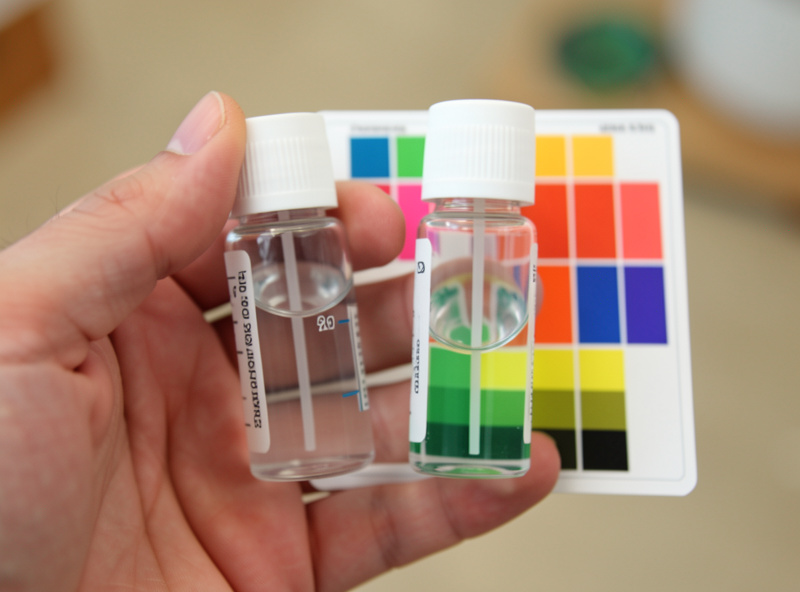
What’s the Difference Between Chlorine and Chloramine?
Free chlorine is the classic pool-smell disinfectant, and its defining trait is that it’s volatile — it evaporates out of standing water within roughly 24 hours, which is why the old-timer trick of “let a bucket sit overnight” actually worked for chlorine. It’s a fast, effective disinfectant but it doesn’t persist through long pipe runs, so it can fade before reaching the far end of a distribution system.
Chloramine is what utilities reach for to solve that persistence problem. It’s chlorine chemically bonded to ammonia, and that bond makes it far more stable — it survives for weeks in the pipes, holding disinfectant power all the way to the last house on the line. It also produces fewer of certain regulated disinfection byproducts, which is another reason utilities favor it. Great for public health; a headache for aquarists, because everything that makes chloramine stable in the pipe makes it stubborn in your bucket.
The aquarium-relevant consequences all flow from that stability. Chloramine won’t off-gas overnight — the bucket trick is useless against it. It carries ammonia that gets released when the bond is broken. And it demands more contact time with carbon to remove. Same goal as chlorine, completely different handling. Treating one like the other is the mistake that bites keepers who moved house or whose utility switched.
How Do Chlorine and Chloramine Compare Head to Head?
Here’s the practical breakdown for an aquarist deciding how to treat their water. The differences all point to one conclusion: chloramine needs more deliberate handling.
| Property | Free Chlorine | Chloramine |
| Composition | Chlorine only | Chlorine bonded to ammonia |
| Off-gasses overnight? | Yes, within ~24 hours | No, stable for weeks |
| Leaves ammonia behind? | No | Yes, when the bond breaks |
| Conditioner needed | Any dechlorinator | Chloramine-rated (binds ammonia) |
| Carbon removal | Standard carbon, easy | Needs more contact / catalytic carbon |
| RO membrane risk | Destroys membrane if unremoved | Destroys membrane, harder to strip |
Read down the chloramine column and you can see why it changes your whole tap-water plan. The overnight-sit trick fails. Your conditioner has a harder job. Your carbon works harder. And if you run RO, your membrane is at greater risk because chloramine is tougher to remove at the carbon stage. None of this makes chloramine bad water to drink — it just makes it water that demands respect at the tank.
Why Chloramine Changes Your Dechlorinator
A plain sodium-thiosulfate conditioner breaks the chlorine part of chloramine off just fine — but that frees the ammonia, and a basic conditioner does nothing about it. So you neutralize the chlorine and simultaneously dump free ammonia into your tank. In a big tank that ammonia might get diluted and consumed before it matters; in a nano’s few liters, it’s a real toxic pulse every water change.
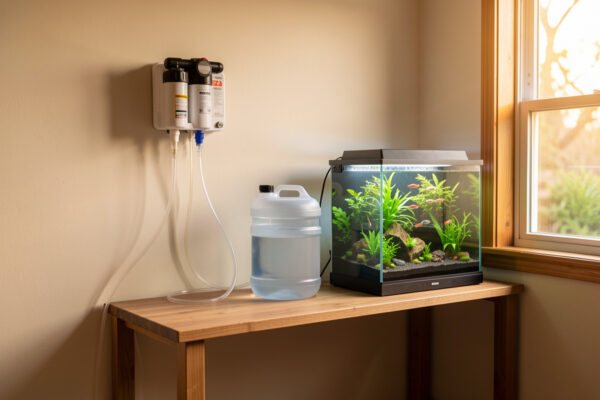
A chloramine-rated conditioner does two jobs: it breaks the chlorine bond and it binds or detoxifies the liberated ammonia into a temporarily less-harmful form, giving your biofilter time to consume it. This is why the product label matters so much. On a chloramine supply, you must use a conditioner that explicitly handles ammonia — the concentrated multi-purpose types are built for exactly this. Match the product to the disinfectant, not to whatever was cheapest on the shelf.
There’s a subtlety that trips up cyclers. The ammonia your conditioner detoxifies often still registers on a standard liquid ammonia test, because the test reads total ammonia including the bound form. So a chloramine keeper can see an ammonia reading, panic, and over-correct — when the ammonia is actually muzzled and being processed. Knowing your water carries chloramine lets you interpret that reading calmly instead of chasing a false alarm.
Why Chloramine Is Harder on RO Membranes and Carbon
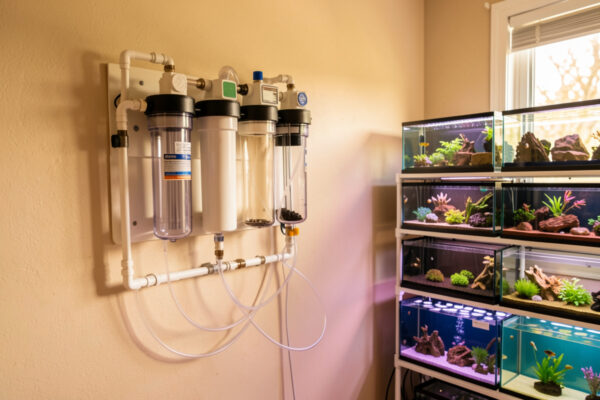
If you run an RO or RO/DI system, chloramine matters even more, because chlorine in any form destroys the RO membrane and the carbon block is what stands between them. Free chlorine is relatively easy for carbon to strip. Chloramine is more stubborn — it needs more carbon contact time, and standard carbon can let chloramine slip through to the membrane if the water moves too fast or the carbon is tiring.
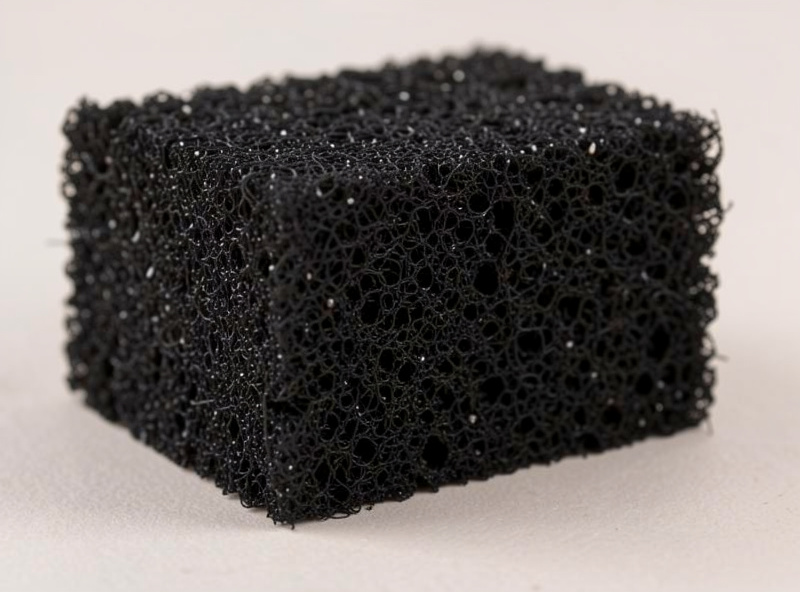
The fix is catalytic carbon, a treated carbon that’s far more effective at breaking down chloramine, and running enough of it. Many serious RO/DI users on chloramine supplies add a second carbon stage or specifically use catalytic carbon blocks for this reason. I watch my carbon harder because of chloramine — spent carbon means chloramine reaching my membrane, and a membrane is an expensive thing to cook. This is one more reason the unit you choose and how you maintain it matters: on a chloramine supply, the carbon stage isn’t a formality, it’s the membrane’s life support.
How Do You Find Out Which One Your Utility Uses?
The answer is public and free. Every US municipal utility publishes an annual Consumer Confidence Report (water quality report), and it states the disinfectant used — look for “chlorine,” “chloramine,” or “chloramination.” You can usually find it on the utility’s website or request it by phone. Outside the US, your water provider publishes equivalent data. This is a five-minute lookup that determines your entire tap-water strategy, and it’s the first thing I tell any new tap keeper to do.
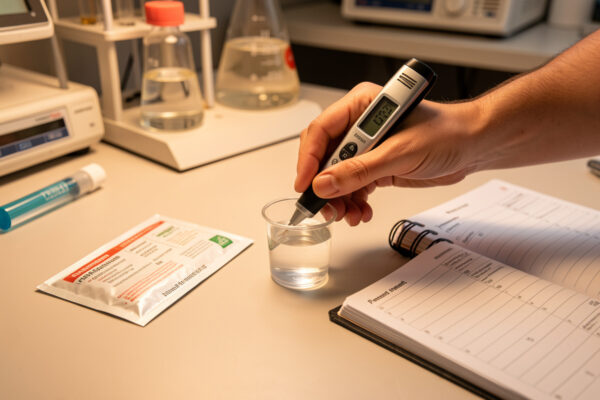
Don’t rely on a test that only reads total chlorine, because both chlorine and chloramine can show as “chlorine” on a basic test — you need the utility’s report to know which. And re-check periodically, because utilities switch, sometimes seasonally: some use free chlorine most of the year and pulse to a temporary “chlorine burn” or switch disinfectants during maintenance. My utility does a seasonal change, so I read the report and note the schedule. The EPA’s page on chloramines in drinking water explains the practice, and the EPA Consumer Confidence Report resource points you to your local report.

The Switch That Crashed My Tank
My municipality moved from chlorine to chloramine and I didn’t notice, because who reads the water report cover to cover? I kept running a plain thiosulfate conditioner that had served me perfectly for chlorine. Within a few weeks my rock-stable little tank threw ammonia readings, the water went faintly cloudy, and my shrimp got twitchy and stopped grazing the way they normally did. I blamed overfeeding, then a dead snail I couldn’t find, then the filter — everything except the water going into the tank.
What finally cracked it was boredom, honestly: I was reading my utility’s annual report for something unrelated and spotted “chloramine” in a table where I was sure it used to say chlorine. Every water change, I’d been neutralizing the chlorine and releasing ammonia straight into a few liters of water, partially stalling my biofilter. The tank never smelled like chlorine anymore — that pool-water bite was gone, replaced by nothing, which should have been my clue that the chemistry had changed. Swapped to a chloramine-rated conditioner, rebuilt the cycle, and the tank recovered. The whole ordeal was a lookup away from never happening. Read the report. Then read it again next year.
What This Means for Your Setup Starting Today
Here’s the plain action list. First, find your utility’s water quality report and learn whether you get chlorine or chloramine — and whether it changes seasonally. If it’s chloramine, use a chloramine-rated conditioner that binds ammonia, and if you run RO, make sure you have enough carbon or catalytic carbon to protect the membrane. If it’s free chlorine, any standard dechlorinator works and even the old bucket-sit trick technically does — though I still condition, because a nano’s small volume gives untreated chlorine too much leverage.
The meta-lesson is the one my hydroponics years drilled in: know your inputs. Water isn’t a neutral background you can ignore; it’s a chemistry with a spec sheet the utility already published for you. Five minutes of reading beats a month of blaming your filter. Test, don’t guess — and when it comes to disinfectant, the test is just reading what your utility already told you.
What is the difference between chlorine and chloramine in tap water?
Free chlorine is a volatile disinfectant that off-gasses from standing water within about 24 hours. Chloramine is chlorine bonded to ammonia, which makes it stable for weeks and unable to evaporate out overnight. Chloramine also releases ammonia when its bond is broken, which is why it needs a different dechlorinator than plain chlorine.
Does letting water sit overnight remove chloramine?
No. The overnight-sit trick works only for free chlorine, which evaporates within about a day. Chloramine is stable for weeks and will not off-gas from a standing bucket, so you must use a chloramine-rated conditioner to neutralize it and bind the ammonia it releases.
How do I know if my tap water has chlorine or chloramine?
Check your utility’s annual water quality report, also called a Consumer Confidence Report, which states the disinfectant used. It is public and free, usually on the utility website or available by phone. A basic chlorine test cannot reliably tell them apart, so rely on the report, and re-check because some utilities switch seasonally.
Does chloramine damage RO membranes?
Chlorine in any form destroys an RO membrane, and chloramine is harder for carbon to strip than free chlorine. On a chloramine supply you need adequate carbon contact time or catalytic carbon to protect the membrane. Spent carbon lets chloramine reach and ruin the membrane, so watch your carbon stage more closely with chloramine.