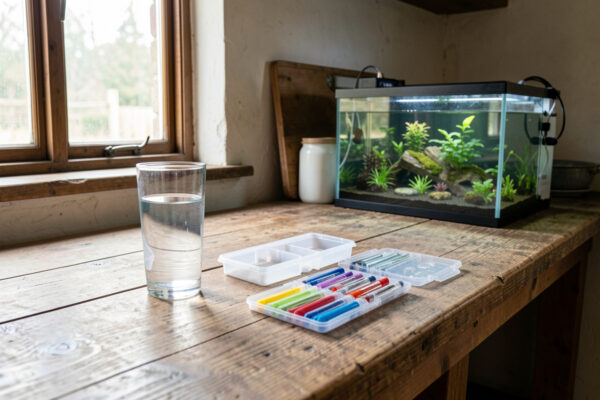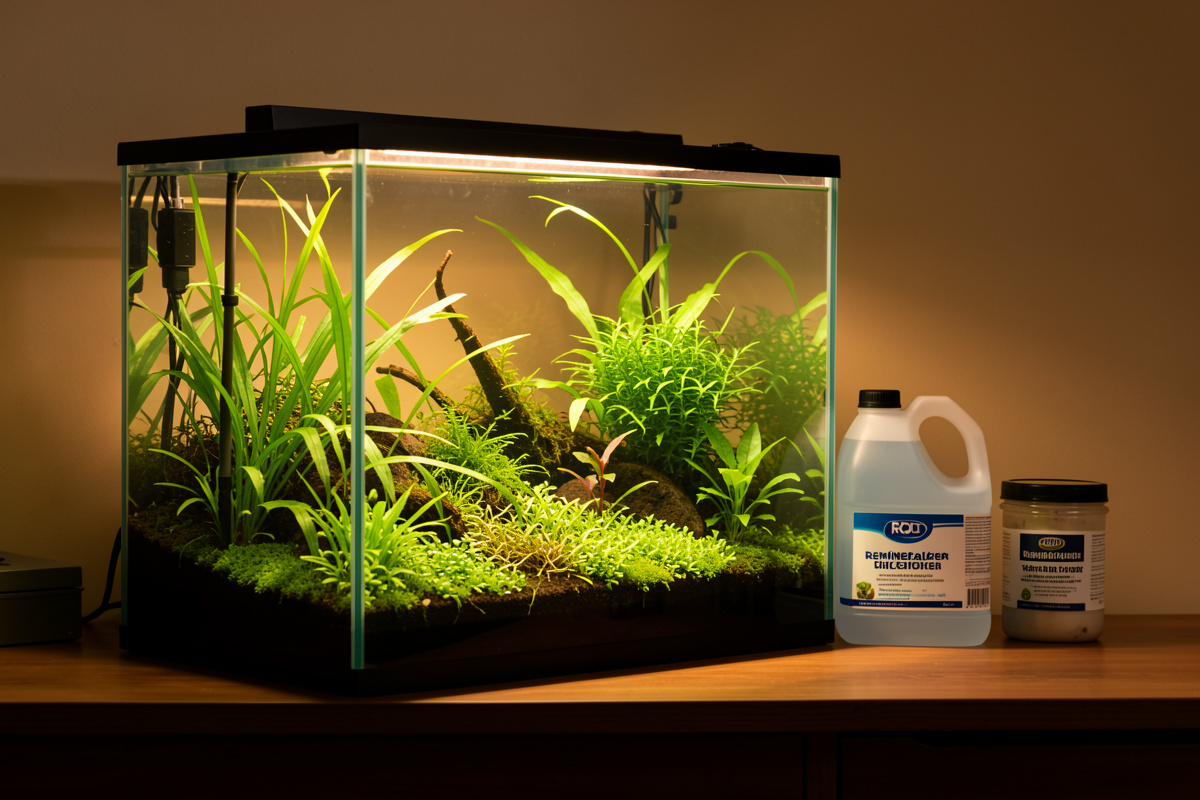
Remineralizing RO water for a planted tank means adding back the calcium, magnesium, and potassium that reverse osmosis stripped out — the minerals plants pull from the water column to grow. Pure RO is a blank slate with zero general hardness, and a lush scape planted in it will show deficiency fast: twisted new growth, pale leaves, a carpet that stalls. Shrimp keepers know they must remineralize. Plant keepers often forget they must too.
My high-tech 60-liter runs on remineralized RO by deliberate choice, not accident, precisely so I control the mineral profile my plants see independent of whatever my tap carries that month. And the recipe for plants is genuinely different from the shrimp recipe — different target, different mineral ratio, different product. Get that distinction wrong and you either starve your plants with a shrimp mix or throw off your shrimp with a plant mix. This is the part of remineralizing that the shrimp-heavy corners of the hobby skip, and it’s why lush RO-based scapes so often underperform.
This lives inside the broader water-source system, and it assumes you’ve already got clean RO to start from — whether from your own RO/DI unit or store-bought. If you’re still deciding whether RO is even for you, start with whether you need RO water at all.
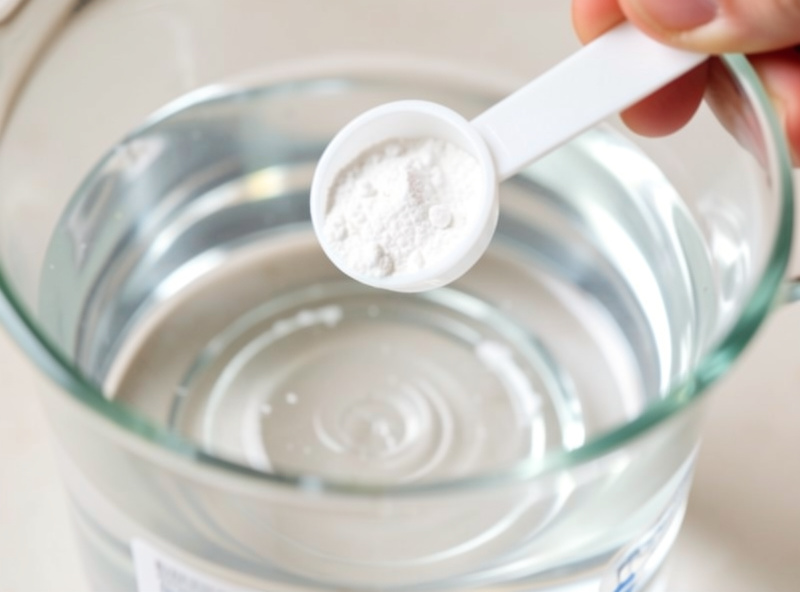
Why Do Planted Tanks Need Remineralized RO?
Plants are miners. They pull calcium, magnesium, and potassium straight out of the water column, and in pure RO those elements simply aren’t there. Calcium builds cell walls and drives new growth; a deficiency shows as stunted, twisted, or curled new leaves and dying growth tips. Magnesium sits at the center of every chlorophyll molecule, so a shortage shows as pale or yellowing leaves, often between the veins. Potassium runs a dozen processes and its lack often shows as pinholes in leaves that spread into ragged tears.
Here’s the trap: these deficiencies look like a lot of other problems — CO2 issues, light problems, other nutrient gaps — so keepers chase the wrong fix for weeks. On my 60-liter I watched a stem plant throw twisted, stunted new growth and spent an embarrassing while blaming my CO2 before I checked the obvious: I’d been remineralizing lightly, shrimp-style, and the plants were calcium-hungry. The plants were telling me the water was too soft for them, and I was reading the wrong chapter.
General hardness — the calcium and magnesium content — is the number that matters here, and pure RO has a GH of zero. Most planted tanks want a GH somewhere in the 4 to 8 range (roughly 70 to 140 ppm as a rough conversion), enough mineral for the plants without going hard. Carbonate hardness (KH) matters too for buffering, especially under CO2, where a little KH stabilizes pH against the daily swing. The USGS explains what hardness actually is — calcium plus magnesium — in its water science resources, and that’s exactly what you’re rebuilding.
How Is a Plant Remineralizer Different From a Shrimp One?
This is the crux. Shrimp remineralizers — the GH/KH+ type products built for Neocaridina and Caridina — are formulated to hit specific hardness targets for shell-building and stable molting, and many are deliberately low in potassium and nitrogen because shrimp keepers don’t want to fuel algae in low-tech tanks. They’re excellent at what they do: a repeatable GH and KH for invertebrates.
Planted remineralizers — often sold as “GH boosters” — are a different animal. They add calcium and magnesium like the shrimp products, but they also include potassium and often trace elements like iron and manganese, because plants need those to grow. A GH booster is built to feed plants while raising hardness, where a shrimp remineralizer is built to stabilize water chemistry for animals. Use a shrimp remineralizer on a demanding planted tank and you may raise GH correctly while leaving your plants short on potassium.
My practical split: I use a shrimp-specific remineralizer on the dedicated Neocaridina tank, dosed to a target GH and TDS for the colony, and a plant-focused GH booster on the high-tech 60-liter, dosed to a GH that suits the plants with potassium in the mix. A well-known example of the plant type is Seachem’s Equilibrium, a GH booster that raises hardness while adding potassium, iron, and manganese — the maker’s details are on Seachem’s site. The point isn’t the brand; it’s matching the mineral profile to whether you’re feeding animals or plants.
What Target Should You Aim For?
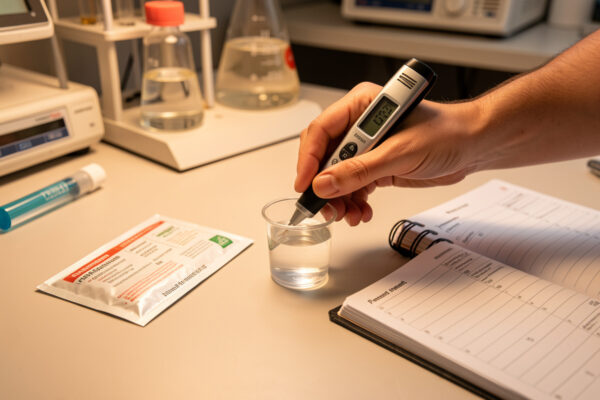
For a planted nano, I aim for a GH around 4 to 6 and a KH around 2 to 4 as a starting point, then adjust based on what the plants and any livestock tell me. On the TDS pen that lands me somewhere in the 100 to 180 ppm neighborhood depending on the product and the tank, though remember TDS is an estimate that varies with your meter’s conversion factor — the GH and KH tests are the numbers that actually govern plant response. I mix to target in the jug, confirm with a test, and only then it goes in the tank.
The calcium-to-magnesium ratio is worth a thought for demanding scapes. A rough 3-to-1 or 4-to-1 calcium-to-magnesium ratio is a common target that suits most plants, and most commercial GH boosters are already blended near that. You generally don’t need to engineer it yourself unless you’re chasing a specific problem — but if you see classic magnesium deficiency (interveinal yellowing) despite adequate GH, a touch of extra magnesium can be the fix. Don’t over-engineer this on a first planted tank; a good GH booster to a sensible target covers most cases.
If your tank is a shrimp-and-plant combo — a very common nano setup — you’re threading a needle, and I’d bias toward the shrimp’s needs first because the animals are less forgiving than the plants. Pick a remineralizer that hits shrimp-safe GH and KH, accept that heavily-demanding plants might want supplemental potassium via a separate fertilizer, and let the easy plants (Anubias, Bucephalandra, mosses) carry the scape. Those epiphytes barely care about water column minerals, which is exactly why I lean on them in mixed tanks.
How Do You Actually Mix It?
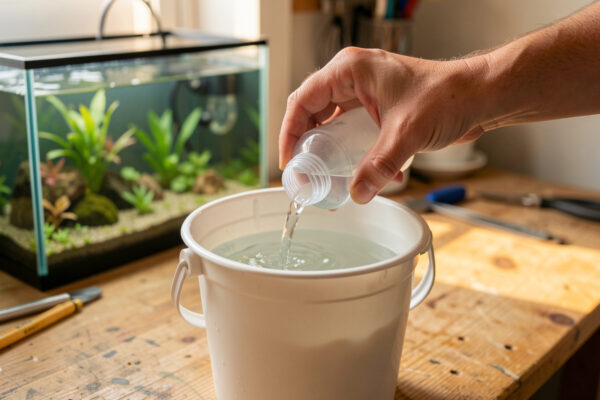
The routine is simple and it’s the same discipline I ran on hydroponic nutrient reservoirs for years: measure, mix, confirm, log. I fill a jug with RO, add remineralizer to my target by weight or by the product’s scoop, stir until fully dissolved (some GH boosters take a minute and a bit of agitation — undissolved powder skews your reading), let it reach room temperature, and then check GH, KH, and TDS. If it’s on target, it goes in; if not, I adjust and re-test. It takes a few extra minutes and it means I never dose a tank with mystery water.
The mistake I made — and I’ve made it — was remineralizing by eye instead of by measurement, trusting a scoop that “looked right.” On the shrimp side that cost me a molt; on the plant side it cost me weeks of chasing a phantom CO2 problem that was really a soft-water deficiency. Both failures had the same root: I had the pen and the test kit right there and didn’t use them. Now I mix to a logged recipe every single time, and the tank tells me a boring, stable story instead of a mystery.
As an Amazon Associate I earn from qualifying purchases.
For a planted tank on RO, the product that earns its place is a GH booster with potassium and trace elements, and if you keep shrimp too, a separate shrimp-specific GH/KH remineralizer keeps the animals’ water dialed independently.
When Plants Tell You the Water Is Wrong
Learn to read the plants, because they’re a slower but honest test kit. Twisted, stunted new growth points to calcium; the growth tips are where calcium shortage shows first because the plant can’t move it from old leaves. Interveinal yellowing on older leaves points to magnesium, which the plant does move to new growth, sacrificing the old. Pinholes and ragged edges point to potassium. None of these are emergencies you fix in a day — plants respond over a week or two — but they tell you your remineralization is off before your test kit’s slow drift would.
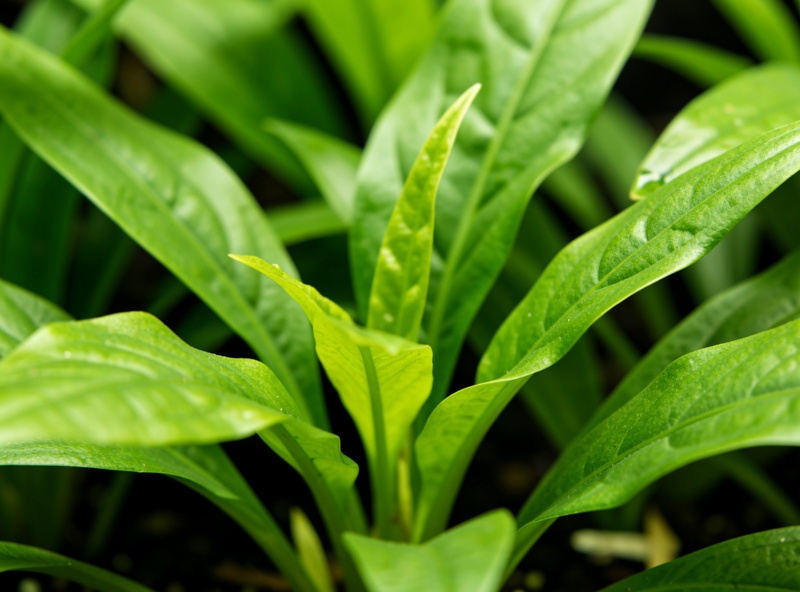
The sensory tell I trust most is new-growth color and form. On my 60-liter, when the remineralization is right, the new leaves come in tight, richly green, and symmetrical, and the carpet knits together instead of reaching leggy for light. When it’s wrong, the new growth looks anxious — pale, twisted, or holed — and that look is my cue to check GH and magnesium before I touch anything else. Plants are patient teachers; they’ll show you the answer if you stop blaming the CO2 first.
What I’d Do Starting Today
If you’re setting up a planted nano on RO, buy a GH booster made for plants, not a shrimp remineralizer, and aim for a GH of 4 to 6 with a KH of 2 to 4 as your starting recipe. Mix to target in the jug, confirm with a GH/KH test and a calibrated TDS pen, and log the number so every batch is repeatable. If you keep shrimp in the same tank, prioritize their hardness range and lean on easy epiphytes for the greenery. And when a plant looks unhappy, check the minerals before you blame the light or the CO2 — nine times out of ten in an RO tank, the water forgot to feed the plants. Test, don’t guess; the roots don’t care whether they have fins, but they absolutely care whether you remembered the calcium.
Do planted tanks need remineralized RO water or just shrimp tanks?
Both do. Plants pull calcium, magnesium, and potassium from the water column, and pure RO has zero of these, so an RO-based planted tank shows deficiency without remineralization. Shrimp keepers remineralize for shell-building and stable molting; plant keepers must remineralize to feed growth. The difference is the recipe, not whether you do it.
What is the difference between a shrimp remineralizer and a plant GH booster?
Shrimp remineralizers hit specific GH and KH targets for shell-building and are often low in potassium to avoid feeding algae. Plant GH boosters raise calcium and magnesium too but also add potassium and often trace elements like iron and manganese because plants need them to grow. Match the product to whether you are feeding animals or plants.
What GH should I target for a planted nano tank on RO?
A GH of about 4 to 6 with a KH of 2 to 4 is a solid starting point for most planted nanos, adjusted based on what the plants show you. On a TDS pen that lands roughly in the 100 to 180 ppm range depending on the product, but the GH and KH tests are the numbers that actually govern plant response, so trust those over TDS alone.
How do I know if my plants have a mineral deficiency?
Read the new growth. Twisted or stunted new leaves and dying tips point to calcium shortage. Interveinal yellowing on older leaves points to magnesium. Pinholes and ragged edges point to potassium. These respond over a week or two, and in an RO tank they usually mean your remineralization is too light before you blame CO2 or light.