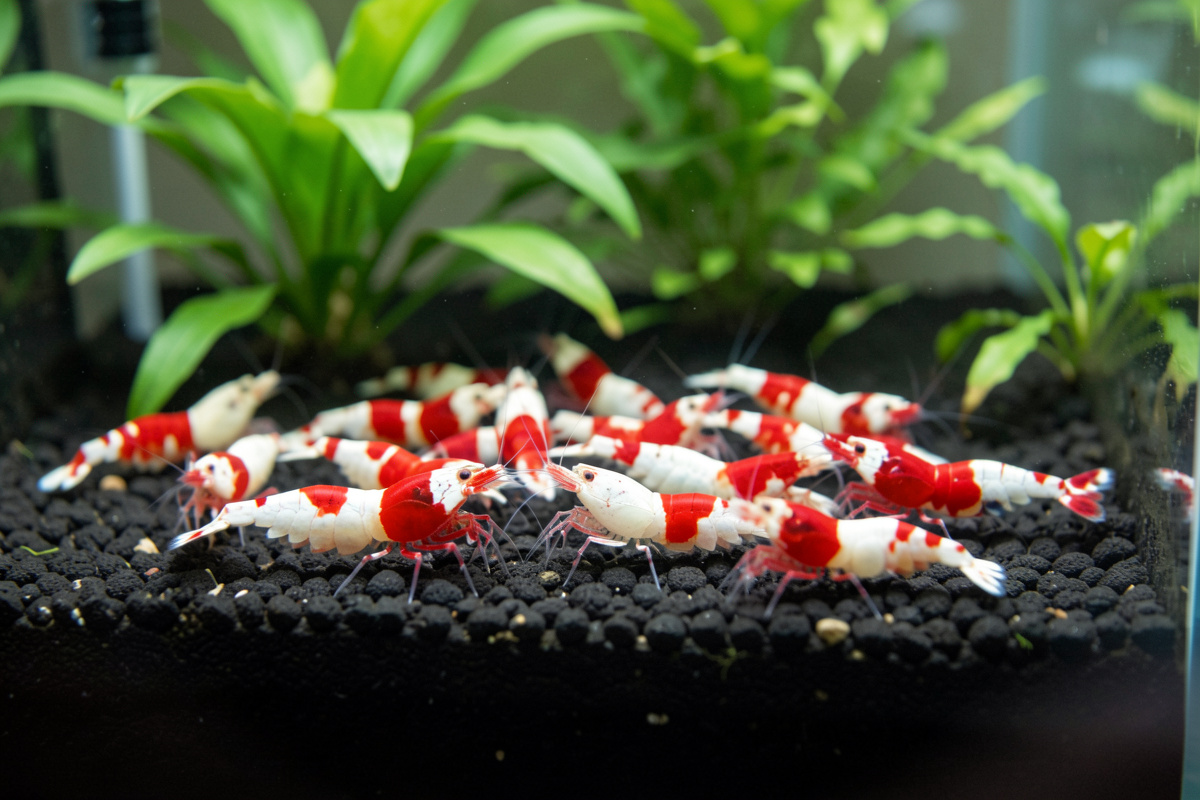
Crystal Red shrimp are kept in soft, acidic water: RO remineralized to a TDS of roughly 100–130 ppm, GH 4–6, KH at or near zero, pH between 5.8 and 6.5, and a cool 20–24°C. They are the iconic red-and-white Caridina, beautiful and genuinely demanding, and almost every problem keepers hit with them is a water problem, not a mysterious one.
My own colony is Neocaridina, so I will be straight with you about where I speak from experience and where I am reporting the consensus careful breeders hold. The water chemistry — RO, remineralizing to a TDS target, holding KH at zero with an active soil — is exactly the bench discipline I run every week, and that is the hard part of Crystal Reds. The deep grade-fixing line-breeding is specialist craft I point you toward rather than claim. This guide stays on the part that keeps your shrimp alive and breeding.
Where Crystal Reds Come From, and Why It Matters
Crystal Reds are a selectively bred form of the bee shrimp, Caridina cantonensis. That origin tells you their water: wild bee shrimp live in soft, acidic Asian streams, and the captive-bred Crystal Red never lost that requirement. Understanding that one fact reframes the whole hobby around them — you are not adjusting tap water to suit a hardy pet, you are recreating a soft-stream chemistry from scratch.
It also explains why Crystal Reds sit a tier above cherry shrimp in difficulty. A Neocaridina cherry is a generalist that adapted to a wide range; a Crystal Red is a specialist bred for looks, not robustness. Treating it like a cherry is the single most common way the colony quietly declines. If you want the full picture of how the two genera differ, my Caridina vs Neocaridina comparison lays it out side by side.
The Water: The Whole Game
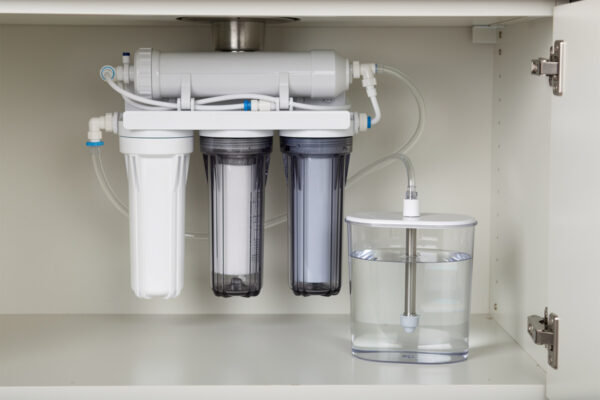
You build Crystal Red water, you do not pour it from the tap. Start with reverse osmosis water at near-zero TDS, then remineralize it back up with a GH-only product to a target TDS around 100–130 ppm, which lands GH in the 4–6 range. KH stays at or near zero so the active substrate can hold the pH down in the high 5s to low 6s. That is the entire specification, and the discipline that makes it work is matching every batch of new water to the same TDS number so water changes never become a source of swing.
My TDS pen is the same instrument that metered my hydroponic reservoirs for years — test, do not guess, whatever is living in the water. The detailed methods live in two companion guides: RO water for Caridina covers making the blank water, and the remineralizer guide covers building it back to spec. The short version: if you are not comfortable owning and using a TDS meter weekly, Crystal Reds are not yet the right shrimp.
Substrate, Tank and Setup
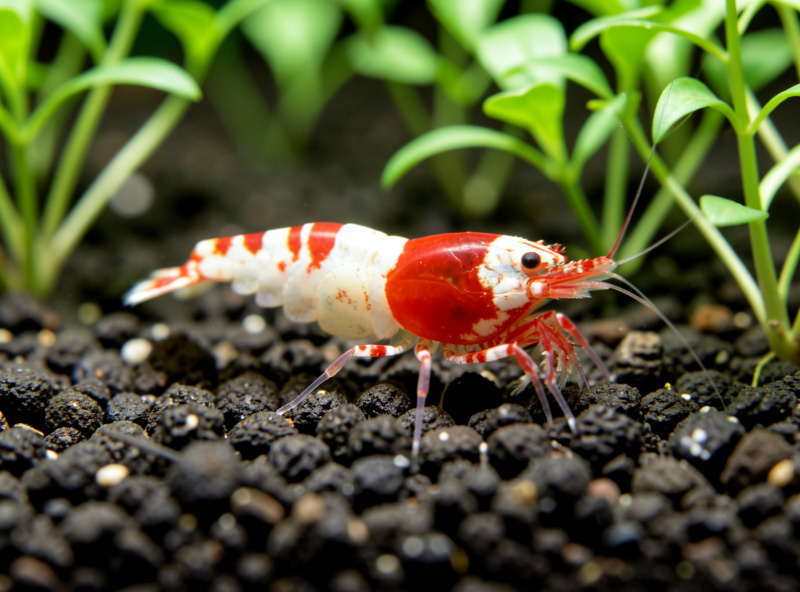
Crystal Reds need an active, buffering aquasoil — the substrate is what holds the low pH, so it is life-support, not decoration. Inert gravel cannot do this job, and trying to chase pH with chemicals instead of a soil destabilizes the exact thing you are trying to keep steady. Plan for the soil’s buffering to exhaust over one to two years and budget a rescape or top-up around then.
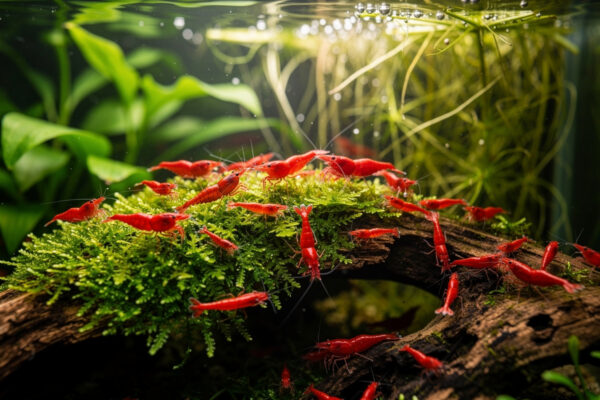
A 20–40 litre tank is the right size: enough volume to buy stability, small enough to make RO mixing manageable. Filtration should be gentle and guarded with a sponge or a pre-filter so shrimplets are not drawn in. Easy epiphytes like Anubias, Bucephalandra and moss suit the soft, low-light conditions and give shrimplets the biofilm surfaces they graze. Because all of this sits in a small, swing-prone volume, the stability routines I use everywhere matter more here, not less.
Cycling and Adding Your Shrimp
Crystal Reds go into a fully cycled tank only — ammonia and nitrite reading zero, the nitrogen cycle complete and not a patience test you can rush. A fresh active soil leaches ammonia for the first weeks, which feeds the cycle but means you wait and test until that soil-driven spike clears before any shrimp arrive. My fishless cycle walkthrough covers the rhythm.
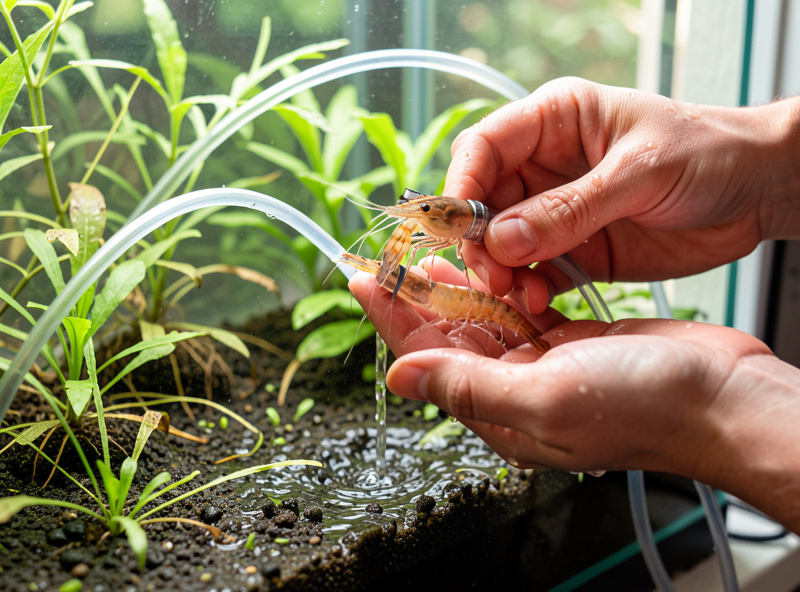
Acclimation is slow drip acclimation, every time, because Crystal Reds are sensitive to TDS and pH shock. Match your tank’s TDS to the shipping water as closely as you can, then drip over an hour or more so the osmotic shift happens slowly enough to survive. The first day after introduction is the honest test: shrimp that settle in and start grazing the next morning have acclimated; ones that sit exposed are telling you the gap was too wide. The fix is always slower acclimation next time, never a treatment — husbandry, not medicine.
Feeding and Daily Care
Crystal Reds graze biofilm continuously and need very little supplemental food — a small amount of a quality shrimp food a few times a week, removing anything uneaten within a couple of hours. Overfeeding is a real risk in a low-mineral system that cannot absorb the extra load, and it is a far more common cause of trouble than underfeeding. A mature, planted tank feeds the colony more than your pellets do.
Daily care is mostly observation. A clean molt means GH is right; a failed molt — a shrimp stuck in its old shell — usually points at hardness being off, which the molting checklist and the parameter explainer cover. Watching molts is a free diagnostic that tells you whether your water is right before any number on a test kit does.
Grades and What You Are Paying For
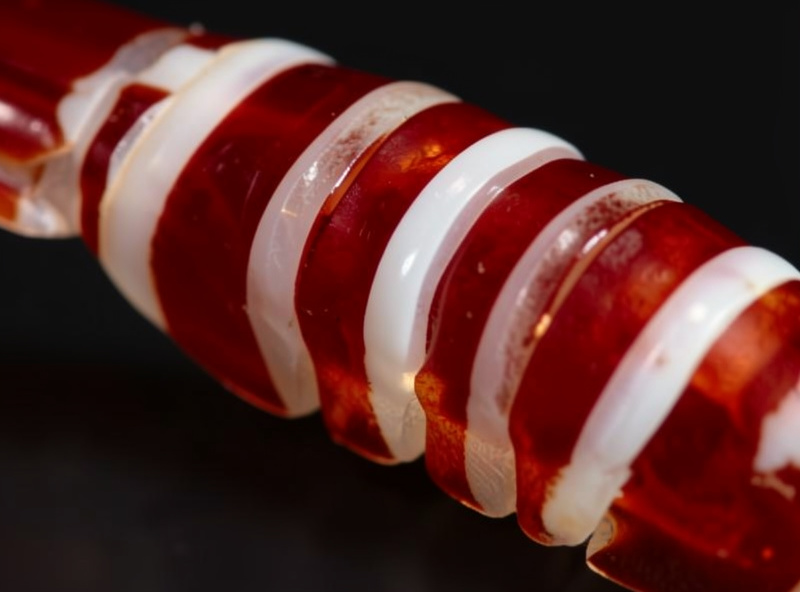
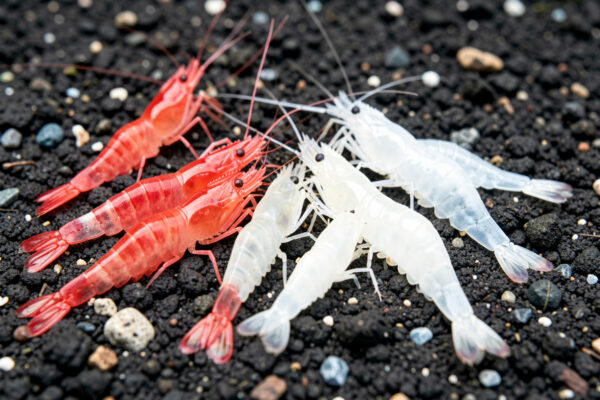
Crystal Reds are graded on the coverage and opacity of their white. A low grade shows thin, translucent bands; a high grade — SSS, Mosura, Hinomaru, Crown — shows thick, chalk-opaque white over most of the body, and price climbs steeply with grade. Grade is genetic: high grades come from breeding high grades, not from any water trick, so buying a higher grade is buying better genetics. The full vocabulary is in my shrimp grading guide, and if you want to improve a line yourself, that is breeding craft — the husbandry-level picture is in the Caridina breeding guide. The hub for all of this is my Caridina care guide.
Frequently Asked Questions
What water parameters do Crystal Red shrimp need?
RO water remineralized to a TDS of roughly 100 to 130 ppm, GH of 4 to 6, KH at or near zero, pH between 5.8 and 6.5, and a cool 20 to 24 degrees Celsius. An active aquasoil holds the low pH.
Are Crystal Red shrimp hard to keep?
They are demanding rather than impossible. The hard part is water: you must make it from RO, remineralize to a TDS target, and hold KH near zero with an active soil. Keepers comfortable running a TDS meter weekly do well with them.
Can Crystal Red shrimp live with cherry shrimp?
Best kept apart. Their water needs barely overlap, and some Caridina and Neocaridina pairings crossbreed into gradeless offspring. Keeping Crystal Reds in their own soft-water tank protects both the parameters and the genetics.
Why are my Crystal Red shrimp not breeding?
Almost always water held slightly wrong rather than disease. Check that TDS, GH, KH and pH sit in range and are stable, that the tank is fully cycled, and that you are not overfeeding. Stable parameters in range produce berried females on their own.
What grade of Crystal Red shrimp should a beginner buy?
Lower grades such as C or B are cheaper and just as easy to keep, so they are a sensible place to learn the water before investing in high grades. Grade is about appearance and genetics, not hardiness, so a low grade is not a weaker shrimp.
Do Crystal Red shrimp need a heater?
Often not. They prefer a cool 20 to 24 degrees Celsius, and many rooms sit in that band without help. If a heater is used, keep it at the low end, because warmer water shortens lifespan and can wash out the white in high grades.