ADA Amazonia is the aqua soil most high-tech planted tanks are built on, and for good reason: it is the heaviest root-feeder and the strongest buffer on the nano shelf. It will hold your water soft and acidic near pH 6.5, grow demanding plants hard, and — the part nobody warns you about — leach ammonia for the first one to three weeks so aggressively that adding livestock early is a death sentence.
My high-tech 60L runs on Amazonia, and it is the substrate I reach for when a tank’s whole point is plant growth. But it is also the substrate that punishes shortcuts harder than any other, because its greatest strength — that nutrient-loaded, ammonia-releasing clay — is exactly what kills fish and shrimp dropped in on day one. This guide is how I rinse it, lay it, cycle through its ammonia phase, and get years out of a bag, written from the tank that taught me each of those steps the slightly-hard way.
What ADA Amazonia actually is
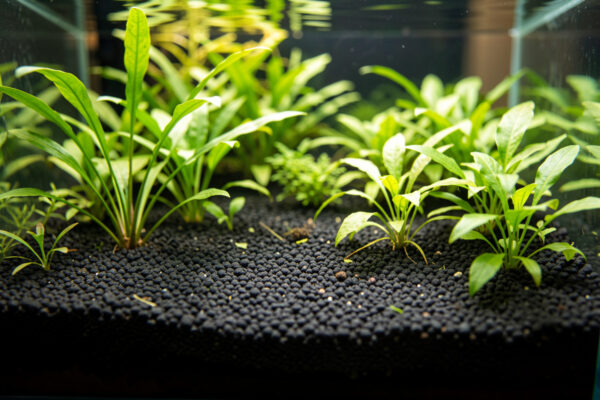
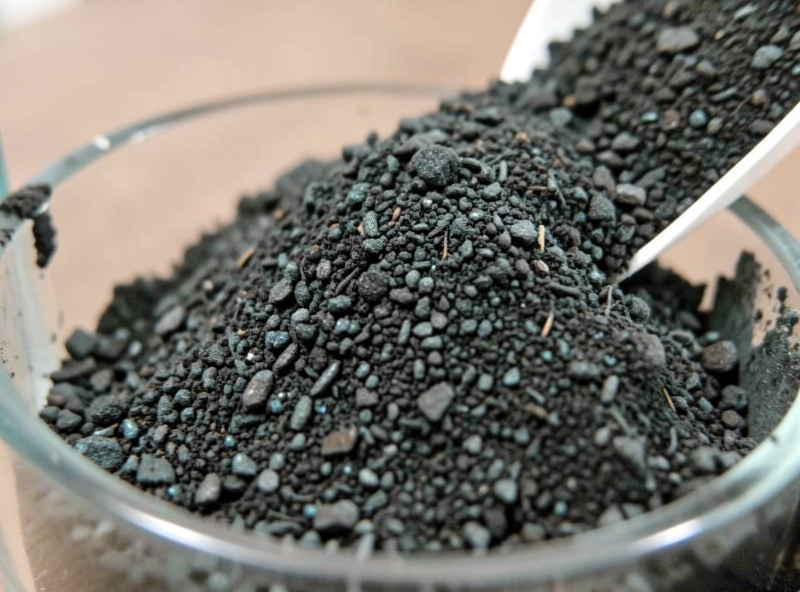
Amazonia is Aqua Design Amano’s flagship aqua soil — baked granules of nutrient-rich volcanic and organic soil, sold as a complete planting substrate you root straight into. It is “active” in every sense covered in my active vs inert substrate breakdown: it feeds roots directly, it pulls carbonate hardness (KH) down toward zero, and it parks pH in the low-to-mid 6s without any additive. That acidic, mineral-stripped water is precisely what soft-water plants and Caridina shrimp want, and precisely what makes Amazonia a poor match for hard-water livestock.
There are a few variants worth knowing. The standard Amazonia is the heaviest feeder and biggest ammonia leacher. “Amazonia Light” trades some nutrient load for a gentler, cleaner start. The newer “Version 2” reformulation aims to cut the ammonia spike while keeping the growth. Whichever you buy, the core behaviour is the same — a powerful active soil on a two-year clock — and the setup discipline below applies to all of them.
Setting it up: do not rinse it like gravel
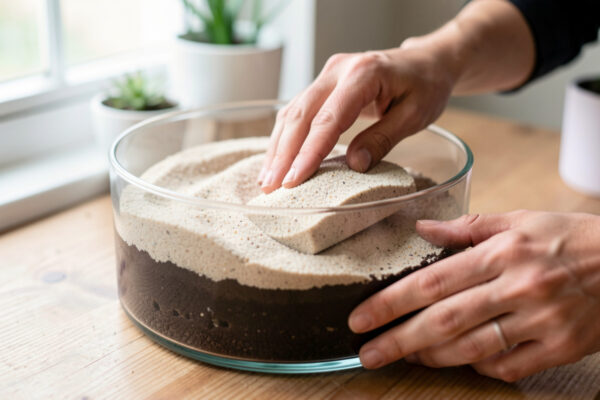
The first instinct from gravel keeping — dump it in a bucket and blast it with the hose — destroys Amazonia. The granules are soft, and rough rinsing grinds them to mud that clouds the tank for weeks. You lay Amazonia dry, straight from the bag, sloped the way you want it, and you flood the tank slowly. I pour onto a plate or over my hand to break the fall, and I fill by trickling water onto a bag or a flat surface laid on the soil so the stream never craters the bed.
Expect cloudiness for the first day or two regardless — fine particles always lift on the first fill, and they settle on their own or clear faster with the filter running and an early water change. What you must not do is “clean” the substrate by stirring or vacuuming it; Amazonia is rinsed only at the surface, gently, for its entire life. Treat it as the structured medium it is, not as gravel, and it holds its form for years. Get the slope and depth right at this stage too, because fixing substrate depth later means a teardown.
The ammonia phase: why you wait
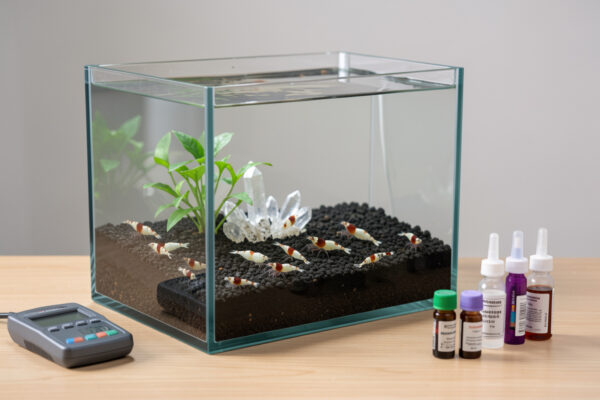
This is the step that separates a thriving Amazonia tank from a dead one. For the first one to three weeks, fresh Amazonia leaches ammonia — sometimes well above 1 ppm — as it settles. That is not a defect; it is the soil feeding a fishless cycle for free. My parameter log on the 60L showed ammonia climbing for about ten days before the nitrifying bacteria caught up and pulled it back to zero. Anyone who plants, fills, and adds shrimp the same weekend is putting livestock into water that can read lethal on an ammonia test.
The discipline is simple and non-negotiable: run a proper fishless cycle, do heavy early water changes for the first week or two to blunt the leach and clear the haze, and do not add a single animal until ammonia and nitrite both read zero — the double-zero that means the tank is ready. With Amazonia you do not usually need to dose ammonia separately; the soil supplies it. You just have to wait it out and test, never guess. Rushing this is the single most common way Amazonia tanks fail.
How Amazonia compares to the alternatives
Amazonia is the benchmark, but it is not the only choice, and it is not always the right one. The honest comparison against the other soil most nano keepers consider, Fluval Stratum, comes down to how hard you want to push growth versus how forgiving you want the start to be.
| Factor | ADA Amazonia | Amazonia Light | Fluval Stratum |
|---|---|---|---|
| Nutrient/feeding | Heaviest | Moderate-heavy | Moderate |
| Ammonia leach | Strong | Reduced | Mild |
| Buffering strength | Strong | Strong | Milder |
| Lifespan | ~2 years | ~2 years | 1–2 years |
| Best for | High-tech, demanding plants | Cleaner high-tech start | Shrimp-first, gentler builds |
If your tank exists to grow a demanding carpet under pressurized CO2 and strong light, Amazonia is the soil I would pick every time. If it is a shrimp-first tank where you want the buffering without the dramatic ammonia start, read my Fluval Stratum review before deciding — gentler is sometimes exactly right.
Lifespan and getting your money’s worth
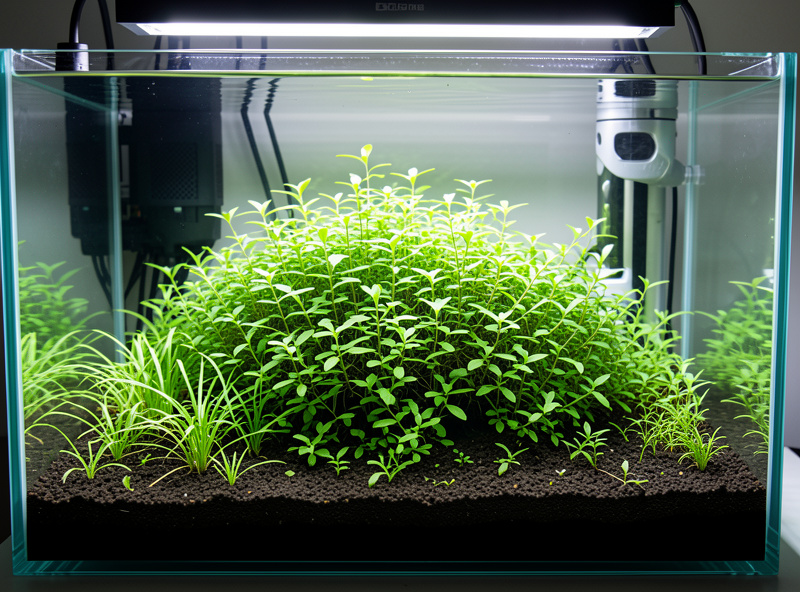
Amazonia is consumable, not permanent. Its feeding and buffering exhaust in roughly two years, after which the granules still anchor roots but behave more like inert gravel — pH drifts back up toward your source water and growth slows. That clock is why I write the install date in my parameter log the day I lay it; when growth tapers eighteen months later, it is not a mystery, it is the soil telling me the truth on schedule.
You stretch a bag’s useful life two ways: dose the water column once feeding slows so plants are not relying on a tired substrate, and avoid disturbing the bed so the granules keep their structure. When the buffering finally fades on a Caridina tank, that is the trigger to plan a refresh, because the soft acidic water those shrimp depend on goes with it — a chemistry I cover in buffering soil for Caridina tanks. For everyone else, Amazonia exhausting is simply the natural end of a scape’s life and a fine excuse to rebuild. It is the broader picture in my planted tank substrate guide, and it is the soil I keep coming back to when the goal is plants first.
As an Amazon Associate I earn from qualifying purchases. If you want to price it, search current stock for ADA Amazonia aqua soil and an ammonia test kit to read it through the cycle.
Frequently Asked Questions
Do I need to rinse ADA Amazonia before use?
No. Amazonia is laid dry, straight from the bag, and you flood the tank slowly. Rinsing grinds the soft granules into mud that clouds the tank for weeks. Some initial cloudiness on the first fill is normal and clears on its own or with an early water change, but you never wash or stir the soil.
How long does ADA Amazonia leach ammonia?
Fresh Amazonia typically leaches ammonia for one to three weeks as it settles, sometimes pushing well above 1 ppm. That ammonia feeds a fishless cycle for free, but it means no livestock until the tank fully cycles and both ammonia and nitrite read zero. Always test rather than guessing the tank is ready.
How long does ADA Amazonia last?
Amazonia’s feeding and buffering exhaust in roughly two years. After that the granules still hold roots but act more like inert gravel, pH drifts back toward your source water, and growth slows. Logging the install date means the slowdown is expected, not a surprise, and signals when to dose more or rescape.
Is ADA Amazonia good for shrimp?
It is excellent for Caridina bee and crystal shrimp because it holds water soft and acidic, but only after the ammonia leach has fully cycled out. It is a poor match for Neocaridina, which prefer harder, more stable water. Match the soil to the shrimp species and never add either to an uncycled tank.
Does ADA Amazonia lower pH?
Yes, strongly. Amazonia pulls carbonate hardness down toward zero and parks pH in the low-to-mid 6s with no additives, for as long as the soil stays active. That is its main appeal for soft-water plants and Caridina, and the reason it does not suit livestock that need hard, alkaline water.
Can I cap ADA Amazonia with sand?
You do not cap Amazonia. It is a complete planting soil meant to be rooted into directly, unlike a dirt base that needs a sand cap. Capping it traps the ammonia leach and the gases it produces. If you want a sand top layer, use a base soil designed for capping instead of an aqua soil.