The choice between active and inert substrate decides more about your tank than any filter or light will. Active substrate (aqua soil) feeds plant roots and pulls your water soft and acidic; inert substrate (sand or gravel) feeds nothing and changes nothing. Active means faster growth and a roughly two-year lifespan; inert means low maintenance and a substrate that lasts forever.
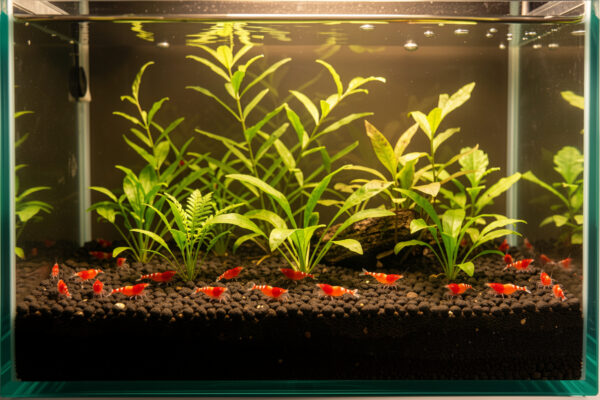
I run both, on purpose, in the same room. My high-tech 60L sits on active soil because it grows demanding stem plants and houses soft-water-loving shrimp. My low-tech 20L sits on inert sand I laid years ago and will never touch again. Neither is “better” — they are answers to different tanks. This is the breakdown I give anyone standing in the shop holding two bags, trying to work out which one their tank actually needs, and it starts with what each material does to your water before a single plant goes in.
What “active” actually means
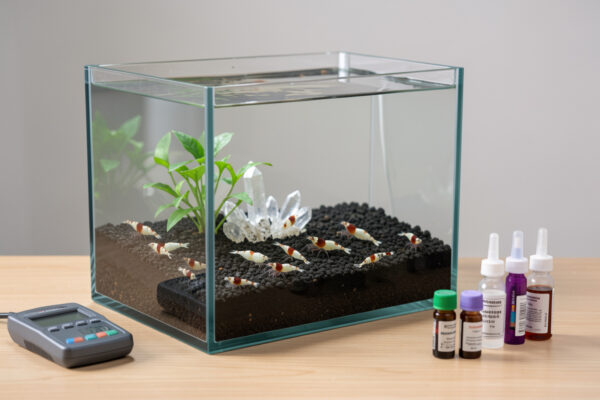
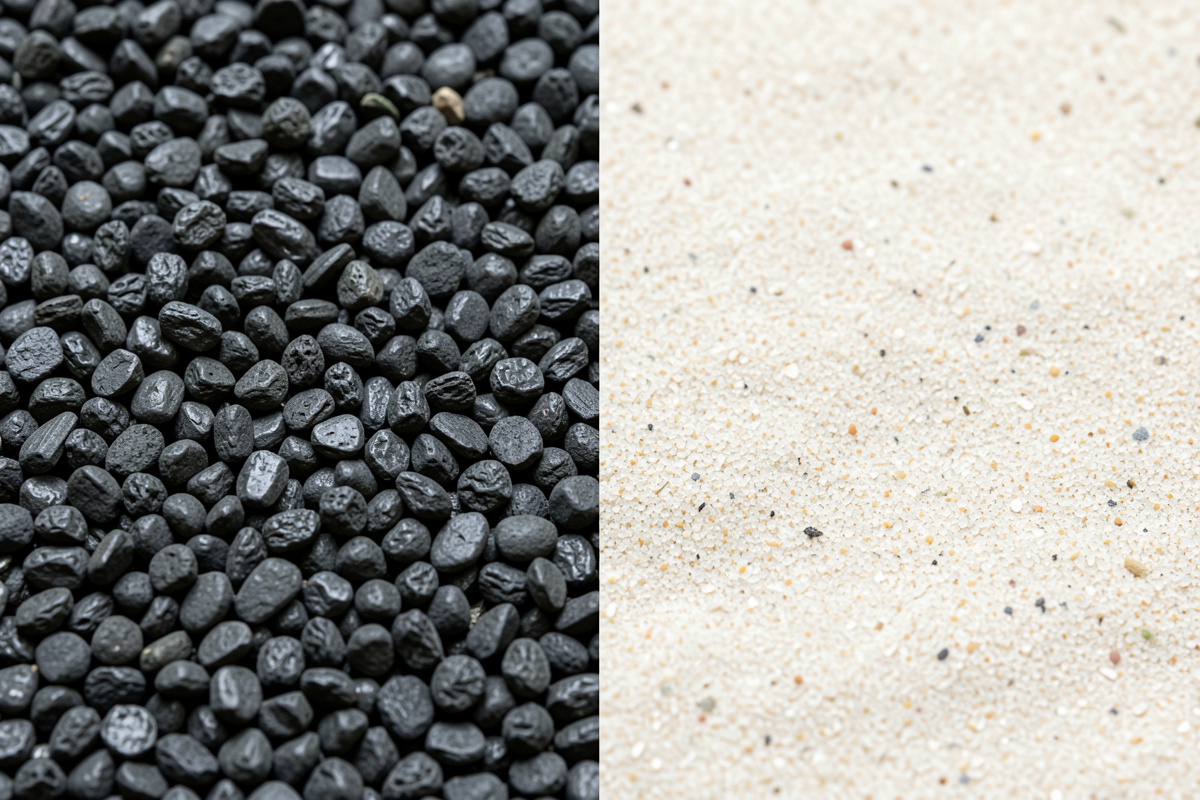
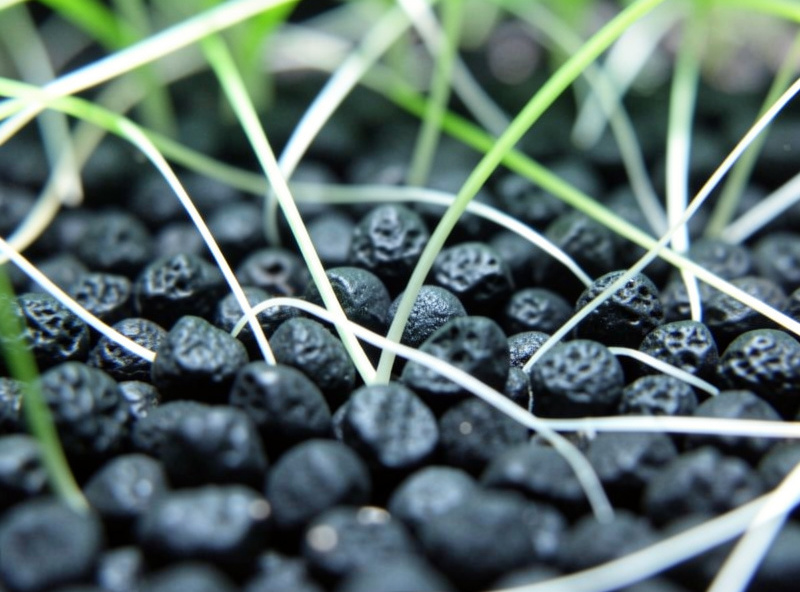
Active substrate is baked, nutrient-loaded clay — products like ADA Amazonia and Fluval Stratum. It does three things inert material cannot: it releases nutrients into the root zone, it lowers carbonate hardness (KH) and drags pH down toward the mid-6s, and it leaches ammonia for the first couple of weeks as it settles. That ammonia leach is why active soil kick-starts its own cycle, and also why you never add livestock to a freshly soiled tank without testing first.
When I filled my 60L on active soil, my KH test dropped from the tap’s value to near zero within a day, and pH followed it down to about 6.5 with no additives at all. That is the whole appeal: the substrate is doing chemistry work that soft-water plants and Caridina shrimp need, automatically. The cost is that this ability is finite — the buffering and feeding exhaust in roughly 1.5 to 2 years, at which point the soil becomes, functionally, expensive inert gravel. I cover the two leading soils in detail in the ADA Amazonia guide and the Fluval Stratum review.
What “inert” actually means
Inert substrate — sand, fine gravel, pool filter sand, inert planted gravels — is chemically silent. It holds roots, it hosts bacteria on its surface, and it does absolutely nothing to your water chemistry. Your tap water’s KH, GH, and pH walk in unchanged and stay that way. There is no ammonia leach, no buffering, no nutrient release, and no expiry date. The substrate I laid in my low-tech nano is the same substrate that will be there if the tank is still running in a decade.
The trade-off is that inert substrate feeds nothing. Heavy root-feeders — swords, crypts, big rooted stems — will sulk in plain sand unless you push root tabs into it. Epiphytes like Anubias, Bucephalandra, java fern, and mosses do not care at all, because they feed from the water column and never root in the substrate. That is the quiet secret of low-tech nano keeping: choose plants that ignore the substrate, and inert sand becomes the most maintenance-free foundation in the hobby, as I argue in my low-tech planted nano guide.
The day-to-day differs in a way the bags never advertise: maintenance. On my inert 20L I gravel-vacuum the sand surface freely at every water change, lifting detritus without a second thought. On the active 60L I never vacuum into the soil — disturbing the granules clouds the water and shortens the soil’s life — so I surface-skim only and let the plants and bacteria handle the cleanup. If hands-off cleaning matters to you, inert is the easier housemate; if maximum growth matters, you accept the gentler routine active soil demands.
As an Amazon Associate I earn from qualifying purchases.
Active vs inert, side by side
Here is the comparison stripped to what changes your decision. Read it against your own plant list and livestock, not against someone else’s showpiece.
| Factor | Active (aqua soil) | Inert (sand/gravel) |
|---|---|---|
| Feeds plant roots | Yes, directly | No (needs root tabs) |
| Changes water chemistry | Lowers KH and pH | No change |
| Lifespan | 1.5–2 years | Indefinite |
| Startup behaviour | Ammonia leach, cloudy | Inert, clear |
| Cost | Higher | Low |
| Best livestock | Caridina, soft-water fish | Neocaridina, hard-water fish |
| Best plants | Demanding root-feeders | Epiphytes, easy rooted with tabs |
The livestock question decides it more than plants
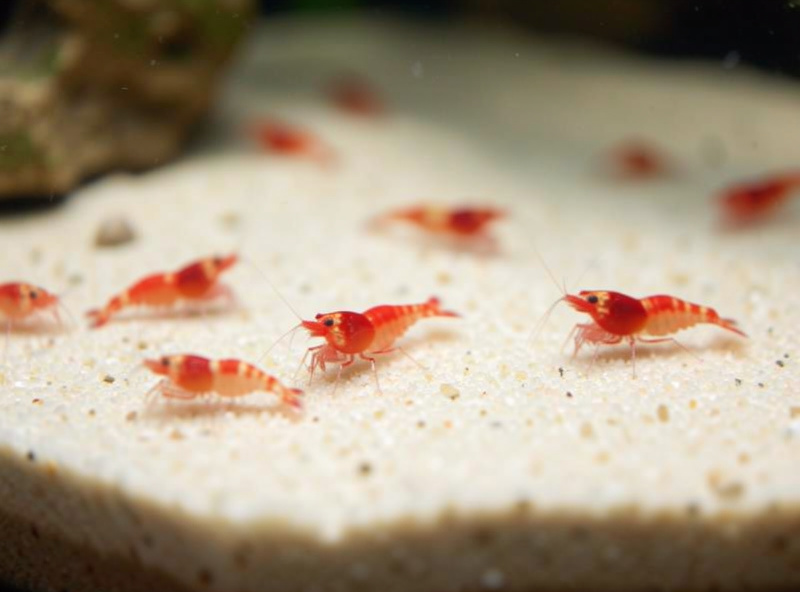
People obsess over plants when choosing substrate, but livestock is often the harder constraint. An active buffering soil that strips KH to zero is perfect for Caridina bee shrimp and wrong for almost everything that wants hard, stable water. My Neocaridina cherry colony wants steady KH and GH — exactly the stability an active soil works against — so they live on inert substrate, and I cover their precise numbers in my cherry shrimp water parameters guide.
Flip it around for soft-water animals and the logic reverses: if you are building around Caridina, fighting your tap water with chemicals every week is misery, and an active soil that holds the water soft and acidic on its own is worth every krona. The substrate is not a plant decision in that case — it is a livestock life-support decision. Test your source water first, decide who is living in it, and the substrate often picks itself before you have even thought about plants.
Cost over time, not at the till
Active soil looks expensive at the counter and inert looks cheap, but the real number is cost per year. A bag of aqua soil that lasts two years and then needs replacing has an ongoing cost; a bag of inert sand bought once has none. Over a five-year tank, the inert tank pays for substrate once and the active tank pays roughly three times. That does not make active “bad value” — you are buying growth and chemistry the inert tank cannot deliver — but it does mean the decision has a running cost most beginners never price in.
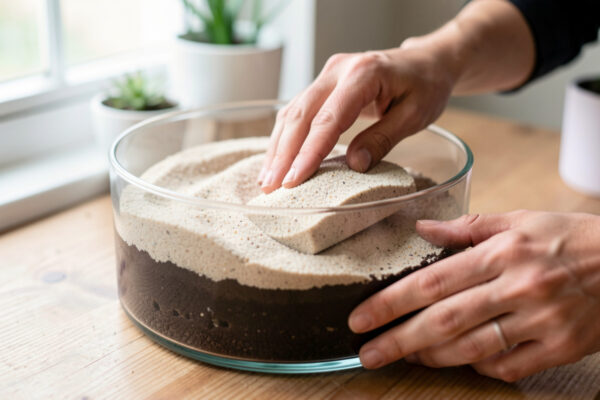
My honest rule: pay for active soil when the plants or the livestock genuinely need what it does. If you are growing easy epiphytes and keeping Neocaridina, an active soil is money spent on chemistry your tank will never use, and inert sand with the odd root tab will outlast and out-stabilise it. If you are running a CO2-injected high-tech scape with demanding carpets, active soil earns its keep and its replacement cost. And whichever you choose, remember the foundation has to be laid at the right depth from day one. Decide what your tank actually is before you decide what goes on the bottom of it.
Frequently Asked Questions
Is active or inert substrate better for beginners?
Inert substrate is more forgiving for beginners. It does not leach ammonia, does not cloud the tank, never expires, and will not strip the minerals from your water. Paired with easy epiphyte plants and root tabs for anything rooted, it removes most of the chemistry surprises that catch new keepers out.
Can I add active soil on top of inert gravel?
You should not layer active soil over inert gravel. Active soils are meant to be the planting layer you root into directly, not a topping. Mixing them lets the gravel migrate up and the soil sink, and disturbing the mix releases trapped gas and mud. Choose one system and commit to it.
Does inert substrate need fertilizer?
Inert substrate feeds nothing, so rooted plants need help. Push root tabs into the substrate near heavy root-feeders like swords and crypts every few months. Epiphytes and water-column feeders are covered by liquid fertilizer dosing instead. Without one or the other, plants in plain inert substrate slowly starve.
How long before I can add fish to an active soil tank?
Wait until the tank fully cycles, which with active soil means waiting out its ammonia leach first. That leach can run one to three weeks, and only after ammonia and nitrite both read zero is the tank safe. Test, never guess, because fresh aqua soil can push ammonia well above safe levels early on.
Will active substrate lower my pH permanently?
Only while it is active. Aqua soil buffers KH and pH down for its working life of about 1.5 to 2 years, after which the effect fades and pH drifts back toward your source water. If you need lasting soft, acidic water beyond that, you replace the soil or buffer the water another way.