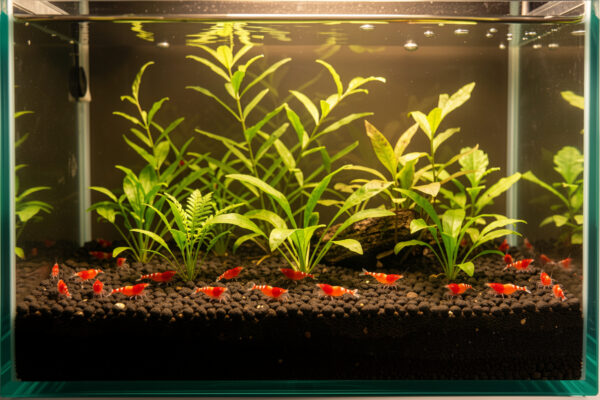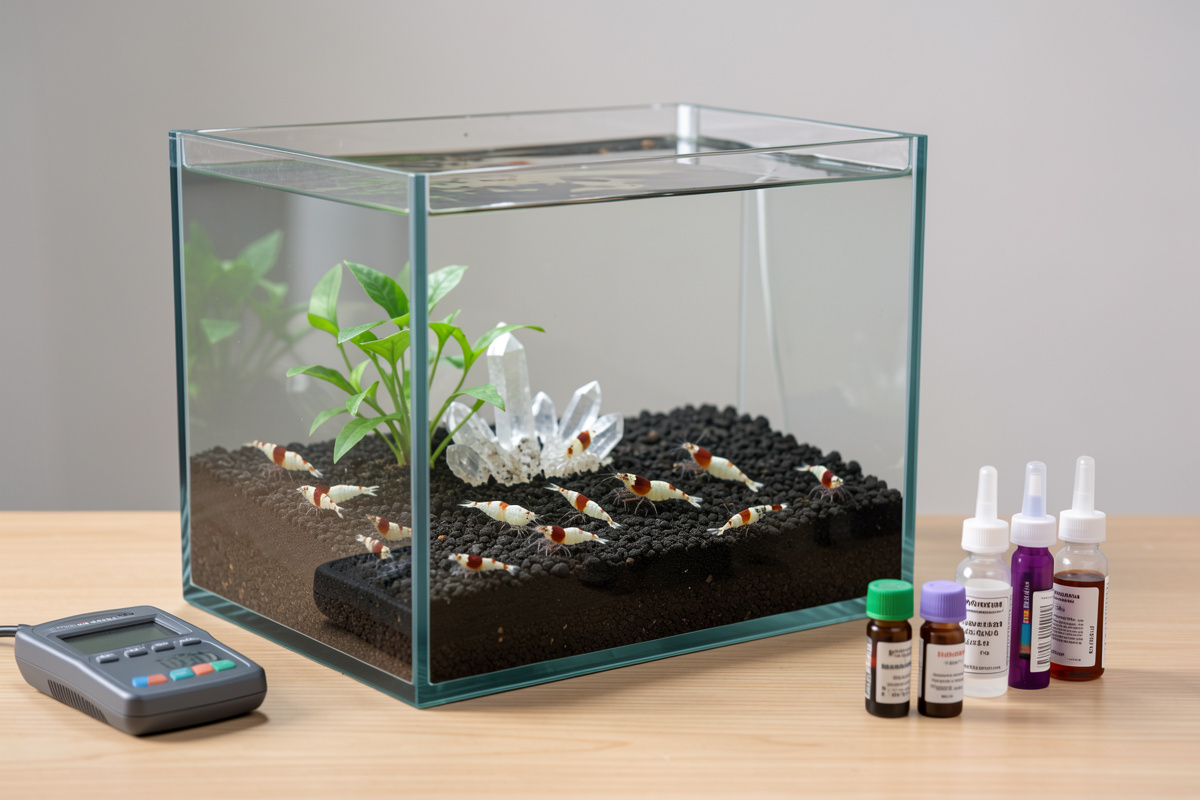
Caridina shrimp — the soft-water bee and crystal shrimp — cannot live in the water that comes out of most taps. They need carbonate hardness (KH) at or near zero and an acidic pH in the low 6s, and the cleanest way to hold that is a buffering substrate: an active aqua soil that strips KH out of the water and parks pH where these shrimp thrive. The soil does the chemistry an inert substrate never could, and getting it right is the difference between a stable Caridina tank and a slow, mysterious decline.
I should be straight about my own bench: my colony is Neocaridina, the harder-water cherry shrimp, not Caridina. For the deepest line-breeding details of bee and crystal shrimp I defer to the dedicated Caridina breeders who live in that world. But the buffering chemistry itself — what an active soil does to KH, GH, and TDS, and how to build the water around it — is the same instrumentation and the same test-don’t-guess discipline I run on every tank, imported straight from years of metering hydroponic nutrient solutions. That part I can walk you through with confidence.
Why Caridina need a buffering soil
Caridina evolved in soft, acidic streams, and their biology depends on it. They want KH effectively at 0–1, a GH around 4–6, and a pH in the region of 5.8–6.8. The problem is that KH and pH are linked: carbonate hardness is what holds pH up, so as long as there is meaningful KH in the water, pH stays in the 7s and refuses to drop. You cannot simply add acid to tap water and call it done — the KH buffers it straight back up, and chasing it with chemicals gives you the unstable pH swings that kill shrimp faster than any wrong number held steady.
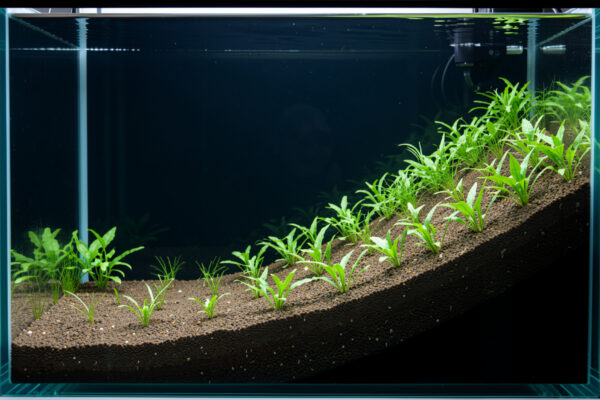
An active buffering soil solves this at the source. It chemically removes carbonate hardness from the water, dropping KH toward zero, and once KH is gone the pH falls and stays down in the acidic range Caridina need — no daily dosing, no swings. The substrate becomes the pH-control system. That is exactly the behaviour described in my active vs inert substrate breakdown: the soil is doing chemistry, not just holding roots, and for Caridina that chemistry is life support.
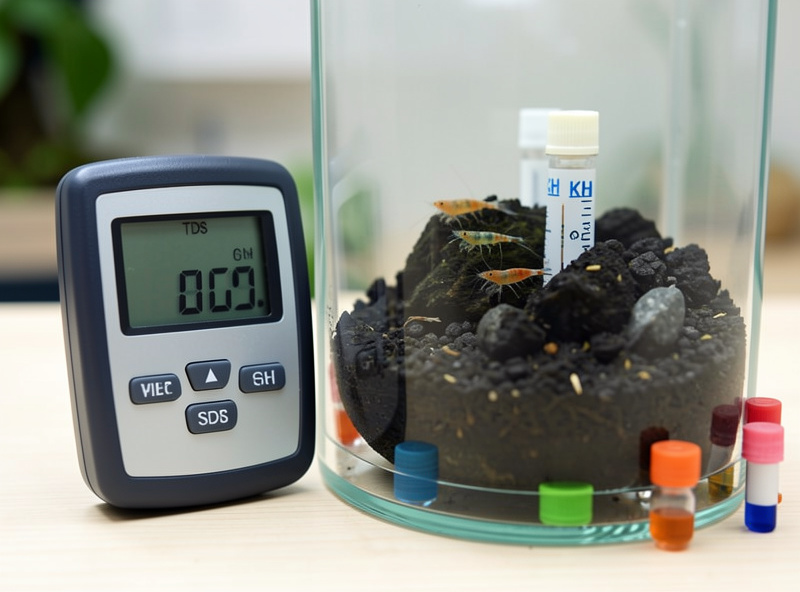
The water you build on top of it
A buffering soil only works if you give it the right water to act on, and for Caridina that means starting from RO. Tap water carries too much KH and unknown extras; the soil would spend itself fighting your tap’s carbonate load and exhaust early. So you start with reverse-osmosis water — a blank slate of near-zero everything — and you remineralize it back up to a target, a process I cover in detail in RO water remineralization for shrimp.
The crucial detail for Caridina is which mineral package you use. You remineralize with a GH-only product, not a GH/KH one, because you want general hardness (the minerals shrimp need for shell and molting) without re-adding the carbonate hardness the soil is working to remove. Add KH back and you undo the buffering. I dial RO remineralized to the GH target, let the soil hold KH near zero, and confirm the result with a TDS pen reading in roughly the 100–150 range for Caridina — the same pen that used to read my nutrient reservoirs. Test, never guess: the meter tells you whether the soil and your remineralized water have actually landed where you intended.
Caridina versus Neocaridina parameters
The reason the substrate choice matters so much is that the two popular shrimp families want opposite water, and the soil decision follows directly from which you keep. Here is the contrast that drives everything.
| Parameter | Caridina (bee/crystal) | Neocaridina (cherry) |
|---|---|---|
| KH | 0–1 (near zero) | 2–4 |
| GH | 4–6 | 6–8 |
| pH | 5.8–6.8 (acidic) | 6.8–7.8 |
| TDS | ~100–150 | ~150–250 |
| Substrate | Active buffering soil | Inert (no buffering) |
This table is why you cannot keep both species in the same tank, and why the substrate is a livestock decision before it is a plant one. My Neocaridina sit on inert substrate in harder, stable water — putting them on a KH-stripping buffer soil would actually work against them. The full cherry-shrimp numbers live in my cherry shrimp water parameters guide and the wider care detail in the Neocaridina care guide. Buffering soil is a Caridina tool, used because that species genuinely needs it — not a default upgrade for every shrimp tank.
Which buffering soils to use
The active soils that buffer hardest are the same ones covered elsewhere in this cluster. ADA Amazonia is the strong benchmark buffer, detailed in my ADA Amazonia guide, and it pulls KH down aggressively. Fluval Stratum buffers more gently, which I weigh up in the Fluval Stratum review. There are also dedicated shrimp-soil products formulated specifically for Caridina buffering. Whichever you use, the same rule applies as with any active soil: it leaches ammonia at first and must be fully cycled before a single shrimp goes in, and it buffers only while it is active.
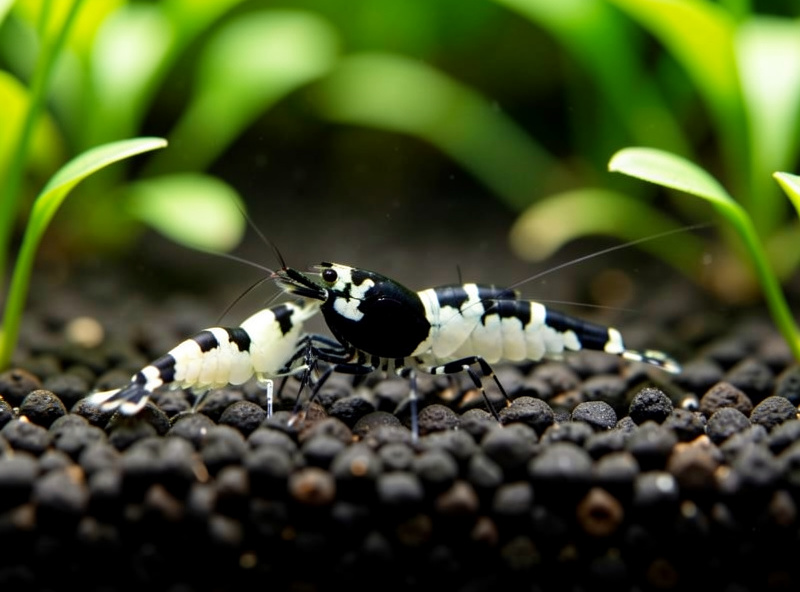
The lifespan trap with Caridina
Here is the catch that specifically bites Caridina keepers. A buffering soil’s KH-stripping power is finite — it exhausts over roughly a year or two, exactly like its feeding does. The danger is that the exhaustion is invisible until it is not: one day the soil can no longer hold KH at zero, KH starts creeping up from your water changes, pH rises with it, and the soft acidic world your shrimp depend on quietly drifts away. Because shrimp tolerate slow change poorly, this can look like a sudden unexplained problem when it is really an old soil reaching the end of its buffering life.
The defence is the same discipline I apply everywhere: log it and test it. I note the soil’s install date, and on a buffering tank I watch KH and TDS over time rather than assuming the numbers are still where they were at setup. A creeping KH is the early warning that the soil is tiring and a refresh is due. When that day comes, swapping the substrate under an established colony has to be done carefully to protect both the cycle and the shrimp — my guide on replacing substrate in an established tank covers the staged method. For the whole substrate picture, the planted tank substrate guide ties it together.
The honest summary: a buffering soil is the right and often necessary tool for Caridina, but it is a system, not a product. RO water remineralized for GH, an active soil holding KH at zero, a TDS pen confirming the result, and a log watching the soil age — get those four working together and the soft acidic water stays stable. For the finer points of breeding bee and crystal shrimp specifically, I send you to the dedicated Caridina breeders; on the water chemistry under them, the meters do not care whether the shrimp are bee or cherry.
Frequently Asked Questions
Why do Caridina shrimp need a buffering substrate?
Caridina need near-zero KH and an acidic pH in the low 6s, and KH is what holds pH up. An active buffering soil chemically removes carbonate hardness, dropping KH toward zero so pH falls and stays down without daily dosing. Inert substrate cannot do this, which is why Caridina specifically need a buffering soil.
Can I use tap water with a buffering soil?
It is far better to start from RO water. Tap water carries too much carbonate hardness, so the soil spends its buffering capacity fighting your tap and exhausts early. Start with RO, remineralize with a GH-only product to add the minerals shrimp need without re-adding KH, and let the soil hold KH near zero.
What KH and pH do Caridina shrimp need?
Caridina bee and crystal shrimp want KH effectively at 0 to 1, GH around 4 to 6, pH roughly 5.8 to 6.8, and TDS in the region of 100 to 150. Those are husbandry ranges; for line-breeding specific grades, specialist Caridina breeders are the better source. Always confirm your water with test kits and a TDS meter.
Do buffering soils stop working over time?
Yes. A buffering soil’s KH-stripping power exhausts over roughly one to two years, like its feeding. As it tires, KH creeps up from water changes, pH rises, and the soft acidic conditions drift. Watch KH and TDS over time rather than assuming the setup numbers hold, and refresh the soil when KH starts climbing.
Can Caridina and Neocaridina share a tank?
Not really, because they want opposite water. Caridina need soft, acidic, near-zero-KH conditions on a buffering soil; Neocaridina prefer harder, more alkaline, stable water on inert substrate. Keeping both in one tank means compromising on parameters neither is happy with. Set up a separate tank, with the right substrate, for each.