Fluval Stratum is the aqua soil I recommend most often to people building their first shrimp tank — not because it grows plants harder than ADA Amazonia (it does not), but because it gives you most of the buffering with a far gentler, more forgiving start. It is lighter-feeding, milder on the ammonia leach, cheaper, and easier to live with, and like any active soil it runs about one to two years before it needs refreshing. After running it on a shrimp-first nano alongside my Amazonia showpiece, my verdict is simple: Stratum is the better soil for the tank most beginners are actually building.
This is an honest review, which means the parts where it falls short of the ADA standard get the same airtime as where it wins. Stratum is not the soil for a demanding high-tech carpet, the granules can be annoyingly buoyant on the first fill, and it does not last forever. But for a planted shrimp tank where the point is soft, stable water and a low-drama setup, it has earned its place on my rack. Here is where it shines and where it does not.
What Fluval Stratum is
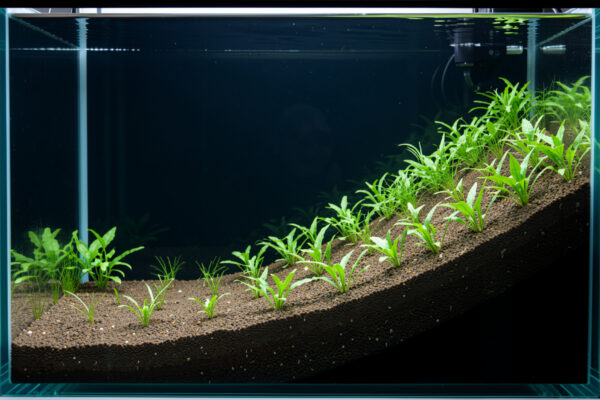
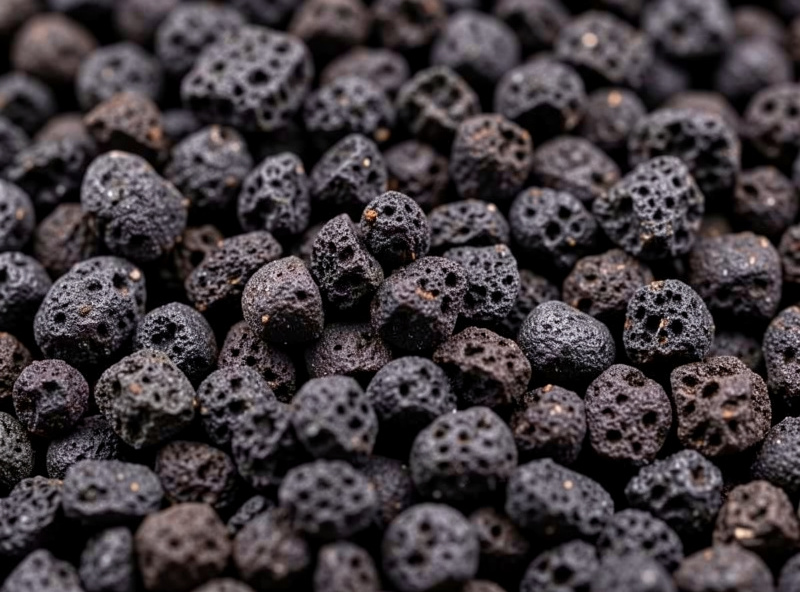
Stratum is an active aqua soil made from porous volcanic basaltic rock — the same active category as Amazonia, covered in my active vs inert substrate breakdown, but tuned softer. It feeds roots, gently lowers carbonate hardness (KH) and pH, and its highly porous structure gives nitrifying bacteria enormous surface area to colonise, which is part of why shrimp keepers like it. You plant straight into it, no cap, exactly like Amazonia.
The headline difference is intensity. Where Amazonia hits your water hard — strong buffering, heavy feeding, a big ammonia leach — Stratum does all the same things at a lower volume. That makes it less of a plant-growth powerhouse and more of a balanced, shrimp-friendly foundation. For a tank built around Neocaridina or a relaxed planted scape, “less aggressive” is not a weakness; it is the whole point.
Where Stratum wins
The gentle start. Stratum’s ammonia leach is mild compared to Amazonia’s. You still cycle the tank properly and wait for the double-zero on ammonia and nitrite before adding livestock — that rule never bends — but the spike is smaller and shorter, and the tank settles faster. For a first soil tank, that lower drama is genuinely reassuring.
On my shrimp-first build the difference showed up in the log. Where the Amazonia in my showpiece ran an ammonia peak that took the better part of three weeks of daily testing and water changes to clear, the Stratum tank peaked lower and read double-zero in around two weeks. That is no licence to rush — I still waited for ammonia and nitrite at zero on the test kit before a single shrimp went in — but a shorter, milder cycle is exactly what makes Stratum forgiving for a first soil tank.
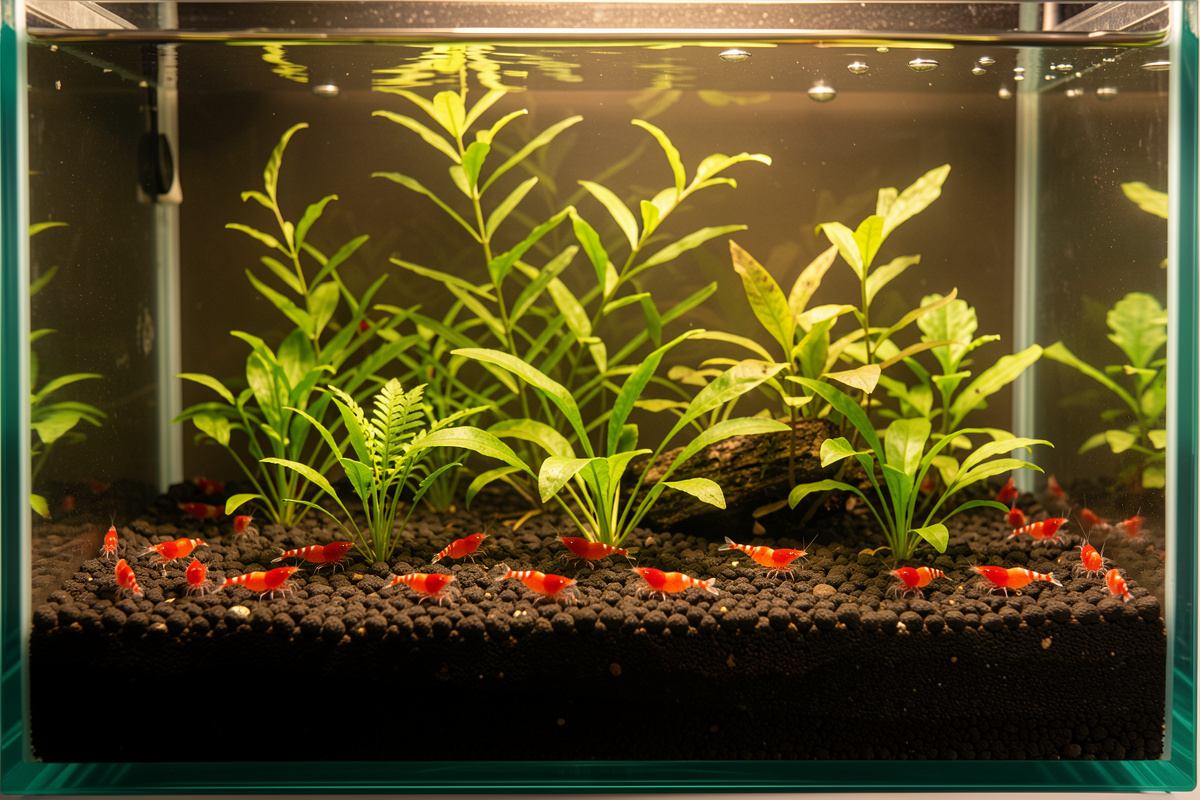
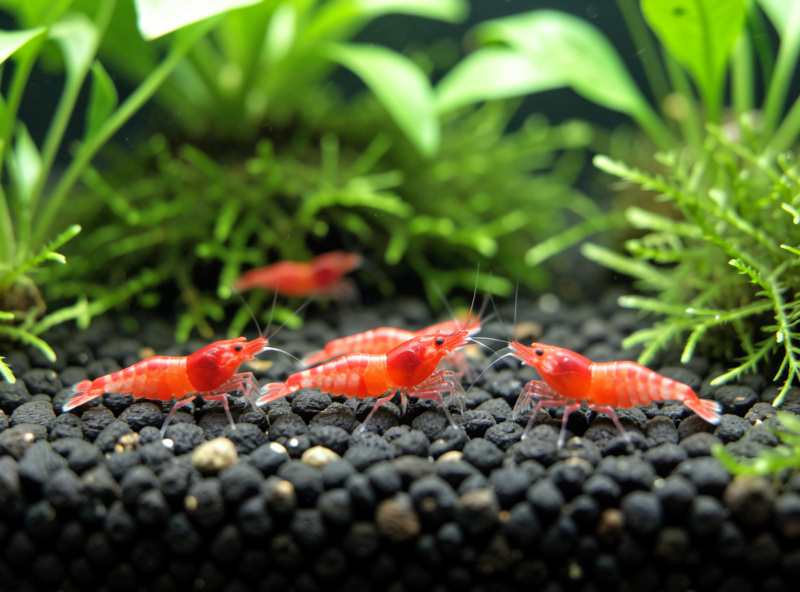
Shrimp friendliness. The porous granules host bacteria beautifully, and the mild buffering nudges water soft and slightly acidic without stripping it as hard as Amazonia does. My shrimp-first build held steady on it, and biofilm — the food a shrimp colony actually grazes — establishes readily across that textured surface. It pairs naturally with the parameters I track in my cherry shrimp water parameters guide.
Price and availability. Stratum costs less than Amazonia and sits on more shelves. For a nano, a single bag goes a long way, and the lower price makes the eventual replacement at end-of-life sting less.
Where Stratum falls short
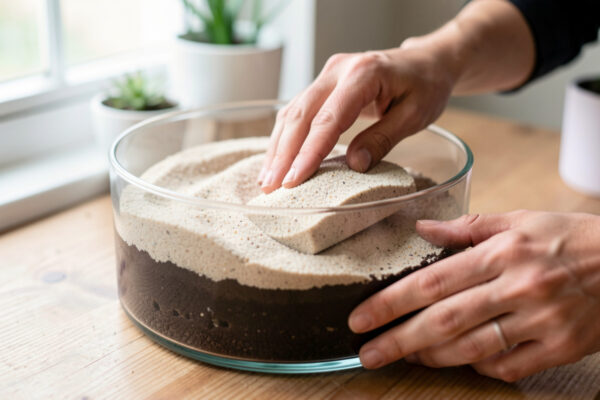
Floating granules. This is the most common complaint and it is real: fresh Stratum granules can be buoyant, and on the first fill a frustrating number bob to the surface. They water-log and sink within a day or two, but the initial fill is fiddlier than Amazonia’s. Pouring slowly and filling gently — onto a plate or bag laid on the soil — limits it, but expect to skim a few floaters.
Lighter feeding. If your goal is a demanding carpet under pressurized CO2 and high light, Stratum’s gentler nutrient load shows. It grows easy and moderate plants well, but for the most demanding scapes the heavier feeding of Amazonia pulls ahead. Know which tank you are building before you choose.
Finite lifespan. Like every active soil, Stratum is consumable. Its buffering and feeding fade over roughly one to two years, after which it behaves more like inert gravel and pH drifts back toward your source water. I log the install date so the slowdown is expected rather than a mystery — the same discipline I apply to the Amazonia in my showpiece, detailed in the ADA Amazonia guide.
Stratum versus Amazonia: which should you buy?
The decision is not “which is better” — it is “which fits your tank.” Buy Stratum if you are building a shrimp tank or a relaxed planted nano, want a gentle cycle, and care about price. Buy Amazonia if you are running a high-tech scape with demanding plants and want maximum growth and the strongest buffering, and you are prepared to manage a bigger ammonia leach. I run both for exactly that reason: the right soil depends on the tank’s job, not on which brand wins a forum argument.
For Caridina bee shrimp specifically, both soils buffer, but the choice interacts with your whole water-prep routine — RO water, remineralization, and the soft acidic target those shrimp need. I work through that in buffering soil for Caridina tanks. And whichever soil you pick, the depth and slope you lay it at matter as much as the brand, which is the subject of my substrate depth guide. The full lay-of-the-land for the whole substrate decision lives in the planted tank substrate guide.
As an Amazon Associate I earn from qualifying purchases. To price it against the alternative, search current stock for Fluval Stratum substrate.
The verdict
Fluval Stratum is the soil I would hand a first-time shrimp or planted-nano keeper without hesitation. It buffers gently, cycles kindly, feeds plants adequately, and costs less than the benchmark — and the floating-granule annoyance is a one-day problem, not a deal-breaker. It is not the soil for a competition aquascape, and it will not out-grow Amazonia. But for the tank most people are actually building — soft water, shrimp, easy-to-moderate plants — it is the smarter, more forgiving choice, and it has held its place on my rack to prove it.
Frequently Asked Questions
Is Fluval Stratum good for shrimp?
Yes, it is one of the most popular shrimp substrates. Its porous volcanic granules host the bacteria and biofilm a colony grazes on, and its mild buffering nudges water soft and slightly acidic without stripping it as hard as ADA Amazonia. Cycle the tank fully before adding any shrimp, regardless of the soil.
Why does Fluval Stratum float?
Fresh Stratum granules can be buoyant and bob to the surface on the first fill. They water-log and sink within a day or two. Pouring slowly and filling gently onto a plate or bag laid on the substrate limits it, but expect to skim a few floaters during setup. It is a brief nuisance, not a defect.
Does Fluval Stratum lower pH?
Yes, but mildly. Stratum gently lowers carbonate hardness and pH, nudging water soft and slightly acidic. The effect is weaker than ADA Amazonia’s strong buffering, which is why Stratum suits shrimp-first and relaxed planted tanks rather than the most demanding high-tech scapes. Test your water to confirm where it settles.
How long does Fluval Stratum last?
Like all active soils, Stratum is consumable. Its buffering and feeding fade over roughly one to two years, after which it behaves more like inert gravel and pH drifts back toward your source water. Logging the install date means the slowdown is expected, and signals when to dose more from the water column or rescape.
Fluval Stratum or ADA Amazonia for a planted tank?
Choose Stratum for a shrimp tank or relaxed planted nano where you want a gentle cycle and lower cost. Choose Amazonia for a high-tech scape with demanding plants where you want maximum growth and the strongest buffering and can manage a bigger ammonia leach. The right soil depends on the tank’s job, not the brand.