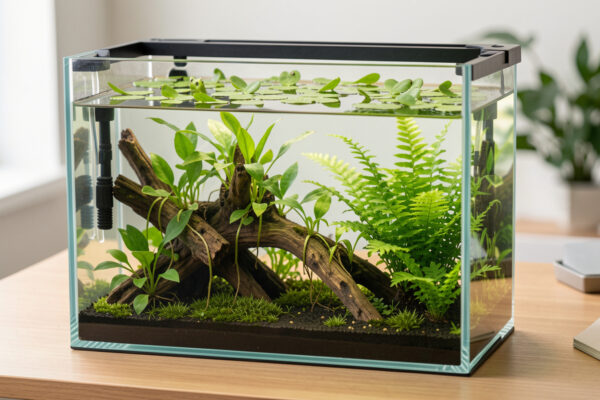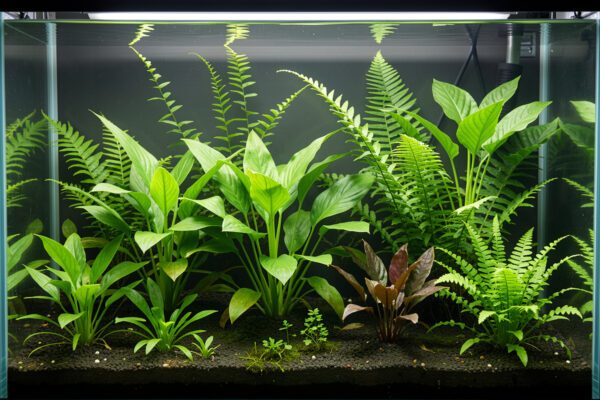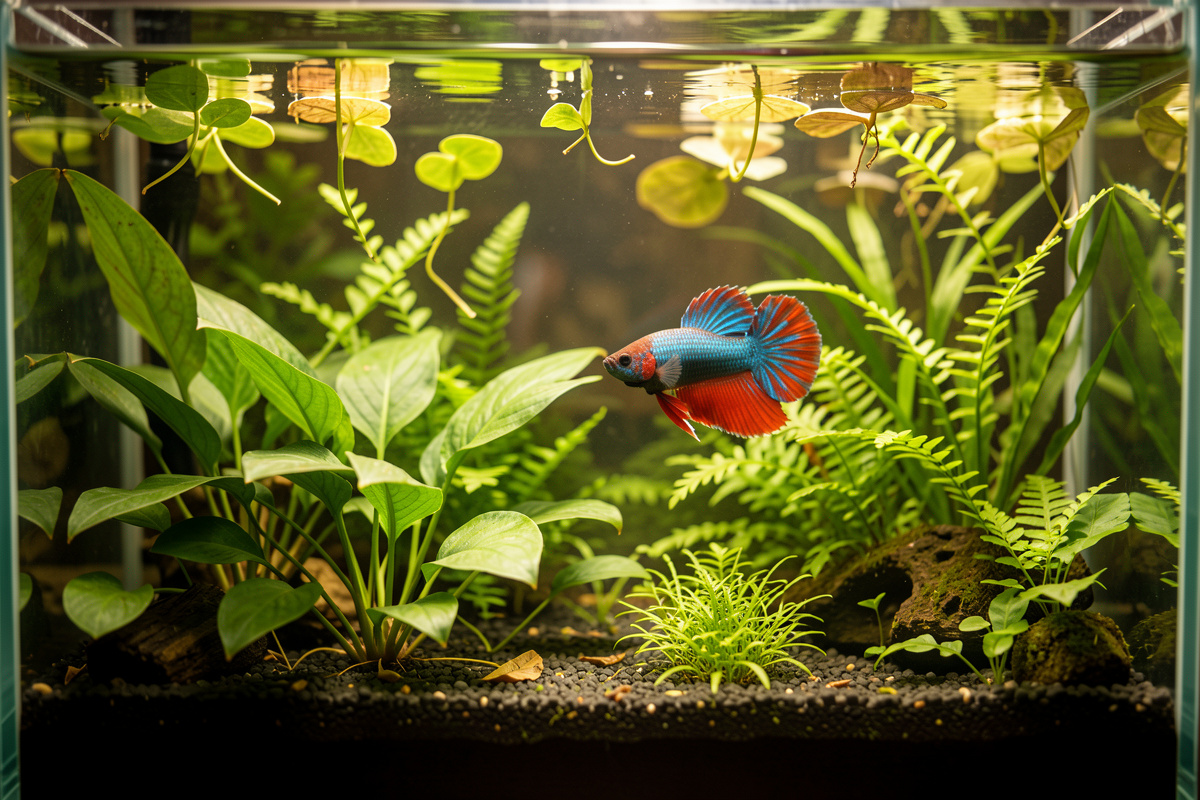
The best plants for a betta nano are the easy, low-light ones — and a planted betta tank is more stable to keep, not more work. Anubias, Java fern, Bucephalandra, and floating plants thrive with no CO2 and modest lighting, consume ammonia and nitrate, and give a betta the cover and resting perches it loves. The betta-appropriate plant list happens to be the beginner-friendly one.
People assume a planted tank means a high-tech setup with pressurised CO2 and blazing light. For a betta, the opposite is true: the plants that suit the fish are precisely the undemanding ones, and they make the water easier to manage by doing real chemical work. I run a low-tech planted nano as my daily reference tank, and the lesson it keeps teaching is that plants are filtration with leaves. Here is the betta planting shortlist, why each earns its place, and how to keep them alive without a lab’s worth of gear.
Why Plants Make a Betta Tank Easier
Live plants actively stabilise a nano, which is exactly what small water needs. They take up ammonia and nitrate directly, compete with algae for nutrients, oxygenate the water, and provide the cover that lowers a betta’s stress. A well-planted tank swings less and forgives more than a bare one.
The chemistry crossover is what convinced me. In hydroponics, plants are the entire nitrogen sink; in an aquarium they do the same job alongside the bacteria, pulling nitrogen compounds out of the water as fertiliser. That extra uptake is a real buffer in a small volume, smoothing the swings I warn about in parameter swings in a small tank. Plants also shade and out-compete algae, which is why my nano algae guide treats heavy planting as the first line of defence rather than a bottle of algaecide. And for the betta specifically, dense planting means cover, resting spots, and broken sightlines that visibly calm the fish. More plants is more stability, more enrichment, and less work — a rare case where the easy path is also the best one.
The Epiphytes: Anubias, Java Fern, Bucephalandra
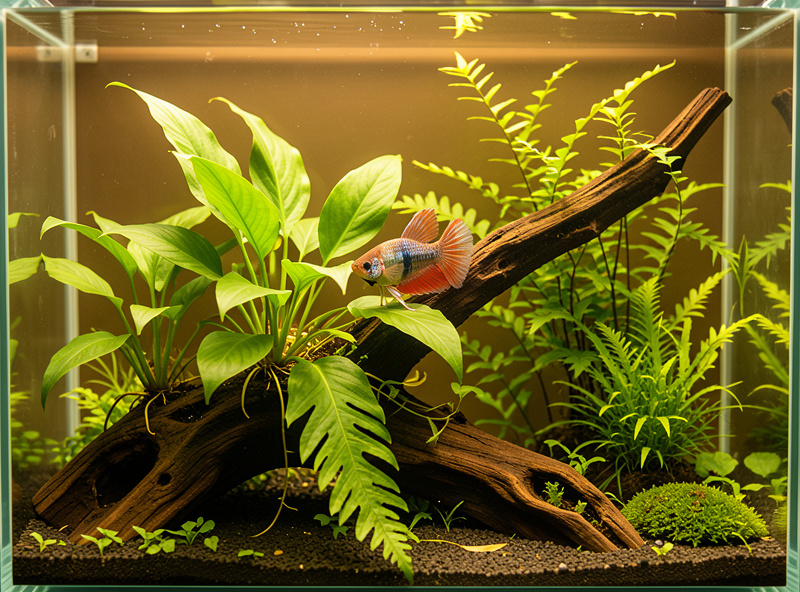
Epiphytes are the foundation of a low-tech betta tank because they need no substrate and almost no skill. Anubias, Java fern, and Bucephalandra attach to wood or rock, tolerate low light, need no CO2, and grow slowly enough to need little maintenance — ideal for a betta. Their broad leaves double as betta perches.
These three are where I tell every beginner to start. You tie or glue the rhizome to driftwood or stone — crucially, you do not bury the rhizome, or it rots — and then you essentially leave them alone. Anubias gives you sturdy, broad leaves that a betta will rest on near the surface, exactly the kind of perch the fish seeks out. Java fern brings taller texture and the same bulletproof low-light tolerance. Bucephalandra adds smaller leaves and subtle colour for a bit of visual interest, with the same care profile. All three shrug off a betta’s nibbling, handle the modest light a betta prefers, and never demand the fertiliser-and-CO2 routine of a high-tech tank. An Anubias or Java fern on driftwood is the single best first plant for a betta nano. As an Amazon Associate I earn from qualifying purchases.
Floating Plants: A Betta’s Favourite
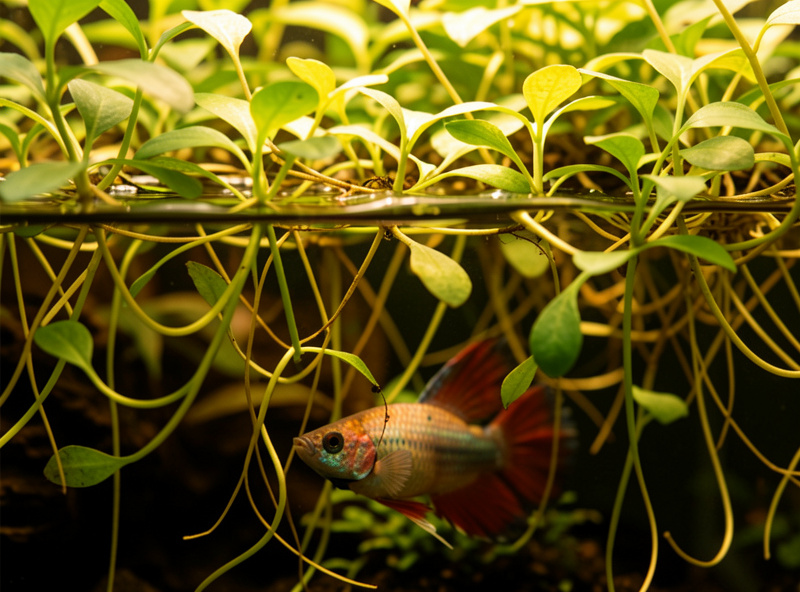
Floating plants might be the most betta-appropriate plants of all. Species like Amazon frogbit, red root floaters, and duckweed dim the light a betta prefers, provide surface cover near where it breathes and builds bubble nests, and absorb nutrients fast through trailing roots. Bettas genuinely seem to love them.
A betta is a surface-oriented fish — it breathes air at the top, builds bubble nests against the surface, and prefers softer overhead light to a bright open tank. Floating plants serve all of that at once: they shade the water, give the fish a sense of cover from above that lowers stress, and their dangling roots are prime nutrient-stripping and a favourite place for a betta to weave through. The one caution is to manage them, because vigorous floaters like duckweed spread fast and can blanket the whole surface, which would cut gas exchange and block too much light — thin them regularly. Amazon frogbit and red root floaters are easier to control than duckweed and my preference for that reason. Floating plants like Amazon frogbit are an easy, high-impact addition.
The Betta Plant Shortlist
Here is the planting list I would build a betta nano from, all low-tech and forgiving. Every plant here grows without CO2 under modest light, which is the whole point for a tank kept dim and gentle for the fish. Mix epiphytes, an easy stem or two, and floaters for a full, layered look.
| Plant | Placement | Light Need | CO2? | Why It Suits a Betta |
|---|---|---|---|---|
| Anubias | On wood/rock | Low | No | Broad leaves make resting perches |
| Java fern | On wood/rock | Low | No | Bulletproof, adds height and cover |
| Bucephalandra | On wood/rock | Low | No | Slow, tidy, low-maintenance interest |
| Java moss | Carpet/attach | Low | No | Cover and grazing surface, very hardy |
| Amazon frogbit | Floating | Low | No | Dims light, surface cover, nutrient uptake |
| Cryptocoryne | Rooted (substrate) | Low | No | Hardy background once settled |
You do not need all of these — a couple of epiphytes on driftwood plus a handful of floaters already makes a stable, betta-friendly tank. Build up from there as you find your feet.
Keeping Them Alive Without High-Tech Gear
Low-tech does not mean no-care — it means a simple routine instead of a complex one. Give the plants modest light on a timer, the occasional dose of a comprehensive liquid fertiliser, and do not bury epiphyte rhizomes; that is essentially the whole job. Lighting is where most low-tech tanks go wrong.
The commonest mistake is too much light without the CO2 and nutrients to match it, which feeds algae rather than plants — the balance I unpack in my nano lighting guide. For a betta tank, a modest light on a consistent photoperiod of around six to eight hours suits both the dim-preferring fish and the low-tech plants, and floaters help by shading the water further. A weekly or fortnightly dose of an all-in-one liquid fertiliser covers what low-tech plants need, since they are not growing fast enough to demand more. Keep epiphyte rhizomes above the substrate, let root-feeders like cryptocoryne settle into the substrate undisturbed, and resist fiddling — low-tech planted tanks reward patience. The whole approach sits inside my low-tech planted nano guide and the complete betta nano setup guide.
Frequently Asked Questions
What are the best plants for a betta tank?
Low-light, undemanding plants: Anubias, Java fern, Bucephalandra, Java moss, and floating plants like Amazon frogbit. They need no CO2 or strong lighting, consume ammonia and nitrate, and give a betta cover and resting perches. The betta-friendly list is also the beginner-friendly one.
Do betta tank plants need CO2?
No. The plants best suited to a betta tank are all low-tech species that grow without injected CO2. Anubias, Java fern, mosses, cryptocoryne, and floating plants all do well under modest light with the occasional liquid fertiliser, which suits the dim, gentle conditions a betta prefers.
Are floating plants good for bettas?
Yes, they may be the most betta-appropriate plants. Floating plants dim the light bettas prefer, provide surface cover near where the fish breathes and builds bubble nests, and absorb nutrients through trailing roots. Manage vigorous spreaders like duckweed so they do not blanket the whole surface.
Can a betta tank be too planted?
Mostly only at the surface. Heavy underwater planting is beneficial, but floating plants that completely cover the surface can reduce gas exchange and block too much light. Thin floaters so some open water remains, and keep enough swimming space for the betta to move freely.
Why is my Anubias rotting?
Most often the rhizome was buried. Anubias, Java fern, and Bucephalandra are epiphytes whose rhizome must stay above the substrate, attached to wood or rock. Burying the rhizome causes it to rot. Reattach the plant so only the roots reach the substrate and the rhizome stays exposed.
How much light does a low-tech betta tank need?
A modest light on a consistent photoperiod of about six to eight hours. Too much light without matching CO2 and nutrients feeds algae rather than plants. Low light suits both the low-tech plant list and the betta, which prefers dimmer, gentler conditions with floating-plant shade.