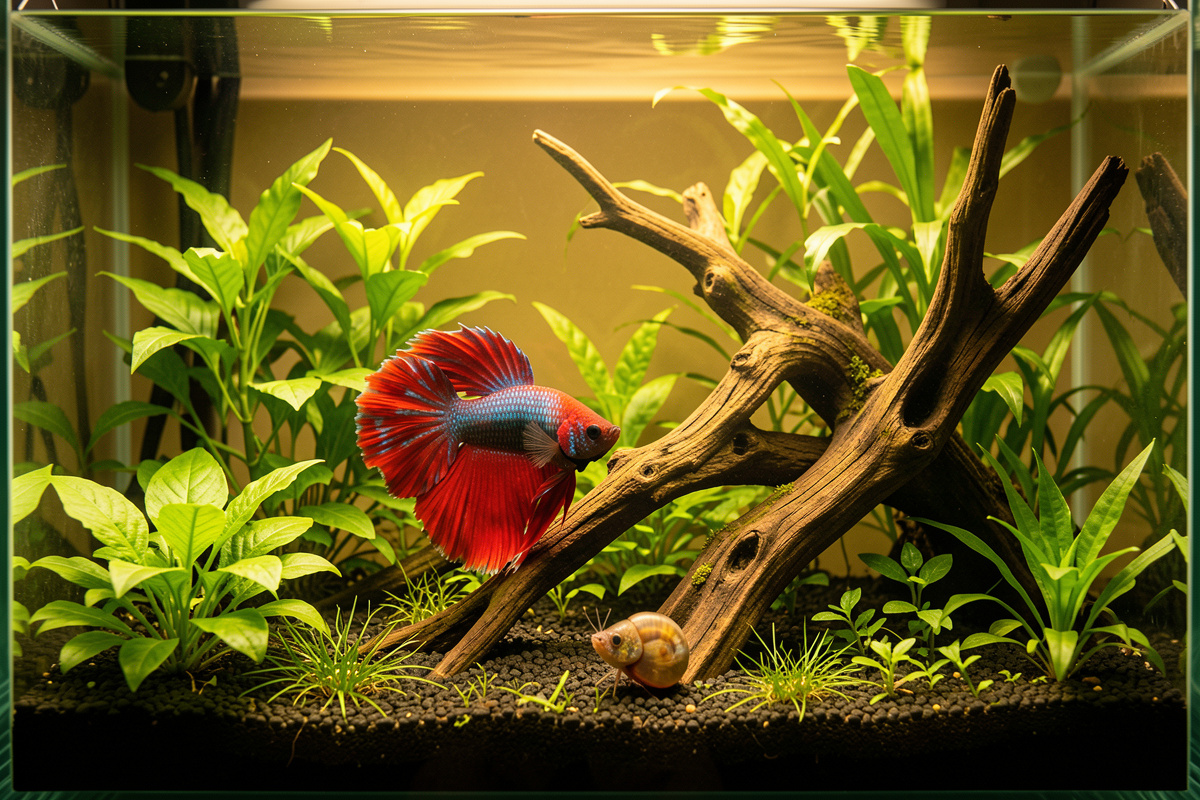
The honest answer is that most bettas in a nano are best kept alone, and the only reliable companions at that scale are invertebrates. In a 19–38 litre nano, nerite snails are the safe choice, shrimp are a gamble, and other fish almost never fit — the volume and the betta’s individual temperament are both against you. I would rather tell you that than sell you a tidy stocking list that gets animals killed.
Tankmates are where good intentions do the most damage in this hobby. People want a lively community, so they add fish a nano cannot support biologically, paired with a fish whose temperament is a coin toss. I keep my stocking decisions the way I keep my parameter log — by the numbers and by honest observation, not by what looks nice on a shelf. Here is what actually works, what sometimes works, and what never does.
Start With the Volume Math, Not the Wish List
Before temperament even enters the picture, bioload rules out most tankmates in a nano. A betta already uses a meaningful share of a 19–38 litre tank’s waste-processing capacity, leaving little room for additional fish without destabilising the water. Adding bodies adds ammonia, and small water has no buffer for it.
This is the unglamorous foundation everyone skips. Every fish you add increases the waste the bacterial colony must process and shrinks the margin before ammonia or nitrite climbs. In a nano, that margin is already thin — which is the whole reason I argue small water is the advanced class in my nano stocking guide and the overstocking signs article. So the first filter on any tankmate question is not “will the betta tolerate it” but “will the water.” For most community fish, the answer in a nano is no before you even reach the betta’s mood. The fish that pass the volume test are the ones that add almost no bioload at all: snails and, carefully, shrimp.
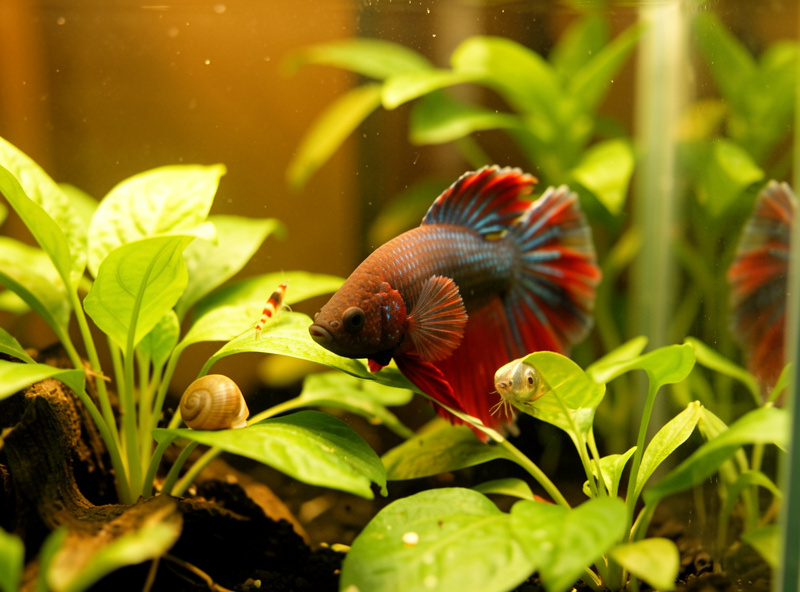
The Reliable Choice: Snails
Nerite snails are the one tankmate I recommend without hesitation. They add negligible bioload, eat algae, ignore the betta, and are ignored in return — and because nerites need brackish water to breed, they will not overrun the tank. They are the closest thing to a free, safe companion a betta nano has.
A nerite earns its place by doing a job and causing no problems. It grazes the film algae off the glass and hardscape, which I would otherwise be scraping, and a betta almost never bothers a hard-shelled snail that offers nothing to chase. Mystery snails can also work but add more waste and can have their antennae nipped by a bold betta, so I favour nerites. Bladder and ramshorn snails will appear on their own from plants and are harmless cleanup crew, though they breed freely. None of these meaningfully load the water, which is exactly why they pass the volume test that fish fail. If algae is part of why you want a cleanup crew, my nano algae guide covers the chemistry-first approach that prevents it in the first place.
The Gamble: Shrimp
Shrimp are the genuine maybe — sometimes a thriving colony, sometimes lunch. Whether a betta leaves Neocaridina shrimp alone comes down to individual temperament, and you cannot know in advance which betta you have. Some ignore shrimp for years; others treat a shrimp tank as a buffet. Plan for the worse case.
I keep a dedicated Neocaridina colony, so I am honest about the risk rather than romantic about it. If you want to try shrimp with a betta, stack the odds: add an established colony to a heavily planted tank with dense cover and a lot of hiding spots before the betta goes in, so survivors can breed faster than they are picked off. Adult shrimp in thick plants survive a mellow betta well; baby shrimp rarely survive any betta. Accept from the start that you may be running a feeder operation, and do not add expensive grade shrimp you would mourn. The full risk breakdown is in keeping shrimp with fish, and the colony parameters that keep them healthy in the first place are in my cherry shrimp water parameters guide.
Tankmate Reality Check
Here is the verdict table I use. The pattern is simple: the more bioload and the more the animal looks like prey or a rival, the worse the odds. Most of the popular “betta community” fish you will see suggested online need far more water than a nano provides, regardless of temperament.
| Candidate | Bioload | Nano Verdict | Why |
|---|---|---|---|
| Nerite snail | Negligible | Recommended | Cleans algae, ignored by betta, will not overbreed |
| Neocaridina shrimp | Low | Risky | Temperament-dependent; heavy cover and a colony help |
| Mystery snail | Moderate | Okay with caution | More waste; antennae can be nipped |
| Corydoras / small tetras | High (shoaling) | No in a nano | Need groups and far more volume than a nano holds |
| Other bettas | High | No | Territorial aggression; only sororities in much larger tanks |
Notice what is not on the “yes” list: any fish. That is not me being cautious for its own sake — it is the volume math closing the door before temperament even gets a vote.
Why “Just Add Cover” Is Not a Cure
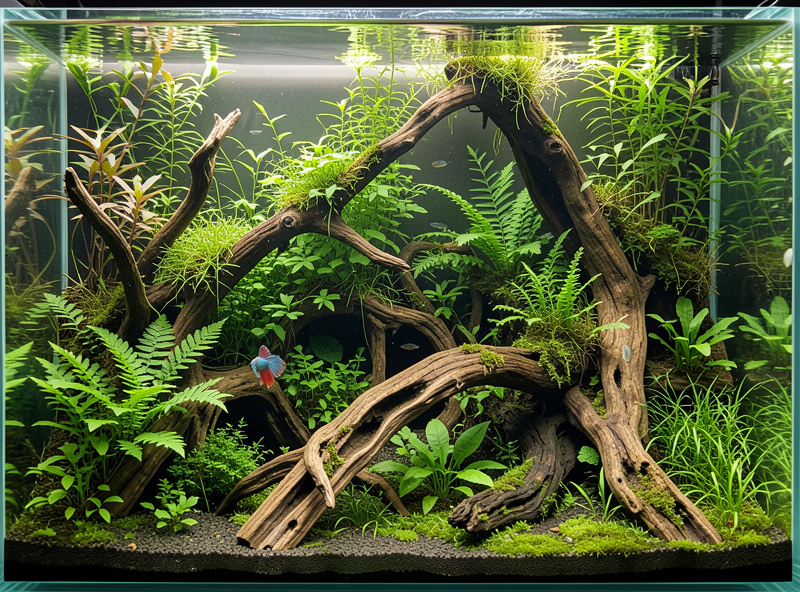
Dense planting genuinely improves tankmate odds, but it is a mitigation, not a guarantee. Cover and broken sightlines reduce a betta’s aggression and give shrimp escape routes, but they cannot change a fish’s individual temperament or the bioload arithmetic of a small tank. Plants help; they do not rewrite the physics.
I plant heavily anyway, because it is good for every reason — the plants consume waste, lower stress, and make the tank beautiful, as I cover in best plants for a planted betta nano and the low-tech planted nano guide. A jungle of stems and floating plants really does turn an edgy betta calmer and gives shrimp somewhere to vanish. But I have watched a determined betta methodically hunt a planted tank empty of shrimp regardless, and no amount of cover would have stopped it. So treat heavy planting as stacking the odds, never as a promise, and always have a backup plan — a separate tank or a willingness to accept losses — before you add anything living to a betta’s territory. When in doubt, the single betta in a planted nano is the setup that never disappoints; the whole system is in my betta nano setup guide.
Frequently Asked Questions
What fish can live with a betta in a nano tank?
Realistically none. Most community fish need groups and far more volume than a 19 to 38 litre nano provides, and the added bioload destabilises the water. The only reliable companions at nano scale are invertebrates, chiefly nerite snails, not other fish.
Can I keep shrimp with a betta?
Sometimes. It depends entirely on the individual betta’s temperament. Some ignore Neocaridina shrimp for years; others hunt them down. Stack the odds with an established colony in a heavily planted tank, accept that babies rarely survive, and never add shrimp you would be upset to lose.
Are snails safe with a betta?
Yes, nerite snails are the safest tankmate. They add negligible waste, graze algae, and a betta ignores their hard shells. Because nerites need brackish water to breed, they will not overrun the tank. Mystery snails also work but add more bioload and can have antennae nipped.
Can two bettas share a nano tank?
No. Male bettas are territorial and will fight, often fatally. Female sororities exist but need much larger, heavily planted tanks and careful management, never a nano. In a nano, one betta per tank is the only safe rule.
Will heavy planting let me add tankmates safely?
It improves the odds but does not guarantee safety. Dense plants and broken sightlines lower betta aggression and give shrimp escape routes, but they cannot change an individual fish’s temperament or the bioload limits of a small tank. Treat cover as stacking odds, not a cure.
Why does everyone online suggest corydoras and tetras with bettas?
Those suggestions usually assume a much larger tank, not a nano. Corydoras and tetras are shoaling fish that need groups and significant volume. Crammed into a nano they overload the water and stress the betta. The advice is not wrong for big tanks, just wrong for nanos.