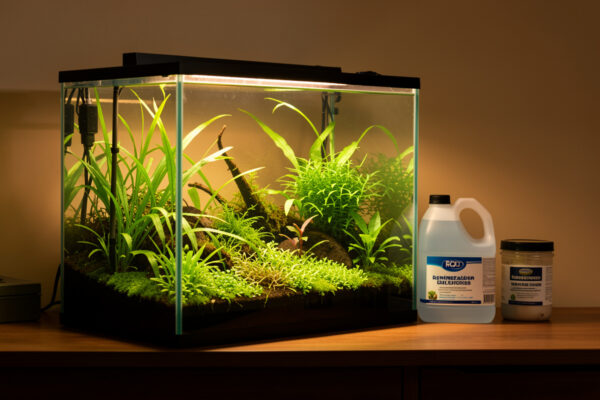
A tap water conditioner neutralizes chlorine, breaks down chloramine and temporarily detoxifies the ammonia it releases, and many bind heavy metals like copper from your plumbing. What it does not do is soften your water, remove nitrate, or add buffer. Understanding that line — what it truly removes versus what the bottle implies — is the difference between a protected biofilter and a mystery fish loss.
I treat dechlorinator as the single most important product a tap-water keeper owns, and yet most people dose it like a magic potion without knowing the chemistry. That’s a problem, because the gap between what these products actually do and what keepers assume they do is exactly where tanks crash. A conditioner is a specific chemical tool with specific limits. Once you know those limits, you stop expecting it to fix problems it was never built to touch — and you start respecting the ones it genuinely prevents.
This piece pulls apart the label claims from the chemistry, written from the same “test, don’t guess” bench I ran through years of hydroponics before it ever held a fish tank. It sits inside the larger water-source system, and it’s the companion to deciding whether you need RO at all — because if you’re staying on tap, your conditioner is doing heavy lifting every single water change.
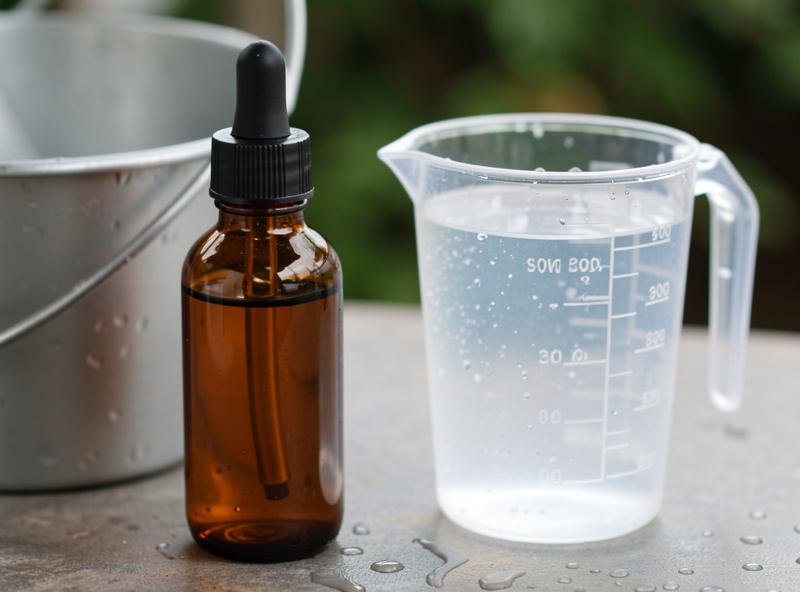
What Does a Dechlorinator Actually Remove?
The core job is chlorine, and here the chemistry is clean and reliable. Utilities add free chlorine to kill pathogens, and it will shred fish gills and wipe out your beneficial bacteria within minutes of an untreated water change. Most conditioners use sodium thiosulfate, which reacts with chlorine almost instantly and renders it harmless. This part genuinely works, fast and completely — a properly dosed conditioner neutralizes free chlorine in seconds, which is why you can dose a bucket and use it right away.
The second job is chloramine, and this is where products separate. Chloramine is chlorine bonded to ammonia, and a plain thiosulfate conditioner breaks the chlorine off but leaves the ammonia floating free — which is toxic. Better conditioners (the ones that advertise chloramine handling) also bind or detoxify that liberated ammonia into a temporarily less-harmful form. If your utility runs chloramine and your conditioner only handles chlorine, you’re releasing ammonia into your tank every water change and wondering why your fish look stressed. The two disinfectants demand different products, which is why I gave the switch its own deep dive in chloramine versus chlorine.
The third job, on many conditioners, is heavy-metal binding. Copper and other metals leach from household plumbing, especially in older homes and after water sits in the pipes overnight. Chelating conditioners lock these metals into a form that’s harmless to fish — genuinely useful for invertebrate keepers, because copper is lethal to shrimp at concentrations that barely bother fish. My shrimp tank gets conditioned water for exactly this reason, even though the rest is remineralized RO.
What Your Conditioner Does NOT Do
Here’s where the folklore hurts people. A conditioner does not soften your water — it changes nothing about GH or KH, so if your tap is rock-hard, it’s still rock-hard after conditioning. It does not remove nitrate, so agricultural or high-nitrate tap comes through untouched. It does not add buffer, remove phosphate, or fix a cycling problem. And critically, the “ammonia detox” it provides is temporary — typically a day or two — a window for your biofilter to consume the ammonia, not a permanent removal.
That temporary-detox point is the one I see misunderstood most. During a fishless cycle, some keepers dose conditioner expecting it to “handle” the ammonia, then panic when their test kit still reads ammonia — because the detoxified form often still shows on a standard liquid test. The ammonia is bound and less toxic, not gone. Your bacteria still need to process it. Conditioner buys time; it does not replace the nitrogen cycle. I learned to read my liquid test kit with that nuance in mind: a conditioner-treated tank can show ammonia that’s chemically muzzled, and knowing that stopped me from chasing a number that wasn’t the emergency it looked like.
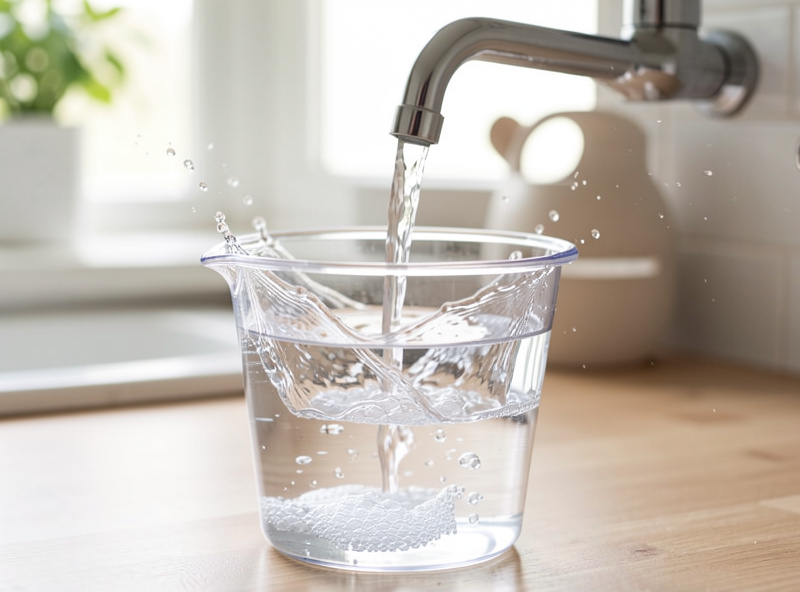
How Much Conditioner Do You Actually Need?
Dose to your product’s label for your water volume, and when your utility runs chloramine, respect that some products call for extra. The concentrated conditioners are potent — a small cap treats a large volume — which is great value but also means eyeballing the dose is easy to get wrong on a nano’s small water change. For a six-liter change on my 20-liter tank, we’re talking drops, not caps, and I measure rather than glug.
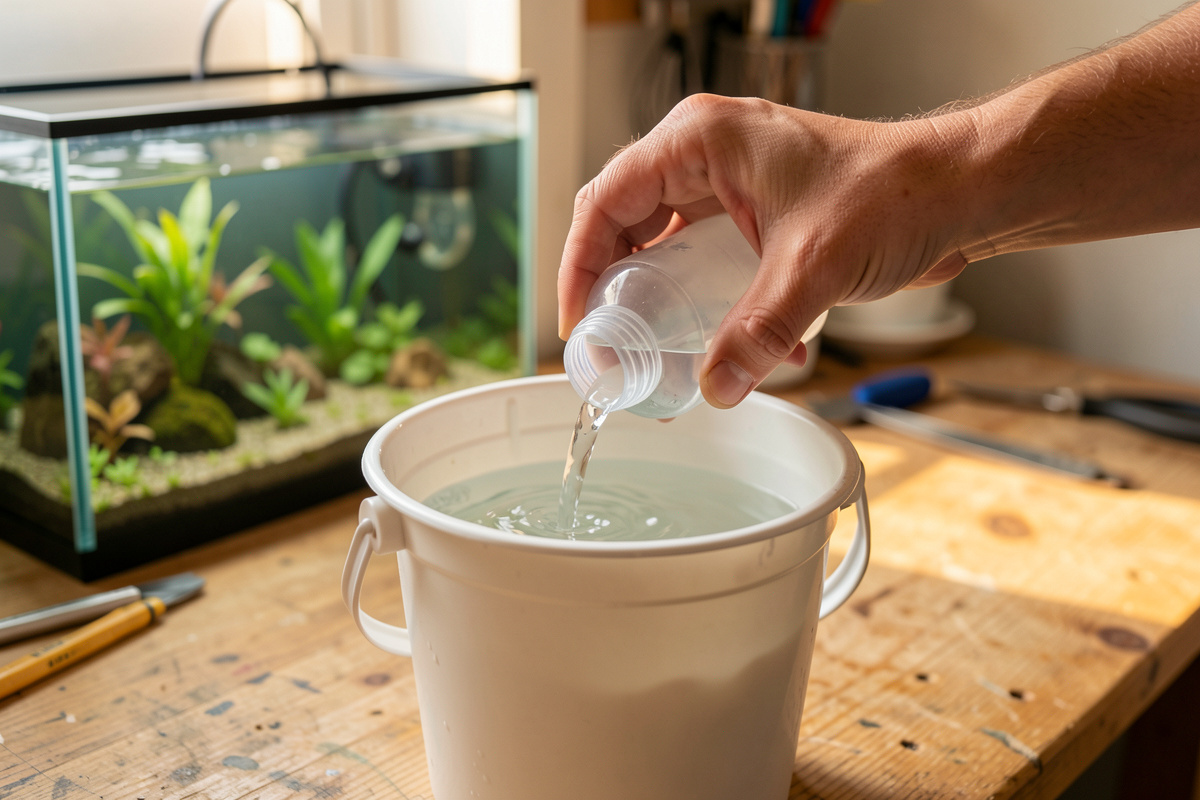
Overdosing modestly is generally safe with most conditioners — they carry a tolerance margin — but massively overdosing can, with some products, temporarily affect oxygen levels, so more is not automatically better. The bigger risk in the nano world is under-dosing because you guessed the tank volume high or forgot the water’s already got some in it. My habit is to dose the fresh change water in the bucket before it goes in, to a measured volume, so there’s no ambiguity. Precision here is cheap insurance.
Conditioner also has a shelf life and degrades once opened, especially if it’s been sitting in a hot garage. An old, oxidized bottle may not neutralize chlorine at its rated dose — a failure mode that’s invisible until your fish tell you. If your conditioner is years old and smells off, replace it; it’s a few dollars against a tank’s worth of livestock.
The Mistake That Cost Me a Biofilter
Early in my tap-water days, my municipality switched from chlorine to chloramine and didn’t exactly send a press release. I was running a plain thiosulfate conditioner that handled chlorine beautifully and did nothing for the ammonia in chloramine. For a few weeks I did my normal water changes, and my previously rock-stable little tank started throwing ammonia readings and cloudy water. I blamed everything but the water — overfeeding, a dying snail, the filter — before I finally read my utility’s annual report and saw the disinfectant change buried in a table.
The sharp, faintly sulfurous smell of thiosulfate as I dosed had been lulling me — it smelled like it was working, and for chlorine it was. But I’d been dripping free ammonia into the tank every change, and it partially stalled my biofilter. The fix was a chloramine-rated conditioner and a re-established cycle. The lesson: know what’s in your tap before you trust any conditioner, because the right product for chlorine is the wrong product for chloramine. Read the water report. It’s public, it’s free, and it would have saved me a month of blaming the wrong things.
The EPA’s page on chloramines in drinking water explains what utilities use and why, and their broader drinking water regulations hub is the authoritative source for what’s legally in your supply. Both beat guessing.
As an Amazon Associate I earn from qualifying purchases.
If you’re on tap water, the one product I wouldn’t skimp on is a chloramine-rated water conditioner — buy the version that handles ammonia, not just chlorine, unless you’ve confirmed your utility uses free chlorine only.
Do You Still Need Conditioner With RO Water?
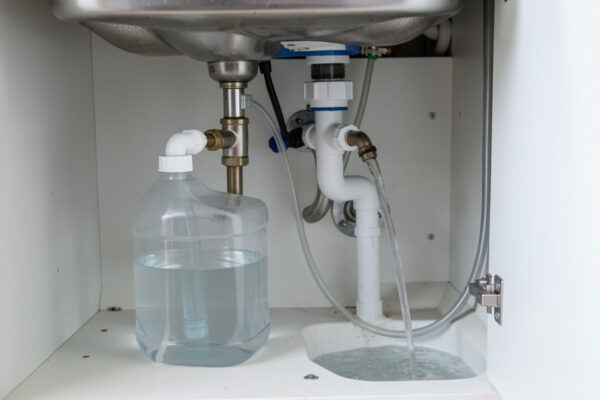
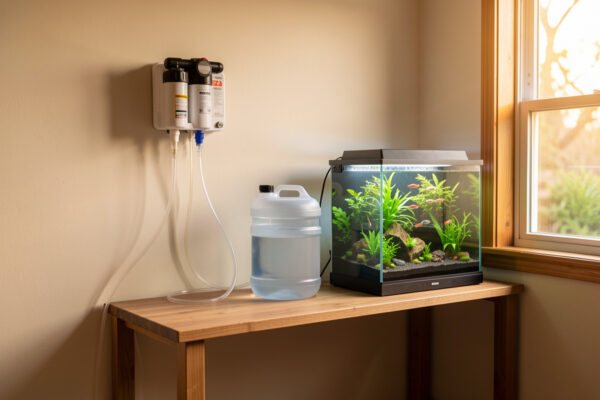
If you make RO or RO/DI water, the membrane’s carbon stages already stripped the chlorine and chloramine, so pure RO doesn’t need conditioning for disinfectant. But there’s a catch worth knowing: if you blend RO with tap, or top off with tap, the tap portion still carries disinfectant and still needs conditioner. I condition any tap that enters a tank, full stop, even a small top-off, because a nano’s small volume means even a little untreated chlorine is a meaningful fraction. When I’m running straight remineralized RO, I skip it — one of the quiet advantages of the RO/DI route.
What I’d do starting today if you’re a tap keeper: pull up your utility’s water quality report, find whether they use chlorine or chloramine, and match your conditioner to the answer. Then measure your dose instead of eyeballing it, and replace any bottle older than a couple of years. A conditioner is a precise tool with real limits — respect both, and it’ll quietly protect every water change you ever do.
Does water conditioner remove ammonia?
Only temporarily. A chloramine-rated conditioner detoxifies the ammonia released when chloramine breaks, binding it into a less harmful form for a day or two so your biofilter can consume it. It does not permanently remove ammonia, and the detoxified form can still show on a standard liquid test. Conditioner buys time; the nitrogen cycle does the real removal.
Does dechlorinator soften water or remove nitrate?
No. A conditioner changes nothing about general hardness, carbonate hardness, or nitrate. Rock-hard tap stays hard after conditioning, and nitrate from agricultural or municipal supply passes through untouched. Softening and nitrate removal require dilution with RO water or other methods, not a dechlorinator.
Can you overdose aquarium water conditioner?
Most conditioners carry a tolerance margin, so a modest overdose is generally safe. Massively overdosing can, with some products, temporarily affect oxygen levels, so more is not automatically better. On a nano tank’s small water change, measure the dose rather than eyeballing a cap, since the volumes are small enough that guessing skews easily.
Do I need water conditioner if I use RO water?
Pure RO or RO/DI water needs no conditioner because the carbon stages already removed chlorine and chloramine. But if you blend RO with tap or top off with tap water, that tap portion still carries disinfectant and must be conditioned. In a small nano, even a minor untreated top-off is a meaningful fraction, so condition any tap that enters the tank.