Well water for an aquarium can be excellent or a slow poison, and you cannot tell which without a full test panel before a single drop touches livestock. Unlike municipal water, your well gets no treatment and no public reporting — it’s your responsibility alone. It can carry dissolved iron, agricultural nitrate, trapped gases, and, critically, no chlorine safety net against pathogens. Test first, trust second.
I keep a spare quarantine bench partly so I can test unknown water sources without risking a display, and well water is exactly the kind of input I’d never trust on faith. Some of the most stable tanks I’ve read about run beautifully on tested, aerated well water with no RO at all — the mineral content is natural and consistent. But I’ve also read the horror stories: fish gasping from trapped gases, shrimp dead from copper, a tank clouding with rust as dissolved iron hit the air. The difference between those outcomes is entirely whether the keeper tested. This is how I’d approach well water, from the same “test, don’t guess” bench I ran through years of hydroponics.
This sits inside the broader water-source system, and it’s the wild-card cousin to the tap-water question. If your well tests ugly, the answer often loops back to running it through RO anyway.
Is Well Water Safe for Aquariums?
Well water is safe for aquariums only after you’ve verified what’s in it, because “well water” isn’t one thing — it’s whatever your local geology and surroundings put into the ground. A well drawing from clean limestone might give you stable, moderately hard water that fish love. A well near agriculture might carry nitrate from fertilizer runoff. A well in iron-rich ground gives you water that runs clear from the tap and then rusts orange as it oxidizes. Same category, wildly different water.
The one genuine advantage well water has over municipal is that it usually carries no chlorine or chloramine, so you skip the dechlorinator step. But that advantage is also a warning: no chlorine means no disinfection, so any bacteria or contamination in your well is coming straight into your tank untreated. For fish that’s rarely a disaster, but it’s a reason to know your well’s bacterial status, especially if it’s shallow or near a septic system. The absence of a safety net cuts both ways.
My blunt position: well water is neither good nor bad by default — it’s unknown, and unknown water is exactly what a nano tank’s small, fast-swinging volume punishes hardest. A 400-liter tank might absorb a marginal water source; a 20-liter can’t. So the burden of proof on well water is high, and the only way to meet it is testing.
What Should You Test Before Trusting Well Water?
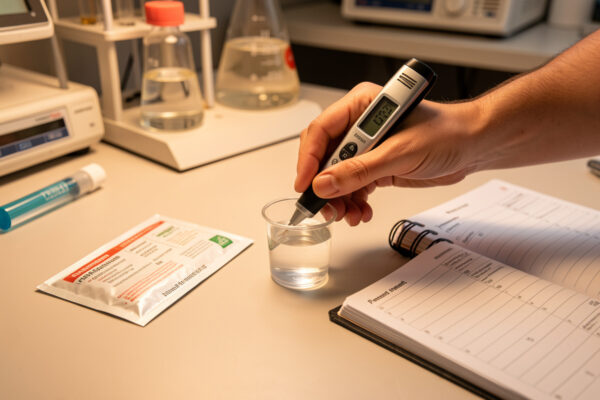
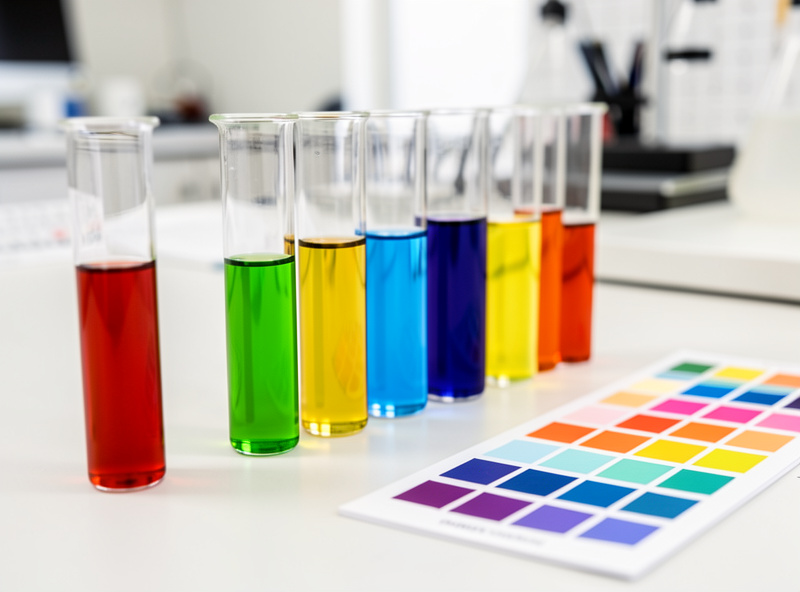
Run a full panel, not just pH. Here’s what I’d measure before trusting well water for a tank, and why each one matters. Every one of these is a cheap test, and the panel together tells you whether the water is tank-ready, needs treatment, or belongs in the RO unit.
| Test | Why It Matters | Warning Sign |
| GH / KH | Sets hardness and buffering for livestock | Extreme high or near-zero |
| pH | Baseline for stocking, shifts after aeration | Very high or very low |
| Ammonia | Can be present from organic ground matter | Any reading above zero |
| Nitrate | Agricultural runoff is common in wells | Above ~20–40 ppm |
| Iron | Oxidizes to rust, stains, feeds algae | Visible tint after standing |
| TDS | Overall dissolved load baseline | Very high (400 ppm+) |
| Copper | Lethal to shrimp and inverts | Any detectable level |
The two that catch people off guard are nitrate and iron. Nitrate from surrounding fields can arrive already elevated, which means your tank starts its life fighting a nitrate problem you didn’t cause and can’t cycle away. Iron reads deceptively — the water is clear from the tap because the iron is dissolved, and only when it contacts air does it oxidize into the orange rust that stains everything and feeds algae. That’s why the next step, aeration, isn’t optional.
Why You Aerate Well Water and Test It Again
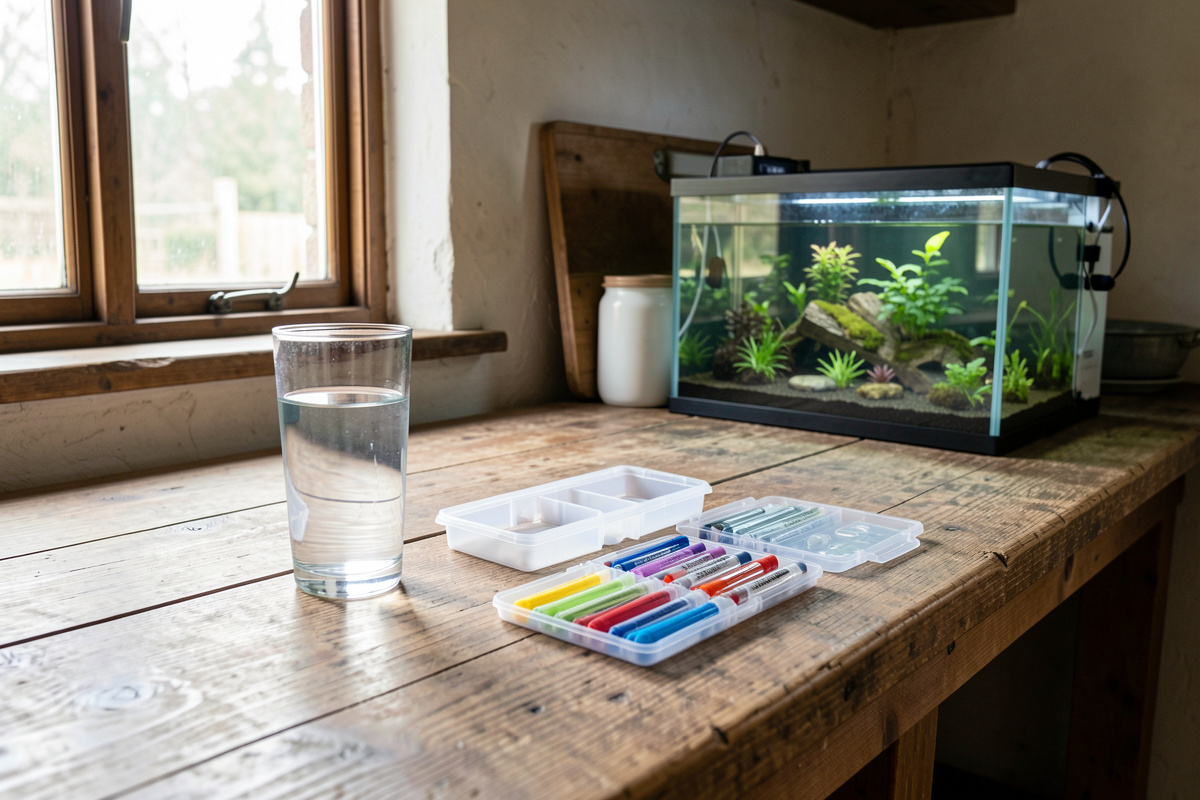
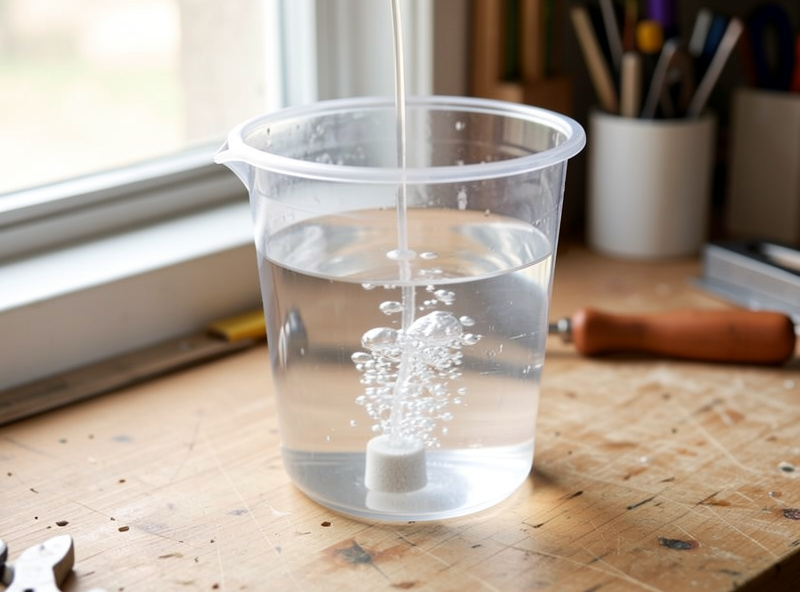
Well water’s numbers change once it leaves the ground, so a single fresh-from-the-tap test can lie to you. Deep well water often holds dissolved gases under pressure — carbon dioxide especially — that make the pH read artificially low or high straight from the tap. Aerate a sample hard for 24 hours with an airstone and those gases equilibrate, and the pH settles to its true resting value. I’ve seen well water read a full point different before and after aeration; testing only the fresh sample would have set me up for a nasty pH swing in the tank.
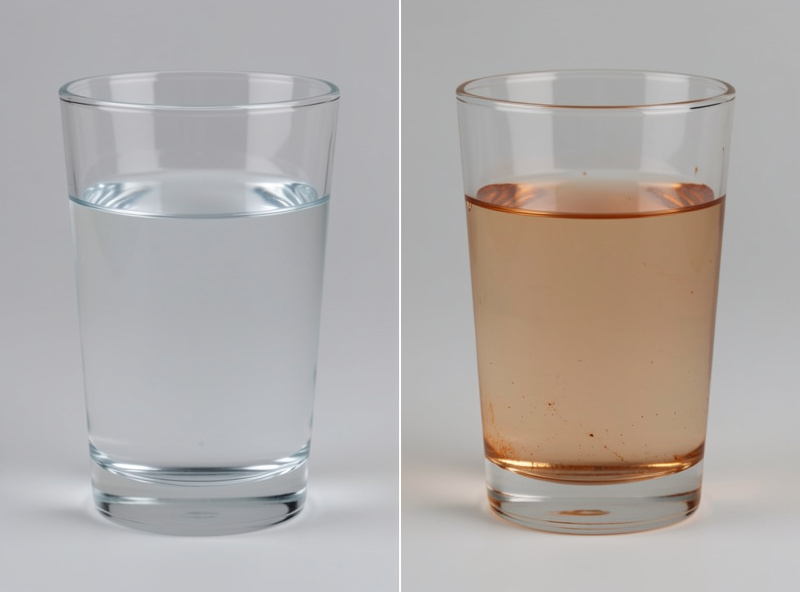
Aeration also forces the iron question. Dissolved iron that was invisible from the tap oxidizes over those 24 hours and either tints the water or drops out as orange sediment. If your aerated sample goes cloudy or rusty, you’ve got an iron well, and that iron will do the same thing inside your tank — clouding water, coating surfaces, and feeding algae blooms. Better to see it in a bucket than in your display. This is the same reason I aerate and settle any unfamiliar water before it goes near livestock: the resting state is the real state, not the moment it hits the glass.
My routine for a new well source: draw a sample, test it fresh, aerate it hard for a full day, then test it again and compare. The gap between those two panels tells me what’s dissolved and volatile versus what’s stable. Only water that reads clean and safe in the aerated state earns a place near my tanks.
When Should You Run Well Water Through RO?
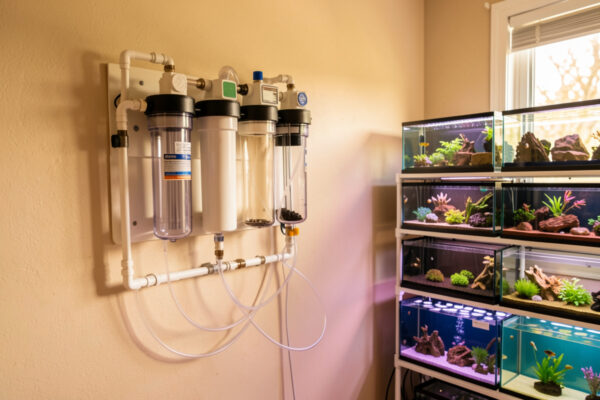
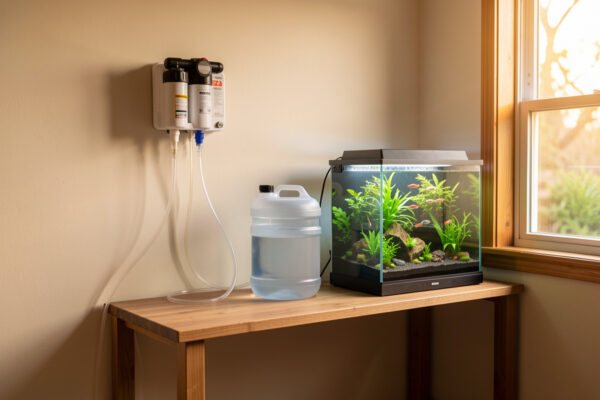
If the panel comes back ugly — high nitrate, iron, extreme hardness, or detectable copper — the cleanest answer is to run that well water through reverse osmosis and rebuild it, exactly as you would treat any problem source. RO strips the nitrate, the iron, the excess minerals, and the copper down to near zero, and then you remineralize to a known recipe. It turns an unpredictable well into the same blank slate you’d get from treating municipal water, which loops you right into the rest of this cluster.
There’s a practical caveat: iron-heavy well water can foul an RO membrane and sediment filter faster, so an iron well may need a dedicated pre-filter or iron-removal stage ahead of the RO to protect it. And very high TDS well water burns through DI resin quickly, raising your running cost. None of this is a dealbreaker — it just means an ugly well makes the RO/DI unit and its maintenance more central, and it’s worth understanding the waste and cost math before committing. A clean well is a gift; a dirty well is just tap water with extra steps, and RO is those steps.
The Well-Water Lesson I Almost Learned the Hard Way
I once helped a friend set up a nano at a rural place on well water, and my instinct — drilled in by years of metering hydroponic reservoirs — was to test before trusting. The tap sample looked fine: clear, reasonable pH, decent hardness. But I aerated a bucket overnight out of habit, and by morning the water had gone faintly cloudy with a rust tint, and a re-test showed the pH had climbed nearly a full point as the dissolved CO2 gassed off. Had we filled that tank straight from the tap and added livestock, the fish would have hit a pH swing and an iron bloom in their first week.
The smell was the other tell — that faint metallic, mineral edge to the aerated water that clean water just doesn’t have. We ended up running that well through a small RO unit and remineralizing, and the tank ran beautifully after. The lesson wasn’t “well water is bad.” It was that the tap sample is a snapshot and the aerated sample is the truth, and skipping the 24-hour test would have cost fish for a mistake that a bucket and an airstone caught for free. Test, aerate, test again. The well doesn’t announce its problems — you have to ask.
The EPA’s guidance for private drinking water wells is the authoritative resource for understanding what wells can carry and how to test them, and the USGS water science resources explain the hardness and dissolved-solids side. Both are worth a read before you trust a well with living animals.
What I’d Do Starting Today
If you’re on a well and want a nano tank, here’s the plan: run a full test panel — GH, KH, pH, ammonia, nitrate, iron, TDS, and copper if you keep inverts — on a fresh sample. Then aerate a bucket for 24 hours and re-test, comparing the two. If the aerated water reads clean and stable, you may have a genuinely good source and can skip the RO expense entirely. If it reads ugly on nitrate, iron, or hardness, run it through RO and remineralize like any other problem water. Either way, never fill a tank from a well on faith — the small volume of a nano gives an unknown water source far too much leverage over your livestock. Ask the well what it’s carrying before you trust it with lives.
Is well water safe for a fish tank?
Only after testing. Well water gets no treatment and no public reporting, so it can carry iron, nitrate, dissolved gases, and no chlorine safety net against pathogens. A clean well can make an excellent, stable aquarium, but you must run a full test panel first. In a small nano tank, an untested water source has too much leverage to risk on faith.
What should I test in well water before using it in an aquarium?
Run a full panel: GH, KH, pH, ammonia, nitrate, iron, and TDS, plus copper if you keep shrimp or other invertebrates. Nitrate from agricultural runoff and dissolved iron are the two that most often catch keepers off guard, since iron is invisible from the tap and only shows once it oxidizes in contact with air.
Why does well water need to be aerated before testing?
Deep well water holds dissolved gases like carbon dioxide under pressure that make pH read artificially high or low straight from the tap. Aerating a sample for 24 hours lets those gases equilibrate so pH settles to its true value, and it lets dissolved iron oxidize and show itself. The aerated sample is the real state, not the fresh one.
Should I use RO on well water for my aquarium?
If the test panel shows high nitrate, iron, extreme hardness, or detectable copper, running the well water through reverse osmosis and remineralizing is the cleanest fix. Iron-heavy wells may need a pre-filter to protect the membrane, and very high TDS burns DI resin faster. A clean well can skip RO entirely; an ugly well is tap water with extra steps.