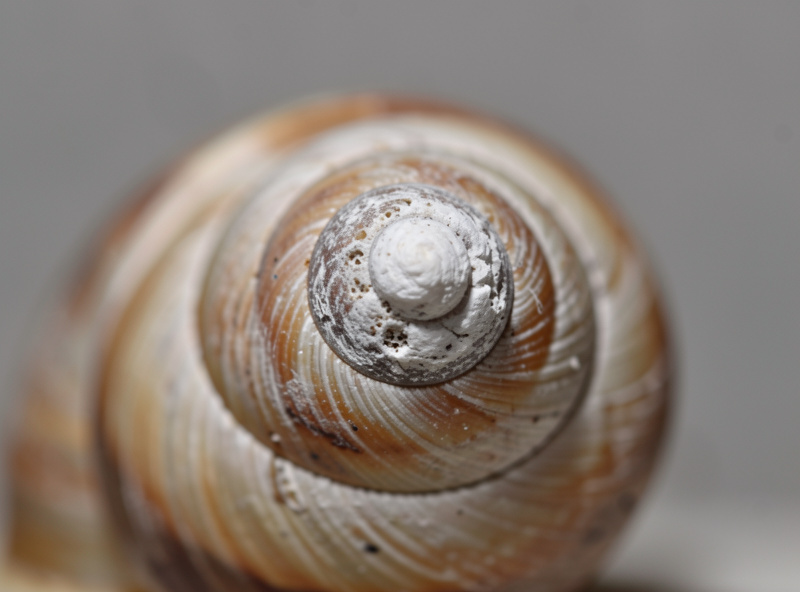
Snail shell erosion is a water chemistry problem, not a disease. A snail builds its shell from calcium carbonate, drawing calcium from GH and carbonates from KH, and when your KH falls below about 4 dKH the shell stops being maintained and starts dissolving — pitting, going chalky white at the tip, and eventually holing. In my shrimp tank the fix was never medication; it was raising KH into the 4–6 dKH band and holding it there.
This is the single most common snail failure I see, and it catches keepers precisely because it looks like an illness. It is not. It is the same soft, low-mineral water that shrimp keepers deliberately create, quietly starving the shell of its raw material. Understanding the KH and GH mechanism turns a mysterious “sick snail” into a five-minute test-kit fix. Test, don’t guess — the answer is in the KH vial, not the medicine cabinet.
Why shells erode: the chemistry
A snail shell is calcium carbonate (CaCO₃), and the snail secretes it continuously to grow and to repair the constant micro-wear of life in water. Building that shell requires two things dissolved in the water: calcium, which is the main component of general hardness (GH), and carbonate/bicarbonate ions, which are what carbonate hardness (KH) measures. Take either away and the snail cannot lay down or maintain shell — and in acidic, low-KH water the existing shell actively dissolves, because carbonate shell is chemically attacked by the hydrogen ions that low KH allows to build up.
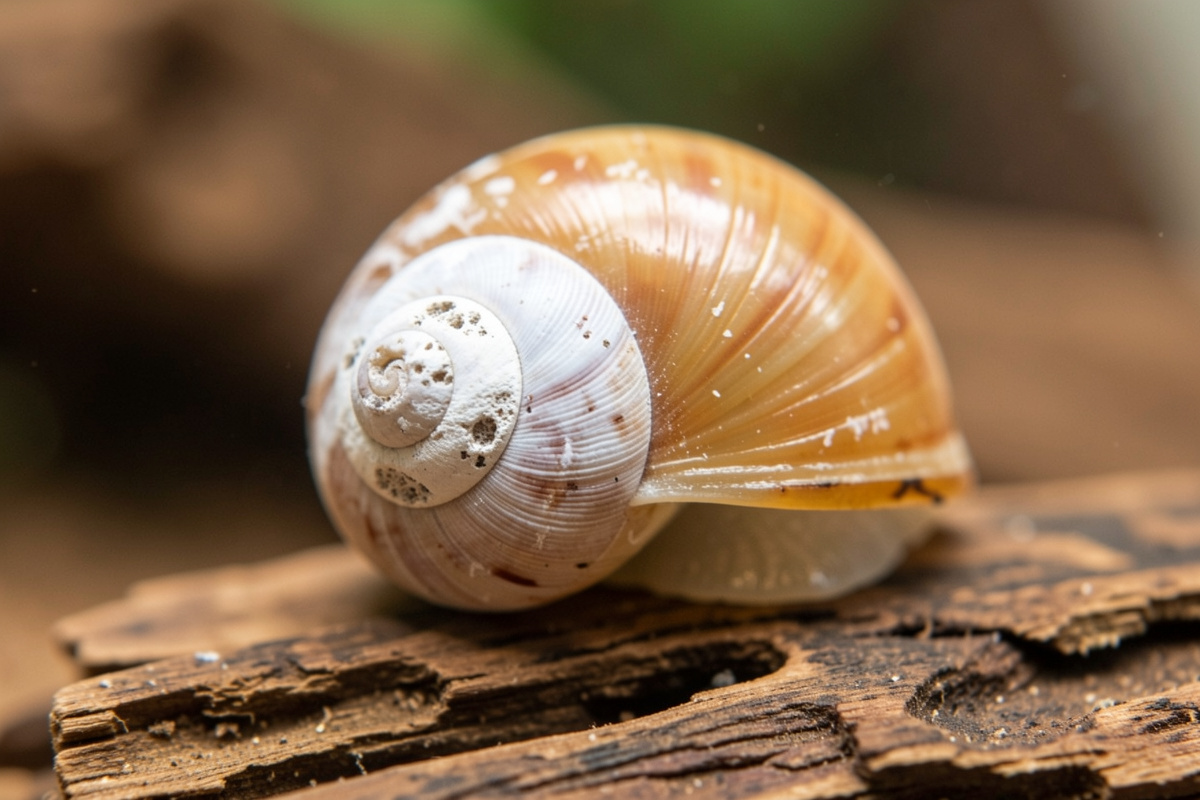
So erosion has two drivers working together. Insufficient KH and GH mean no raw material to build with; low KH also means an unstable, drifting pH that trends acidic, and acid dissolves calcium carbonate directly. The tip of the shell — the oldest part, laid down when the snail was small — erodes first because it has been exposed longest, which is why a chalky white apex is the classic early warning. This is pure chemistry, and it is the same reason I lean on the KH test constantly across all my tanks, including for shrimp parameters.
KH vs GH: which one matters for shell?
Both matter, and keepers constantly confuse them. GH (general hardness) measures calcium and magnesium — the calcium is the literal building block of the shell. KH (carbonate hardness) measures carbonates and bicarbonates — these are the other half of the calcium carbonate molecule and, just as importantly, they buffer your pH so it does not crash into the acidic range that dissolves shell. You need adequate levels of both: GH to supply calcium, KH to supply carbonate and to hold pH stable.
In practice KH is the one that fails first and does the visible damage, because soft-water setups and RO-based shrimp tanks strip it right down. A tank can show a moderate GH but near-zero KH, and that combination still erodes shells because the pH is unbuffered and acidic. The rule I keep is simple: if snails live in the tank, KH does not go below 4 dKH, full stop. The table below is the working target I aim for.
| Parameter | Erosion risk (too low) | Healthy snail range | What it supplies |
|---|---|---|---|
| KH (carbonate hardness) | Below 3 dKH | 4–8 dKH | Carbonate + pH buffering |
| GH (general hardness) | Below 4 dGH | 6–12 dGH | Calcium building block |
| pH | Below 6.5 (drifting) | 7.0–8.0 (stable) | Prevents shell dissolving |
How to raise KH and GH safely
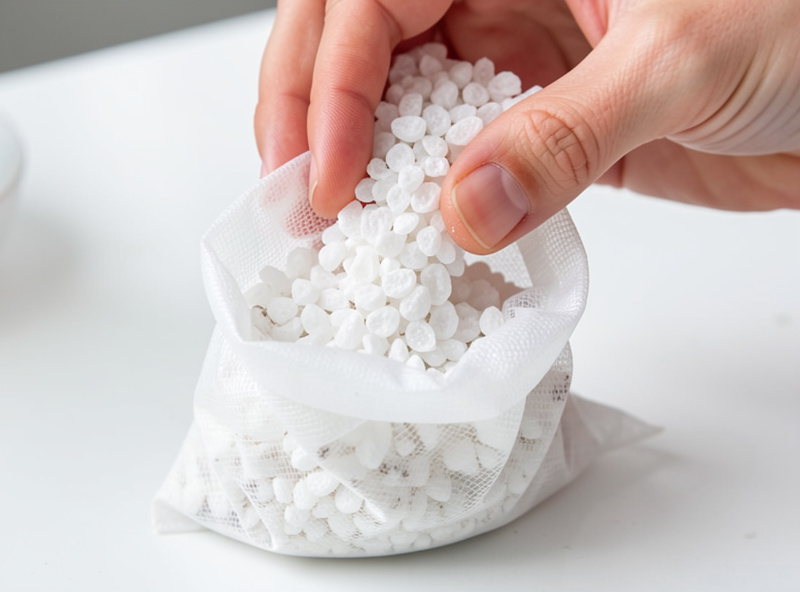
The fix is to add carbonate and calcium back into the water, and the golden rule is to do it slowly — a sudden swing stresses snails, shrimp and fish as much as the erosion does. My preferred method for a permanent, self-regulating buffer is a small amount of crushed coral or aragonite, either in the filter or mixed into the substrate. It dissolves gradually as the water acidifies, nudging KH and GH up and holding pH stable without daily dosing. It is the lowest-effort durable fix I know.
For faster or more precise control, a dedicated remineralizer works — the same GH/KH+ products shrimp keepers use to build up RO water, which I cover in the RO remineralization guide. Whatever you use, raise KH gradually over several days and retest, rather than dumping it in. A common mistake is chasing GH with a GH-only remineralizer and leaving KH at zero; that feeds calcium but leaves the pH unbuffered and the shell still erodes. Raise both.
As an Amazon Associate I earn from qualifying purchases. A bag of aquarium crushed coral in the filter is the cheapest, most forgiving way I know to hold KH up in a snail tank.
Will an eroded shell heal?
Partly, and only going forward. A snail cannot rebuild the eroded old shell at the tip — that damage is permanent — but once KH and GH are corrected, all new shell growth at the opening (the aperture) comes in thick, smooth and healthy. You will see a clear demarcation: the old eroded spire behind a band of glossy new growth. That new healthy margin is your proof the chemistry fix worked. So the goal is never to reverse existing erosion; it is to stop it advancing and let the snail grow out of it.
This is why catching it early matters. A snail whose erosion has reached the body whorl and started holing may not survive, because breaches expose the soft body. But a chalky tip caught early, with KH promptly corrected, almost always recovers to healthy ongoing growth. The moment you see a white eroding apex on any snail — nerite, ramshorn, mystery or assassin — test your KH that day.
The soft-water shrimp tank problem
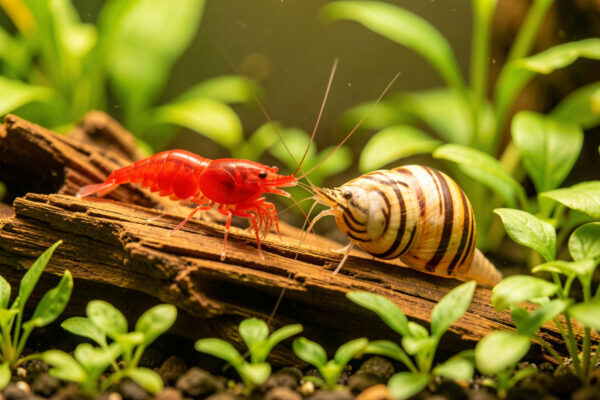
The hardest case is the deliberate soft-water tank. Caridina shrimp keepers run KH at 0–2 on purpose, because that is what their shrimp need — and that water erodes snails by design. There is no clean compromise: raise KH enough to protect a snail and you push the water out of Caridina range. This is why I keep snails with my harder-water Neocaridina colony, which shares the 4–6 dKH band snails need, and leave my soft Caridina tank snail-free.
If you run soft water and still want a cleanup crew, the honest answer is to lean on the shrimp themselves plus manual maintenance rather than forcing snails into water that will slowly dissolve them. Matching livestock to water instead of fighting it is the whole discipline — the same logic behind pairing snails with shrimp and behind the wider cleanup crew guide. Keep a KH kit, test before you add any snail, and you will never meet shell erosion by surprise.
Frequently Asked Questions
Why is my snail’s shell eroding or turning white?
Soft water. The shell is calcium carbonate built from calcium (GH) and carbonates (KH). When KH falls below about 4 dKH the shell stops being maintained and dissolves, pitting and going chalky white at the tip first. It is chemistry, not a disease to medicate.
What KH do snails need to prevent shell erosion?
Keep KH at 4 to 8 dKH and GH at 6 to 12 dGH for healthy snail shells. Below 3 dKH the shell erodes because there is no carbonate to build with and the unbuffered pH drifts acidic, which dissolves calcium carbonate directly.
Does KH or GH matter more for snail shells?
Both, but KH usually fails first and does the visible damage. GH supplies the calcium building block; KH supplies carbonate and buffers pH so it does not crash acidic. A tank can have moderate GH but near-zero KH and still erode shells, so raise both.
Will an eroded snail shell grow back?
The old eroded tip is permanent, but once KH and GH are corrected all new growth at the shell opening comes in thick and smooth. You will see glossy new shell behind the eroded spire, which is your proof the fix worked. Catch it early, before holing reaches the body.
How do I raise KH in a snail tank safely?
Add crushed coral or aragonite to the filter or substrate for a slow, self-regulating buffer, or use a KH remineralizer for faster control. Raise it gradually over several days and retest, since a sudden hardness swing stresses snails and shrimp as much as the erosion.