To get rid of pest snails without chemicals, cut the food supply first — population tracks surplus food, not the snails themselves. Then remove adults faster than they breed using a blanched-vegetable trap and manual culls, and add a predator if the plague is entrenched. In my parameter log a bladder-snail boom collapsed within three weeks once I halved feeding; no copper, no dead shrimp.
I keep snails on purpose in every tank, so I am not anti-snail — I am anti-outbreak. There is a real difference between a healthy cleanup population and a glass-covering plague, and the plague is always a feeding problem you can fix mechanically. This is the chemical-free method I actually use, in the order I use it, and why I never reach for the “snail killer” bottle on the shelf.
First, understand why the outbreak happened
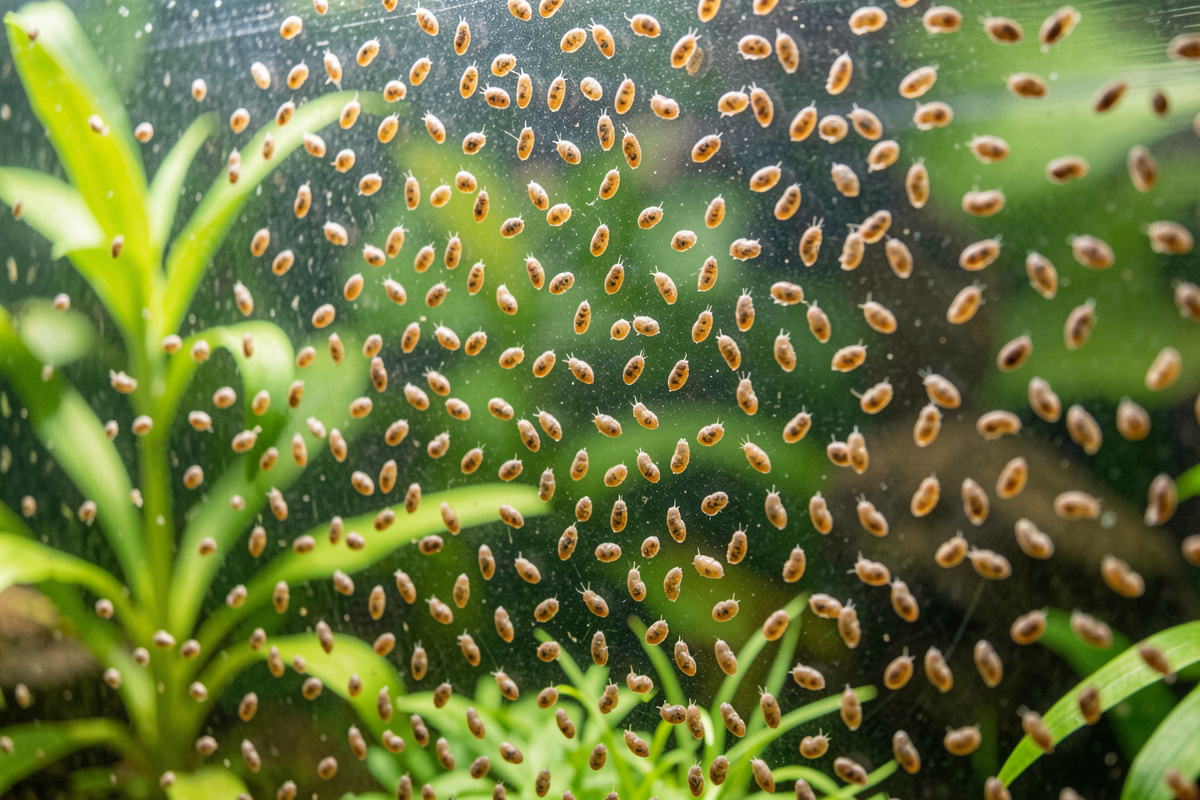
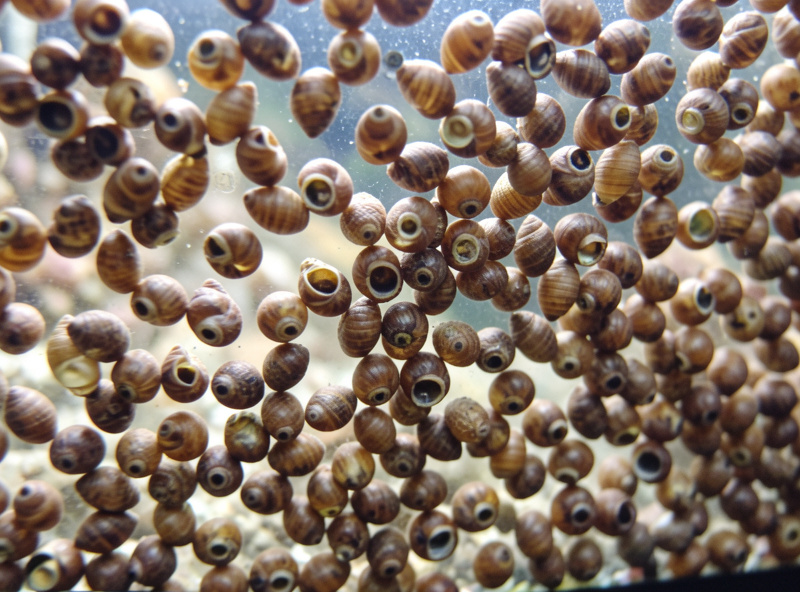
A pest snail population is a mirror of your feeding. Bladder, ramshorn and Malaysian trumpet snails breed to match available food; give them surplus and they multiply, starve them and they crash. The snails did not cause the problem — the extra food did, and the snails simply converted it into more snails. This is why chemicals fail long-term: kill every snail and leave the feeding unchanged, and the survivors or the next hitchhikers rebuild the plague in weeks.
So the first move is not removal at all — it is honest feeding. Feed your fish and shrimp only what they finish in about two minutes, once a day, and remove any uneaten food. Within a week or two the snail population stops growing; within a month it visibly shrinks as the surplus they were living on disappears. Everything below just speeds up a decline that feeding discipline sets in motion. If your snails multiplied because the tank runs dirty, the water-change cadence guide is the other half of the fix.
The chemical-free removal toolkit
Once feeding is under control, you thin the adults out mechanically. None of these methods risk your fish, shrimp, plants or biofilter, which is the entire point. The table below is how I rank them by effort and effect for a nano tank.
| Method | How it works | Effort | Best for |
|---|---|---|---|
| Cut feeding | Starves the surplus population down | Low, ongoing | The root fix — always do this |
| Blanch-veg trap | Snails swarm sinking vegetable overnight; lift it out | Low | Nightly bulk removal |
| Manual culls | Pick or crush snails at each water change | Medium | Steady thinning |
| Assassin snails | Predatory snails hunt and eat pest snails | Low, hands-off | Entrenched plagues |
| Reset hardscape | Remove and scrub the worst-infested rock/wood | High | Severe egg-laden surfaces |
The blanched-vegetable trap is the workhorse. Drop a slice of blanched courgette, cucumber or spinach on the substrate at lights-out; by morning it is crawling with snails you lift out in one motion. Repeat nightly for a week or two and you physically export a large share of the population. It costs nothing, harms nothing, and — bonus — your shrimp love the leftover vegetable too.
Assassin snails: the biological option
When a plague is entrenched and manual removal cannot keep pace, the elegant answer is a predator: Clea helena, the assassin snail. It hunts and eats bladder and ramshorn snails, breeds slowly enough to never become the next problem, and leaves your fish, shrimp and plants untouched. A small squad grinds a heavy infestation down over a few weeks with zero chemicals and zero effort on your part.
Assassins are my preferred long-term control because they are self-sustaining as long as prey lasts. There are real considerations — what they eat once the pests are gone, and whether they will bother your nerites — which I cover fully in the assassin snail guide. For most keepers facing a genuine outbreak, three or four assassins in a nano is a permanent fix where trapping is a temporary one.
Why I skip the chemical snail killers
The shelf is full of “snail eliminator” products, most based on copper or molluscicides. I do not use them in a nano tank for three concrete reasons. First, copper is lethal to shrimp and other invertebrates — one dose in a shrimp tank wipes the colony, and copper lingers, bonding to substrate and hardscape where it leaches for months. Second, a mass die-off dumps a huge slug of decaying snail bodies into a small volume, spiking ammonia and risking the crash you were trying to avoid. Third, it does nothing about the feeding that caused the outbreak, so the plague returns.
Even a “shrimp-safe” molluscicide asks you to trust a marketing label with your entire invertebrate stock in a tiny water volume where mistakes are unforgiving. The mechanical methods above cost nothing, carry zero collateral risk, and fix the actual cause. The only thing chemicals buy you is speed, and in a nano the price of that speed is far too high.
Prevention: stop the next infestation at the door
Pest snails almost always arrive as eggs on new plants. The habit that prevents most outbreaks is a plant dip before anything goes in the tank: a 20-minute soak in a bleach solution (one part bleach to nineteen parts water) followed by a thorough dechlorinated rinse, or a gentler alum or saltwater dip for delicate plants. This kills eggs and hitchhiking snails without importing them.
Beyond that, prevention is just the feeding discipline from the top of this guide. A tank fed correctly cannot sustain a plague no matter how many snails hitchhike in. That is the reassuring truth underneath all of this — and if you are wondering whether you even need to bother, my honest answer is in are pest snails actually bad. The wider roster of snails worth keeping on purpose sits in the nano tank snails guide, and if you run shrimp alongside them, keeping snails with shrimp covers the compatibility.
Frequently Asked Questions
How do I get rid of pest snails without chemicals?
Cut feeding first, since population tracks surplus food. Then thin adults with a blanched-vegetable trap left in overnight and manual culls at water changes. For entrenched plagues, add assassin snails. Feeding discipline alone collapses most outbreaks within a month.
What kills pest snails naturally in an aquarium?
Assassin snails hunt and eat bladder and ramshorn snails biologically. Beyond predators, starving the population by cutting food is the most effective natural control. Blanched vegetable traps physically export large numbers overnight with no risk to other livestock.
Are copper snail killers safe for shrimp?
No. Copper is lethal to shrimp and all invertebrates, and it lingers in substrate and hardscape for months. Never use copper-based molluscicides in a tank with shrimp or snails you want to keep. Mechanical and biological methods carry no such risk.
How do pest snails get into a tank in the first place?
Almost always as eggs on new plants. Prevent it with a plant dip before adding anything: a 20-minute soak in a one-to-nineteen bleach solution followed by a dechlorinated rinse, or a gentler alum dip for delicate plants, kills eggs and hitchhikers.
Will pest snails go away on their own?
They will shrink to match available food once you stop overfeeding, but they rarely vanish entirely, nor do they need to. A small residual population is harmless detritivore cleanup. Only a genuine glass-covering plague needs active removal.