“Is my aquarium cycled?” is the question that decides whether your first fish thrive or die, and it’s the one most beginners get wrong — not because the test is hard, but because they stop reading the numbers one step too early. After running cycles on every tank in my nano rack and treating each one as a controlled experiment, I’ve learned the finish line is a single, specific test pattern, not a feeling, a date on the calendar, or clear water. Get the pattern right and you’ll never stock a tank into a poison trap. Let me show you exactly what “cycled” looks like on the test kit.
This is the finish-line article for the whole cluster. The nitrogen cycle guide covers the chemistry behind it, and the fishless cycle walkthrough covers the weeks that lead up to this moment.
The double-zero test, step by step
The only reliable confirmation that a tank is cycled is a controlled challenge: you give the bacteria a full meal and check whether they can finish it overnight. Here’s exactly how I run it.
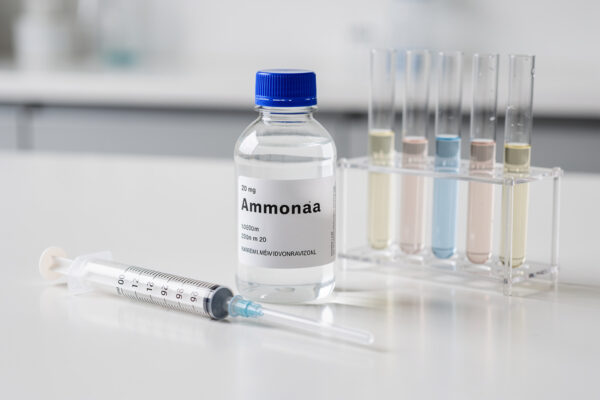
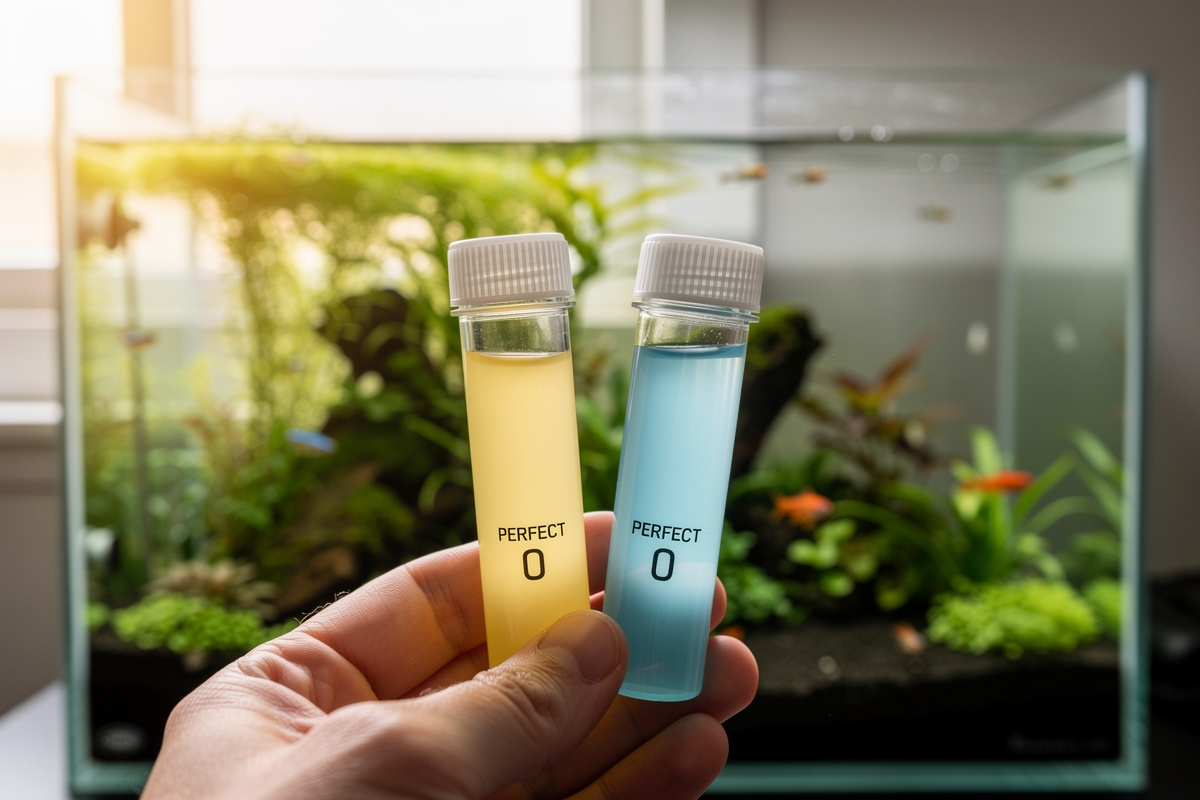
In the evening, dose ammonia to the same target you’ve been using all cycle. The next day, roughly 24 hours later, test both ammonia and nitrite. A cycled tank will have processed all of it: ammonia reads zero and nitrite reads zero, with nitrate now clearly present on the test. That’s the “double zero” — the proof that both bacterial colonies have grown large enough to convert a full bioload’s worth of waste, all the way through to nitrate, within a day. When you see it, the colony can keep pace with the fish you’re about to add.

The mistake almost everyone makes
The classic error is stocking when ammonia hits zero — and ignoring nitrite. People watch ammonia fall, get excited, and assume the job is done. But ammonia hitting zero only means the first bacterial colony is established. The second colony, which converts the resulting nitrite into harmless nitrate, takes longer to build. If you stock now, your fish walk straight into the nitrite spike, which is every bit as toxic as ammonia. I’ve seen more fish lost to “ammonia was zero so I added them” than to almost any other cycling mistake.
This is why the test requires both numbers at zero. A reading of zero ammonia but high nitrite means you’re mid-cycle, not finished — the first colony is done, the second is still catching up. Wait. The nitrite will fall as the second colony matures, and only when both clear overnight is the tank genuinely ready. The presence of nitrate is the corroborating evidence: it’s the end product, so seeing it confirms the full chain is working, not just the first link.
What “cycled” does not mean
Several things people treat as proof of a cycle prove nothing at all. Worth being blunt about each.
- Clear water is not cycled. The cycle is invisible. A tank can be crystal clear and full of ammonia, or cloudy with a bacterial bloom and nearly finished. Clarity tells you about suspended particles, not chemistry.
- A calendar date is not cycled. “It’s been four weeks, it must be done” ignores that cycles run on bacterial growth, not your schedule. Some finish in four weeks, some take eight. The kit decides, not the calendar.
- One zero reading is not cycled. A single zero ammonia today, without the 24-hour challenge and without checking nitrite, is a snapshot, not a confirmation. Run the full test.
- A bottled-bacteria label is not cycled. “Instant cycle” on a bottle is a marketing claim; your test kit is the only thing that confirms the tank can actually process waste.
Reading the numbers in the days before the finish
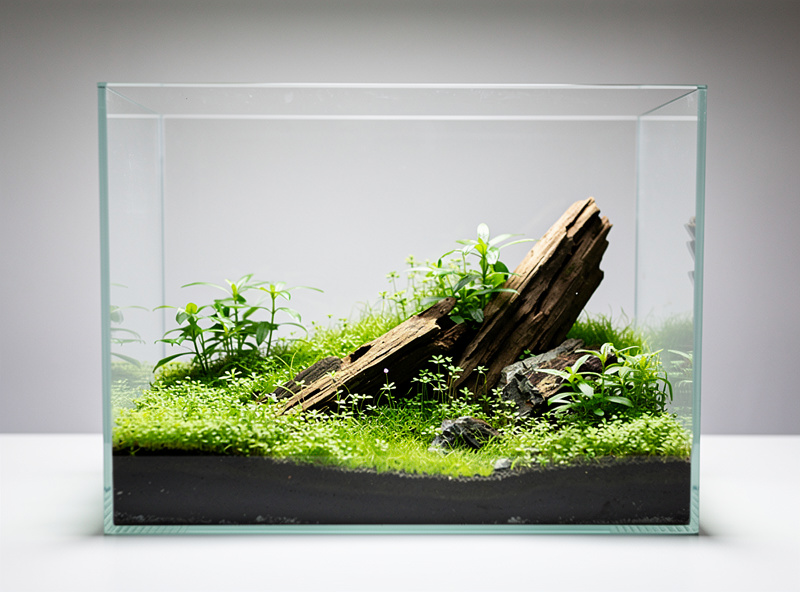
The double-zero rarely arrives out of nowhere — you can usually see it coming if you’re logging the trend, which is the habit I carried over from years of reading hydroponic reservoirs. In the final stretch, the pattern is distinctive: ammonia clears to zero faster and faster after each dose, nitrite turns from “off the chart” to a falling mid-range reading, and nitrate climbs steadily. When ammonia is clearing overnight and nitrite has dropped from maximum to near the bottom of the scale over a few days, you’re days away. That’s the moment to start running the formal 24-hour challenge rather than guessing.
A useful sanity check on a nano is to do the challenge two days running. If the tank clears a full ammonia dose to double-zero on Monday, dose again and confirm it does the same on Tuesday. Two consecutive clean passes rule out a fluke — maybe the first day’s ammonia was slightly low, or you misread a borderline color. Small water makes borderline readings more common because concentrations are higher and color shifts are sharper, so a second confirming pass is cheap insurance before you commit livestock to the tank. I’d rather burn two extra days than lose a fish to a misread vial.
What if it never quite gets there?
If you’ve been cycling for many weeks and the double-zero stubbornly won’t arrive — ammonia clears but nitrite stays high, or neither moves — you’re not looking at a finish-line problem, you’re looking at a stall. The usual suspects are a crashed pH from depleted KH, water that’s too cold, an ammonia overdose, or chlorinated top-up water sterilizing the colony. The finish-line test can’t pass until those conditions are fixed, so chase the cause rather than re-running the challenge in frustration. Restore the environment, give the bacteria a few days to recover, and then the double-zero usually follows.
The gear that confirms it
You cannot run this test without a kit that reads both ammonia and nitrite with real resolution, which is the whole case for liquid drops over strips.
- A liquid test kit — ammonia and nitrite at minimum, plus nitrate to confirm the end product. The instrument the whole test depends on. Browse master liquid test kits on Amazon.
- A dechlorinator — for the big pre-stocking water change and every change after. Browse dechlorinators on Amazon.
Right after you confirm: what to do
The moment you get a clean double-zero, do one large water change before adding any livestock. Nitrate has been climbing for weeks during the cycle, and you want your fish moving into low-nitrate water, not the accumulated end-product of a month of nitrification. Knock it down with a big change, then you’re ready to stock. Because the colony is fully built, you can add your planned livestock together rather than dribbling it in.
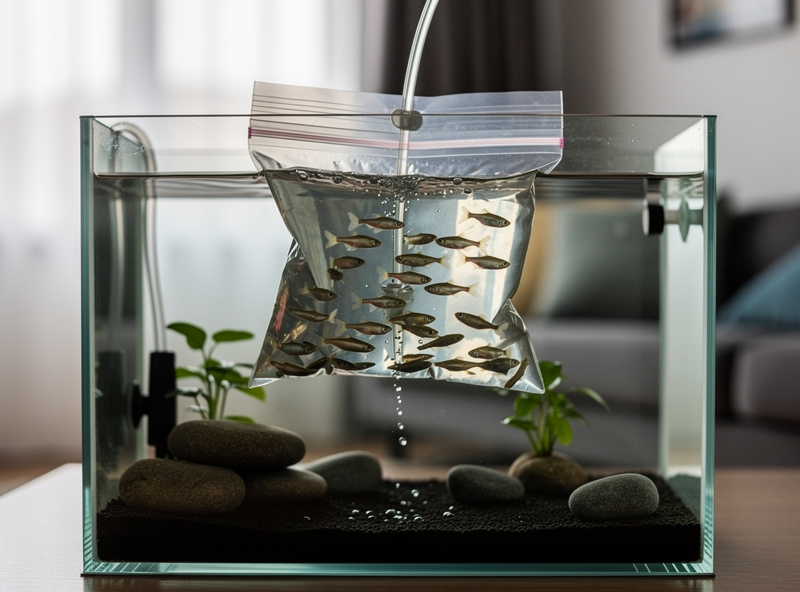
Drip-acclimate the new arrivals to your parameters, especially on a nano where the difference between bag water and tank water can be sharp. And carry forward the one discipline that protects everything you built: never strip the filter media. The colony lives there now. Rinse it gently in old tank water if it clogs, never under chlorinated tap, and never replace it all at once. A cycled tank is only as stable as the colony you spent weeks growing.
Keeping it cycled
One last point that the finish line obscures: “cycled” is not a permanent state you reach and forget. The colony sizes itself to the bioload you feed it. Add a lot of fish at once to a lightly cycled tank and you can briefly outpace the colony, producing a small ammonia or nitrite reading until the bacteria multiply to match — a “mini-cycle.” This is why I keep testing for the first couple of weeks after stocking, even on a confirmed-cycled tank, and why I add livestock thoughtfully rather than all at the absolute maximum at once. On a nano especially, where small volume amplifies every swing, the cycle is a living balance you maintain, not a box you tick once.
Get the double-zero test right, respect the colony, and keep the test kit in the drawer, and you’ve internalized the single most important skill in the hobby. Everything else — plants, shrimp, aquascaping — builds on a tank that can quietly turn poison into nitrate, day in and day out, exactly as the chemistry intends.
More from the cycle cluster
- The nitrogen cycle, honestly — the full overview and chemistry.
- Fishless cycle, step by step — the weeks that lead to this test.
- What a nitrite spike means — why the second zero matters.
- The truth about bottled bacteria — why the label can’t confirm a cycle.
- When your cycle stalls — if the double-zero won’t come.