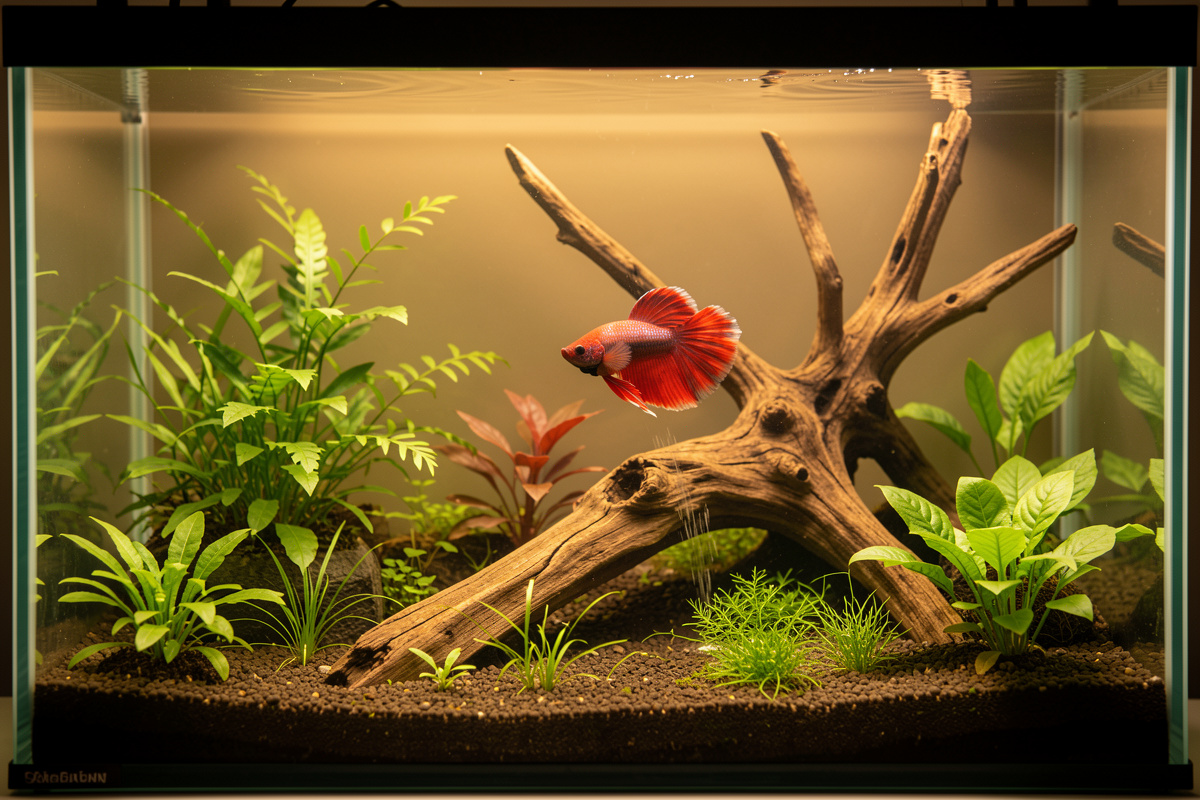
A betta needs filtration but hates strong flow, and the conflict is easy to solve once you understand it. A betta’s long fins act like a sail, so a current that is nothing to a streamlined fish exhausts it, pinning the betta in corners or against the intake. The fix is gentle, broken flow — a sponge filter or a baffled output — not removing the filter.
This is one of the most common husbandry mistakes I see, and one of the most misread: the fish looks ragged and stressed, so the keeper assumes disease, when the real problem is the weather inside the tank. A betta fighting its filter all day is spending energy it should be using to stay healthy. Let me show you how to read the signs, why flow is uniquely hard on this species, and every practical way to tame a current that is too strong.
How to Tell the Flow Is Too Strong
A betta tells you the flow is too strong through its behaviour and its fins. Watch for a fish that hides from the outflow, gets pushed around when it stops swimming, has fins constantly blown back, or rests in the one dead spot in the tank. Clamped or tattered fins with no sign of infection are the long-term fingerprint of chronic current.
The clearest tell is a betta that cannot hold its position. A healthy betta in appropriate flow cruises deliberately and rests where it likes; a betta in too much current gets visibly shoved, its fins streaming behind it like a flag, and it retreats to whatever low-flow corner it can find rather than using the whole tank. Over weeks, fighting the current frays the fins and keeps stress hormones high, which suppresses the immune system and opens the door to the very fin problems people then blame on bad water. Before reaching for any treatment, I always check the flow first — it is the husbandry cause hiding behind a lot of “sick betta” messages, and I treat it the same way in my betta fin damage prevention checklist.
Why Flow Is Uniquely Hard on a Betta
The betta’s problem with flow is anatomical, not fussiness. Generations of selective breeding gave fancy bettas enormous, heavy fins that create drag and make them poor swimmers against a current. A wild betta copes far better; the long-finned varieties most people keep are working against their own fins.
It helps to picture what those fins do hydrodynamically. A halfmoon or veiltail betta is dragging a large surface area through the water, so any current pushes on a lot of fish. The same flow a tetra slices through becomes a constant shove for a betta, and the more elaborate the fins, the worse it is — a plakat with shorter fins handles current better than a heavily finned show betta. This is why “my filter is fine for the tank size” misses the point: the filter may be perfectly sized for the volume and still be far too much for this particular fish. You are not matching flow to the tank; you are matching it to a poor swimmer with a sail strapped on. Once that clicks, the solution is obvious — reduce or break up the flow until the betta can win against it.
Six Ways to Tame the Current
You rarely need new equipment — you need to soften the flow you have. The most effective fixes are switching to a sponge filter, baffling the output, adding a pre-filter sponge, and planting to break up the current. Most cost almost nothing and take minutes.
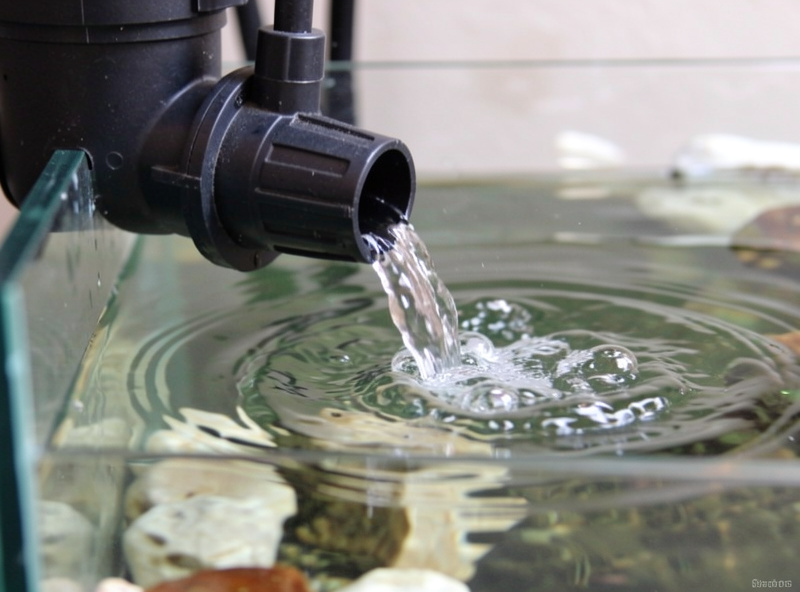
Here is my go-to list, roughly in order of how often I reach for each. First, a sponge filter: run off an air pump, it provides biological filtration and surface agitation with the gentlest flow of any option, which is why it is my default for any betta tank — a nano sponge filter is the cheapest, most betta-appropriate upgrade you can make. Second, baffle a hang-on-back output: a piece of filter sponge wedged under the outflow, or a cut and folded plastic bottle clipped over the lip, spreads the water out instead of jetting it down. Third, a pre-filter sponge on the intake both protects the betta’s fins from being sucked against the strainer and slightly reduces throughput — a pre-filter sponge is worth it for the fin protection alone. Fourth, aim the outflow at the glass so it dissipates against the wall rather than across the swimming space. Fifth, plant heavily — stems, floating plants, and an Anubias jungle physically slow water and create calm pockets, as I cover in best plants for a betta nano. Sixth, if the filter is adjustable, turn it down — obvious, but often forgotten. As an Amazon Associate I earn from qualifying purchases.

Do Not Overcorrect Into Stagnation
There is a floor as well as a ceiling: a betta wants gentle flow, not dead water. Some surface movement is essential for gas exchange and to stop the surface filming over, so the goal is a slow, broken current, not zero flow. Bettas breathe air, but the tank’s bacteria and plants still need oxygenated, circulating water.
I see the occasional keeper swing from too much flow to switching the filter off entirely, which trades one problem for another. Without any circulation, oxygen drops, a film develops on the surface that hampers gas exchange, and waste settles into stagnant pockets that feed the wrong kind of bacteria and algae. The target is the gentle, even circulation a sponge filter provides — enough to ripple the surface and keep the water turning over, gentle enough that the betta never has to fight it. If you are unsure whether your tank is moving enough, watch a leaf or a wisp of mulm: it should drift slowly and steadily, not whip around and not sit perfectly still. That slow drift is the sweet spot, and it pairs with the rest of the husbandry in my complete betta nano setup guide and the maintenance rhythm in my water change cadence guide.
Frequently Asked Questions
How do I know if my betta’s filter flow is too strong?
Watch the fish. If your betta hides from the outflow, gets pushed around when it stops swimming, has its fins constantly blown back, or stays in one low-flow corner, the current is too strong. Clamped or frayed fins with no infection are the long-term sign.
What is the best filter for a betta?
A sponge filter run off an air pump. It provides biological filtration and gentle surface agitation with the softest flow of any option, which suits a betta’s poor swimming against current. It is also cheap and easy to clean, making it the default choice for betta tanks.
How do I baffle a hang-on-back filter for a betta?
Spread out the outflow so it no longer jets across the tank. Wedge a piece of filter sponge under the lip, or cut and fold a plastic bottle over the outflow to disperse the water. Aiming the outflow at the glass also dissipates the current effectively.
Can a betta tank have no filter if I do water changes?
It is not recommended. A filter houses the bacteria that process ammonia and keeps water circulating for gas exchange. Going filterless puts all that burden on manual water changes and risks stagnation. A gentle sponge filter solves the flow concern without removing filtration.
Why does my betta hide behind the filter or in plants?
Often it is escaping the current. A betta will seek out the calmest spot in the tank, which is frequently behind the filter or deep in planting. Persistent hiding in dead spots is a strong sign the overall flow is too strong and needs softening.