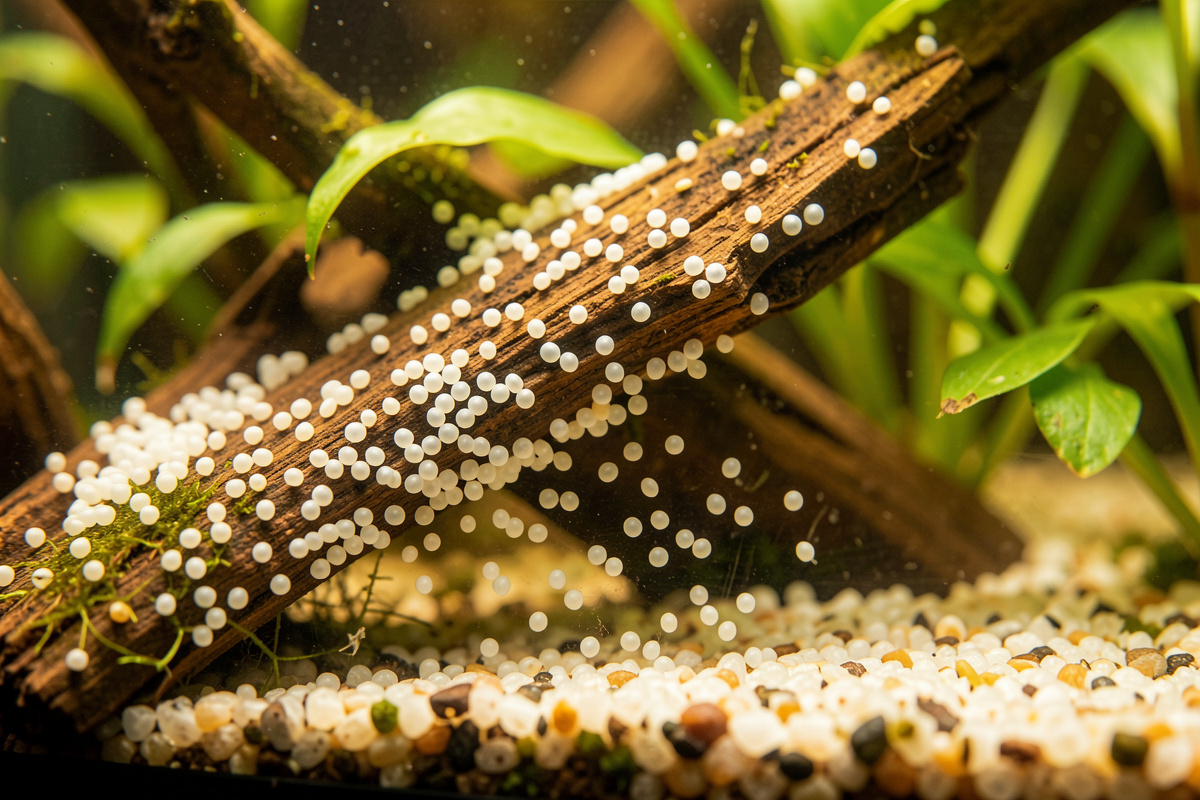
Those small white sesame-seed dots on your glass and driftwood are nerite snail eggs, and they appear because a well-fed female is doing exactly what she is built to do. The good news is they are harmless and will never hatch — nerite larvae need brackish water to develop, so in a freshwater tank the eggs are permanently sterile. The frustrating news is they are cemented on hard, and only mechanical removal shifts them.
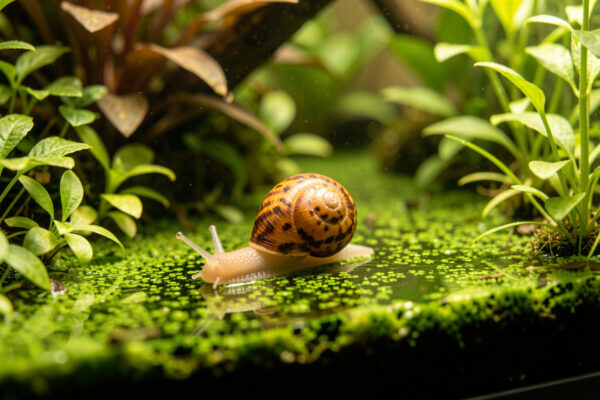
I run nerites in three of my four tanks precisely because they are the best algae grazers going, and the eggs are the tax I pay for that. Over the years I have tried every removal trick and settled on what actually works. This is the honest guide to why the eggs appear, what does and does not remove them, and how to reduce how many you have to deal with in the first place.
Why nerite snails lay eggs on glass and hardscape
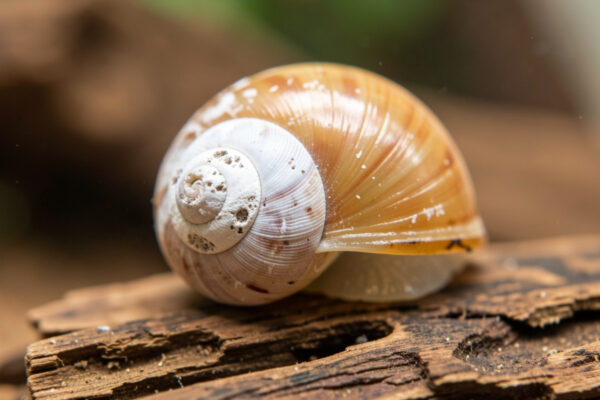
Egg-laying is a sign of a healthy, well-fed female — it is not a problem with your tank, it is a compliment to it. A nerite that has plenty of algae to graze and stable water will reach breeding condition and deposit eggs on hard surfaces: glass, silicone, driftwood, rock, and sometimes broad plant leaves. Each capsule is a hard calcium shell about a millimetre across containing an egg, cemented down with a bond that is genuinely tough.
You need at least one female for eggs, and because nerites are difficult to sex reliably, most keepers with a group of three or more end up with at least one layer. There is nothing you did wrong and nothing you can feed or dose to stop a healthy female laying. The only true levers are how many nerites you keep and whether any of them are female — everything else is about removal and acceptance.
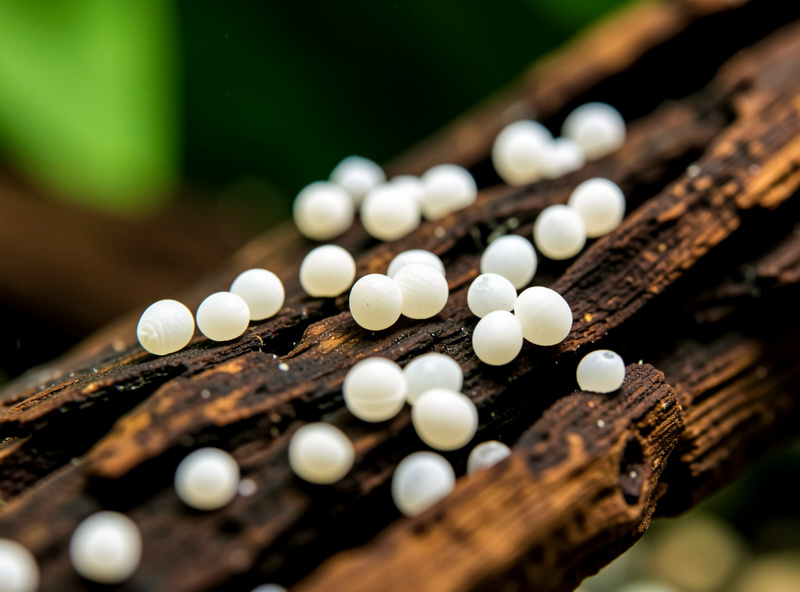
Why they never hatch in your tank
Here is the biology that makes nerite eggs a cosmetic issue rather than a population one. Nerites evolved in estuaries, and their larvae — called veligers — require brackish or full marine salinity to develop and survive. In a freshwater aquarium the eggs simply cannot progress; the larvae never form. So unlike bladder or ramshorn snails, a nerite will never populate your tank, no matter how many eggs it lays.
This is the same trait that makes nerites the safest algae grazer for a nano — the zero-population-risk workhorse I cover in the nerite snail guide. The eggs are the flip side of that same coin: because they cannot hatch in fresh water, the female keeps laying them looking for a viable spot she will never find. You get guaranteed sterility and, as a consequence, a steady trickle of little white dots.
What actually removes nerite eggs
Removal is mechanical, and the surface matters. On glass, the eggs come off cleanly: a razor blade or a stiff algae scraper run flat against the pane pops them off with a satisfying scrape, ideally during a water change so the debris siphons out. An old credit card works on glass too if you would rather not use a blade near silicone seams. This is the one surface where removal is quick and complete.
Hardscape is the hard case. Eggs cemented onto textured driftwood and porous rock resist scraping because the surface is uneven and you cannot get a blade flat against it. A stiff toothbrush shifts some; a thorough scrub with the hardscape removed from the tank shifts more. Honestly, on rough wood many keepers — me included — simply leave them, because the effort of removal outweighs a few white specks that blend in as the wood ages. There is no chemical or livestock that eats nerite eggs, so do not go looking for a magic bullet; it does not exist.
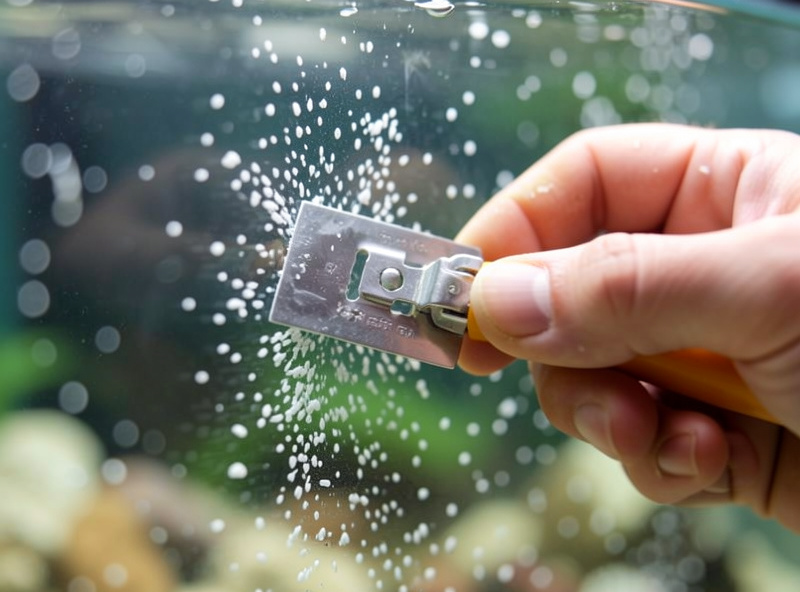
How to reduce the egg load
Since you cannot stop a female laying, prevention is really about limiting how many layers you keep. The single most effective step is simply keeping fewer nerites — one per 8–10 litres is enough for algae control, and fewer snails means fewer eggs. If you can source them, an all-male group produces no eggs at all, though reliable sexing usually requires buying from a specialist who has vented them, which is uncommon.
Some keepers report that heavily fed, very stable tanks trigger more laying because the females stay in peak condition — but I would never advise underfeeding a snail to reduce eggs, because a starved nerite thins at the shell and suffers. The trade-off is not worth it. Keep the snails healthy, keep the number modest, and accept that eggs are the cost of the best glass-cleaning invertebrate in the hobby. If the eggs genuinely ruin the look for you, the answer might be a different grazer entirely — I compare the options in best algae-eating snails.
Should you even bother removing them?
My honest position after years of this: on glass, yes, scrape them at water changes because it takes thirty seconds and keeps the viewing panes clean. On hardscape, usually no — they are sterile, harmless, and on aged driftwood they become nearly invisible. Fighting every egg on textured wood is effort spent on a non-problem. I would rather keep the nerite doing its job on my glass than strip out my hardscape to chase cosmetic specks.
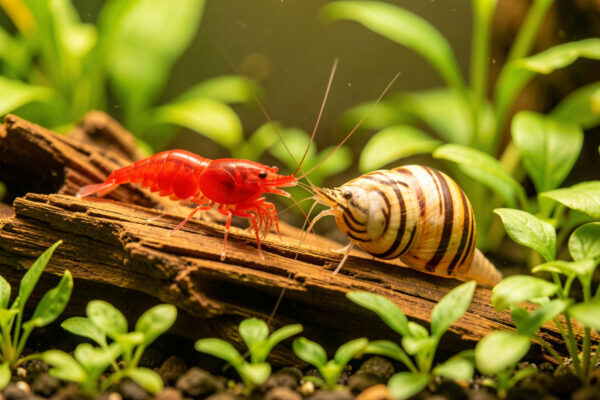
If eggs on hardscape are a genuine dealbreaker for your aquascape, the cleaner solution is to not keep nerites and instead lean on other grazers and good algae husbandry. But for most keepers the maths favours the nerite: unbeatable algae control for the price of a few white dots you learn to stop noticing. The full cleanup-crew picture, including snails that will not stipple your wood, is in the nano tank snails guide, and if you keep shrimp too they will happily pick at the biofilm around the eggs — see keeping snails with shrimp.
Frequently Asked Questions
Will nerite snail eggs hatch in a freshwater tank?
No. Nerite larvae need brackish or marine salinity to develop, so eggs laid in a freshwater aquarium are permanently sterile and will never hatch. This is exactly why nerites cannot overpopulate a tank the way pest snails do.
How do I remove nerite eggs from aquarium glass?
Scrape them off with a razor blade, stiff algae scraper or old credit card held flat against the glass, ideally during a water change so the debris siphons out. On glass they pop off cleanly; hardscape is much harder because the blade cannot lie flat.
Does anything eat nerite snail eggs?
No fish, shrimp or snail reliably eats nerite eggs, and no chemical dissolves them safely. Removal is purely mechanical. This is why many keepers simply leave eggs on textured driftwood, where they are sterile, harmless and blend in as the wood ages.
How do I stop nerite snails from laying eggs?
You cannot stop a healthy female laying, and you should not underfeed to try. The only real levers are keeping fewer nerites so there are fewer layers, or sourcing an all-male group, which is difficult because nerites are hard to sex reliably.
Are nerite eggs a sign of a problem?
No, the opposite. Egg-laying signals a healthy, well-fed female in stable water. The eggs are cosmetic only, since they cannot hatch in fresh water. They are the harmless trade-off for keeping the best algae grazer available for a nano tank.