The real minimum tank size for a betta is 19 litres (5 US gallons) — not the half-litre cup it shipped in, and not the 10-litre “betta tank” the shelf sells. That volume is the smallest you can reliably heat, filter, and keep chemically stable. Below it, you are not keeping a betta so much as managing its decline.
I land on five gallons the same way I landed on reservoir sizes for hydroponics: by the chemistry, not the marketing. Volume is the single variable that buys you a margin for error, and a betta in too little water gives you none. Let me walk through why the number is what it is, where the popular smaller “minimums” come from, and what changes the day you give a betta enough water to actually live in.
The Short Answer: 19 Litres, and Why Not Less
Nineteen litres is the floor because it is the smallest volume that holds a stable temperature and dilutes ammonia between water changes. A betta produces waste continuously; in five gallons that waste is spread thin enough that a once-weekly water change keeps pace. In two litres, the same waste concentrates fast enough to harm the fish within days.
The logic is dilution. Ammonia is toxic in parts per million, and the fewer litres you have, the faster a fixed amount of waste climbs into the danger zone. Temperature behaves the same way — a small volume tracks the room, swinging up in afternoon sun and down overnight, while five gallons has enough thermal mass to ride those changes out. In my parameter log, the difference between a 10-litre and a 19-litre tank is not subtle: the smaller one needs testing and intervention on a schedule a beginner will not keep, while the larger one forgives the occasional missed day. That margin is the whole point. I make the broader case in why small aquariums are harder, and it applies double to a fish as waste-heavy as a betta.
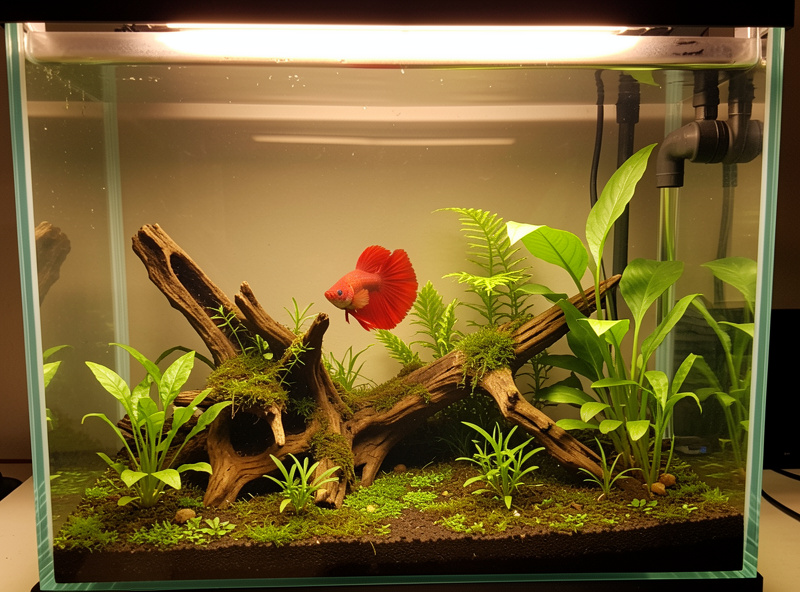
Where the Smaller “Minimums” Come From
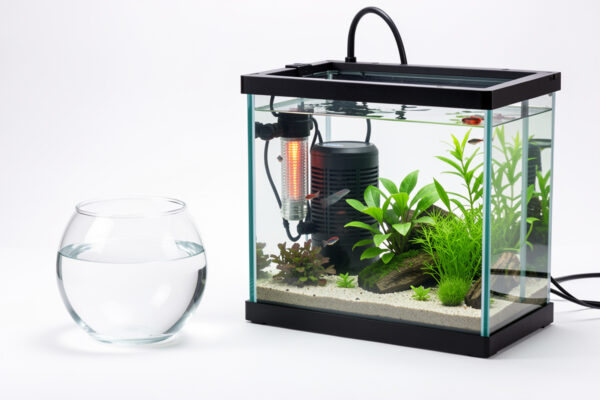
The 2-litre and 10-litre “betta minimums” come from retail, not from the fish. A betta survives those volumes thanks to its labyrinth organ, and the trade has quietly rebranded “survives” as “is fine.” A fish that endures is not a fish that thrives, and the gap between those two states is exactly what good husbandry closes.
It is worth being honest about the labyrinth organ because it is the root of the whole myth. The betta can breathe atmospheric air, so it does not suffocate in the low-oxygen water a tiny container produces, the way most fish would. That single adaptation is why bettas became the “bowl fish” — not because a bowl suits them, but because they are uniquely slow to die in one. The cup at the shop is a shipping method, not a recommendation. Once you see that the small “minimums” are reverse-engineered from what a betta can tolerate rather than what it needs, the marketing falls apart and the chemistry is all that is left.
What a 10-Litre Tank Actually Demands
A 10-litre tank is keepable by an experienced hand but is the wrong starting point. It can be heated and gently filtered, but its small volume swings fast enough that it demands near-daily attention to stay safe. I keep small water successfully, but I do it with a test kit, a log, and years of reflexes — not the tools a first-time keeper has yet.
If you already own a 10-litre and a betta, do not panic-buy — tighten the routine. Test ammonia and nitrite more often, change water little and often to keep parameters from drifting, and watch temperature like a hawk because a 10-litre cools quickly in a Swedish winter. The honest framing is that 10 litres is the expert-only minimum: doable, but with no margin. For anyone asking what to buy, I will always steer them up to 19 litres, because the extra nine litres of water is the cheapest insurance in the hobby. The routines that make either size survivable are in my water change cadence guide and the broader nano stability guide.
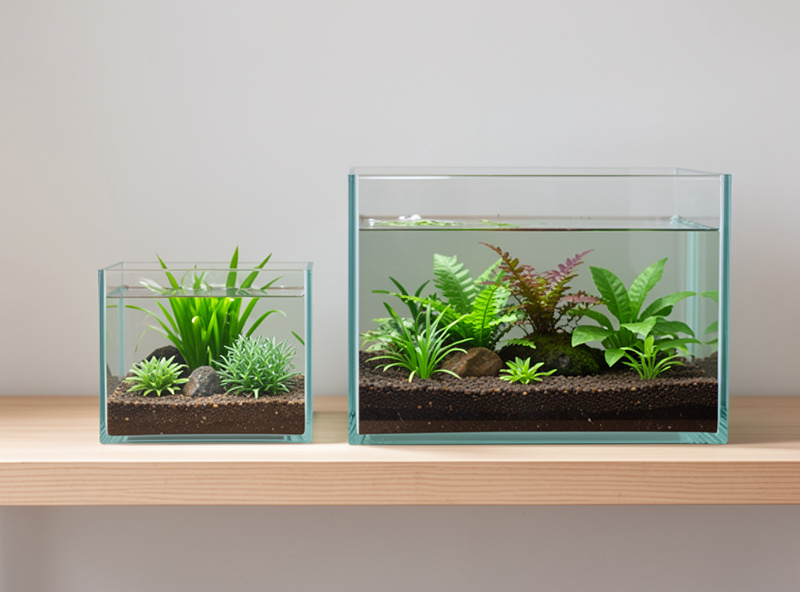
Tank Size by the Numbers
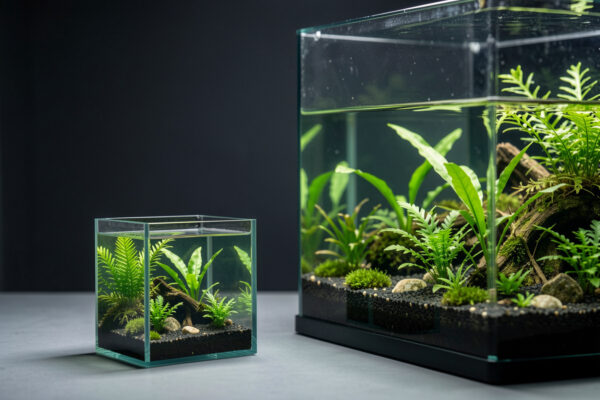
Here is the comparison I give every time someone asks me to settle the size argument. The jump from bowl to five gallons changes the keeping difficulty far more than the jump from five to ten gallons does. The first nine litres are the ones that matter most.
| Volume | Heat Stability | Ammonia Buffer | Attention Needed | Suitable For |
|---|---|---|---|---|
| 0.5–3 L bowl | None | None | Constant, still fails | No one |
| 10 L cube | Marginal | Small | Near-daily | Experienced keepers |
| 19 L (5 gal) | Good | Workable | Weekly | The honest minimum |
| 38 L (10 gal) | Very good | Generous | Relaxed weekly | Beginners and beyond |
If your budget and shelf can take it, a 38-litre (10-gallon) tank is genuinely the easiest betta home of all — large enough to be near-foolproof, still small enough to count as a nano. But 19 litres is the line below which I will not go, and the one I would defend to anyone.
What Changes When You Give a Betta Enough Water
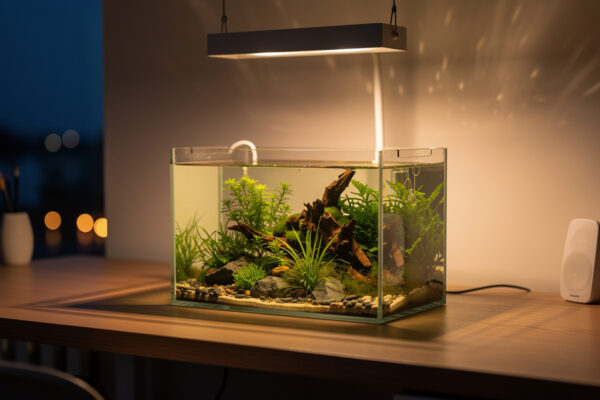
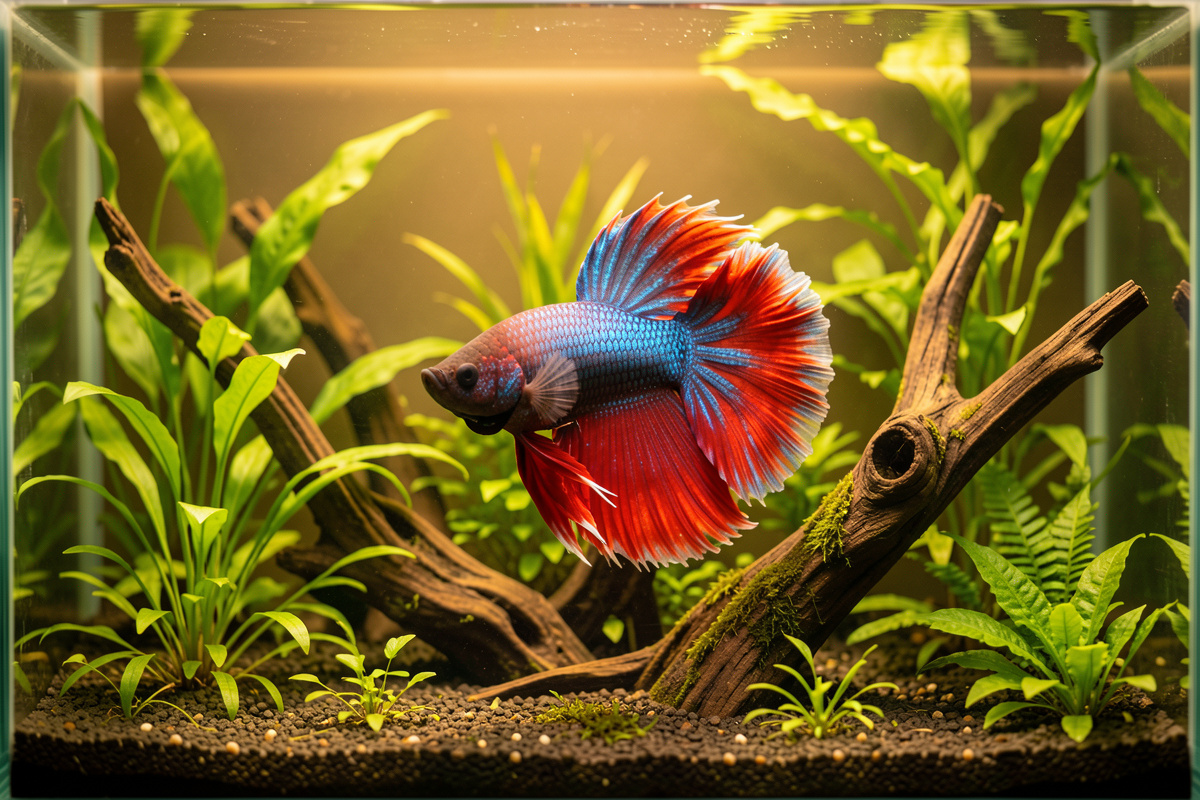
Give a betta proper volume and the whole experience inverts — from constant firefighting to quiet, rewarding maintenance. In a heated, filtered, cycled 19-litre tank, a betta colours up, builds bubble nests, patrols its territory, and lives out the multi-year lifespan a cup never allows. The behaviour you were promised only appears when the husbandry is right.
This is the part that converts people. A betta in adequate water is not a sad ornament; it is an interactive, curious, surprisingly intelligent fish that recognises you and begs at the glass. The colour deepens once chronic stress lifts, the fins relax instead of clamping, and the fish uses the space — resting on plant leaves, exploring decor, flaring at its reflection. None of that is available in two litres, where survival consumes all the fish’s reserves. Volume does not just keep a betta alive; it gives it a life worth photographing. Pair the right tank with the rest of the system — heat, flow, plants, cycle — in my complete betta nano setup guide, and understand why the smallest containers cross from “hard” into genuinely unkind in the betta bowl truth. The temperature half of the equation gets its own treatment in do bettas need a heater.
Frequently Asked Questions
Can a betta live in a 2 litre tank?
It can survive but not thrive. Two litres cannot be safely heated or kept chemically stable, so temperature swings and ammonia accumulate quickly. The labyrinth organ lets a betta endure low oxygen, which is why the myth persists, but the fish pays for it in stress and a shortened life.
Is a 5 gallon tank really enough for a betta?
Yes, 19 litres (5 US gallons) is the honest minimum. It is the smallest volume you can reliably heat, filter, and keep stable with a weekly water change. A betta in five planted gallons colours up, builds bubble nests, and lives its full multi-year lifespan.
Why do pet shops sell tiny betta tanks then?
Because bettas survive them long enough to sell, thanks to the labyrinth organ that lets them breathe air. Retail minimums are reverse-engineered from what a betta tolerates, not what it needs. The shipping cup is a container, not a habitat recommendation.
Is bigger always better for a betta?
Up to a point, yes. A 38-litre (10-gallon) tank is the easiest betta home because more water means more stability. Bettas dislike strong flow, so very large tanks need gentle filtration, but volume itself is almost always an advantage for water quality and temperature.
I already have a 10 litre tank. Do I need to upgrade?
Not necessarily, but tighten your routine. Ten litres is the expert-only minimum: keepable with a test kit, frequent small water changes, and close temperature monitoring. If you want an easier ride, moving up to 19 litres is the cheapest insurance you can buy.
How does tank size affect betta lifespan?
Strongly. Bettas in tiny unstable containers commonly die within a year from chronic stress and poor water quality. In an adequately sized, heated, cycled tank, a healthy betta typically lives three to five years. Volume is the foundation that makes that lifespan possible.