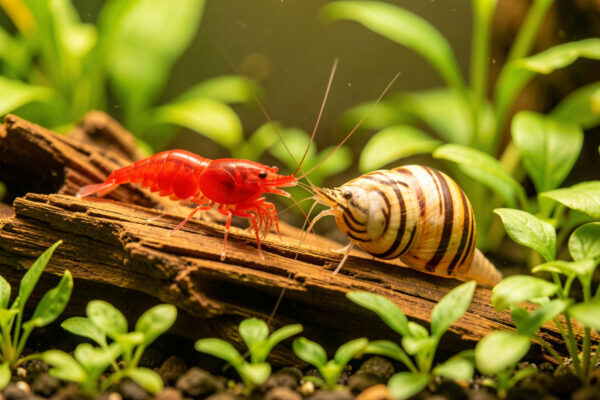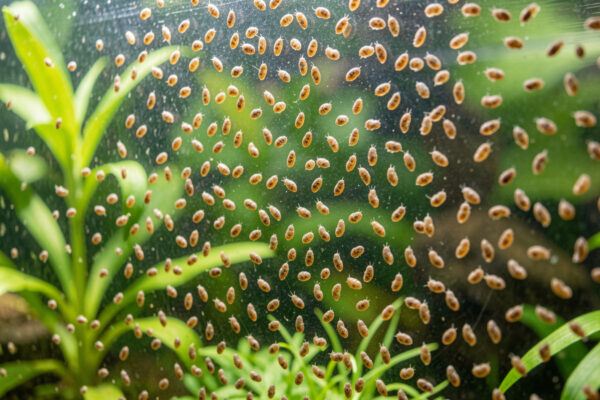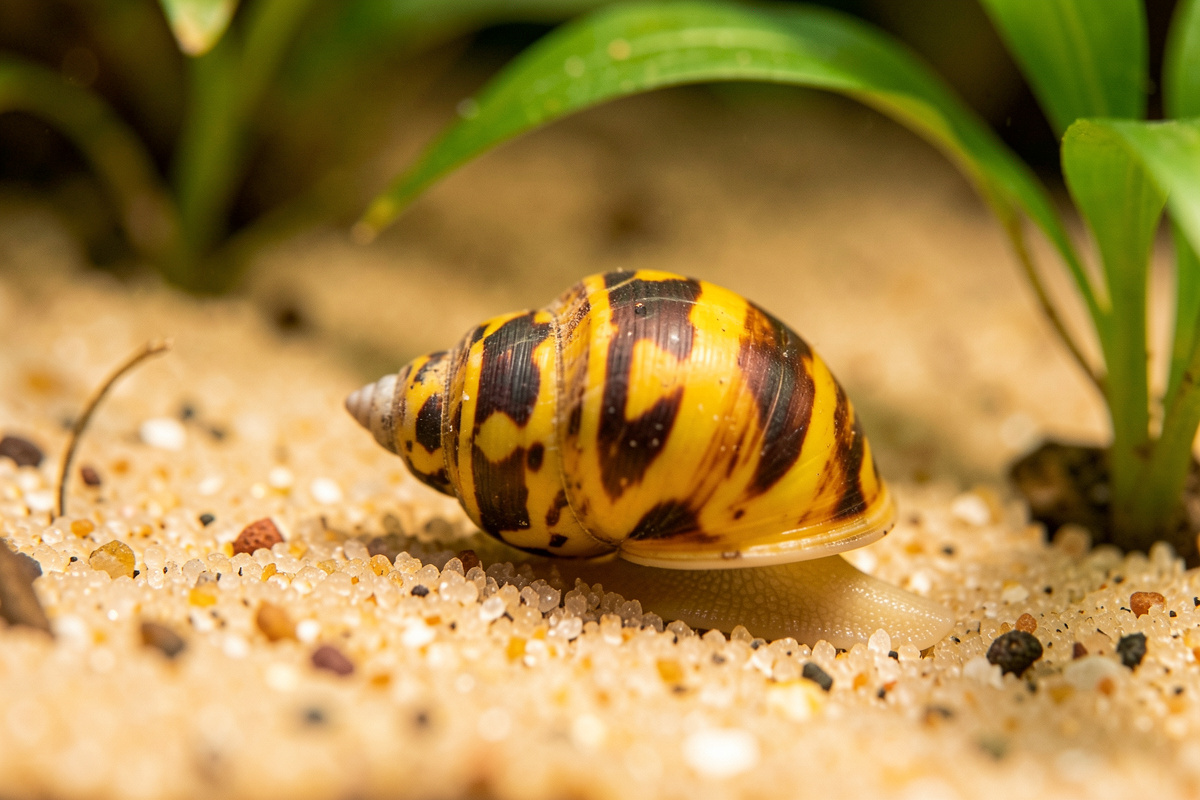
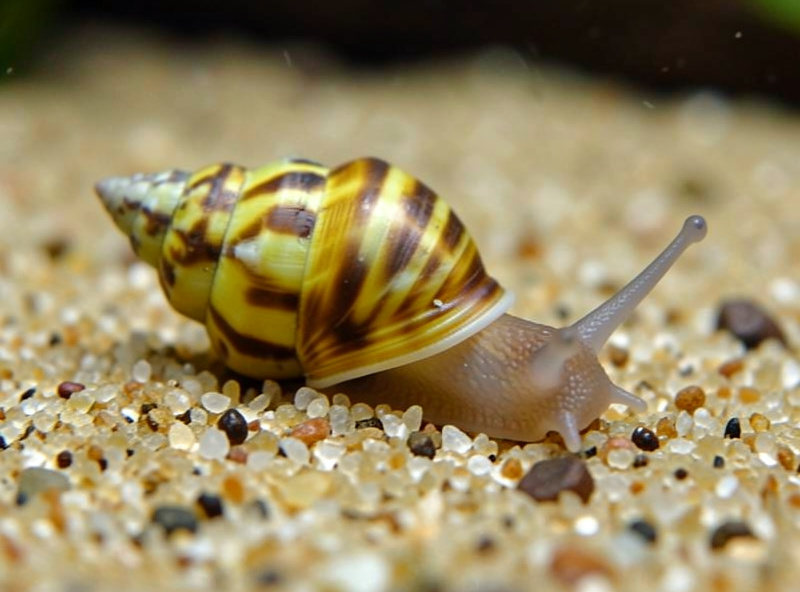
The assassin snail (Clea helena) is the biological answer to a pest snail outbreak: a carnivorous snail that hunts and eats bladder and ramshorn snails with no chemicals, no risk to fish or plants, and no threat of becoming the next infestation. Three or four in a nano tank will grind a heavy plague down over a few weeks. In my parameter log they cleared a bladder-snail boom in about a month and then quietly held the line.
Assassins are my preferred permanent fix when manual removal cannot keep pace, because they are self-sustaining as long as there is prey. But they come with genuine considerations most sellers skip: what they eat once the pests are gone, whether they will touch your nerites or shrimp, and how many a small tank actually needs. Here is the honest, keeper-tested guide to running them in nano volumes.
How assassin snails control pest snails
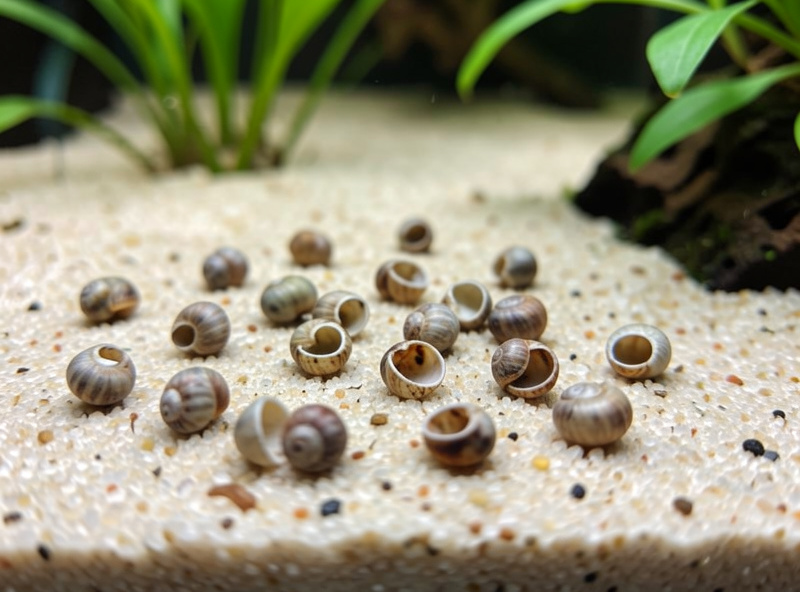
Assassin snails are ambush predators. They spend much of their time buried in the substrate with just a siphon showing, then emerge to hunt other snails, overpowering prey and consuming it inside its shell. They target the soft-bodied pest species — bladder, pond and small ramshorn snails — that plague overfed tanks, working through a population steadily rather than in a dramatic sweep. You will often first notice empty pest-snail shells accumulating on the substrate, the calling card of assassins at work.
The pace is gradual but relentless. A handful of assassins does not clear a plague overnight; it thins it over three to six weeks, and because assassins keep hunting as long as prey exists, the pest population stays suppressed rather than rebounding the way it does after a chemical kill. That durability is the whole appeal — this is a fix that maintains itself, and it pairs naturally with the feeding discipline covered in how to get rid of pest snails, since cutting food starves the pests while the assassins pick off the rest.
How many assassin snails for a nano tank?
Restraint is the rule, because assassins breed — slowly, but they do. For a 20-litre nano I use three to four assassins to tackle an active outbreak; for a 40–60 litre tank, five or six. That is enough hunting pressure to knock a plague down without overpopulating. Unlike the pest snails they eat, assassins lay single eggs and reproduce far more slowly, so they rarely explode — but a well-fed group in a tank with endless prey will slowly increase, and in a small volume you want to stay ahead of that.
Do not overstock them thinking more is faster. A crowd of assassins in a nano just means more predators competing for a finite prey supply, and once the pests are gone you are left with a lot of carnivores to feed. Start conservative, watch the empty shells pile up, and add more only if the pest population is genuinely outpacing them after a few weeks.
What happens when the pest snails run out
This is the question sellers never answer, and it matters. Assassins are obligate carnivores — they do not eat algae or plant matter — so when they have eaten every pest snail, they still need protein. They will scavenge, taking frozen bloodworms, sinking carnivore pellets, and bits of leftover fish food, and a small group survives fine on this once the plague is cleared. But you have to actually feed them; a starving assassin population is a welfare problem you created.
This is why I treat adding assassins as a long-term commitment, not a disposable pest treatment. Once they are in the tank, they are livestock you maintain like any other — which fits the ethic I keep every snail by. If you are not prepared to feed them after the pests are gone, the trapping-and-feeding-discipline route from the pest snail reality check is the better fit. Assassins are for keepers who want a permanent resident predator, not a one-off cure.
Will assassins harm nerites, shrimp or fish?
Fish and plants are completely safe — assassins have no interest in either. Nerites are almost always safe too: a healthy adult nerite is large and has a thick, tightly sealed operculum that an assassin cannot breach, so the two coexist in most tanks. The caution is with very small or weakened snails you want to keep; a large assassin can occasionally overpower a tiny or ailing snail, so do not house assassins with baby nerites or delicate ornamental snails you value.
Shrimp are the real judgement call. Assassins primarily hunt snails, and in a well-fed tank they usually ignore shrimp entirely — but there are scattered, credible keeper reports of assassins taking weak or freshly moulted shrimp that cannot escape. I would not put assassins in a valued nerite-and-shrimp display or a breeding shrimp colony. If you have a pest problem in a shrimp tank, control it with traps and feeding instead; the compatibility trade-offs are covered in keeping snails with shrimp.
Keeping assassins healthy
Assassins are hardy but they are still snails, and their shells need the same carbonate hardness as any other. Keep KH at 4 dKH or above or their conical shells erode at the tip just like a nerite’s — the mechanism is in the shell erosion guide. They prefer a soft sand or fine gravel substrate they can burrow into, since burrowing is how they hunt and rest. Beyond that they ask for nothing special: stable, cycled water and the occasional protein feed once the pest snails are gone.
Treated as permanent livestock rather than a quick fix, assassins are one of the most satisfying problem-solvers in the hobby — a self-maintaining biological control that turns a plague into a slow, tidy cleanup. For the full picture of every snail worth keeping and how they fit together, see the nano tank snails guide.
Frequently Asked Questions
How many assassin snails do I need for a nano tank?
Three to four assassin snails suit a 20-litre nano tackling an active pest outbreak, and five or six suit a 40 to 60 litre tank. That is enough hunting pressure without overpopulating. Start conservative, since assassins breed slowly and you can always add more.
What do assassin snails eat when the pest snails are gone?
They are obligate carnivores and still need protein, so they scavenge frozen bloodworms, sinking carnivore pellets and leftover fish food. You must actually feed them once the plague is cleared, because a starving assassin population is a welfare problem, not a self-solving one.
Will assassin snails eat my shrimp?
Usually not in a well-fed tank, since they primarily hunt snails, but there are credible reports of assassins taking weak or freshly moulted shrimp. Do not put them in a valued or breeding shrimp colony; control pests there with traps and feeding discipline instead.
Do assassin snails eat nerite snails?
Almost never. A healthy adult nerite is large with a thick, tightly sealed operculum an assassin cannot breach, so they coexist in most tanks. The exception is very small, young or weakened snails, which a large assassin can occasionally overpower.
How long do assassin snails take to clear pest snails?
Three to six weeks for a heavy plague, working steadily rather than overnight. Because assassins keep hunting as long as prey exists, they suppress the pest population durably instead of letting it rebound the way it does after a chemical treatment.