The substrate is the one part of a planted nano you cannot swap on a Sunday afternoon, so it is the one decision worth slowing down for. Pick the wrong one and you fight algae, poor roots, and pH swings for a year. The short answer: an active aqua soil for a plant-driven tank, an inert sand or fine gravel with root tabs for a low-maintenance or hardscape-led tank.
I keep four small systems running side by side, logged like bench experiments, and the substrate layer is where most of their differences are decided long before the first plant goes in. My high-tech 60L runs on an active soil that drops the water acidic and feeds heavy root-feeders for a couple of years. My low-tech 20L sits on inert sand I will never replace, fed with root tabs under the heavy plants. Same hobby, two completely different chemistries under the glass — and the substrate is what set them apart. This guide is the map of that whole layer: what the substrate has to do, the two families it splits into, how deep to lay it, how to cap it, how it behaves with shrimp, and how to pull it out years later without crashing the cycle.
What a planted-tank substrate actually has to do
A substrate has four jobs, and most beginner advice only mentions the first. It anchors plant roots, it stores and releases nutrients, it hosts a huge share of the tank’s nitrifying bacteria, and — for active soils only — it actively changes your water chemistry. A bag of plain gravel does the first job and a little of the third. An active aqua soil does all four, which is exactly why it costs more and why it eventually expires.
Here is the part the store skips: the substrate is a chemistry component, not just decoration. When I dropped my first bag of active soil into the 60L, my TDS pen and KH test told the real story within hours — carbonate hardness fell, pH followed it down, and the tank parked itself near 6.5 without a single drop of pH-down product. Inert substrate does none of that; your tap water’s chemistry walks in unchanged. Knowing which behaviour you want is the entire game, and it is why I tell people to understand the nitrogen cycle and test their source water before they buy a single bag.
The two families: active versus inert
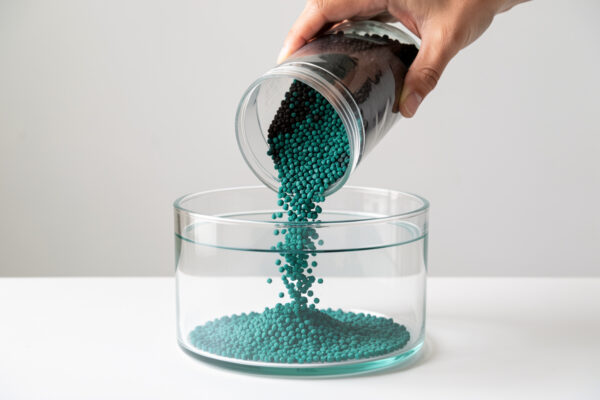
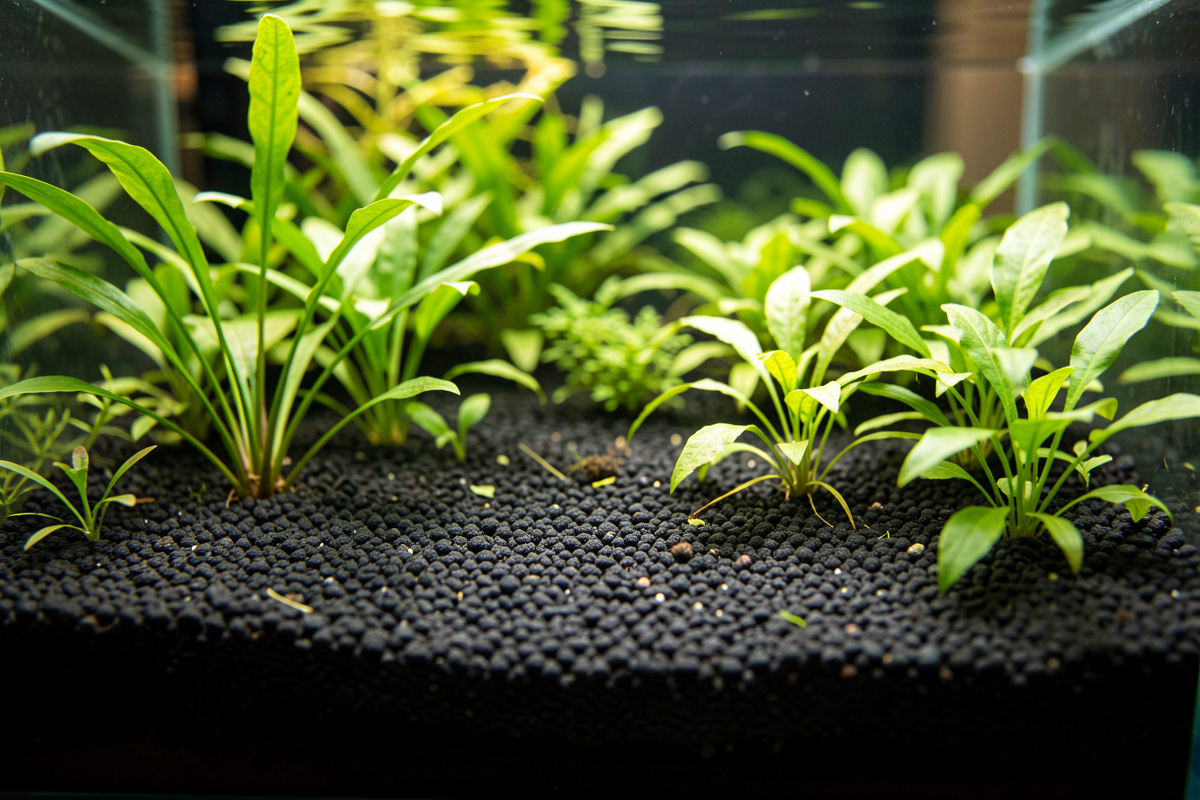
Every substrate you will consider falls into one of two camps. Active substrates (aqua soils like ADA Amazonia and Fluval Stratum) are baked, nutrient-rich clay granules that release ammonia and minerals, lower KH and pH, and feed roots directly. Inert substrates (sand, fine gravel, pool filter sand, inert planted gravels) are chemically neutral — they hold roots and bacteria but add nothing and change nothing. The full trade-off has its own deep dive in my active vs inert substrate breakdown, but the headline is simple: active soil buys you faster, lusher plant growth and soft acidic water at the cost of money, a messy ammonia-leaching start, and a two-year lifespan.
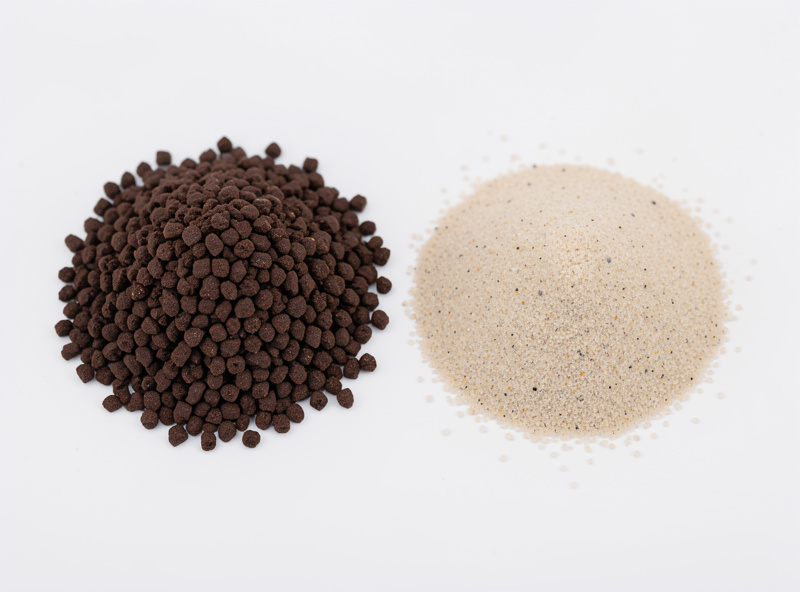
The mistake I see most often is buying active soil for a tank that did not need it. If you are keeping easy epiphytes — Anubias and Bucephalandra lashed to wood, java fern, mosses — those plants feed from the water column and never touch the substrate. Spending on a buffering soil to grow plants that ignore it is paying for chemistry you will not use. Match the substrate to the plants and the livestock, not to the prettiest bag.
Substrate types compared
This is the comparison I wish someone had handed me before my first planted build. The five rows below cover almost every nano substrate decision. “Buffers pH” means the substrate actively pulls KH and pH down — a feature for soft-water plants and shrimp, a problem if you keep hard-water livestock.
| Substrate | Feeds roots | Buffers pH down | Lifespan | Street price | Best for |
|---|---|---|---|---|---|
| Active aqua soil (ADA Amazonia) | Yes, heavy | Yes, strong | 1.5–2 years | $$$ | High-tech, soft-water plants, Caridina |
| Active aqua soil (Fluval Stratum) | Yes, moderate | Yes, mild | 1–2 years | $$ | Shrimp tanks, gentler buffering |
| Inert sand + root tabs | Only via tabs | No | Indefinite | $ | Low-tech, hardscape-led, easy livestock |
| Capped dirt (soil under inert) | Yes, very heavy | Mild | 3–5+ years | $ | Budget high-growth, larger nanos |
| Fine inert gravel | Only via tabs | No | Indefinite | $ | General community, rooted stems with tabs |
Notice the pattern: the substrates that feed plants hardest are also the ones that change your water and wear out. There is no free lunch in this layer. You are choosing which set of trade-offs you would rather manage, and that choice should follow your plant list and your stocking plan, not the other way round.
Active aqua soils: the two I keep coming back to
If you go active, two products dominate the nano shelf, and I have run both. ADA Amazonia is the benchmark — the heaviest feeder, the strongest buffer, and the messiest start, with an ammonia leach that demands a proper fishless cycle before livestock. I broke down exactly how I rinse, layer, and cycle it in the ADA Amazonia substrate guide. Fluval Stratum is the gentler, cheaper alternative — lighter feeding, milder buffering, and far more forgiving for shrimp-first builds, which is why it gets its own honest Fluval Stratum review covering where it shines and where it falls short of the ADA standard.
Both are “complete” soils — you do not cap them, you plant straight in. That is their convenience and their clock: the day you buy active soil, the two-year countdown to nutrient exhaustion starts. I note the install date in my parameter log so I am never surprised when growth slows and it is time to dose more from the water column or plan a rescape.
Capping: when soil goes on the bottom
There is a third path that sits between active and inert, and it is the cheapest high-growth option in the hobby: a nutrient layer (organic soil or worm castings) on the bottom, capped with an inch of inert sand or gravel to lock it down. Done right, a capped dirt tank out-grows a bag of aqua soil for a fraction of the cost and lasts three to five years. Done wrong, you get a sulphur-smelling mud volcano the first time you disturb it.
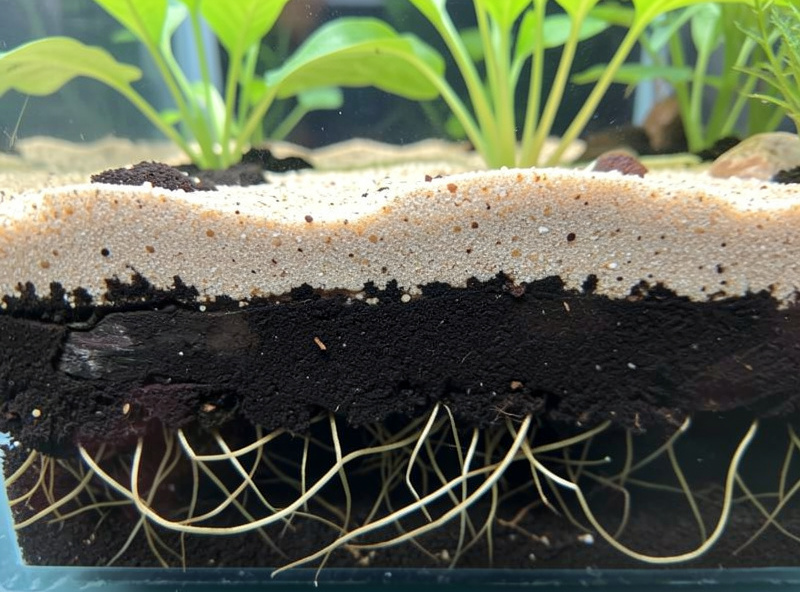
The cap is not optional and the technique is fussier than it looks — cap thickness, how you flood the tank, and which plants you trust to root through it all matter. I walk through the full method, including the mistakes that cause the dreaded cloud, in capping substrate for planted tanks. If you are on a budget and want serious growth, this is the route I would point you to before an expensive soil.
How deep should the substrate be?
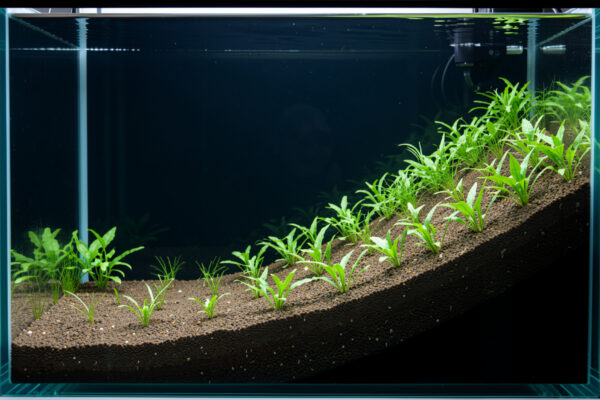
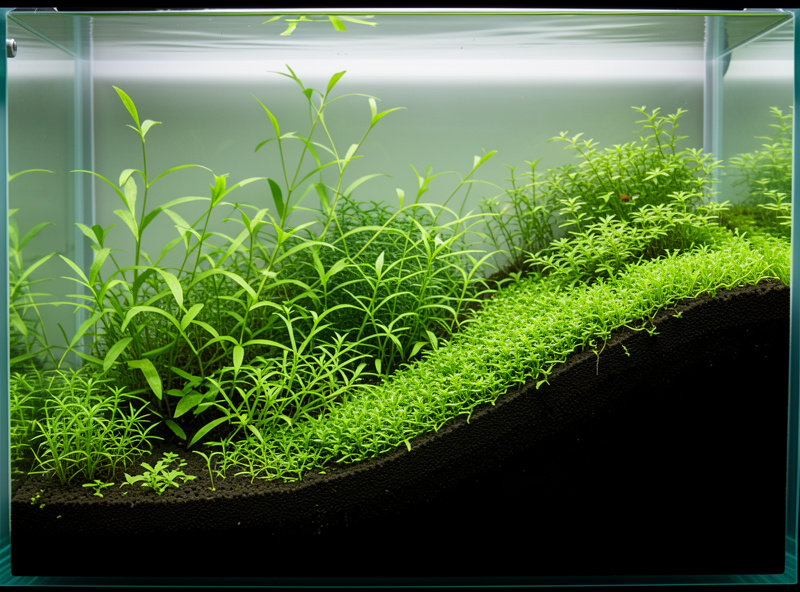
Depth is the spec people guess at and regret. Too shallow and rooted plants tear loose and the soil exhausts fast; too deep and the lower layer goes anaerobic and produces gas pockets. For most nano tanks I run roughly 2–3 cm at the front sloping to 5–7 cm at the back — enough for carpet roots up front and stem roots in the rear, with a slope that adds visual depth to a small footprint.
That is the short version; the long one depends on your plants, your tank’s footprint, and whether you are capping. Carpet plants, big sword-type root-feeders, and dirted tanks each change the math. I laid out the full depth logic, with the front-to-back slope numbers I actually use, in the planted tank substrate depth guide. Get this right at setup, because adding depth to a planted tank later means tearing it down.
Substrate, shrimp, and water chemistry
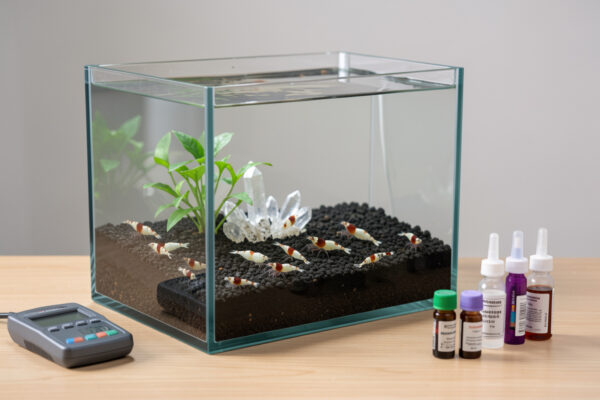
This is where my hydroponics background earns its keep, because shrimp keeping is water chemistry with a heartbeat. The substrate you choose sets the chemistry your shrimp live in. Neocaridina — my cherry colony — are happy on inert substrate in harder water; they want stable KH and GH, and an active buffering soil that strips KH to zero is actually the wrong tool for them. I cover their exact numbers in cherry shrimp water parameters.
Caridina — the soft-water bee and crystal shrimp — are the opposite. They need the low KH and acidic pH that an active buffering soil delivers, built on RO water you remineralize to a precise GH. The substrate is doing chemistry work no inert material can replicate. I keep Neocaridina rather than Caridina, so for the deep specialist detail I defer to the bee-shrimp breeders, but the buffering-soil chemistry itself I explain in buffering soil for Caridina tanks. The lesson holds either way: choose the substrate to match the animal, then test and confirm — never guess.
Replacing substrate without crashing the tank
Active soils expire, dirt caps eventually compact, and sometimes you simply want a different look. The fear that stops people is real: the substrate holds a huge fraction of your nitrifying bacteria, so ripping it out can crash a cycle and ammonia-spike your livestock. It does not have to. With the filter protected, plants and animals temporarily housed, and the swap staged in sections, I have changed substrate in an established tank with barely a blip in my ammonia and nitrite readings.
The full staged method — what to save, how to protect the biofilter, and how to test your way through the days after — is in replacing substrate in an established tank. Pair it with a tightened water-change cadence for a week and the tank barely notices.
The first month: what new substrate does to your water
The substrate you choose changes how the opening weeks of a tank behave, and active soils make them dramatic. A fresh bag of aqua soil does not sit quietly — it leaches ammonia for the first one to three weeks as it settles, which is both a feature and a trap. The feature: that ammonia feeds your nitrifying bacteria and helps drive a fishless cycle with no need to dose a separate ammonia source. The trap: anyone who plants, fills, and drops shrimp in on day one is putting livestock into water that can read well above 1 ppm ammonia. My parameter log on the 60L showed ammonia climbing for ten days before the bacteria caught up and pulled it to zero.
Inert substrate skips that drama entirely — no leach, no spike from the soil itself — but it also gives the cycle nothing to eat, so you supply the ammonia and run a normal fishless cycle. Either way the rule is the same one that governs every nano: wait for the double-zero on ammonia and nitrite before a single animal goes in. New active soil also tints the water and clouds it for a few days as fines settle; heavy early water changes clear it and blunt the ammonia leach at the same time. None of this is a problem if you expect it. All of it is a disaster if you treated “easy planted tank” as literal.
Substrate mistakes that cost real tanks
A few errors show up again and again, and most of them are unfixable without a teardown — which is exactly why the substrate deserves this much thought up front. Buying active soil for an epiphyte-only tank wastes money on chemistry the plants ignore. Laying it too shallow means rooted plants tear free and the soil exhausts in a year. Vacuuming active soil like gravel grinds the granules to mud and destroys their structure — you rinse the surface of soil, you never dig it. Mixing an active buffering soil with hard-water livestock leaves you fighting your own substrate as it strips the minerals those animals need.
The deepest trap is treating substrate as permanent when it is consumable, or as consumable when it is permanent. Active soils expire and need a plan; inert substrate is forever and rewards patience. I sort that confusion out by writing the substrate type and its install date in the same log where I track ammonia, nitrate, and KH — so the foundation of the tank is on the record alongside the water it sits under. The substrate is not a detail you decorate over. It is the chemistry the next two years are built on, and the difference between a tank that runs itself and a tank that fights you starts right here, at the bottom of the glass.
Substrate and the algae connection
Substrate choice quietly drives one of the most common nano frustrations: algae. A fresh active soil dumps nutrients fast, and in the first weeks that surplus — ammonia, then nitrate, before the plants are established enough to use it — is exactly what feeds a diatom bloom or a film of green dust. It is not a defect in the soil; it is the gap between the soil feeding hard and a plant mass still too small to keep up. The fix is not a bottle from the algae aisle but balance: heavy early water changes to export the surplus, a modest photoperiod, and enough fast-growing plants in from day one to compete for the food.
Inert substrate sidesteps the nutrient dump but sets the opposite trap — under-fed rooted plants that stall, weaken, and lose to algae from the other direction. A struggling plant is an algae magnet whichever substrate it sits in. The chemistry lens I bring from the hydroponics bench applies cleanly: diagnose algae by cause — light, nutrient, and CO2 balance — not by product, and the substrate is one of those three nutrient levers you are balancing, never an afterthought once the algae has already arrived.
Matching the substrate to your build
Step back and the whole decision collapses into a few questions. Do your plants root-feed or water-feed? Do you want soft acidic water or are you keeping hard-water livestock? Is this a high-tech, CO2-injected showpiece or a quiet low-tech nano? What is your budget, and how long before you would rescape anyway? Answer those honestly and the substrate picks itself.
For a high-tech, soft-water plant tank with pressurized CO2 and strong lighting, active soil earns its price. For a relaxed planted nano with easy epiphytes and Neocaridina, inert sand with root tabs will outlast three soil tanks and never spike. For maximum growth on a budget, cap some dirt. None of these is “the best substrate” — they are different answers to different tanks, and the worst mistake is buying for the tank you saw online instead of the one on your own shelf. The substrate is the foundation of a stable nano; lay it deliberately and the next two years get a lot easier.
As an Amazon Associate I earn from qualifying purchases. When I do point at a product, it is a generic search so you land on current stock: aquarium aqua soil, root tabs for inert substrate, and a KH/GH test kit so you can actually read what your substrate is doing.
Frequently Asked Questions
What is the best substrate for a planted nano tank?
There is no single best. Active aqua soil suits high-tech, soft-water plant tanks and Caridina shrimp; inert sand or gravel with root tabs suits low-tech, hardscape-led tanks and Neocaridina. Match the substrate to your plants, livestock, and budget rather than copying a setup you saw online.
Do I need active soil or will gravel work for plants?
Gravel works fine if you supplement it. Inert gravel or sand holds roots and bacteria but feeds nothing, so heavy root-feeders need root tabs pushed into it. Epiphytes like Anubias and java fern ignore the substrate entirely and grow on plain gravel with no help at all.
How long does aquarium aqua soil last?
Active aqua soils like ADA Amazonia and Fluval Stratum exhaust their nutrients in roughly 1.5 to 2 years. They keep anchoring roots after that, but their buffering and feeding fade, so you either dose more from the water column or plan a rescape. I log the install date so the slowdown is never a surprise.
How deep should substrate be in a nano tank?
For most nanos, run about 2 to 3 cm at the front sloping up to 5 to 7 cm at the back. That gives carpet plants enough up front and rooted stems enough at the rear, while the slope adds visual depth. Going deeper than 7 cm risks anaerobic gas pockets in small tanks.
Can I change substrate without crashing my cycle?
Yes, if you protect the biofilter. Most nitrifying bacteria live in the filter and on surfaces, not only in the substrate, so keep the filter running and wet, swap the substrate in sections, and test ammonia and nitrite daily for a week afterward. Done in stages, the readings barely move.
Does substrate change my water chemistry?
Active soils do, strongly. They pull carbonate hardness (KH) and pH down, parking many tanks near pH 6.5 without any additives. Inert substrates change nothing, so your tap or RO water chemistry walks in unchanged. Always test KH and pH after a substrate change so you know what you actually have.