Green film on the glass of a nano tank is the most common algae there is, and the least worth worrying about. It is the thin green haze that softens the front glass over a week or two, driven by ordinary light and a small nutrient surplus, and lifts off in seconds at each water change. A little of it is completely normal in any healthy planted tank — the goal is to manage it, not to chase a sterile, film-free box that does not exist.
I have run planted nanos for years, and not one of them has ever been permanently free of glass film. Nor should it be. A thin green haze on the most strongly lit pane is simply the tank growing a little algae where light and nutrients are most available — exactly what you would expect in a living system. The keepers who fight it hardest tend to over-correct their light or nutrients and trigger something genuinely difficult, like the hard green spot algae people so often confuse it with. This guide is about reading the film correctly and keeping it to a level you barely notice.
What Green Film Algae Is
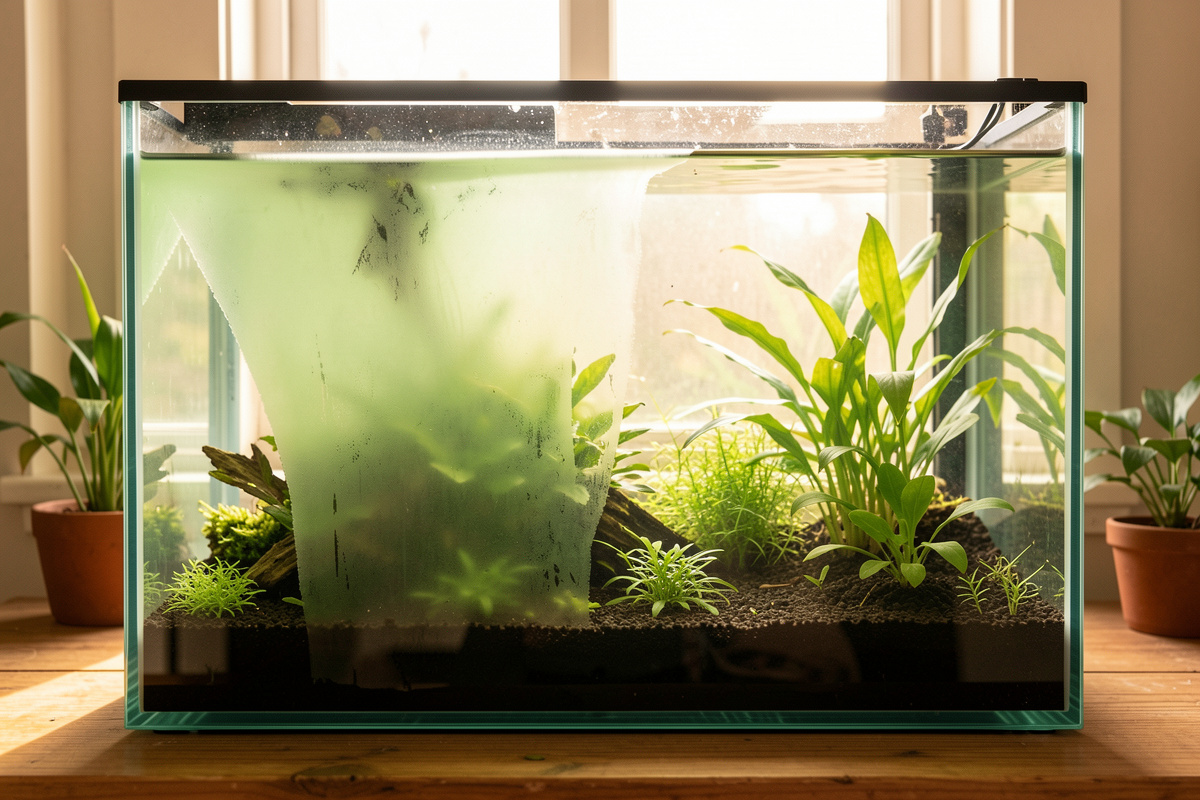
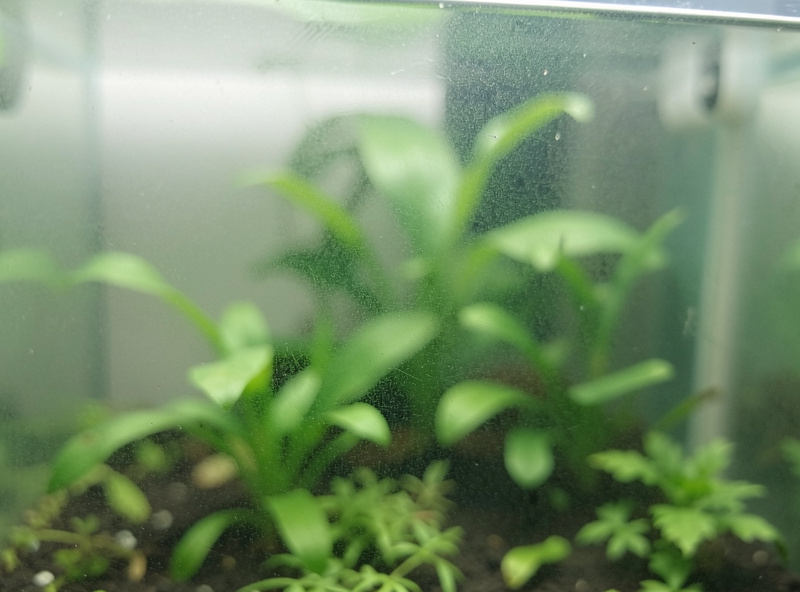
Green film algae is a soft, thin green haze that spreads evenly across the glass and wipes off effortlessly with a cloth or magnetic cleaner. That softness is the key distinction: unlike green spot algae, which forms hard dots that need a blade, film algae comes away with the lightest pressure and leaves the glass clear. It is the everyday, low-grade algae that every illuminated surface in a tank grows to some degree.
Because it wipes off so easily, film algae is more a maintenance item than a problem. You will notice it as a gradual loss of clarity on the front glass over a week or two — the view softens, colours dull slightly, and a quick wipe restores it. If what you are seeing instead is hard, discrete dots that resist a cloth, you are looking at green spot algae and should read that guide; if it is brown and dusty on a new tank, those are diatoms. The aquarium algae guide lays out how to tell every type apart.
The Cause: Light Plus a Small Nutrient Surplus
Green film algae is driven by the combination of light and a modest surplus of nutrients in the water — the same two ingredients your plants use, just available faster than the plants can take them up on the glass surface. Because the front and side panes are well lit and sit at the water’s edge where nutrients circulate, they are the natural place for a thin film to establish. It is a low-level imbalance, not a crisis.
The intensity of the film tracks your light and your nutrient load. A longer photoperiod, a brighter fixture, or a stretch of heavier feeding will thicken the film and make you wipe more often; a controlled light and steady maintenance keep it to a faint haze. This is the gentlest expression of the same light-and-nutrient mechanism that, taken to extremes, produces the more troublesome algae — which is why the prevention is simply a milder version of the same balance. When the film thickens noticeably, it is usually a quiet signal that the light is a touch long or a water change is overdue, the kind of small drift the parameter log is built to catch.
Managing It: Wipe, Time the Light, Accept Some
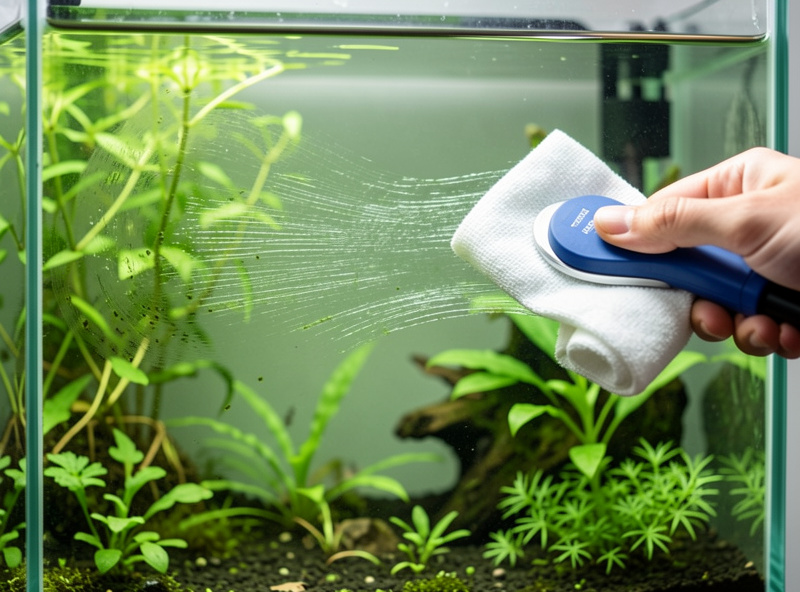
Managing green film algae takes three things: a weekly wipe, a controlled photoperiod, and a realistic expectation that a faint haze is normal. There is no cause to eliminate here — film algae is a permanent feature of a lit tank — so the job is keeping it to a level you do not notice rather than waging war on it. Ten seconds of glass cleaning at each water change handles the visible part entirely.
For the wipe, a magnetic glass cleaner makes it trivial: a quick pass before each water change keeps the viewing panes clear without getting your hands wet. I keep a magnetic aquarium glass cleaner on every tank for exactly this. As an Amazon Associate I earn from qualifying purchases. It is a convenience tool, not a treatment — the film comes off just as well with a cloth or a soft sponge kept solely for the tank.
For the light, if the film is thickening faster than you would like, shorten the photoperiod by an hour and make sure the fixture is on a timer with no afternoon sun adding to the dose. Controlling light is the single most effective lever on film thickness, just as it is for nearly every algae, and the nano lighting guide covers how to set it. Steady water changes handle the nutrient half by keeping the surplus modest. And for the acceptance part — let a little film live on the back and side glass if you like, where it does not affect the view and gives grazers something to eat. A planted tank with healthy plants and good flow, the balance described in controlling algae with plants and flow, naturally keeps film to a minimum without any fight at all.
The Cleanup Crew That Keeps Glass Clear
The most pleasant way to manage green film is to let livestock do most of the work, because film algae is exactly the soft, grazeable growth a nano cleanup crew thrives on. Nerite snails, otocinclus catfish, and a colony of Neocaridina shrimp all graze film and the biofilm it grows alongside, and in a well-stocked nano they keep the glass and hardscape far cleaner than wiping alone ever could. On my shrimp tank the colony keeps the film so low that I rarely need the magnetic cleaner at all.
The trick is matching the crew to the tank and not over-relying on it. A couple of nerites suit almost any nano and are the single best glass-grazers for their size; otocinclus need an established, biofilm-rich tank to thrive and should never go into a fresh setup; and shrimp graze constantly but gently, taking the film without touching healthy plants. None of these animals is an algae cure — they manage the visible film while your light and water-change discipline keep the underlying surplus modest. Add them because they are good tank inhabitants in their own right, not as a fix for a problem that is really about light. And always confirm the tank is mature enough to support a grazer before adding one, because a hungry cleanup crew in an immature tank is a welfare problem, not a cleaning solution.
Why Nano Glass Films a Little Faster
A nano films slightly faster than a large tank for the same reason it does everything faster: large viewing panes sit close to a bright fixture over a tiny, nutrient-concentrated volume. The proportion of brightly lit glass to water is high, so the surfaces most available to film algae are a bigger share of the whole system. It is a minor effect, but it is why nano keepers notice the haze sooner than big-tank keepers do.
It also means the same small corrections go further. Trimming the photoperiod by an hour or tightening the water-change cadence shows up on a nano’s glass within days, where a large tank would take a week or more to respond. The volume math that makes nanos demanding also makes them responsive, and film algae — being the gentlest algae of all — is the easiest place to feel that responsiveness working in your favour.
When a Thin Film Becomes Something More
A green film that suddenly thickens, spreads aggressively, or turns the water itself green has crossed from normal maintenance into a signal worth reading. Rapid film growth usually means the light or nutrient surplus has grown — a longer day, a new brighter light, or a lapse in water changes — and a green tint to the water itself points toward a free-floating bloom rather than glass film. At that point the response shifts from “wipe and forget” to “find what changed.”
The diagnostic is the same one I apply to any algae: check what moved in the last two weeks, confirm the photoperiod, and make sure the water-change cadence has not slipped. If the water has gone cloudy green, read the green water guide, because that is a different organism with a different fix. But for the ordinary, slow, wipe-it-weekly film that every planted nano grows, there is nothing to cure — only a tank doing what living tanks do, kept tidy with a few seconds of glass cleaning and a sensible light schedule. The broader routines that keep all of it in check sit in the stability guide.
Further Reading
Green film is the gateway to understanding algae as a balance rather than an enemy. From here, the most useful next reads are the cause-first hub and the two types film algae is most often confused with:
- The aquarium algae guide — diagnose every algae type by cause
- Green spot algae — the hard dots people mistake for film
- Diatoms in a new tank — the brown film, and why it is a normal milestone
- Controlling algae with plants and flow — keep film to a minimum naturally
- Water change cadence — the nutrient half of the balance