The best algae-eating snail for a nano tank is the nerite — it grazes glass, silicone and hardscape harder than anything its size and cannot breed in fresh water. But “best” depends on the algae and your water: for soft-film and detritus a ramshorn earns its place, and for substrate a Malaysian trumpet snail works below the surface. In my four tanks I run different grazers for different jobs, matched to hardness.
No single snail eats every kind of algae, and the hobby’s habit of naming one “best” ignores that a grazer is a tool matched to a task. This is my ranked, keeper-tested breakdown of the algae-eating snails that actually earn their place in small water — what each one eats, the hardness it needs, and where it beats the alternatives. The honest headline: a snail manages algae, it never cures the imbalance feeding it.
How to judge an algae-eating snail
Three questions decide whether a snail is right for your tank. First, what algae does it eat? Grazers specialise — some rasp hard films off glass, others graze soft fuzz or clear detritus, and none touch water-column problems like green water. Second, does it breed in your water? A snail that multiplies to match food can become the next problem. Third, can it hold a shell in your hardness? A grazer that dissolves in soft water is no grazer at all.
Get those three right and the snail thrives and works; get them wrong and it starves, overpopulates, or erodes. Underneath all of it sits a truth I never stop repeating: a grazer is downstream of the cause. If algae keeps coming back, the fix is light, nutrients and flow — the algae-by-cause method — not more snails. Snails keep surfaces tidy while you fix the chemistry; they are the cleanup, not the cure.
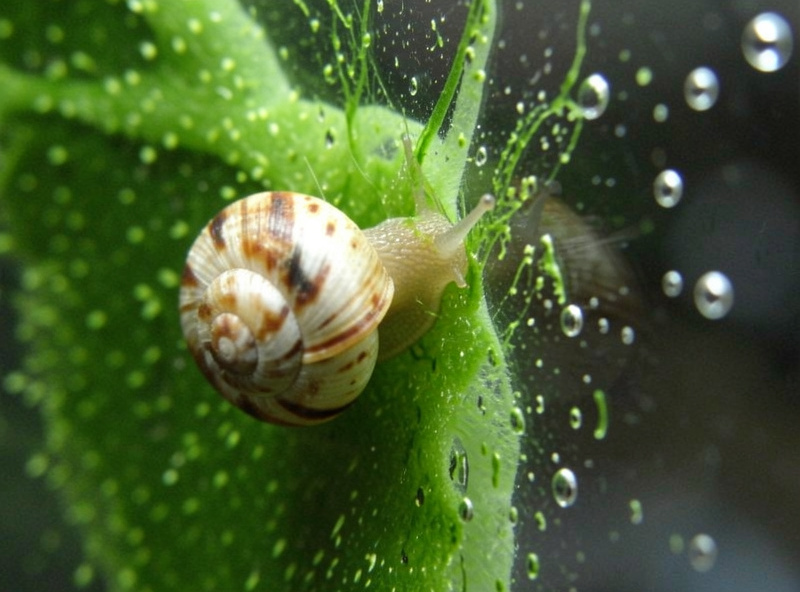
The ranked list for nano tanks
Here is how I rank the realistic options for small water, judged on grazing power, population safety and how much hardness they demand. The table sorts them; the notes below explain the placements.
| Rank | Snail | Best on | Breeds in freshwater? | Min KH |
|---|---|---|---|---|
| 1 | Nerite | Film, diatoms, green spot on glass and hardscape | No | 4+ dKH |
| 2 | Ramshorn | Soft green algae, biofilm, dead leaves | Yes | 4+ dKH |
| 3 | Malaysian trumpet | Substrate detritus, algae on sand | Yes | 3+ dKH |
| 4 | Bladder / pond | Film, leftover food, soft algae | Yes | 3+ dKH |
| 5 | Mystery / apple | Leftover food, some soft algae | Yes | 5+ dKH |
The nerite tops the list for one reason: it is the only heavy hard-surface grazer that carries zero population risk, which I break down fully in the nerite snail guide. Everything below it either grazes lighter, breeds, or both — which is not a flaw, just a different job.
Nerite: the glass and hardscape specialist
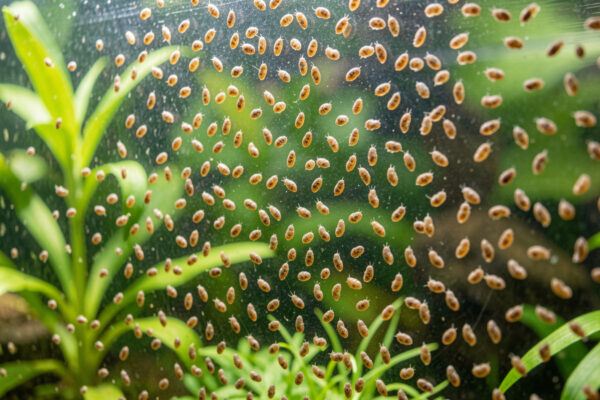
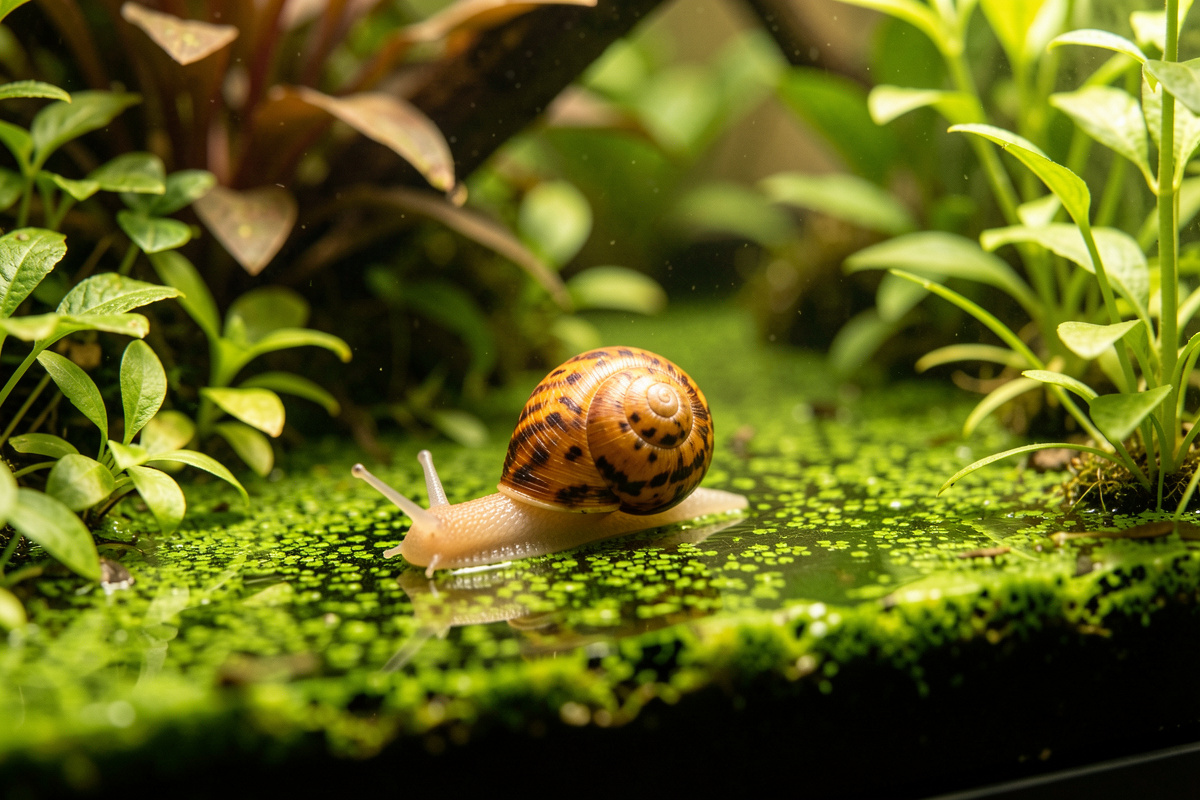
Nerites are unmatched on the hard films that plague nano tanks: brown diatoms in a new setup, green spot algae welded to glass, and the thin biofilm that reappears between cleanings. Their radula is tough enough to lift green spot algae that most snails cannot touch. One per 8–10 litres keeps glass clear, they import negligible waste, and freshwater sterility means no population math. The only cost is the sterile white eggs they cement onto hardscape — the trade-off that comes with the territory.
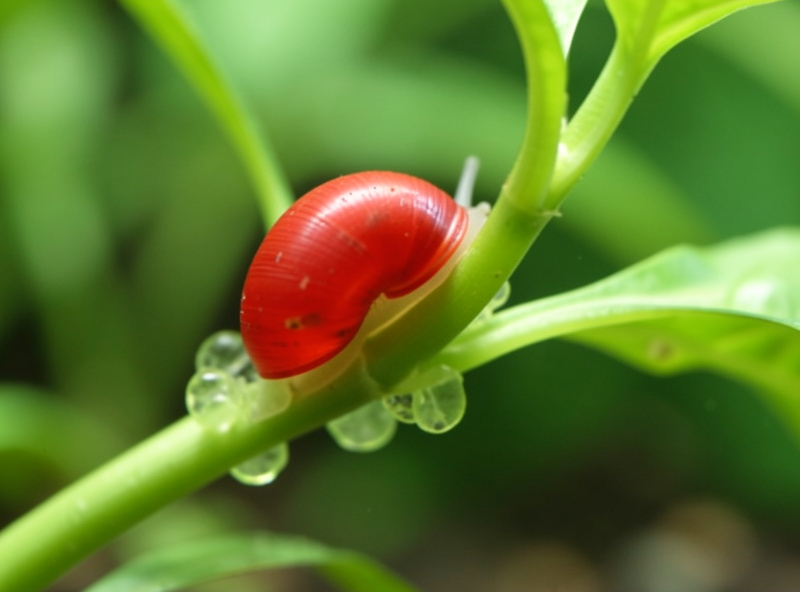
Ramshorn and trumpet: the soft-work specialists
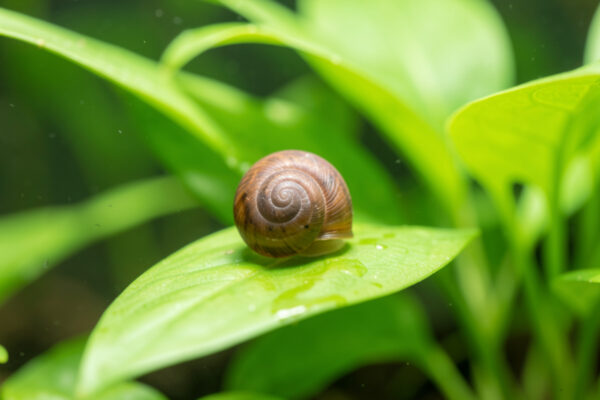
Ramshorn snails are underrated. They graze soft green algae, biofilm and decaying plant matter that nerites ignore, and their flat spiral shell lets them work leaf surfaces and tight corners. They breed to match food, so they self-regulate on feeding discipline, and a small ramshorn population is quietly useful cleanup rather than a pest — the case I make in are pest snails actually bad. Malaysian trumpet snails, meanwhile, do their work below the surface: burrowing the substrate, eating detritus and algae on sand, and tilling anaerobic pockets no glass grazer reaches.
Both breed readily, which is a feature if you want self-sustaining cleanup and a nuisance if the population runs away on surplus food. The lever is always feeding, and if a boom does happen, the removal is chemical-free and covered in how to get rid of pest snails. For most planted nanos, a modest mixed population of these does genuine background work.
What no snail can do
Here is the honest limit. No snail eats hair algae, black beard algae, staghorn or green water — those are water-column and balance problems that grazers cannot solve. Reaching for “more snails” against those is the classic beginner mistake, and it just starves the snails against algae they will not touch. Those problems are fixed with light duration, nutrient balance and flow, not livestock. If you match the eater to hard-surface films and detritus — the jobs snails genuinely do — you will not be disappointed; ask a snail to fix a CO2 or lighting imbalance and you will be.
A quiet mistake worth naming: buying grazers for a tank that is already clean. A well-run planted nano with good flow and a sane photoperiod may simply not grow enough algae to feed a squad of snails, and the grazers slowly starve on bare glass. If your algae is under control, you do not need more eaters — you need to feed the ones you have with the occasional algae wafer, or keep fewer of them. Match the number of grazers to how much algae your tank actually produces, not to how many the shop had in the tank.
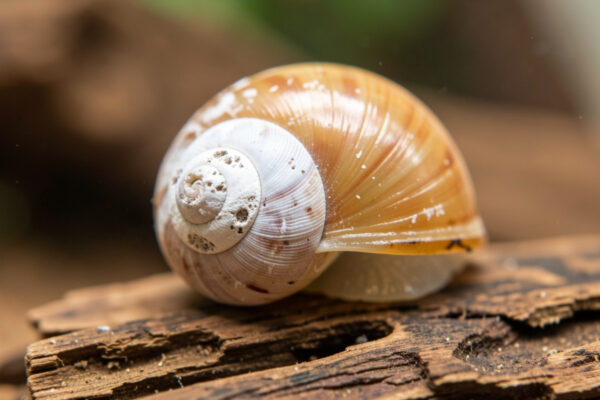
Whatever grazer you choose, hardness is the gate. Every snail here needs carbonate hardness to build shell, and a soft-water tank erodes them regardless of how well they eat — the KH and GH detail is in the shell erosion guide. Build the crew to your water, pair it with dwarf shrimp for full coverage (keeping snails with shrimp), and see the whole roster in the nano tank snails guide.
Frequently Asked Questions
What is the best algae-eating snail for a nano tank?
The nerite snail. It grazes film, diatoms and green spot algae off glass and hardscape harder than any snail its size and cannot breed in freshwater, so there is no population risk. For soft algae and detritus, ramshorn and Malaysian trumpet snails complement it.
Do algae-eating snails get rid of all algae?
No. Snails graze hard-surface films, diatoms, green spot algae and detritus, but no snail eats hair algae, black beard algae or green water. Those are balance problems fixed with light, nutrients and flow. A grazer manages algae; it never cures the cause.
How many algae-eating snails do I need in a small tank?
About one nerite per 8 to 10 litres for glass and hardscape. Ramshorn and trumpet snails self-regulate to available food, so let them establish and manage the population through feeding rather than counting. Overstocking grazers just starves them.
Are ramshorn snails good algae eaters?
Yes, and they are underrated. Ramshorns graze soft green algae, biofilm and decaying plant matter that nerites ignore, and their flat shell works leaf surfaces and corners. They breed to match food, so a small population is useful cleanup rather than a pest.
Will algae-eating snails survive in soft water?
Only if there is enough carbonate hardness to build shell. Below about 4 dKH most snails pit and erode regardless of how well they graze. Soft-water shrimp tanks often cannot hold a healthy snail without raising KH first.