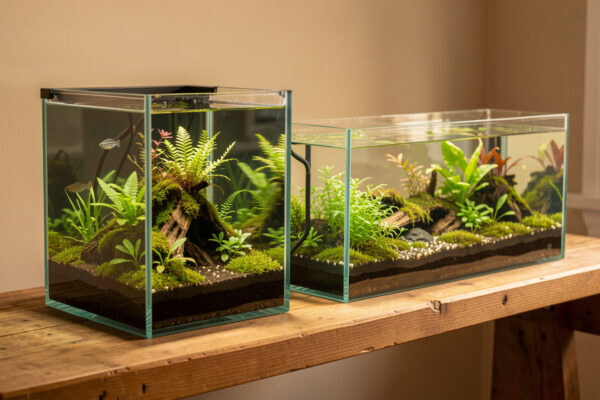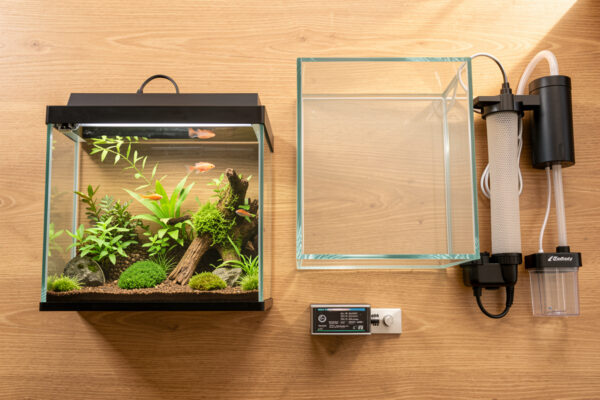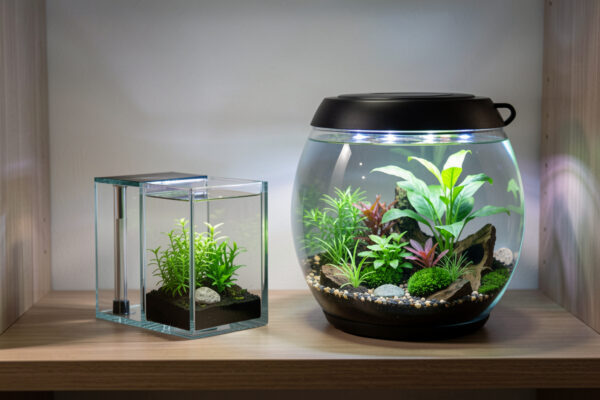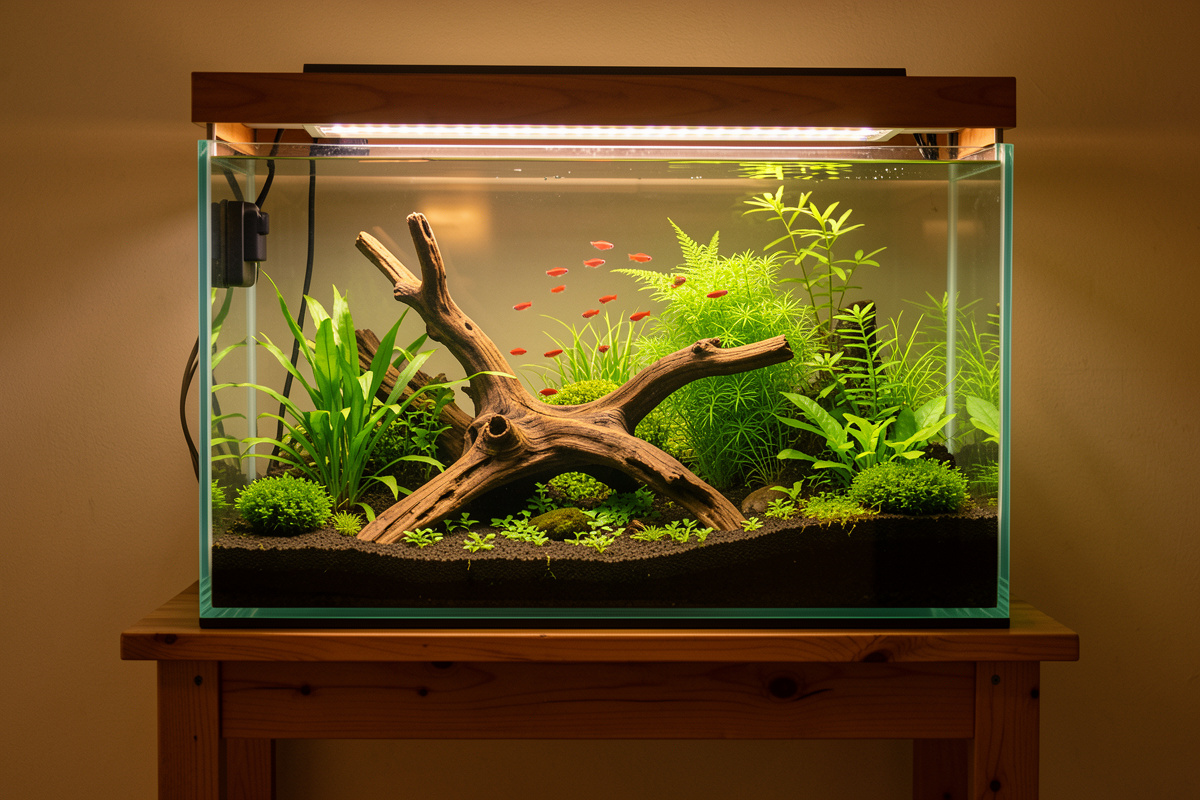
The best 10-gallon nano tank for a first real setup is a rimless or all-in-one around 38 litres — a Fluval Flex 15 if you want the equipment hidden, or a standard low-iron 10-gallon rimless if you want to aquascape. Ten gallons is the size where a nano finally stops fighting you: enough water to hold temperature through a cold night, enough surface for a genuine small school, and enough margin that one mistake is not a disaster. If you can fit it, this is where I tell beginners to start.
I run smaller tanks daily and I still say it: the jump from 5 to 10 gallons is the single best stability upgrade in the hobby, and it costs maybe fifteen dollars more at the kit level. Double the water, roughly half the volatility. This is the first tank size where you can keep a shoal of tiny fish and watch them actually behave like a shoal, and that changes the whole experience.
Why 10 Gallons Is the First Real Nano
Because volume is stability, and 10 gallons is the first point where you have enough of it to keep a small community alive comfortably. A standard 10-gallon holds about 38 litres, roughly double a 5-gallon, and that extra water slows every swing — temperature drifts less overnight, ammonia climbs more gently during the cycle, and a heavy feed dilutes instead of spiking. It is the exact opposite of the volatility I describe in why small aquariums are harder, and it is why I nudge people up from 5 gallons whenever the shelf allows.
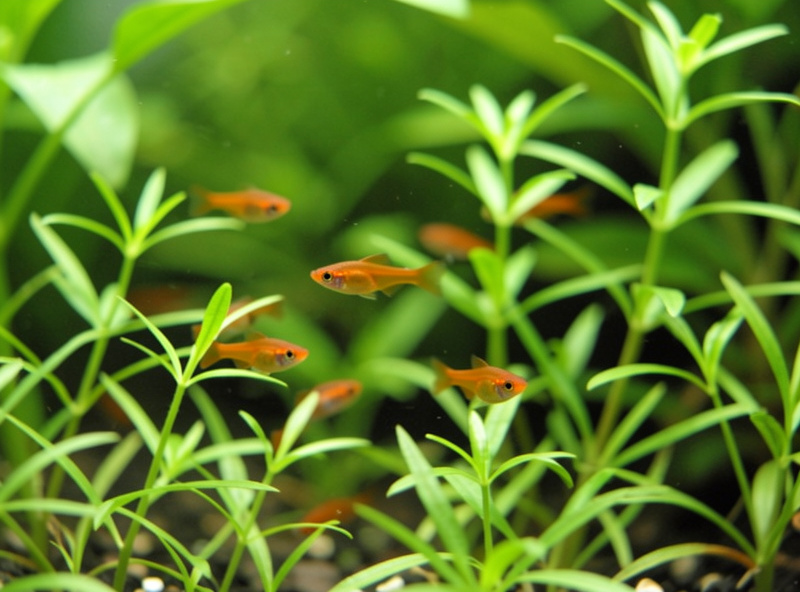
It is also the size where stocking gets fun. In 5 gallons your honest options are a shrimp colony or one betta. In 10 gallons you can keep a real school — six to ten chili rasboras, ember tetras, or a group of pygmy corydoras — with dilution behind them, which I break down in the nano tank stocking guide and the underlying bioload math. A shoal of tiny fish moving as one is the payoff 10 gallons unlocks and 5 gallons cannot.
The Best 10-Gallon Tanks to Buy
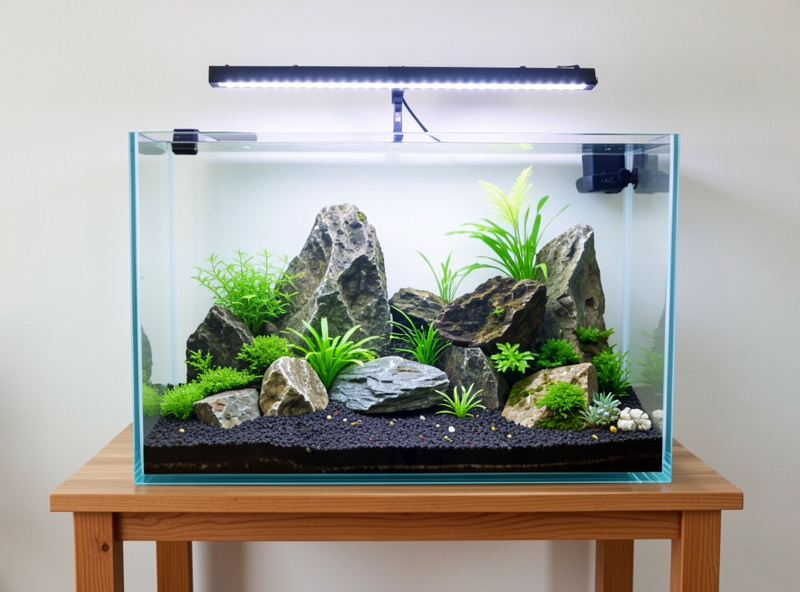
Three routes are worth your money. The all-in-one route — a Fluval Flex 15 or similar — hides the filter and ships a controllable light, the tidiest option for a display tank. The rimless route — a low-iron 10-gallon cube or rectangle — is for aquascapers who will source their own gear, covered in rimless tank vs an all-in-one kit. And the classic standard 10-gallon combo — an Aqueon or Marina glass tank with a bundled hang-on-back and hood — is the budget workhorse that has started more fishkeepers than any tank in history.
| Route | Example | Filter | Best for | Rough price |
|---|---|---|---|---|
| All-in-one | Fluval Flex 15 | Hidden 3-stage chamber | Planted display, small school | $150 to $190 |
| Rimless | Low-iron 10-gal cube/rectangle | You choose (HOB or canister) | Aquascaping | $160 to $280 built |
| Standard combo | Aqueon or Marina 10-gal kit | Bundled hang-on-back | Budget first tank | $50 to $80 |
Prices are 2026 ballparks. The standard combo is the value champion here — a bare, honest rectangle with the best footprint-to-price ratio in the hobby. Its weaknesses are the same as always: a weak stock light and a visible hang-on-back. Upgrade the light if you want plants, and you have a superb first tank for the price of a takeaway dinner or two.
What Can You Keep in 10 Gallons?
This is where the size earns its reputation. A single tidy school is the classic, correct stock: six to ten chili rasboras or ember tetras, alone, in a planted tank — calm, colourful, and well within the bioload. Alternatively a betta with a small clean-up crew of snails or a shrimp colony, or a group of pygmy cories on a sand bottom. Ten gallons even holds a small shrimp colony alongside a peaceful nano fish if you accept the shrimp will breed slower with predators around.
What still does not belong: two schools, aggressive fish, or anything sold as “grows to six inches.” Ten gallons is generous for a nano but it is not a community tank in the big-aquarium sense — restraint is still the rule, and the compatibility realities are in the stocking guide. If you want a betta specifically, 10 gallons is a luxurious home for one and the honest build is in the betta nano setup guide. Stock one clear idea well and the tank sings.
All-in-One or Standard 10-Gallon Combo?
It comes down to money and looks. The all-in-one costs two to three times the standard combo and buys you a hidden filter, a better light, and a display that looks finished out of the box — worth it if the tank sits in a room you live in. The standard combo saves that money and hands you a visible hang-on-back and a weak light, both of which you can live with or upgrade. I lay the full logic out in all-in-one vs buying components separately.
My honest steer: if this is your first tank and budget matters, the standard 10-gallon combo plus a light upgrade is the most tank for the least money in the entire hobby, and it starts you exactly where I started plenty of others. If you want it beautiful from day one and you will not tinker, pay up for the Flex 15. If you can stretch just below this size and want a proven all-in-one, compare it against its little sibling in Fluval Spec vs Flex before you decide, and cross-check the smaller option in the best 5-gallon kits.
The Equipment a 10-Gallon Kit Still Needs
Even the good kits leave gaps. A heater is first — 25 to 50 watts for this volume depending on your room, and always verified against an external thermometer rather than the dial, for the reasons in heater reliability on small tanks. A real light is second if you want plants; the standard-combo hood is weak, so read the best LED light guide before you settle. And your own filter media third — pull the proprietary cartridge and pack sponge and biomedia so the nitrogen cycle has a permanent home.
Budget maybe $50 to $80 of add-ons on top of a bare combo, or $20 to $40 on top of an all-in-one, and spend it before livestock. The single most common failure I see is a beautifully bought 10-gallon that skipped the cycle — the tank was ready and the keeper wasn’t. Run the fishless cycle, test weekly, and the 10-gallon rewards the patience.
How I’d Set Up a 10-Gallon From Scratch
The order matters more than the shopping list. First I level the empty tank on a solid stand — a full 10-gallon weighs around 45 kilograms, so this is not a shelf job. Then substrate goes in, an active soil for a planted build or inert sand for a cory tank, and the reasoning for each is in the low-tech planted nano guide. Hardscape and plants next, before the water, because planting a full tank is a soggy, frustrating fight I have lost more than once.
Only then do I fill, dechlorinate, and start a fishless cycle — no shortcuts, because this is the step that quietly decides whether the tank lives, and the full walkthrough is in the fishless cycle guide — dose ammonia to the 2 to 3 ppm window DrTim’s Aquatics documents and hold it below 5 ppm so the nitrite-eaters never stall. The cycle in a planted 10-gallon usually settles over a few weeks; I test until ammonia and nitrite both read zero and nitrate is climbing, then add livestock slowly, a few fish at a time. After that it is just the rhythm: a small weekly water change matched to temperature, per the water change cadence guide, and a weekly glance at the numbers. Do it in that order and a 10-gallon becomes the calm, self-running tank the size is famous for.
My Pick
For a first real nano on a budget, a standard 10-gallon combo with a light upgrade and a trusted heater — the most capable tank per krona there is. For a finished display with no fuss, the Fluval Flex 15. For aquascapers, a low-iron 10-gallon rimless. Whatever you choose, the 10-gallon is the size I would put in most beginners’ hands, because forgiving volume is the cheapest insurance in this hobby — the whole cross-size logic sits in my nano tank kit guide. Start here if you can, and you will fight the water far less.
As an Amazon Associate I earn from qualifying purchases. The aisles: 10-gallon aquarium kits and nano planted lights. I test every tank with a liquid API kit before anything lives in it, and dechlorinate each fill with Seachem Prime, which by Seachem’s own description removes chlorine and chloramine and detoxifies ammonia.
What is the best 10-gallon nano tank?
For a hidden-equipment display, the Fluval Flex 15 all-in-one; for aquascaping, a low-iron 10-gallon rimless; and for the best value, a standard Aqueon or Marina 10-gallon combo with a light upgrade. Ten gallons holds about 38 litres, which is the first size that comfortably supports a small school of fish.
Is a 10-gallon tank good for beginners?
Yes, it is the size I recommend most beginners start with if they have the space. At about 38 litres it holds temperature overnight and dilutes mistakes far better than a 5-gallon, and the extra water usually costs only around fifteen dollars more at the kit level.
How many fish can you keep in a 10-gallon nano tank?
One tidy school of small nano fish, such as six to ten chili rasboras or ember tetras, or a group of pygmy corydoras. Avoid mixing multiple schools or adding aggressive or large-growing fish. Stock one clear idea and keep the bioload modest.
Should I buy an all-in-one or a standard 10-gallon combo?
A standard combo plus a light upgrade is the most tank for the least money and a great first setup. An all-in-one like the Flex 15 costs two to three times as much but hides the filter and looks finished out of the box. Choose based on budget and whether the tank is on display.
What extra equipment does a 10-gallon kit need?
Usually a heater of 25 to 50 watts verified against an external thermometer, a better light than the stock hood if you want plants, and your own filter media in place of the proprietary cartridge. Budget the add-ons and buy them before adding any livestock.